Flag Tower Hanoi: History, Highlights & Visitor Guide

Flag Tower Hanoi is one of the most iconic historical landmarks in Vietnam’s capital, standing as a timeless symbol of the country’s resilience and rich cultural heritage. Built over 200 years ago, this remarkable monument has witnessed centuries of change while remaining one of the best-preserved structures in Hanoi. Whether you’re passionate about history, architecture, or simply exploring the city’s top attractions, Flag Tower Hanoi offers a fascinating journey into Vietnam’s past. In this guide, you’ll discover its history, architectural highlights, visitor information, and practical tips to make the most of your visit.
In this guide
What Is Flag Tower Hanoi?
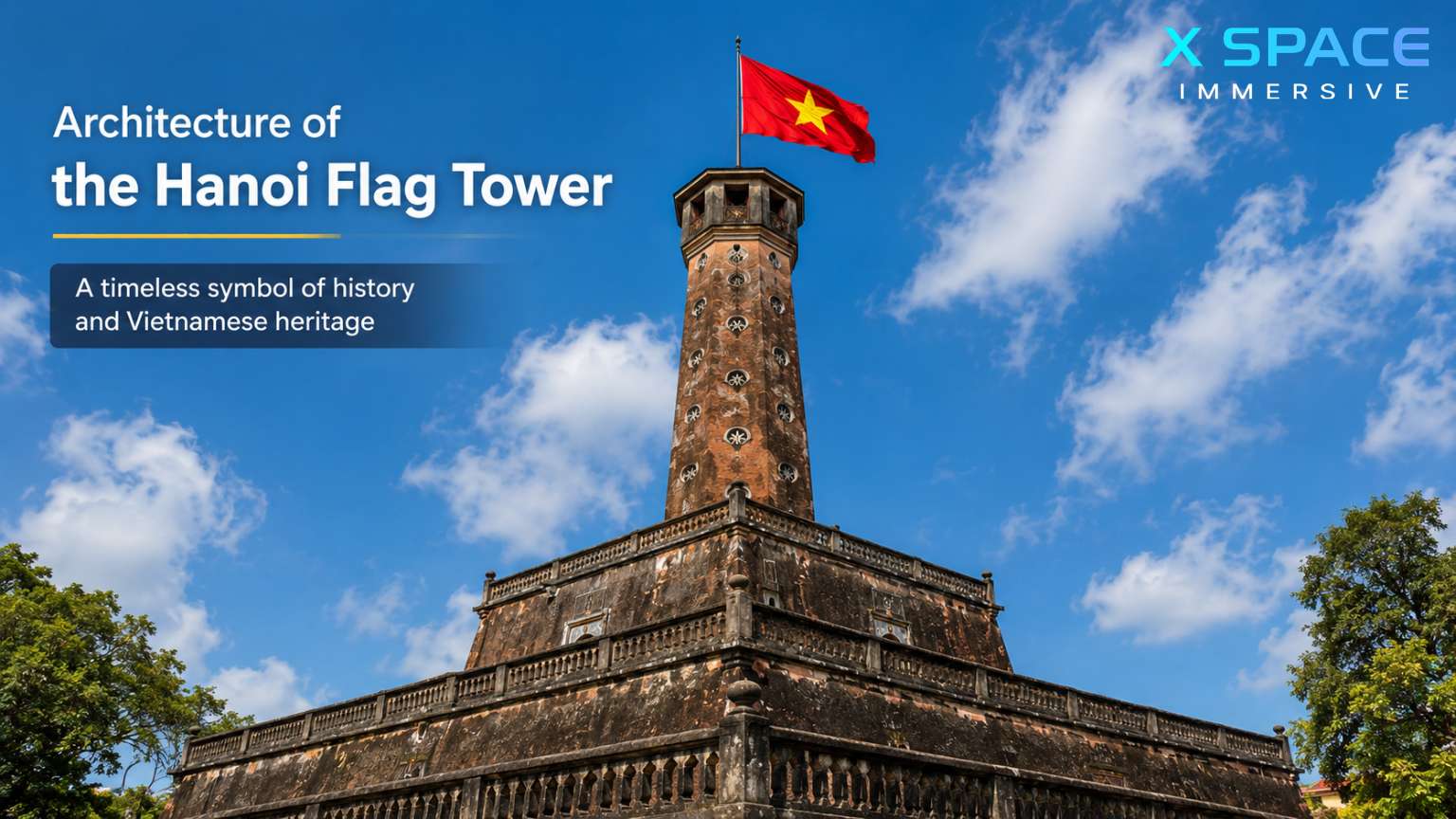
Overview of Flag Tower Hanoi, one of the most iconic historical landmarks in Vietnam
An Overview of the Hanoi Flag Tower
The Flag Tower Hanoi, locally known as Cột cờ Hà Nội, is one of Vietnam’s most recognizable historical landmarks. Built in 1812 during the Nguyen Dynasty, the tower originally served as a military observation post within the ancient Imperial Citadel of Thang Long. Today, it stands as both a national symbol and one of the city’s most photographed monuments.
Unlike many historic buildings that were heavily damaged during conflicts, the Hanoi Flag Tower survived both the French colonial period and the Vietnam War. Its remarkable preservation makes it one of the few remaining military structures that still reflects the architectural style of early nineteenth-century Vietnam.
At approximately 33 meters (108 feet) tall, or nearly 45 meters (148 feet) including the national flag, the tower dominates the surrounding landscape. Every day, Vietnam’s red flag with a golden star flies proudly at its peak, representing the country’s enduring spirit and independence.
Beyond its visual appeal, the monument carries profound historical significance. It has witnessed some of the nation’s defining moments, from royal ceremonies during the Nguyen Dynasty to military events throughout modern Vietnamese history. Today, visitors come not only to admire its architecture but also to connect with the stories that shaped the nation.
For both domestic and international travelers, flag tower hanoi represents the perfect combination of history, culture, and architecture, making it one of the essential attractions in Vietnam’s capital.
Why Is Flag Tower Hanoi So Famous?
Several factors contribute to the popularity of Flag Tower Hanoi among travelers and historians alike.
First, it is one of the oldest surviving landmarks in Hanoi, offering an authentic glimpse into Vietnam’s military and architectural heritage.
Second, the tower is closely associated with Vietnamese national identity. The image of the national flag flying high above the city has become a powerful symbol of freedom, resilience, and unity.
Third, its location makes it incredibly accessible. Sitting beside the Vietnam Military History Museum and only minutes away from the Imperial Citadel of Thang Long, Ho Chi Minh Mausoleum, and Ba Dinh Square, the tower fits seamlessly into almost every Hanoi sightseeing itinerary.
Finally, the tower offers visitors something many historical monuments cannot—a chance to climb inside, explore its spiral staircase, and enjoy panoramic views of Hanoi from above.
Where Is the Hanoi Flag Pole Located?
One of the reasons the Hanoi Flag Pole is so popular is its central location in Ba Dinh District, the political and historical heart of Hanoi.
The tower is situated inside the Vietnam Military History Museum, at 28A Dien Bien Phu Street, just west of Hoan Kiem Lake and north of the Temple of Literature. Because many of Hanoi’s top attractions are located nearby, visitors can comfortably explore several iconic sites within a single day.
From Hoan Kiem Lake, reaching the Hanoi Flagpole takes around 10 to 15 minutes by taxi, ride-hailing service, or motorbike. Those who enjoy walking can also reach the site in approximately 30 minutes while discovering Hanoi’s charming French Quarter along the way.
The surrounding neighborhood is rich in history and culture. Within walking distance, visitors can explore:
- Vietnam Military History Museum
- Imperial Citadel of Thang Long (UNESCO World Heritage Site)
- Ho Chi Minh Mausoleum
- Ba Dinh Square
- Presidential Palace
- Temple of Literature
This concentration of landmarks makes the area one of Hanoi’s most rewarding destinations for travelers interested in Vietnam’s past.
Why the Location Matters
The location of flag tower hanoi reflects its original military function.
When the tower was constructed in the early nineteenth century, it occupied one of the highest strategic positions inside the Imperial Citadel. Soldiers stationed at the observation deck could monitor surrounding areas, relay military signals, and defend the royal capital.
Today, although modern skyscrapers have transformed Hanoi’s skyline, visitors can still appreciate how the tower once overlooked the city’s ancient walls and defensive structures.
The History of Flag Tower Hanoi
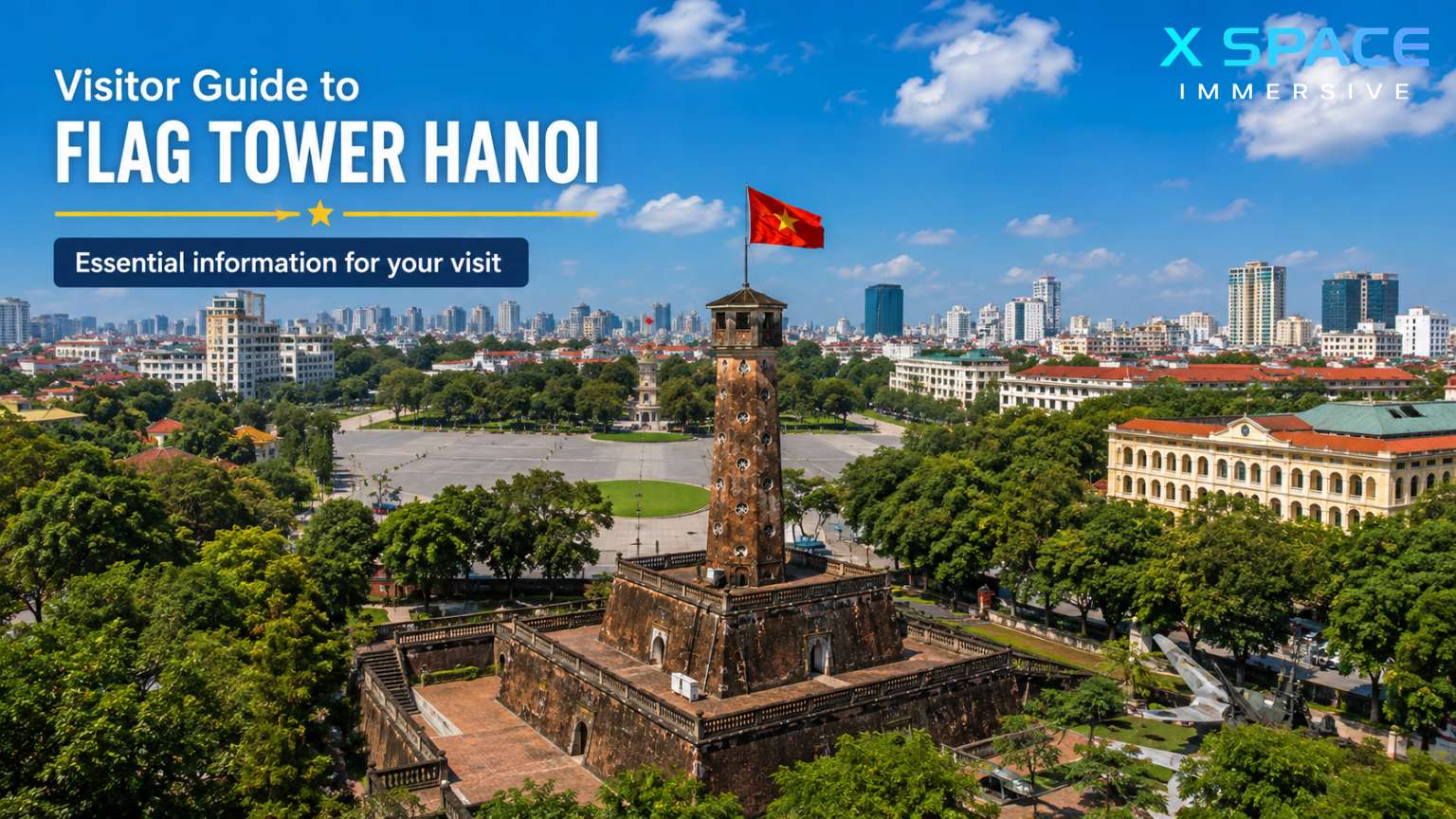
Architecture of the Hanoi Flag Tower featuring its octagonal tower and historic brick structure
When Was the Hanoi Flagpole Built?
The story of Flag Tower Hanoi begins in 1812 during the reign of Emperor Gia Long, the founder of Vietnam’s Nguyen Dynasty.
Following the reunification of Vietnam, the Nguyen rulers invested heavily in strengthening military defenses throughout the country. Hanoi, then known as Thang Long, remained one of the kingdom’s most strategically important cities despite the imperial capital being relocated to Hue.
As part of a comprehensive reconstruction of the ancient citadel, the Hanoi Flag Tower was built to function as an observation tower and signaling station for military operations.
Unlike decorative monuments intended solely for ceremonial purposes, the tower served practical defensive roles. Guards stationed at its summit monitored troop movements, observed approaching threats, and communicated with nearby fortifications using signal flags and lanterns.
Its elevated position made it indispensable to the military infrastructure of the time.
Flag Tower Hanoi Through Different Historical Periods
The true significance of flag tower hanoi lies not only in its age but also in its extraordinary journey through Vietnam’s turbulent history.
During the Nguyen Dynasty
Throughout the nineteenth century, the tower remained an active military facility within the Imperial Citadel.
Its observation platform allowed soldiers to oversee the city’s defenses, while the surrounding fortress protected one of northern Vietnam’s most important administrative centers.
Although many structures within the citadel have disappeared over time, the tower continues to stand as one of the few authentic reminders of this period.
During the French Colonial Era
When French forces occupied Hanoi in the late nineteenth century, much of the Imperial Citadel was demolished to make way for military barracks and administrative buildings.
Remarkably, the Hanoi Flag Tower escaped destruction.
French authorities recognized its usefulness as an observation point and continued using the tower for military purposes. While many neighboring structures vanished, the tower remained standing, preserving an invaluable piece of Vietnamese architectural heritage.
Its survival through this period makes it exceptionally significant among Hanoi’s historical landmarks.
During the Vietnam War
The twentieth century brought new challenges as Hanoi became a central target during wartime.
Despite extensive bombing campaigns that damaged many parts of the city, the Hanoi Flagpole once again survived.
The tower became an enduring symbol of perseverance, reflecting the resilience of both the capital and the Vietnamese people. Images of the national flag flying above the tower during periods of conflict inspired hope and determination throughout the country.
For many Vietnamese, the monument represents far more than an architectural structure—it embodies the nation’s unwavering spirit.
A National Historic Symbol Today
Today, Flag Tower Hanoi is officially recognized as one of Vietnam’s most important historical monuments.
Integrated into the Vietnam Military History Museum, it welcomes thousands of visitors from around the world every year. Travelers climb its centuries-old spiral staircase, admire the preserved architecture, and reflect on the remarkable events that unfolded beneath its flag.
As Hanoi continues to evolve into a modern metropolis, the tower remains a timeless reminder that history and progress can coexist. Its enduring presence bridges Vietnam’s imperial past with its dynamic present, making it one of the city’s most meaningful destinations for anyone seeking to understand the country’s cultural identity.
For visitors exploring Hanoi for the first time, beginning the journey at Flag Tower Hanoi offers not only spectacular views but also a deeper appreciation of the stories that have shaped Vietnam over the past two hundred years.
Architecture of the Hanoi Flag Tower
The remarkable architecture of Flag Tower Hanoi is one of the main reasons it has remained a beloved historical landmark for more than two centuries. More than just a military observation tower, the structure reflects the ingenuity of early nineteenth-century Vietnamese engineering, blending practicality with elegant design. Every detail – from its sturdy stone base to the spiral staircase leading to the top – was carefully planned to serve both defensive and symbolic purposes.
Today, visitors admire the Hanoi Flag Tower not only for its historical significance but also for its unique architectural features that have withstood the test of time.
Unique Design of the Hanoi Flag Pole
Unlike many ancient towers found across Asia, the Hanoi Flag Pole was designed primarily as a military lookout while maintaining a refined architectural appearance that complemented the Imperial Citadel of Thang Long.
The tower consists of three main sections: a solid three-tiered base, an octagonal tower body, and the flag mast at the summit. Together, these elements create an impressive silhouette that can be recognized from various points across central Hanoi.
The Three-Tiered Base
The foundation of Flag Tower Hanoi is made up of three gradually narrowing square platforms. Constructed from durable bricks and stone, these terraces provided exceptional stability while elevating the observation tower above the surrounding citadel.
Each level features stairways and decorative balustrades that soften the monument’s military character. Even after more than 200 years, much of the original masonry remains intact—a testament to the craftsmanship of Nguyen Dynasty builders.
Walking around the base, visitors can appreciate the harmonious proportions that give the tower its balanced and elegant appearance.
The Octagonal Tower
Above the base rises the tower’s distinctive octagonal structure, the most recognizable feature of the Hanoi Flagpole.
This section measures approximately 18 meters in height and contains a narrow spiral staircase leading to the observation deck. Small windows are strategically positioned on each side of the tower, allowing natural light and ventilation while also enabling soldiers to monitor the surrounding area.
Interestingly, many of these windows have unique decorative shapes, including circular, fan-shaped, and flower-inspired openings. These subtle artistic touches demonstrate that even military architecture during the Nguyen Dynasty valued beauty alongside functionality.
The octagonal design also distributes structural weight evenly, contributing to the tower’s remarkable durability through centuries of natural weathering and historical conflicts.
The Spiral Staircase
Inside the tower, visitors climb a spiral staircase of more than 50 stone steps.
Although relatively narrow, the staircase creates a memorable experience as daylight filters through the small windows, revealing changing perspectives of the tower’s thick brick walls. Every few steps offer glimpses of Hanoi outside, gradually building anticipation before reaching the observation platform.
The climb itself becomes part of the attraction, allowing visitors to experience the monument much as military guards once did over two hundred years ago.
The Observation Deck and National Flag
At the top of Flag Tower Hanoi lies the observation platform, where visitors are rewarded with panoramic views of the surrounding historical district.
Above the platform rises the tall flag mast carrying Vietnam’s national flag. The brilliant red banner with its golden star is visible from considerable distances and serves as a powerful reminder of national unity and independence.
For many Vietnamese people, this flag represents far more than decoration – it symbolizes resilience, sacrifice, and the country’s enduring spirit throughout history.
Interesting Architectural Features
While its overall appearance may seem simple at first glance, Flag Tower Hanoi contains numerous architectural details that reveal the sophistication of its original design.
Built to Withstand Time
One of the most impressive characteristics of the Hanoi Flag Tower is its extraordinary durability.
Constructed in 1812, the tower has survived severe tropical weather, colonial occupation, and multiple military conflicts. Unlike many surrounding structures that were demolished or heavily damaged, the tower remains remarkably well preserved.
Historians attribute this longevity to several factors:
- Thick brick walls that provide exceptional structural strength.
- A stable multi-tiered foundation designed to distribute weight evenly.
- High-quality traditional construction materials.
- Careful restoration and preservation efforts over the years.
Its survival makes the monument one of the oldest intact military structures in Hanoi.
Windows with Purpose
The windows of the Hanoi Flag Pole are more than decorative elements.
During the Nguyen Dynasty, they served practical military functions by allowing soldiers to observe activity in multiple directions while maintaining protection inside the tower.
Different window shapes also improved airflow, helping cool the interior during Hanoi’s hot and humid summers.
Today, these openings frame beautiful views of surrounding landmarks, making them favorite spots for photography enthusiasts.
Symbolism Beyond Architecture
Although originally designed for military purposes, flag tower hanoi gradually evolved into a national symbol.
Following Vietnam’s independence, the monument became closely associated with patriotism and historical remembrance. The daily display of the national flag transformed the tower into an enduring representation of Vietnamese identity.
This symbolic role explains why the monument continues to hold deep emotional significance for both local residents and international visitors.
A Harmonious Blend of Strength and Elegance
One reason architects continue to admire the Hanoi Flagpole is its balance between defensive functionality and aesthetic beauty.
Instead of overwhelming ornamentation, the tower relies on:
- Clean geometric proportions.
- Symmetrical design.
- Elegant brickwork.
- Carefully positioned windows.
- Refined architectural simplicity.
These characteristics reflect traditional Vietnamese architectural philosophy, where practical needs coexist with visual harmony
Why Visit Flag Tower Hanoi?
While Hanoi offers countless attractions, Flag Tower Hanoi stands out because it combines history, architecture, culture, and breathtaking city views in one destination. Whether you’re visiting Vietnam for the first time or returning to explore the capital more deeply, this landmark provides an experience that is both educational and memorable.
Spectacular Views from the Hanoi Flagpole
One of the highlights of visiting the Hanoi Flagpole is reaching the observation deck.
Although modern buildings now surround the historic center, the elevated viewpoint still offers impressive perspectives over Ba Dinh District and several iconic landmarks.
From the top, visitors can spot:
- Vietnam Military History Museum
- Imperial Citadel of Thang Long
- Ba Dinh Square
- Tree-lined boulevards
- Historic French colonial architecture
- Parts of Hanoi’s evolving skyline
The contrast between ancient monuments and contemporary city life creates a fascinating panorama that perfectly captures Hanoi’s unique character.
Photographers especially appreciate visiting during the early morning or late afternoon, when soft natural light enhances both the tower and the surrounding cityscape.
Discover a Living Piece of Vietnamese History
Unlike museums where history is displayed behind glass, Flag Tower Hanoi allows visitors to step directly into a monument that has witnessed more than two centuries of Vietnamese history.
Every staircase, brick wall, and viewing platform tells part of a larger story.
As you climb the tower, you’re following the same path once used by military guards who monitored the capital during the Nguyen Dynasty. Standing beneath the national flag offers a tangible connection to Vietnam’s journey through colonialism, war, reunification, and modernization.
This immersive historical experience makes the visit far more meaningful than simply viewing artifacts in an exhibition.
A Symbol of National Pride
For many Vietnamese people, the Hanoi Flag Tower represents perseverance.
Its survival through the French colonial era and the Vietnam War has transformed it into a powerful national icon. The sight of Vietnam’s flag flying proudly above the tower evokes feelings of independence, resilience, and unity.
Understanding this symbolic importance helps visitors appreciate why the monument remains one of Hanoi’s most respected historical sites.
A Paradise for Photography Lovers
Whether you’re a professional photographer or simply capturing memories on your smartphone, flag tower hanoi offers countless photo opportunities.
Popular photography spots include:
- The symmetrical staircases surrounding the tower.
- The brick architecture viewed from ground level.
- The spiral staircase inside the monument.
- The observation platform overlooking Hanoi.
- The vibrant national flag waving against a clear blue sky.
During spring and autumn, the pleasant weather and softer sunlight create particularly beautiful conditions for photography.
Perfect for Families, History Enthusiasts, and First-Time Visitors
One of the greatest strengths of the Hanoi Flag Pole is its broad appeal.
Families enjoy introducing children to Vietnam’s history through an engaging landmark.
History lovers appreciate its authentic architecture and fascinating past.
Architecture enthusiasts admire its elegant Nguyen Dynasty design.
International travelers value its central location, allowing them to combine several major attractions into one enjoyable walking itinerary.
Whether you have one hour or an entire day to explore, Flag Tower Hanoi offers an enriching cultural experience that appeals to visitors of all ages.
More Than a Landmark – A Gateway to Hanoi’s Heritage
Visiting Flag Tower Hanoi is about more than checking off another tourist attraction. It provides a meaningful introduction to Hanoi’s historical heart and sets the stage for exploring nearby sites such as the Imperial Citadel of Thang Long, the Vietnam Military History Museum, and Ba Dinh Square.
For travelers seeking to understand Vietnam beyond its modern cityscape, the Hanoi Flag Tower serves as the perfect starting point. Every brick, staircase, and panoramic view tells a story of resilience, cultural pride, and centuries of history that continue to shape Hanoi today.
Visitor Guide to Flag Tower Hanoi
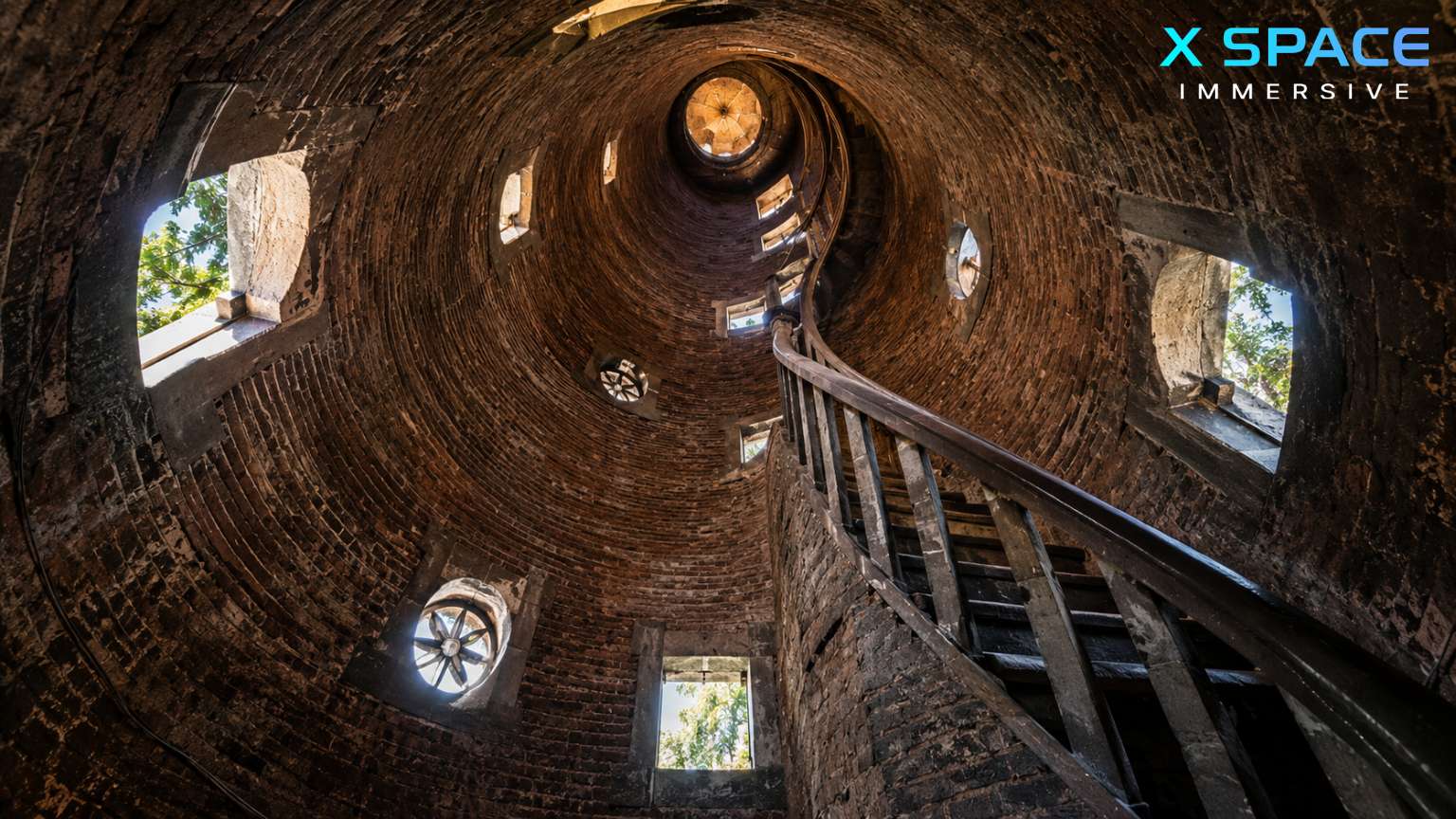
Panoramic view of Flag Tower Hanoi and Ba Dinh District from above
A visit to Flag Tower Hanoi is both convenient and rewarding, especially if you’re planning to explore the historical heart of Vietnam’s capital. Located within the Vietnam Military History Museum, the landmark is easy to include in a half-day or full-day sightseeing itinerary. Before you go, here are a few practical tips to help you make the most of your visit.
Opening Hours
Flag Tower Hanoi is generally open during the operating hours of the Vietnam Military History Museum.
Typical opening hours:
- Morning: 8:00 AM – 11:30 AM
- Afternoon: 1:00 PM – 5:00 PM
- Closed: Mondays and Fridays (check official updates before visiting, as schedules may change during holidays or special events).
Arriving early in the morning is highly recommended. The weather is cooler, the lighting is ideal for photography, and you’ll have a more peaceful experience before larger tour groups arrive.
If you prefer a quieter atmosphere, weekdays usually offer fewer visitors than weekends.
Ticket Prices
One of the best things about visiting the Hanoi Flag Tower is that it’s an affordable attraction for all travelers.
Since the tower is located inside the Vietnam Military History Museum, admission is included with the museum ticket.
Typical admission fees include:
- Adults
- Students (with valid identification)
- Children (according to museum policy)
- Free or discounted entry on selected national holidays
Ticket prices may occasionally be adjusted, so it’s always worth checking before your visit.
Considering the historical significance of the monument and access to the museum’s impressive exhibitions, it offers excellent value for money.
Best Time to Visit
Although Flag Tower Hanoi welcomes visitors year-round, choosing the right season can greatly enhance your experience.
Spring (February – April)
Spring is widely considered one of the best times to visit.
Comfortable temperatures, blooming trees, and clear skies create ideal conditions for walking around the historic district and taking beautiful photographs.
Autumn (September – November)
Autumn is another favorite season among travelers.
The cooler weather and lower humidity make climbing the Hanoi Flagpole much more enjoyable, while the soft golden sunlight provides spectacular views across the city.
Summer (May – August)
Summer brings high temperatures and occasional heavy rain.
If visiting during these months, it’s best to arrive shortly after opening to avoid the midday heat.
Winter (December – January)
Winter in Hanoi is generally mild.
Cool temperatures make sightseeing pleasant, although occasional fog may reduce long-distance visibility from the observation platform.
How to Get to Flag Tower Hanoi
Thanks to its central location, reaching Flag Tower Hanoi is straightforward regardless of where you’re staying.
From Hoan Kiem Lake
Distance: approximately 2 kilometers
Travel options include:
- Taxi (10–15 minutes)
- Ride-hailing services
- Motorbike
- Bicycle
- Walking (around 30 minutes)
Walking is an excellent choice if you enjoy exploring Hanoi’s tree-lined boulevards and French colonial architecture along the way.
From Hanoi Old Quarter
The Hanoi Flag Pole is only a short drive from the Old Quarter.
Many visitors combine the journey with stops at:
- Temple of Literature
- Ho Chi Minh Mausoleum
- Ba Dinh Square
- Imperial Citadel of Thang Long
This route creates one of Hanoi’s most rewarding cultural walking tours.
Travel Tips for First-Time Visitors
A little preparation can make your visit to Flag Tower Hanoi even more enjoyable.
Wear Comfortable Shoes
Although climbing the tower isn’t particularly difficult, you’ll need to navigate a spiral staircase and spend time walking around the museum grounds.
Comfortable footwear makes a noticeable difference.
Bring a Camera
Photography enthusiasts will find countless opportunities throughout the site.
Popular photo locations include:
- The front staircase
- The historic brick walls
- The observation platform
- The Vietnamese national flag
- The panoramic city views
Morning and late afternoon provide the best natural lighting.
Stay Hydrated
During warmer months, temperatures in Hanoi can rise quickly.
Bringing a bottle of water helps ensure a comfortable visit, especially if you plan to explore nearby attractions afterward.
Respect the Historical Site
Remember that Flag Tower Hanoi is an important national monument.
Visitors are encouraged to:
- Keep noise levels low.
- Avoid climbing on historic structures.
- Dispose of rubbish responsibly.
- Follow museum guidelines.
Showing respect helps preserve this remarkable landmark for future generations.
Allow Enough Time
While some travelers spend only 30 minutes at the tower, a more rewarding visit usually takes between 1.5 and 2 hours, especially if you also explore the Vietnam Military History Museum.
Those interested in Vietnamese history may wish to spend even longer discovering the museum’s extensive exhibits.
Top Attractions Near Flag Tower Hanoi
One of the greatest advantages of visiting Flag Tower Hanoi is its location in the heart of Hanoi’s historical district. Within a short walking distance, you’ll find several of Vietnam’s most significant cultural and historical attractions, making it easy to plan an enriching day of sightseeing.
Vietnam Military History Museum
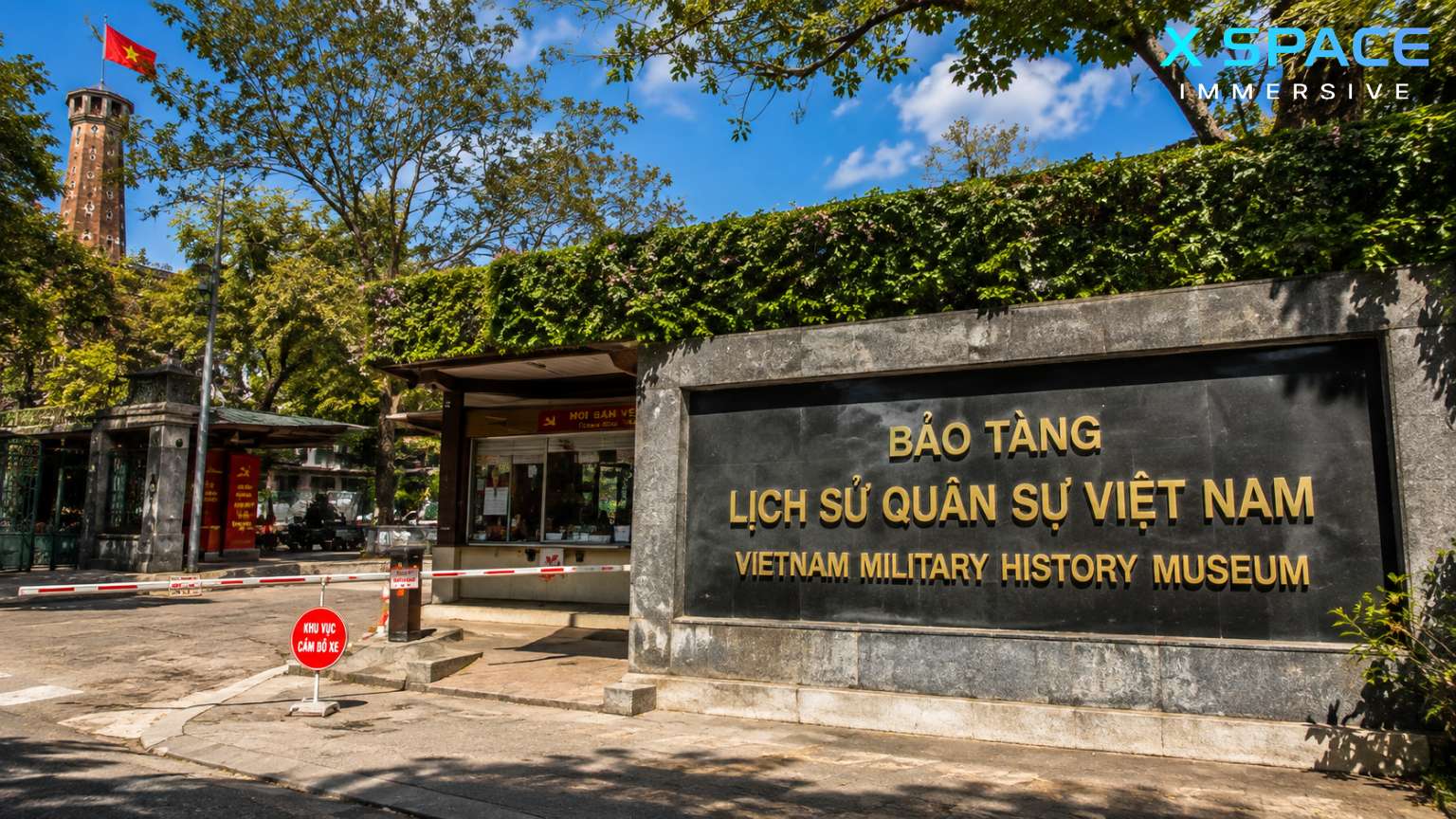
Entrance to the Vietnam Military History Museum beside Flag Tower Hanoi
Located directly beside the Hanoi Flag Tower, the Vietnam Military History Museum is a must-visit for anyone interested in the country’s past.
The museum showcases thousands of artifacts spanning centuries of Vietnamese military history, including:
- Ancient weapons
- Military uniforms
- Historical documents
- Tanks and armored vehicles
- Aircraft used during the Vietnam War
Outdoor exhibitions feature impressive military equipment, while indoor galleries provide deeper insights into Vietnam’s struggle for independence.
Together with Flag Tower Hanoi, the museum offers a comprehensive understanding of the nation’s resilience and history.
Imperial Citadel of Thang Long
Just a few minutes away lies the Imperial Citadel of Thang Long, a UNESCO World Heritage Site that served as Vietnam’s political center for more than 1,000 years.
Visitors can explore:
- Ancient palace foundations
- Archaeological excavations
- Royal gates
- Historic bunkers
- Cultural exhibitions
The citadel perfectly complements a visit to the Hanoi Flagpole, allowing travelers to experience both the military and royal history of Vietnam in one itinerary.
Ho Chi Minh Mausoleum
One of Hanoi’s most visited landmarks, the Ho Chi Minh Mausoleum is located only a short distance from Flag Tower Hanoi.
Here, visitors can pay their respects to President Ho Chi Minh while exploring the surrounding complex, which also includes:
- Ho Chi Minh’s Stilt House
- Presidential Palace
- Ho Chi Minh Museum
The area is beautifully maintained and offers an excellent opportunity to learn about one of Vietnam’s most influential historical figures.
Ba Dinh Square
Directly in front of the Ho Chi Minh Mausoleum is Ba Dinh Square, one of Vietnam’s most historically significant public spaces.
It was here that President Ho Chi Minh proclaimed Vietnam’s Declaration of Independence in 1945.
Today, visitors gather to watch the ceremonial flag-raising and flag-lowering events while enjoying the peaceful atmosphere of one of Hanoi’s most iconic locations.
Temple of Literature
A short drive from the Hanoi Flag Pole brings visitors to the Temple of Literature, Vietnam’s first national university.
Built in 1070, this beautifully preserved Confucian temple is admired for its:
- Traditional Vietnamese architecture
- Peaceful courtyards
- Ancient stone steles
- Cultural exhibitions
Its tranquil environment provides a wonderful contrast to the military history experienced earlier in the day.
Hanoi Old Quarter
No visit to Flag Tower Hanoi is complete without exploring the nearby Hanoi Old Quarter.
Famous for its lively streets, colonial architecture, and traditional markets, the Old Quarter offers endless opportunities to experience local culture.
Visitors can:
- Sample authentic Vietnamese street food.
- Enjoy traditional egg coffee.
- Shop for handmade souvenirs.
- Discover hidden temples.
- Watch everyday life unfold in the city’s oldest neighborhoods.
As evening approaches, the area comes alive with bustling cafés, night markets, and vibrant nightlife.
Suggested One-Day Itinerary Around Flag Tower Hanoi
If you’re visiting Hanoi for a short time, here’s an itinerary that combines history, culture, and local experiences into one memorable day.
8:00 AM – Arrive at Flag Tower Hanoi and explore the monument.
9:00 AM – Visit the Vietnam Military History Museum.
11:00 AM – Walk to the Imperial Citadel of Thang Long.
12:30 PM – Enjoy lunch at a nearby Vietnamese restaurant.
2:00 PM – Visit Ho Chi Minh Mausoleum and Ba Dinh Square.
3:30 PM – Explore the Temple of Literature.
5:00 PM onwards – Head to Hanoi Old Quarter for street food, shopping, and evening entertainment.
This itinerary allows visitors to experience many of Hanoi’s most iconic attractions while minimizing travel time between destinations.
Whether you’re fascinated by history, architecture, or local culture, the area surrounding Flag Tower Hanoi offers an unforgettable introduction to Vietnam’s capital.
FAQ About Flag Tower Hanoi
Before planning your visit, you may have a few questions about Flag Tower Hanoi. Below are some of the most frequently asked questions from travelers, covering its history, accessibility, and visitor experience.
Why is Flag Tower Hanoi famous?
Flag Tower Hanoi is famous for being one of the oldest and best-preserved historical landmarks in Vietnam’s capital. Built in 1812 during the Nguyen Dynasty, the tower originally served as a military observation post within the Imperial Citadel of Thang Long.
Unlike many structures in the ancient citadel, it survived the French colonial period and the Vietnam War, making it a powerful symbol of Vietnam’s resilience and national identity. Today, it is one of Hanoi’s most recognizable landmarks and an essential stop for anyone interested in the city’s history and culture.
Can visitors climb the Hanoi Flag Tower?
Yes. Visitors can climb inside the Hanoi Flag Tower via its historic spiral staircase.
The climb is relatively short and suitable for most visitors. Along the way, small windows provide glimpses of the surrounding city before you reach the observation platform near the top.
Although the tower isn’t particularly tall compared to modern skyscrapers, the panoramic views of Ba Dinh District, the Vietnam Military History Museum, and nearby historical landmarks make the climb well worth the effort.
How old is the Hanoi Flagpole?
The Hanoi Flagpole was completed in 1812, making it more than 200 years old.
For over two centuries, the tower has witnessed some of Vietnam’s most significant historical events – from the Nguyen Dynasty and French colonial rule to the country’s struggle for independence and modern development.
Its remarkable preservation allows today’s visitors to experience one of the few surviving military structures from early nineteenth-century Vietnam.
Is Flag Tower Hanoi worth visiting?
Absolutely.
Whether you’re visiting Hanoi for the first time or returning to explore more of its cultural heritage, Flag Tower Hanoi offers a unique combination of history, architecture, and panoramic city views.
It’s also conveniently located near several of Hanoi’s top attractions, including the Imperial Citadel of Thang Long, Ho Chi Minh Mausoleum, and the Vietnam Military History Museum. This makes it easy to include in a one-day sightseeing itinerary.
For travelers interested in Vietnam’s history, the monument provides a deeper understanding of the country’s resilience while offering excellent opportunities for photography.
How long should I spend at the Hanoi Flag Pole?
Most visitors spend 1 to 2 hours exploring the Hanoi Flag Pole and the surrounding museum.
If you’re only interested in climbing the tower and taking photos, around one hour is usually enough.
However, if you plan to visit the Vietnam Military History Museum or combine your trip with nearby attractions, allowing three to four hours will provide a much more relaxed and rewarding experience.
Experience X Space Immersive After Visiting Flag Tower Hanoi

Visitors enjoying the X Space Immersive experience in Hanoi
After exploring centuries of Vietnamese history at Flag Tower Hanoi, why not continue your journey through culture in a completely different way?
While the tower offers a fascinating look into Vietnam’s past, X Space Immersive invites you to experience storytelling through cutting-edge digital technology, interactive art, and immersive visual experiences. Together, these two attractions create a unique contrast between Hanoi’s rich heritage and its vibrant creative future.
Continue Your Hanoi Journey with an Immersive Cultural Experience
Traveling isn’t just about seeing famous landmarks – it’s about experiencing different perspectives.
After walking through the historic grounds surrounding the Hanoi Flag Tower, stepping into X Space Immersive offers a refreshing transition from traditional architecture to innovative digital exhibitions.
Using large-scale projections, interactive installations, and multi-sensory storytelling, X Space Immersive transforms art and culture into engaging experiences that appeal to visitors of all ages.
Whether you’re traveling with family, friends, or on your own, it’s an inspiring way to end a day of exploring Hanoi.
What You’ll Experience at X Space Immersive
At X Space Immersive, visitors can enjoy a variety of interactive experiences that blend creativity, technology, and culture.
Highlights include:
- Immersive digital art exhibitions
- Interactive projection rooms
- Multi-sensory storytelling experiences
- Creative photo opportunities
- Family-friendly installations
- Contemporary interpretations of art and culture
Rather than simply observing exhibits, visitors become part of the experience, creating memorable moments that are both entertaining and visually stunning.
It’s an ideal destination for anyone looking to discover another side of Hanoi beyond its traditional landmarks.
A Perfect One-Day Hanoi Itinerary
Combining Flag Tower Hanoi with X Space Immersive creates a balanced itinerary that showcases both the city’s historical legacy and its modern creative scene.
Morning
Begin your day at Flag Tower Hanoi, where you can admire one of Vietnam’s most iconic historical monuments before exploring the Vietnam Military History Museum.
Midday
Continue to the nearby Imperial Citadel of Thang Long or Ho Chi Minh Mausoleum, followed by lunch at a local restaurant serving authentic Hanoi cuisine.
Afternoon
Visit the Temple of Literature or wander through Ba Dinh District, discovering more of the city’s cultural heritage.
Evening
End your day at X Space Immersive, where digital technology, immersive storytelling, and interactive art provide a completely different perspective on creativity and culture.
The contrast between these destinations makes for a memorable journey – from Vietnam’s historical roots to its contemporary artistic innovation.
Conclusion
Standing proudly in the heart of Vietnam’s capital, Flag Tower Hanoi is far more than a centuries-old monument. It is a symbol of resilience, national pride, and the enduring spirit of Hanoi. From its remarkable Nguyen Dynasty architecture and fascinating military history to its panoramic views and central location, the tower offers visitors an unforgettable glimpse into the country’s rich cultural heritage.
Whether you’re exploring the Vietnam Military History Museum, discovering the Imperial Citadel of Thang Long, or strolling through the nearby Old Quarter, a visit to the Hanoi Flag Tower provides the perfect starting point for understanding Hanoi’s past and present.
To make your journey even more memorable, consider ending your day with a visit to X Space Immersive. Together, these two destinations showcase the best of Hanoi – where timeless history meets modern creativity, offering travelers a richer and more diverse experience of Vietnam’s capital.
If you’re planning your next adventure in Hanoi, be sure to add Flag Tower Hanoi to your itinerary. It’s not just a landmark you’ll photograph – it’s a place where history comes alive and every visit leaves a lasting impression.
Was this article helpful?
Thanks for your feedback!