Long Bien Bridge: History, Best Views, and Photo Spots in Hanoi

Long Bien Bridge is one of Hanoi’s most iconic landmarks, where history, culture, and everyday life come together. Stretching across the Red River for more than a century, this historic bridge has witnessed the city’s transformation while remaining a symbol of resilience and heritage. Whether you’re drawn by its fascinating past, breathtaking river views, or unique photo opportunities, Long Bien Bridge offers an authentic glimpse into the heart and soul of Vietnam’s capital. In this guide, you’ll discover its history, the best viewpoints, and must-visit photo spots to make your Hanoi journey truly unforgettable.
In this guide
What Is Long Bien Bridge?
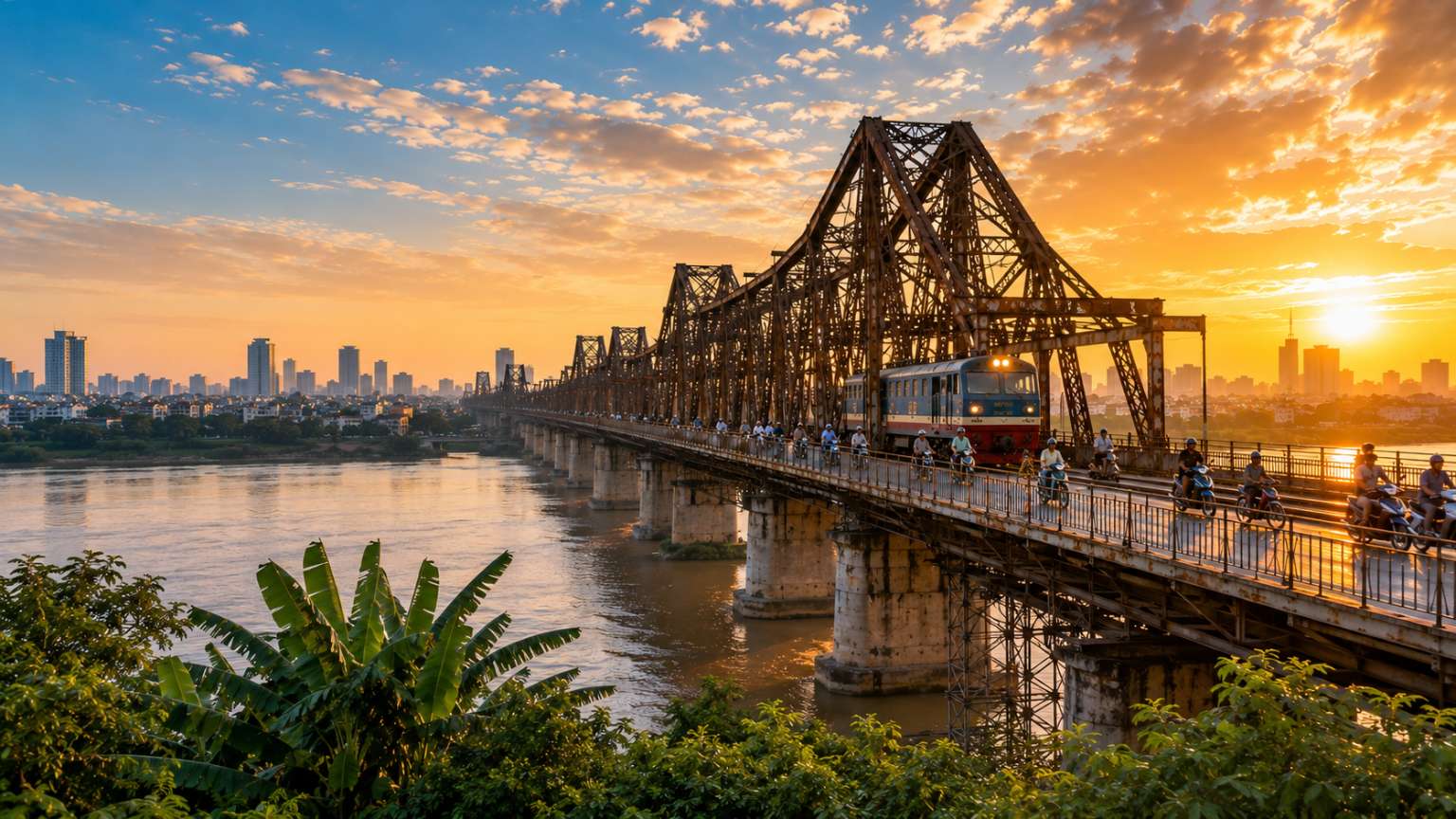
Long Bien Bridge spanning the Red River in Hanoi, Vietnam during golden hour
A Historic Landmark That Defines Hanoi
Long Bien Bridge is one of the oldest and most recognizable landmarks in Vietnam’s capital city. Stretching across the Red River, the bridge connects Hanoi’s Hoan Kiem and Ba Dinh districts with Long Bien District, serving as both a functional transportation route and a treasured historical monument.
Completed in the early twentieth century, the bridge has witnessed more than a hundred years of political change, urban development, and national resilience. While modern bridges now carry most of Hanoi’s traffic, Long Bien Bridge continues to welcome trains, motorcycles, bicycles, and pedestrians every day, preserving its role in the daily rhythm of the city.
For many locals, the bridge represents memories of childhood, family traditions, and the enduring spirit of Hanoi. For international visitors, it offers an opportunity to step away from crowded tourist attractions and experience a quieter, more authentic side of the capital.
Where Is Long Bien Bridge Hanoi?
Located just a few minutes from Hanoi’s famous Old Quarter, Long Bien Bridge Hanoi is incredibly easy to reach.
The bridge spans the Red River, connecting the historic city center with the eastern neighborhoods of Hanoi. From Hoan Kiem Lake, visitors can walk, cycle, or take a short taxi or Grab ride to reach one of the bridge’s entrances.
Its convenient location makes it an excellent stop before or after visiting nearby attractions such as Dong Xuan Market, Train Street, or the bustling streets of the Old Quarter.
Because of its central location, many travelers choose to visit twice—once at sunrise to enjoy peaceful river views and again in the late afternoon when the bridge glows beneath the golden light of sunset.
Quick Facts About Long Bien Bridge
| Feature | Information |
| Location | Hanoi, Vietnam |
| Crosses | Red River |
| Completed | 1902 |
| Original Name | Paul Doumer Bridge |
| Length | Approximately 2.4 km |
| Designed By | Daydé & Pillé (French engineering company) |
| Transportation | Railway, motorcycles, bicycles, pedestrians |
| Best Time to Visit | Sunrise and sunset |
Although the bridge has undergone multiple repairs throughout its history, much of its original steel framework remains intact, giving visitors a rare glimpse into early twentieth-century engineering.
Why Is Long Bien Bridge So Famous?
Unlike many historic bridges that function primarily as monuments, Long Bien Bridge continues to play an active role in everyday life.
Early each morning, commuters cycle across its narrow pathways while street vendors carry baskets of fresh produce toward city markets. Throughout the day, trains rumble slowly over the railway tracks, creating one of Hanoi’s most iconic scenes. By evening, photographers gather to capture the warm sunlight reflecting off the steel structure as the Red River flows quietly below.
This blend of history and daily life is what makes the bridge so unique.
Visitors don’t simply observe a historical monument—they become part of an environment where the past and present exist together.
The bridge also offers some of the city’s most impressive panoramic views. Looking north reveals the expanding skyline of modern Hanoi, while looking south showcases traditional riverside villages and lush agricultural land that has survived rapid urban development.
The History of Long Bien Bridge Vietnam
A Masterpiece of French Colonial Engineering
The story of Long Bien Bridge Vietnam begins at the end of the nineteenth century, when French colonial authorities sought to improve transportation throughout Indochina.
At the time, crossing the Red River was both difficult and unreliable, particularly during the rainy season when water levels rose dramatically. Recognizing the need for a permanent crossing, the French administration commissioned one of the region’s most ambitious infrastructure projects.
Construction officially began in 1899 under the supervision of the French engineering company Daydé & Pillé. Thousands of Vietnamese workers participated in the enormous undertaking, assembling massive steel components imported from Europe while overcoming the engineering challenges posed by the wide and unpredictable Red River.
After three years of construction, the bridge officially opened in 1902.
Originally named Paul Doumer Bridge, after the Governor-General of French Indochina, it quickly became one of Southeast Asia’s longest steel bridges and an important link connecting Hanoi with northern provinces and neighboring China through the railway network.
For the colonial government, the bridge symbolized technological progress and administrative power.
For the Vietnamese people, however, it would eventually come to represent something far more meaningful.
Long Bien Bridge During the Vietnam War
Few structures in Hanoi have endured as much hardship as Long Bien Bridge.
Because it served as a crucial transportation route for military supplies and civilian movement, the bridge became a strategic target during the Vietnam War.
Throughout the 1960s and early 1970s, it suffered repeated aerial bombardments.
Several sections were destroyed, yet each time local engineers and residents worked tirelessly to repair the damage.
Historical photographs show twisted steel beams, collapsed spans, and reconstruction efforts taking place under extraordinarily difficult conditions.
Despite these challenges, the bridge never completely lost its importance.
Its survival became a powerful symbol of Hanoi’s resilience.
Today, visitors walking across Long Bien Bridge may notice that certain sections differ slightly in appearance. These visible variations are reminders of decades of restoration and the determination to preserve one of Vietnam’s most significant historical landmarks.
Rather than concealing its scars, the bridge proudly carries them, allowing each generation to remember the hardships that shaped modern Hanoi.
From Historic Infrastructure to Cultural Heritage
In the decades following the war, Hanoi expanded rapidly.
New bridges such as Chuong Duong Bridge, Vinh Tuy Bridge, and Nhat Tan Bridge gradually assumed much of the city’s growing traffic.
Yet Long Bien Bridge Hanoi retained a unique place in the hearts of local residents.
Instead of becoming obsolete, it transformed into one of the city’s most beloved cultural symbols.
Today, the bridge welcomes thousands of visitors every week—not only for transportation but also for photography, sightseeing, cycling, and quiet walks along the Red River.
Artists frequently paint its weathered steel arches, filmmakers use it as a cinematic backdrop, and wedding photographers choose it for its nostalgic atmosphere.
More importantly, the bridge continues to connect communities on both sides of the river, reminding visitors that history is not confined to museums.
Here, history is something people cross every single day.
Why Long Bien Bridge Is One of Hanoi’s Most Iconic Landmarks
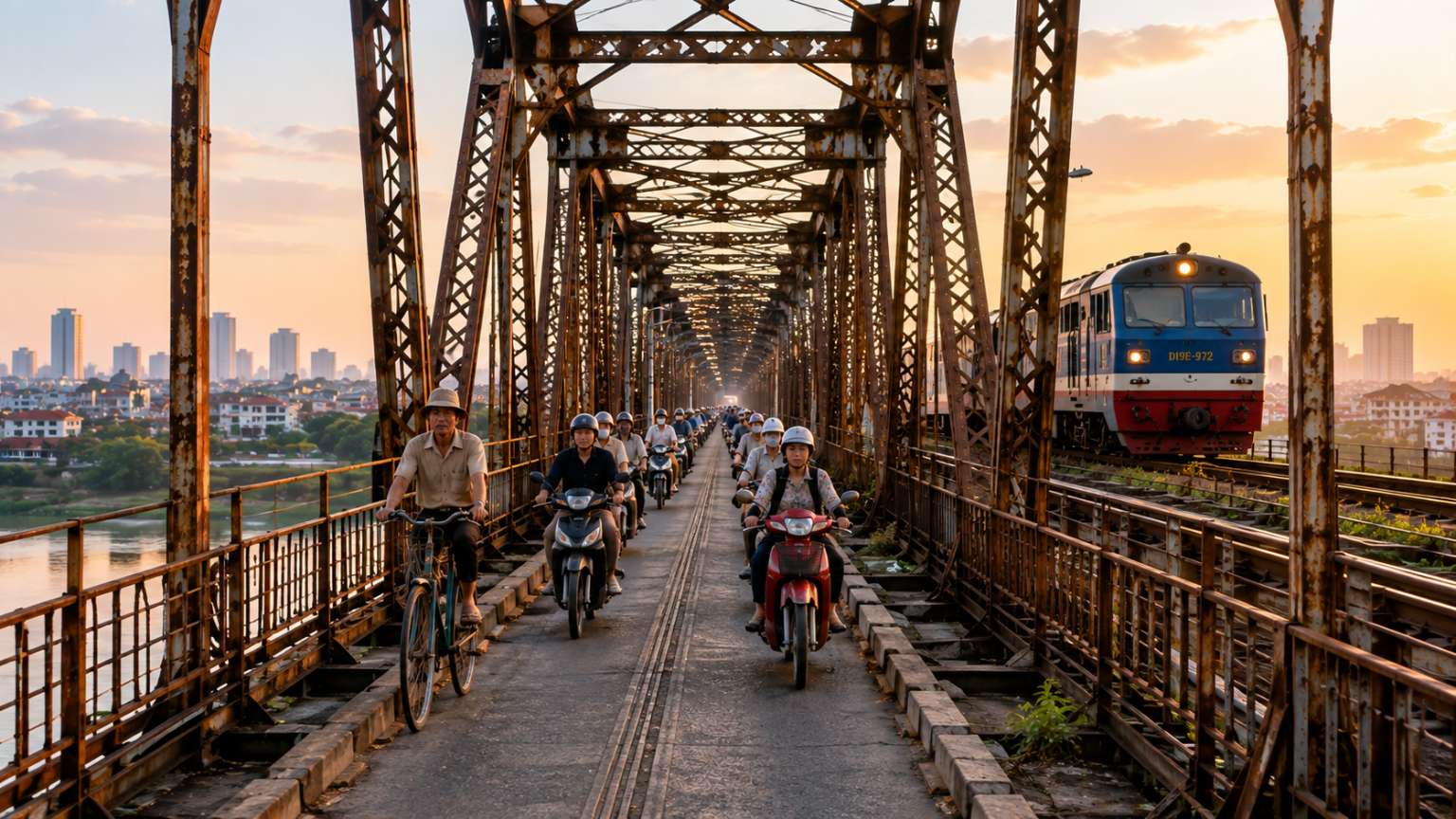
Daily life on Long Bien Bridge with motorbikes, cyclists, pedestrians, and train in Hanoi
Few places capture the spirit of Hanoi quite like Long Bien Bridge. More than a century after its construction, the bridge continues to stand as a symbol of resilience, history, and everyday life. Unlike many landmarks preserved behind museum walls, Long Bien Bridge Hanoi remains an active part of the city, welcoming trains, cyclists, motorbikes, and pedestrians every day.
For travelers, visiting the bridge is about more than admiring its architecture. It’s an opportunity to witness a side of Hanoi where the past and present exist in harmony. From the rhythmic sound of trains crossing the tracks to the sight of locals cycling to nearby markets, every moment on the bridge tells a story that has unfolded over generations.
Whether you’re passionate about history, photography, or simply exploring beyond the typical tourist route, Long Bien Bridge Vietnam offers an experience that feels authentic, memorable, and deeply connected to Hanoi’s identity.
A Living Symbol of Hanoi’s History
Every city has a landmark that reflects its character, and for Hanoi, that landmark is Long Bien Bridge.
Since opening in 1902, the bridge has witnessed French colonial rule, the struggle for independence, the Vietnam War, and the rapid modernization of the capital. Despite enduring decades of change and conflict, it continues to stand proudly across the Red River, connecting communities on both sides.
Walking along the bridge, you’ll notice its weathered steel structure, aging railway tracks, and sections that have been restored over time. Rather than diminishing its beauty, these visible marks of history make the bridge even more meaningful. They remind visitors that Long Bien Bridge is not simply an architectural landmark—it is a living testament to Hanoi’s resilience.
For many local residents, the bridge is closely tied to childhood memories, family stories, and daily routines. It remains a place where history is experienced rather than simply remembered.
Distinctive French Colonial Architecture
One of the first things visitors notice about Long Bien Bridge Hanoi is its striking steel framework.
Designed by the French engineering company Daydé & Pillé, the bridge showcases early twentieth-century industrial architecture with its repeating truss design, riveted steel beams, and impressive engineering scale.
Although several sections have been reconstructed over the years, much of the original structure remains intact. This combination of historic craftsmanship and visible restoration creates a unique visual character unlike any other bridge in Hanoi.
Its rusty red steel contrasts beautifully with the blue sky during sunny days, while misty mornings add a timeless atmosphere that photographers especially appreciate.
Unlike modern bridges designed primarily for efficiency, Long Bien Bridge invites visitors to slow down, observe its details, and appreciate the craftsmanship behind one of Vietnam’s oldest engineering achievements.
Experience Everyday Local Life
One of the most rewarding aspects of visiting Long Bien Bridge is the opportunity to experience everyday Hanoi beyond its famous tourist attractions.
Early in the morning, cyclists pedal across the bridge carrying baskets of flowers, vegetables, and fresh fruit toward local markets. Vendors stop briefly to chat, fishermen cast their lines into the Red River below, and commuters make their way to work as trains pass slowly through the center of the bridge.
The atmosphere changes throughout the day.
In the afternoon, students gather to take photos with friends, couples enjoy leisurely walks, and artists set up their easels to capture the bridge’s timeless beauty. As evening approaches, the bridge becomes quieter, offering a peaceful escape from the busy streets of the Old Quarter.
These ordinary moments are precisely what make Long Bien Bridge Hanoi so extraordinary. Rather than presenting a staged tourist experience, the bridge offers a genuine glimpse into the rhythm of local life.
A Favorite Destination for Photographers
Whether you’re using a professional camera or simply taking photos with your phone, Long Bien Bridge Vietnam provides endless creative opportunities.
The bridge’s industrial architecture, combined with natural landscapes and changing light throughout the day, creates a variety of stunning compositions.
Popular photography subjects include:
- The repeating steel arches stretching into the distance
- Historic railway tracks disappearing toward the horizon
- Trains crossing the bridge
- Sunrise reflecting on the Red River
- Sunset silhouettes against the city’s skyline
- Cyclists and pedestrians moving through the bridge’s narrow pathways
Each season also brings a different atmosphere.
Spring offers soft golden light, summer showcases vibrant blue skies, autumn creates comfortable weather with warm tones, while winter often blankets the bridge in light mist, producing cinematic scenes that many photographers love.
Because the bridge remains active throughout the day, every visit offers something different. No two photographs ever look exactly the same.
Best Views from Hanoi Long Bien Bridge
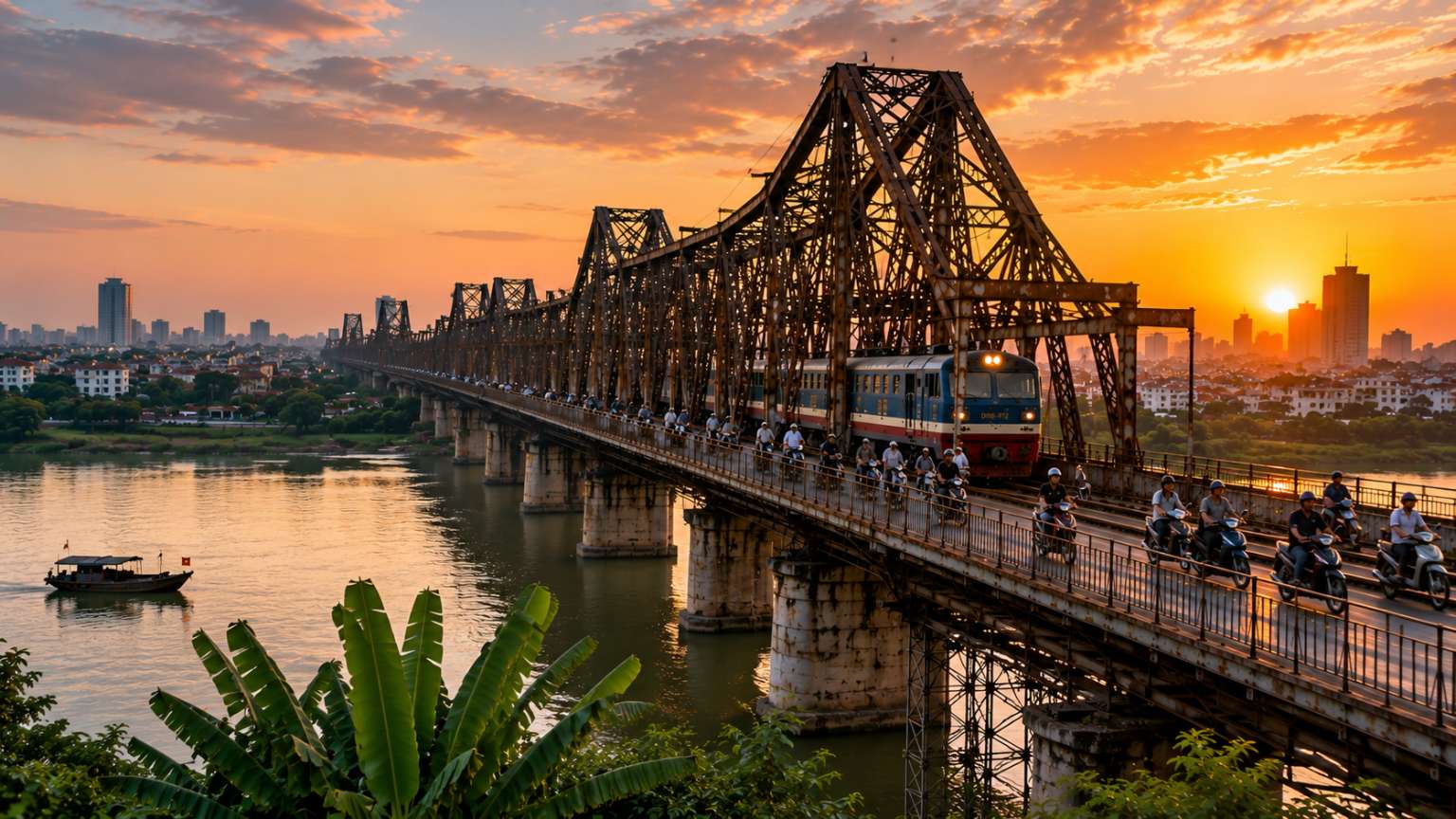
Sunset view of Long Bien Bridge over the Red River with Hanoi skyline
One of the biggest reasons travelers visit Hanoi Long Bien Bridge is the breathtaking scenery. Standing high above the Red River, the bridge offers panoramic views that combine historic architecture, natural landscapes, and the evolving skyline of Vietnam’s capital.
Unlike observation decks or rooftop cafés, the views here feel immersive. You’re not simply looking at Hanoi—you become part of the city’s daily life as trains pass nearby, boats glide beneath the bridge, and the river reflects the changing colors of the sky.
Here are the best times and locations to enjoy the scenery.
Sunrise Over the Red River
If you only have time to visit once, make it at sunrise.
As the first light of day appears above the horizon, the Red River gradually transforms into a mirror of soft orange, pink, and golden hues. Morning mist often lingers above the water, creating an almost dreamlike atmosphere that feels peaceful and untouched.
This is also when Long Bien Bridge is at its quietest.
Instead of crowds, you’ll share the bridge with local residents cycling to work, morning joggers, flower vendors, and photographers hoping to capture Hanoi’s most magical light.
Sunrise is particularly recommended for anyone seeking calm surroundings and natural photography without heavy traffic.
Sunset and Golden Hour
While sunrise offers tranquility, sunset brings energy and warmth.
As the afternoon fades into evening, the steel structure of Long Bien Bridge Hanoi glows beneath golden sunlight. Long shadows stretch across the railway tracks, creating dramatic lines that photographers love.
This period—often referred to as the “golden hour”—provides ideal lighting for portraits and landscape photography alike.
The changing colors of the sky reflect beautifully on the Red River, while the silhouette of Hanoi’s skyline creates a memorable backdrop.
Because sunset is one of the most popular times to visit, arriving 30–45 minutes early allows you to find the best viewpoint before more visitors arrive.
Panoramic Views of Hanoi’s Skyline
From the center of the bridge, visitors can enjoy one of the city’s most unique panoramas.
Looking west, you’ll see the historic districts of Hanoi with their dense neighborhoods, church towers, and colonial buildings. Looking east, the scenery becomes noticeably greener, revealing agricultural land, Banana Island, and riverside communities that contrast sharply with the modern city.
This perspective highlights the fascinating balance between Hanoi’s rapid development and its enduring natural landscape.
It is one of the few places where visitors can appreciate both sides of the capital in a single view.
Watching Trains Cross the Bridge
Perhaps the most unforgettable experience on Long Bien Bridge Vietnam is watching a train slowly pass through its historic steel structure.
Unlike modern railway crossings, trains here move at a relatively slow speed, giving visitors enough time to safely step aside and admire the impressive scene.
As the train approaches, the bridge begins to vibrate gently beneath your feet. The sound of steel wheels echoing across the tracks creates an atmosphere that feels both nostalgic and powerful.
For many travelers, this moment becomes the highlight of their visit.
Travel Tip: Always stay within designated pedestrian areas and follow local safety instructions when trains are approaching. Never stand on or walk along the railway tracks for photos.
Hidden Corners Loved by Locals
Beyond the main viewpoints, Long Bien Bridge also hides quieter corners that many first-time visitors overlook.
Near both ends of the bridge, you’ll find small seating areas where locals gather to relax and enjoy river breezes. From these spots, it’s easy to watch fishing boats, observe daily life along the riverbanks, or simply pause and appreciate the peaceful atmosphere.
These lesser-known viewpoints are especially appealing for travelers who prefer authentic experiences away from larger crowds.
Sometimes, the most memorable moments aren’t the ones planned—they’re the simple moments spent watching Hanoi unfold at its own pace.
Best Photo Spots Around Long Bien Bridge
Whether you’re a professional photographer, a content creator, or simply looking to capture memorable travel moments, Long Bien Bridge offers some of the most photogenic locations in Hanoi. Its combination of historic steel architecture, the Red River, and authentic local life creates a backdrop that changes beautifully throughout the day.
Here are the best places to photograph Long Bien Bridge Hanoi from different perspectives.
The Center of Long Bien Bridge
The middle section of Long Bien Bridge is the most iconic viewpoint and one of the first stops for visitors.
Standing here, you’ll be surrounded by the bridge’s distinctive steel trusses stretching into the distance. The symmetrical structure naturally frames your photos, creating strong leading lines that draw attention to the center of the image.
From this point, you can also enjoy sweeping views of the Red River and both sides of Hanoi. During sunrise or sunset, the warm light filtering through the steel beams creates dramatic shadows and a timeless atmosphere.
Photography tip:
Visit early in the morning to capture cleaner compositions before pedestrian and motorcycle traffic increases.
Historic Railway Tracks
The railway running through Long Bien Bridge Vietnam is one of its most recognizable features.
As trains pass several times a day, the tracks have become a favorite subject for photographers seeking dramatic urban landscapes. The repeating rails and steel framework create impressive depth, making almost every angle visually striking.
However, it’s important to remember that these tracks remain active.
Always stay within the designated pedestrian pathways and never step onto the railway for photographs. Some of the best images can be taken safely from the side walkways while still showcasing the bridge’s unique perspective.
Safety should always come before the perfect shot.
Banana Island (Bãi Giữa)
Hidden beneath and beside Long Bien Bridge Hanoi, Banana Island (Bãi Giữa) is one of Hanoi’s best-kept secrets.
This peaceful riverside area feels worlds away from the city’s busy streets. Visitors will find lush banana plantations, vegetable gardens, sandy riverbanks, and open green spaces that contrast beautifully with the industrial steel bridge above.
From Banana Island, photographers can capture panoramic views of the entire bridge reflected in the Red River, especially during the golden hours of sunrise and sunset.
It is also an excellent location for:
- Landscape photography
- Drone photography (where permitted by local regulations)
- Nature portraits
- Couple and pre-wedding photo shoots
The contrast between rural scenery and the historic bridge creates images that truly capture Hanoi’s unique character.
Riverside Paths Along the Red River
Walking along the riverbanks on either side of Long Bien Bridge reveals another perspective that many visitors overlook.
Here, the bridge appears even more impressive as its steel arches stretch across the Red River against Hanoi’s skyline.
The riverside paths are especially beautiful during autumn and winter when soft morning mist lingers over the water. Reflections in the river add depth and texture to landscape photographs, while local fishermen and passing boats provide authentic storytelling elements.
This area is perfect for travelers who enjoy documentary-style photography that captures everyday life rather than staged tourist scenes.
Cafés with Views of Long Bien Bridge
After exploring the bridge on foot, consider visiting one of the nearby cafés overlooking the Red River.
Several local coffee shops around Long Bien District offer elevated views of the bridge, allowing visitors to relax while enjoying panoramic scenery.
From these cafés, you can photograph:
- Trains crossing the bridge
- Sunset over the Red River
- Hanoi’s skyline at dusk
- Evening lights reflecting on the water
For photographers who appreciate slower travel experiences, enjoying Vietnamese coffee while watching the bridge transition from day to night is an unforgettable way to end the visit.
Things to Do at Long Bien Bridge
Although photography is one of the biggest attractions, Long Bien Bridge offers far more than beautiful views. The surrounding area is filled with authentic experiences that allow visitors to connect with Hanoi’s history, culture, and daily life.
Here are some of the best things to do during your visit.
Walk Across the Historic Bridge
The simplest activity is often the most rewarding.
Walking across Long Bien Bridge Hanoi allows visitors to appreciate its remarkable engineering while observing the rhythm of daily life around them.
Unlike modern bridges designed for speed, this historic structure encourages slow exploration. Every few steps reveal a different view of the Red River, passing trains, cyclists, or local vendors.
The full walk takes approximately 30 to 45 minutes, depending on how often you stop for photos.
Watch Trains Pass Through the Bridge
One of the most unforgettable experiences is watching a train slowly cross Long Bien Bridge.
As the train approaches, the bridge gently vibrates beneath your feet, creating an exciting reminder that this century-old structure continues to serve its original purpose.
The combination of historic steel architecture and moving trains offers a scene rarely found elsewhere in Southeast Asia.
For many visitors, this simple moment becomes one of the highlights of their trip to Hanoi.
Explore Long Bien Market
Located near the bridge, Long Bien Market is one of Hanoi’s largest wholesale markets.
The market comes alive before sunrise as vendors from surrounding provinces arrive with fresh fruits, vegetables, flowers, and seafood.
Even if you’re not shopping, wandering through the lively market provides fascinating insight into the city’s daily commerce and local culture.
Photographers often visit early in the morning to capture colorful scenes filled with energy and authenticity.
Visit Banana Island
If you have extra time, head down to Banana Island after crossing the bridge.
The island offers a completely different atmosphere from central Hanoi.
Visitors can enjoy:
- Peaceful walking paths
- Riverside picnics
- Cycling
- Nature photography
- Quiet escapes from urban crowds
It’s difficult to believe that such a tranquil green space exists only minutes from Hanoi’s bustling Old Quarter.
Discover Local Street Food
No visit to Long Bien Bridge Vietnam is complete without sampling Hanoi’s famous street food nearby.
The surrounding neighborhoods are home to numerous local eateries serving traditional Vietnamese dishes.
Popular choices include:
- Phở (Vietnamese noodle soup)
- Bún chả (grilled pork with vermicelli)
- Bánh cuốn (steamed rice rolls)
- Bánh mì
- Egg coffee
Rather than dining in tourist-oriented restaurants, choosing a small local eatery near the bridge offers a more authentic culinary experience.
How to Visit Long Bien Bridge Hanoi
Planning your visit in advance helps you enjoy Long Bien Bridge Hanoi at its very best.
Here’s everything you need to know before you go.
Best Time to Visit
The bridge is open year-round, but certain times provide a much better experience.
Early Morning (5:30–8:00 AM)
Ideal for:
- Sunrise photography
- Cooler temperatures
- Peaceful atmosphere
- Watching local life begin
Late Afternoon (4:30–6:30 PM)
Perfect for:
- Golden hour photography
- Sunset views
- Comfortable walking weather
- Vibrant city scenery
Best Seasons
The most pleasant months are:
- September–November: Cool temperatures and clear skies.
- March–April: Mild weather with blooming greenery.
Summer can be hot and humid, while winter often brings mist that creates a unique, atmospheric setting.
Opening Hours
Long Bien Bridge is accessible 24 hours a day.
However, daylight hours are recommended for sightseeing and photography.
If visiting after dark, remain aware of traffic and use designated pedestrian walkways.
Entrance Fee
One of the best things about Long Bien Bridge Vietnam is that visiting is completely free.
There is:
- No entrance ticket
- No reservation required
- No official guided tour necessary
Visitors are free to explore at their own pace while respecting local traffic and railway safety regulations.
How to Get to Long Bien Bridge
Because of its central location, reaching Long Bien Bridge Hanoi is quick and convenient.
By Walking
From Hoan Kiem Lake:
- Around 25–30 minutes
- A pleasant walk through the Old Quarter
By Grab or Taxi
Travel time:
- Approximately 10–15 minutes from central Hanoi
This is the easiest option for first-time visitors.
By Bus
Several Hanoi bus routes stop near Long Bien Bridge.
Public transportation offers an affordable way to reach the bridge while experiencing everyday city life.
By Bicycle
Cycling is increasingly popular among both locals and visitors.
Riding across the historic bridge allows travelers to appreciate its atmosphere at a slower pace while exploring nearby neighborhoods.
Helpful Travel Tips
To make the most of your visit, keep these practical tips in mind:
- Wear comfortable walking shoes.
- Bring drinking water during warmer months.
- Visit during sunrise or sunset for the best lighting.
- Keep valuables secure in crowded areas.
- Stay inside pedestrian walkways at all times.
- Never stand on railway tracks for photographs.
- Check local weather forecasts before your visit.
- Carry a camera or fully charged phone—you’ll likely take more photos than expected.
With a little preparation, your visit to Long Bien Bridge will be both enjoyable and memorable, offering a deeper appreciation of one of Hanoi’s most enduring landmarks.
Nearby Attractions After Visiting Long Bien Bridge
One of the advantages of visiting Long Bien Bridge is its convenient location near many of Hanoi’s most popular attractions. Whether you’re interested in history, local markets, cultural landmarks, or authentic food experiences, you can easily continue exploring the city after crossing the bridge.
Here are a few nearby destinations worth adding to your itinerary.
Hoan Kiem Lake
Located just a short drive or a pleasant walk from Long Bien Bridge Hanoi, Hoan Kiem Lake is considered the heart of the capital.
Surrounded by tree-lined paths, historic architecture, and lively cafés, the lake is the perfect place to unwind after exploring the bridge. Visitors can admire the iconic Turtle Tower, visit Ngoc Son Temple, or simply enjoy the peaceful atmosphere that contrasts with the city’s busy streets.
The area also comes alive in the evenings, making it an excellent stop for dinner or a leisurely stroll.
Hanoi Old Quarter
No trip to Hanoi is complete without wandering through the famous Old Quarter.
Only minutes away from Long Bien Bridge, this historic neighborhood features narrow streets, colonial architecture, traditional shophouses, and countless local businesses that have operated for generations.
Here, you’ll discover:
- Traditional Vietnamese street food
- Boutique cafés
- Handmade souvenirs
- Local art galleries
- Hidden temples
- Historic French architecture
Every street tells a different story, making the Old Quarter one of the most rewarding places to explore on foot.
Dong Xuan Market
For travelers looking to experience local commerce, Dong Xuan Market is an essential stop.
As Hanoi’s largest indoor market, it offers everything from clothing and handicrafts to spices, fresh produce, and household goods.
Even if shopping isn’t your priority, wandering through the bustling aisles provides fascinating insight into everyday life in Hanoi.
Early morning visits are particularly lively, with vendors preparing for another busy day.
Hanoi Train Street
Another iconic attraction nearby is Hanoi Train Street.
Known for its narrow railway running directly through residential buildings, the area has become one of the city’s most photographed locations.
Visitors can relax at one of the small cafés while watching trains pass through this remarkably close urban setting. Before planning your visit, be sure to check the latest access regulations, as entry rules may change to ensure visitor safety.
Hanoi Opera House
If you’re interested in architecture and performing arts, the Hanoi Opera House is another worthwhile destination.
Built during the French colonial period, this elegant building showcases beautiful neoclassical design and regularly hosts concerts, ballets, and cultural performances.
Its architectural style complements the historical atmosphere experienced earlier at Long Bien Bridge, offering another perspective on Hanoi’s colonial heritage.
FAQ About Long Bien Bridge
Is Long Bien Bridge free to visit?
Yes. Visiting Long Bien Bridge is completely free. There is no entrance fee, making it one of Hanoi’s most accessible historical attractions.
Can tourists walk across Long Bien Bridge?
Absolutely.
Pedestrian walkways run along both sides of the bridge, allowing visitors to safely enjoy panoramic views of the Red River while observing daily local life.
Always remain within designated walking areas, especially when trains are approaching.
What is the best time to visit Long Bien Bridge?
The best times are:
- Sunrise for peaceful scenery, cooler temperatures, and beautiful morning light.
- Late afternoon for golden hour photography and sunset views over the Red River.
These periods also provide the most comfortable weather for walking.
Is Long Bien Bridge still used by trains?
Yes.
Although several newer bridges now carry much of Hanoi’s traffic, Long Bien Bridge Vietnam continues to serve active railway services alongside motorcycles, bicycles, and pedestrians.
Watching a train cross the historic bridge remains one of the highlights for many visitors.
How long should I spend at Long Bien Bridge?
Most travelers spend 1–2 hours exploring the bridge, taking photographs, and enjoying the surrounding scenery.
If you also plan to visit Banana Island, Long Bien Market, or nearby cafés, you may want to allow half a day for a more relaxed experience.
Is Long Bien Bridge worth visiting?
Definitely. For travelers seeking more than famous landmarks, Long Bien Bridge Hanoi offers an authentic experience that combines history, architecture, photography, and everyday local life. Its unique atmosphere makes it one of the city’s most rewarding places to explore.
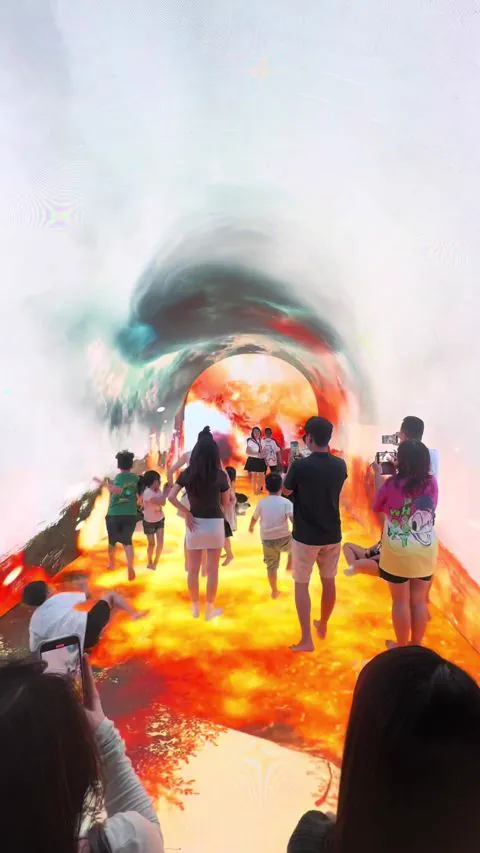
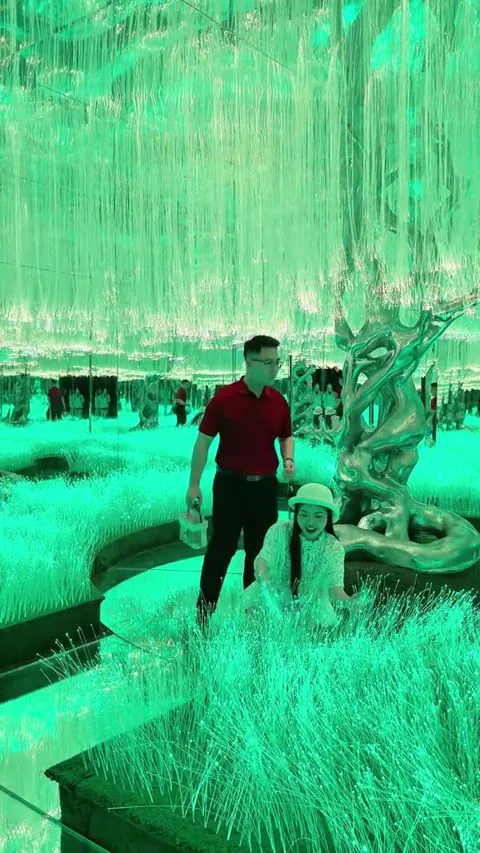
Experience X Space Immersive After Visiting Long Bien Bridge

Visitors enjoying the X Space Immersive experience in Hanoi
After discovering the timeless charm of Long Bien Bridge, why not continue your journey through Hanoi with an experience that celebrates creativity in a completely different way?
Experience X Space Immersive invites visitors to step into a world where art, technology, and storytelling come together through immersive digital experiences. While Long Bien Bridge connects you with Hanoi’s rich history and cultural heritage, X Space Immersive offers a glimpse into the city’s modern creative spirit, creating a fascinating contrast between the past and the future.
Through large-scale projections, interactive installations, and multi-sensory exhibitions, visitors can engage with visual art in ways that go far beyond a traditional museum visit. Every room is designed to encourage exploration, creativity, and meaningful interaction, making it an exciting destination for solo travelers, couples, families, and groups of friends.
For photography enthusiasts, X Space Immersive also provides countless opportunities to capture vibrant, visually striking images that complement the historic scenes you’ve experienced earlier at Long Bien Bridge.
Whether you’re looking to unwind after a day of sightseeing or searching for a unique cultural activity in Hanoi, adding Experience X Space Immersive to your itinerary offers a fresh perspective on the city’s dynamic creative landscape.
Together, these two destinations showcase two sides of Hanoi—one rooted in history, the other inspired by innovation.
Conclusion
Long Bien Bridge is more than a historic landmark—it’s a place where Hanoi’s rich heritage, vibrant local life, and timeless beauty come together. Whether you’re walking across its century-old steel structure, capturing stunning views of the Red River, or exploring nearby attractions, every visit offers a deeper connection to the city’s unique character. Add Long Bien Bridge to your Hanoi itinerary, then continue your journey at Experience X Space Immersive to discover a modern, interactive perspective on Vietnam’s culture and creativity.
Was this article helpful?
Thanks for your feedback!