Hanoi Ceramic Mosaic Mural: A Stunning Masterpiece in Vietnam

Discover the Hanoi Ceramic Mosaic Mural, a colorful masterpiece that transforms the streets of Vietnam’s capital into an extraordinary open-air gallery. Stretching along the Red River dike, this remarkable ceramic artwork brings Vietnamese history, traditional craftsmanship, and contemporary creativity together through thousands of vibrant mosaic pieces. More than a striking Hanoi landmark, it offers a fascinating way to experience the stories, culture, and artistic spirit of the city.
In this guide
What Is the Hanoi Ceramic Mosaic Mural?
What is the Hanoi Ceramic Mosaic Mural in Vietnam
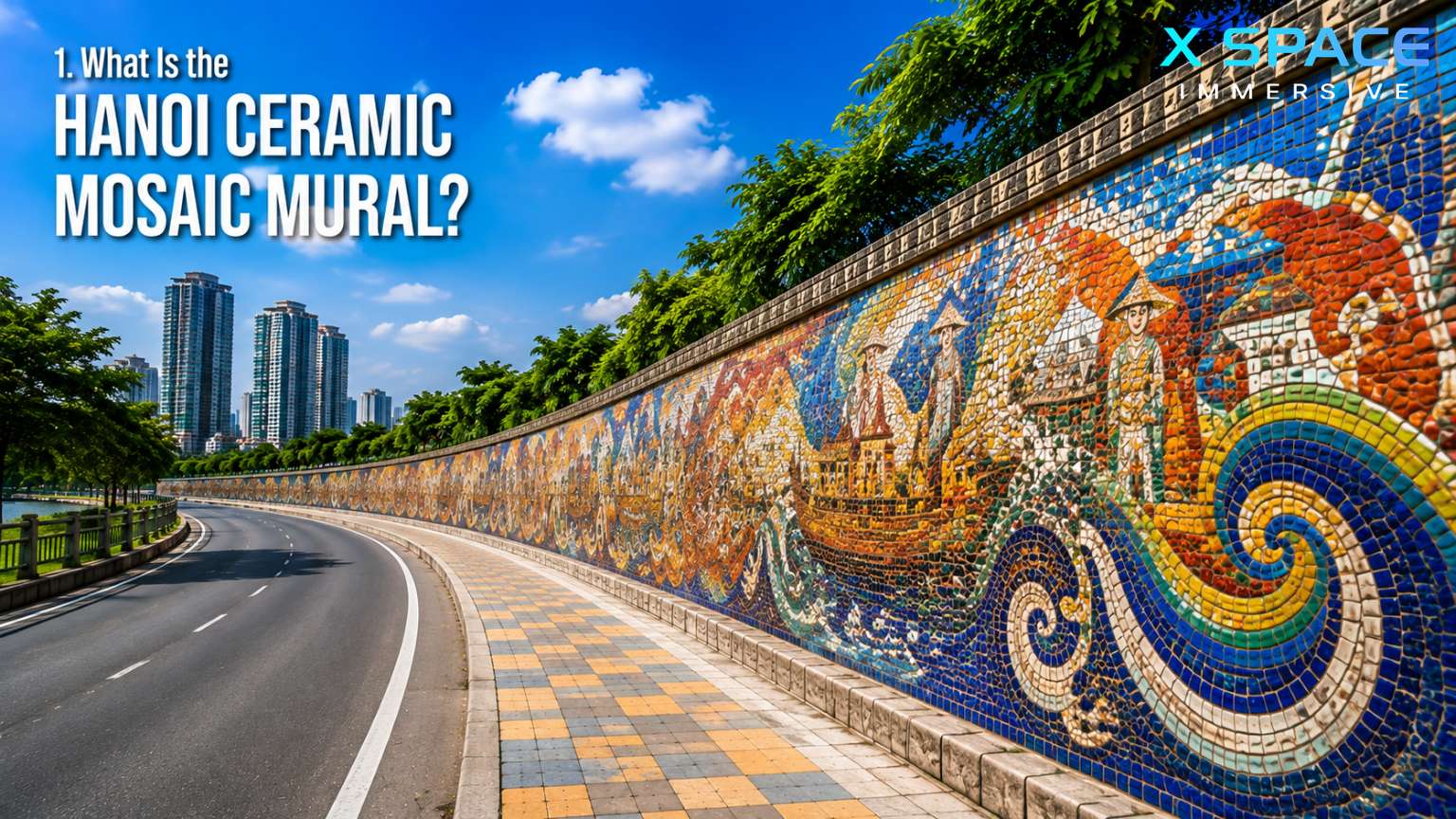
The Hanoi Ceramic Mosaic Mural, often referred to as the Hanoi Ceramic Road, is a large-scale public art project decorating sections of the dike system along the Red River in Hanoi.
Rather than being a single painting or one continuous artistic scene, the mural is composed of numerous ceramic mosaic sections. Each has its own patterns, themes, colors, and artistic language, yet together they create an extensive visual narrative.
Its surface is covered with countless small ceramic pieces carefully arranged to form figures, landscapes, decorative motifs, historical scenes, and abstract compositions.
What makes the project particularly interesting is the way it transforms infrastructure into art.
A concrete wall that might otherwise blend into Hanoi’s urban environment becomes a giant outdoor gallery. Instead of entering a building and moving from room to room, visitors encounter artwork while moving through the city itself.
The mural is also deeply connected with Vietnamese ceramic traditions. Pottery and ceramics have played an important role in the country’s artistic heritage for centuries, and Hanoi is surrounded by communities where ceramic craftsmanship remains part of local identity.
By bringing ceramic materials into a contemporary public space, the project creates an intriguing conversation between traditional craftsmanship and modern urban life.
Today, the Hanoi Ceramic Mosaic Mural stands as both an artistic attraction and a cultural landmark—a place where visitors can experience Vietnamese stories through color, texture, and design.
The History Behind the Hanoi Ceramic Mosaic Mural
History of the Hanoi Ceramic Mosaic Mural and Ceramic Road
The story behind the mural is closely tied to Hanoi itself.
Hanoi is a city where history is never far away. Ancient temples exist beside French colonial buildings, narrow traditional streets lead toward modern towers, and centuries-old customs continue amid the energy of a rapidly developing capital.
The Hanoi Ceramic Mosaic Mural reflects this layered identity.
The Inspiration Behind the Ceramic Road
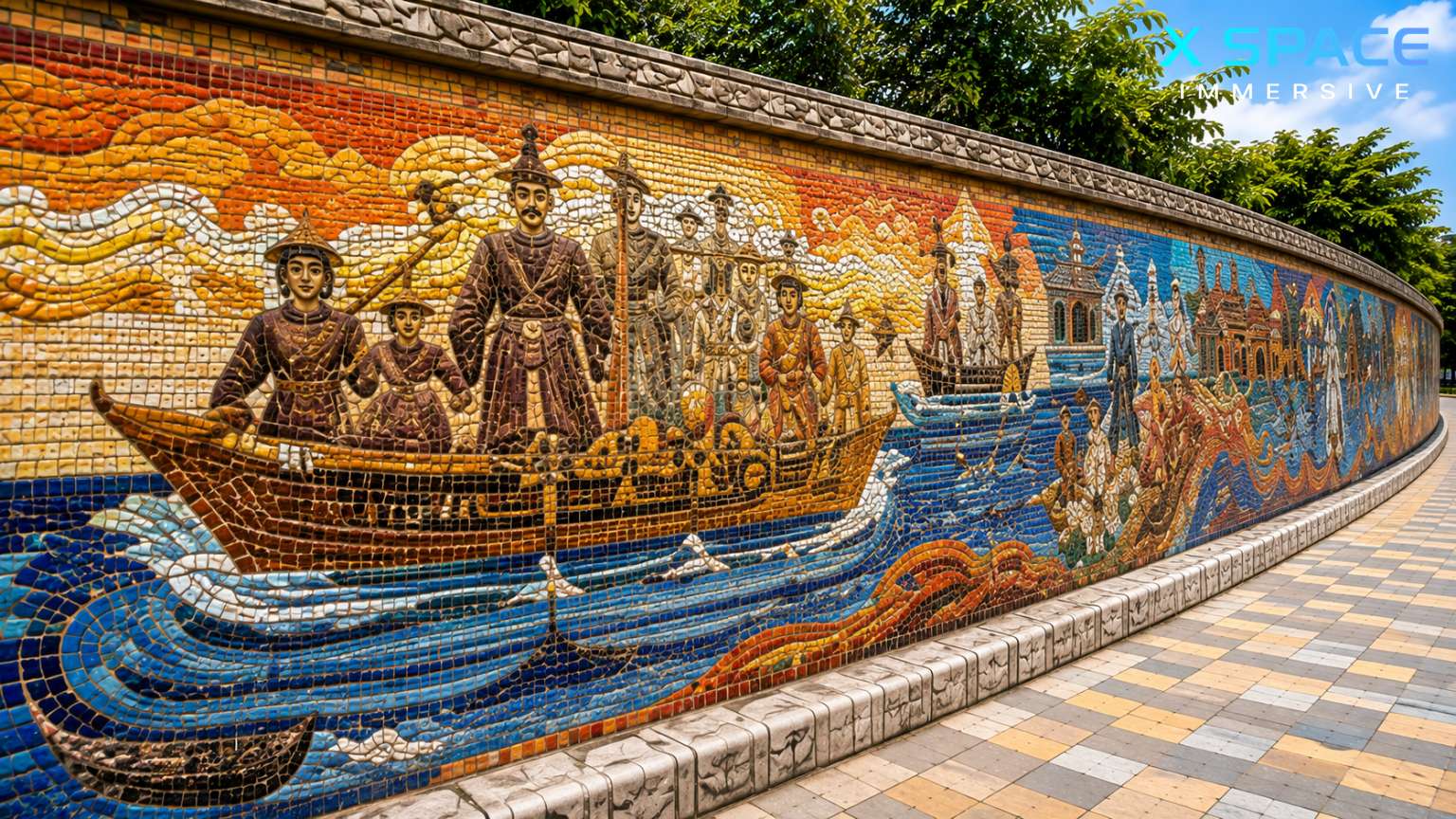
The project was conceived as a way to transform sections of Hanoi’s Red River dike into an ambitious work of public art.
Instead of leaving the long concrete walls as purely functional urban infrastructure, artists envisioned them as a vast canvas capable of telling stories about Vietnam.
Ceramic mosaic was a particularly meaningful choice.
Vietnam has a rich tradition of pottery and ceramic production, with generations of craftspeople developing distinctive techniques, glazes, patterns, and decorative styles. Ceramic materials are therefore more than simply colorful building blocks; they carry cultural associations with Vietnamese craftsmanship and artistic heritage.
The concept brought this traditional material into a very different setting.
Small pieces of ceramic would collectively form monumental compositions visible from Hanoi’s streets. Traditional motifs could appear alongside contemporary designs, while artists could use a historic craft medium to communicate with a modern audience.
The result was an urban artwork that feels simultaneously traditional and contemporary.
Celebrating Hanoi’s 1,000th Anniversary
One of the most important chapters in the mural’s history is its connection with the celebration of 1,000 years of Thang Long–Hanoi in 2010.
The anniversary represented a major cultural milestone for the capital.
Rather than celebrating the city’s history through a single monument, the ceramic project offered a different approach: telling Hanoi’s story through a long sequence of images, patterns, symbols, and artistic interpretations.
Artists, craftspeople, and contributors participated in creating different sections, helping the mural develop into a collaborative work rather than the expression of just one individual.
That collaborative character remains visible today.
As you move along the mural, artistic styles shift. Colors change. Historical references give way to folk imagery, abstract forms, landscapes, or contemporary compositions.
This variety is part of the experience.
The mural does not attempt to tell Hanoi’s story in one visual language. Instead, it embraces the diversity of the city itself.
What Makes the Hanoi Ceramic Mosaic Mural So Special?
Colorful ceramic mosaic details of the Hanoi Ceramic Mosaic Mural
Hanoi has no shortage of culturally significant places. Visitors can explore ancient temples, historical monuments, museums, colonial architecture, and traditional neighborhoods.
Yet the Hanoi Ceramic Mosaic Mural occupies a category of its own.
Its appeal comes from a combination of scale, craftsmanship, accessibility, and storytelling.
An Extraordinary Mosaic Stretching Along Hanoi
One of the first things that surprises visitors is the mural’s sheer scale.
This is not an artwork designed to be appreciated from a single viewpoint. It stretches along the city, revealing itself gradually.
Walk beside one section and you may see geometric patterns inspired by traditional decorative art. Continue farther and historical imagery may appear. Elsewhere, bright contemporary designs transform the wall into an explosion of color.
That sense of progression makes exploring the mural different from viewing a conventional painting.
There is no single frame.
The city becomes the frame.
Buildings, streets, vehicles, trees, pedestrians, and the changing Hanoi sky all become part of the visual experience.
Thousands of Ceramic Pieces Creating One Giant Artwork
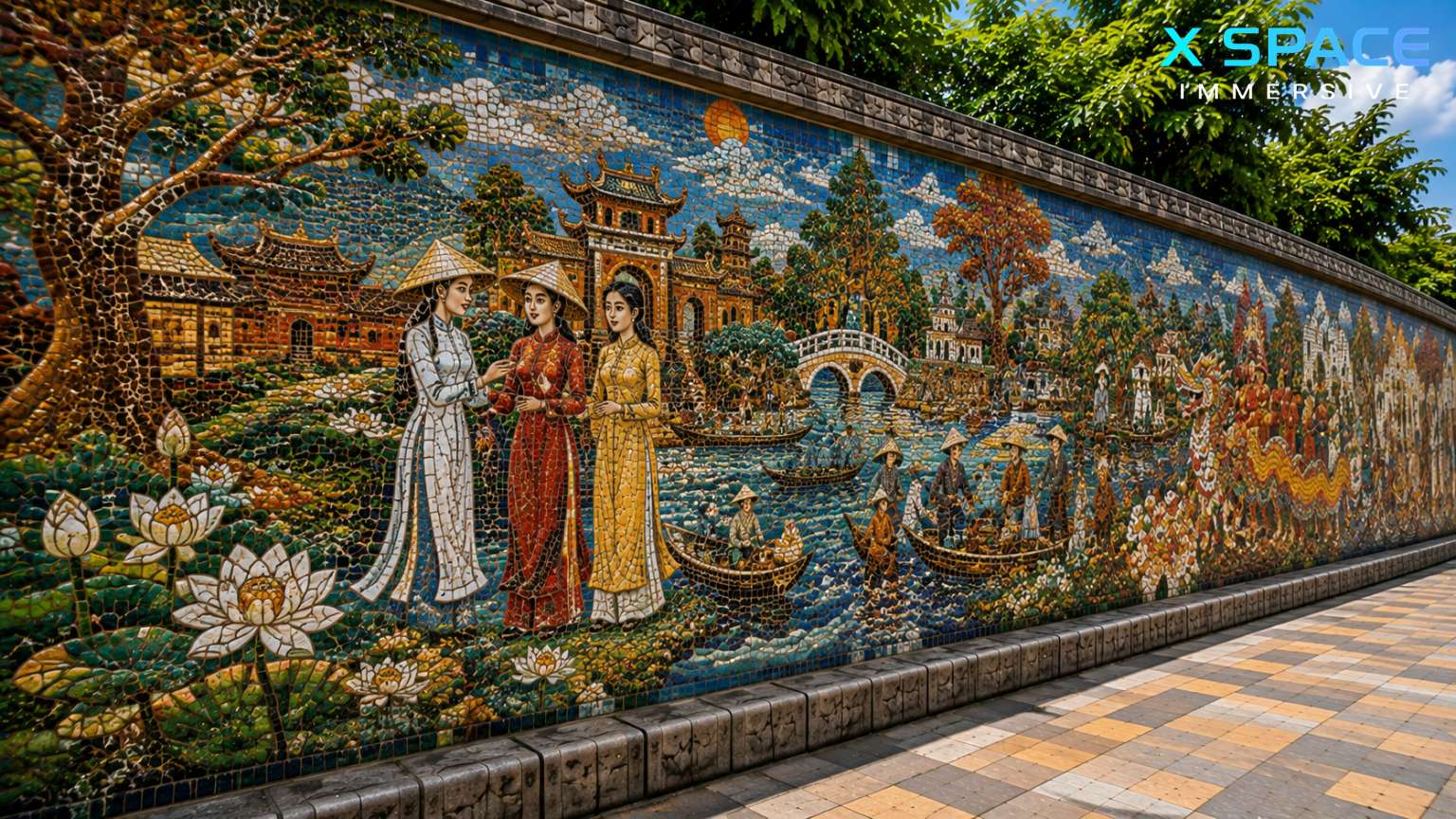
From a distance, the mural appears as a continuous collection of colorful images. Up close, its craftsmanship becomes much easier to appreciate.
Each composition is constructed from numerous ceramic pieces.
Individual fragments may seem small and simple, but when arranged together they create faces, animals, buildings, landscapes, flowers, decorative patterns, and complex scenes.
This relationship between tiny pieces and enormous compositions is part of what makes mosaic art so fascinating.
Step backward and you see the story.
Step closer and you see the craftsmanship.
The ceramic surface also creates a texture that ordinary paint cannot replicate. Light interacts with glazed pieces differently throughout the day, giving some sections a subtle changing quality depending on the weather and viewing angle.
For anyone interested in design, traditional crafts, or public art, these details can be just as captivating as the mural’s overall scale.
A Collaboration of Vietnamese and International Artists
Another distinctive characteristic of the Hanoi Ceramic Mosaic Mural is its collaborative nature.
Different artists contributed ideas and designs, including Vietnamese and international participants. As a result, the mural does not follow a single rigid aesthetic.
This diversity allows visitors to encounter multiple interpretations of culture and creativity within one larger project.
Some sections feel deeply traditional. Others are playful and contemporary. Certain compositions focus on recognizable cultural imagery, while others rely on abstract shapes and imaginative patterns.
Rather than weakening the mural’s identity, these differences give it energy.
It feels like a conversation between artists, cultures, generations, and ideas—held together by the common language of ceramic mosaic.
Stories and Symbols Hidden in the Hanoi Ceramic Mosaic Mural
Vietnamese stories and symbols on the Hanoi Ceramic Mosaic Mural
One of the pleasures of exploring the mural is realizing that many of its images are more than decoration.
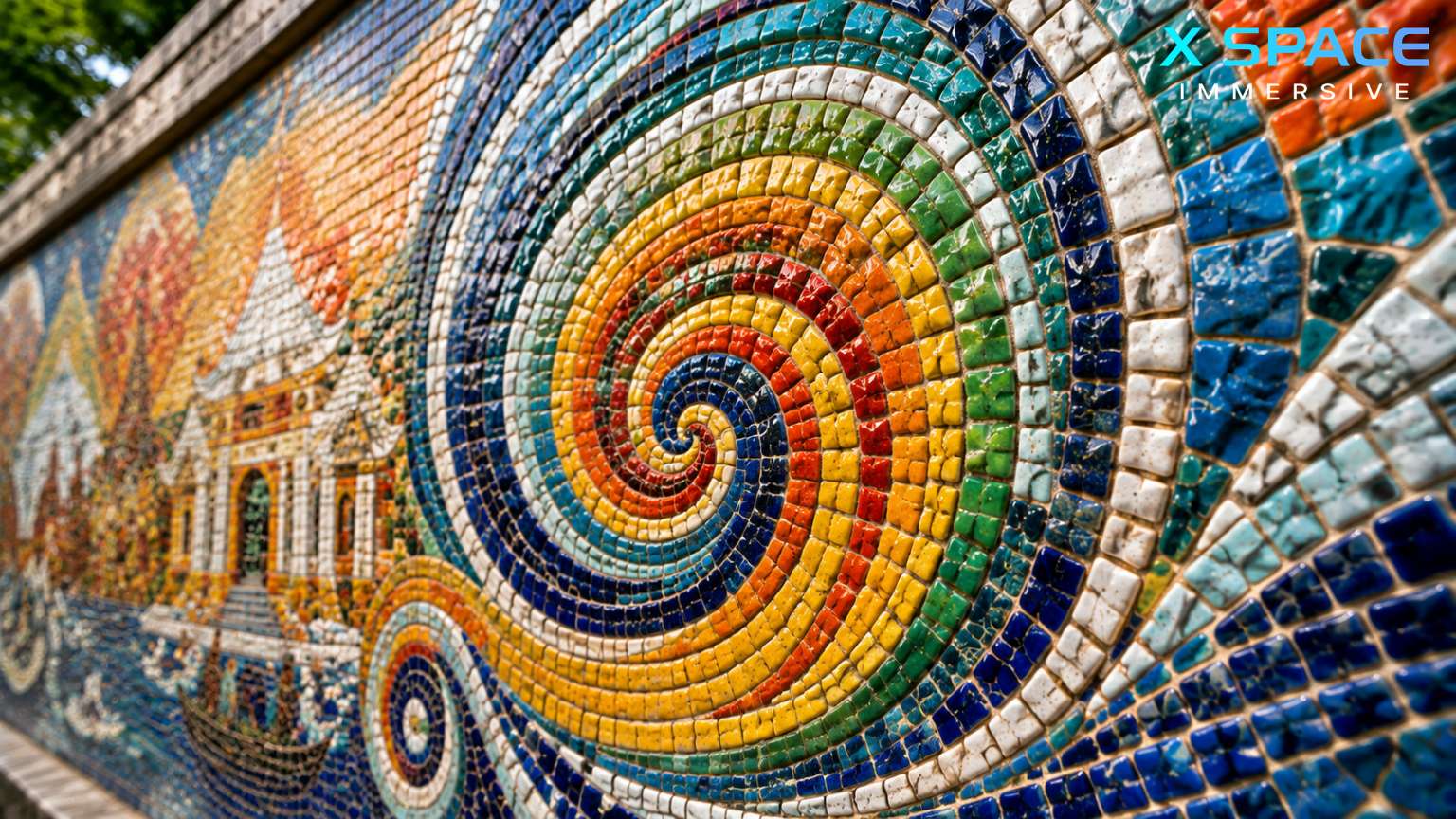
They reference Vietnamese history, traditional culture, folk imagery, architecture, nature, and everyday life.
You do not need to recognize every symbol to enjoy the artwork. Still, understanding some of its themes can make the experience richer.
Scenes Inspired by Vietnamese History
Vietnam’s long history provides abundant inspiration for visual storytelling.
Across the Hanoi Ceramic Mosaic Mural, visitors can encounter imagery that evokes different chapters of the country’s cultural past.
The visual language can feel almost like an open-air history book, although one told through artistic interpretation rather than chronological text.
This is especially appropriate in Hanoi.
For centuries, the capital has been connected with major political, cultural, and historical transformations. The city’s identity has developed through multiple periods, and traces of those periods remain visible throughout modern Hanoi.
The mural brings that sense of historical layering into public art.
Folk Art, Legends and Traditional Motifs
Vietnamese folk culture is another important source of inspiration.
Traditional patterns, animals, flowers, rural imagery, decorative symbols, and scenes reminiscent of folk art appear throughout various sections.
These elements help connect the project with artistic traditions that existed long before modern Hanoi.
They also give international visitors an accessible introduction to Vietnamese visual culture.
Even without knowing the precise meaning behind every image, you can appreciate the recurring shapes, rhythmic patterns, vivid colors, and relationship between people and nature.
For Vietnamese visitors, some designs may evoke familiar cultural memories. For international travelers, they offer an invitation to look deeper.
Modern Hanoi Through Contemporary Art
The mural is not solely focused on the past.
Contemporary artistic elements appear as well, creating a bridge between heritage and modern creativity.
This balance is particularly fitting because Hanoi itself is constantly balancing those two worlds.
Spend a morning wandering around traditional streets and you may encounter family-run businesses, old houses, temples, and local markets. Travel across the city later that day and you will see modern architecture, creative spaces, digital entertainment, and a younger generation experimenting with new forms of art.
The Hanoi Ceramic Mosaic Mural captures something of that evolution.
It honors history without becoming frozen in it.
Where Is the Hanoi Ceramic Mosaic Mural?
The mural runs along sections of Hanoi’s Red River dike area, including stretches near roads that connect with central parts of the city.
Because the artwork extends over a considerable distance, visiting it is different from arriving at a conventional attraction with a single entrance and exit.
You are exploring a route rather than one fixed point.
Location and Best Sections to Explore
Travelers staying around central Hanoi can incorporate part of the mural into a broader day of sightseeing.
You do not necessarily need to explore its entire length.
For many visitors, choosing a convenient section and spending time examining the details provides a more enjoyable experience than trying to cover every part.
Look beyond the largest compositions.
Some of the most interesting details are easy to miss when passing quickly: small figures, unusual patterns, changes in ceramic texture, transitions between artistic styles, and tiny decorative elements.
Allow yourself to slow down.
The Hanoi Ceramic Mosaic Mural rewards observation.
How to Get to the Hanoi Ceramic Road
Depending on where you are staying in Hanoi, reaching the mural can be relatively straightforward by taxi, ride-hailing service, or other local transportation.
Visitors exploring central Hanoi may also combine nearby sections with a wider sightseeing itinerary.
When planning your route, remember that the mural follows active urban roads. Hanoi traffic can be busy, particularly during peak periods, so choosing a specific section in advance can make the visit more comfortable.
Instead of thinking of the mural as a destination you must “complete,” treat it as an artistic journey that can be experienced in smaller sections.
That mindset makes the visit much more relaxed.
Best Time to Visit the Hanoi Ceramic Mosaic Mural
Because this is an outdoor attraction, timing can significantly influence your experience.
Temperature, sunlight, traffic, and weather all affect how comfortable it is to explore the mural and how its colors appear in photographs.
Best Time of Day for Exploring
Morning can be a pleasant choice, especially during warmer periods when midday temperatures become uncomfortable.
The city is waking up, the light can be softer, and exploring outdoors may feel easier before the heat intensifies.
Late afternoon can also be attractive.
As harsh midday sunlight begins to soften, the ceramic colors can look warmer and more balanced in photographs.
Weather should also influence your plans. Hanoi experiences significant seasonal variation, from hot and humid summer days to cooler winter conditions.
Checking the forecast before visiting is a simple but worthwhile step.
Best Spots and Tips for Photography
The Hanoi Ceramic Mosaic Mural offers plenty of opportunities for creative photography.
For detailed images, move closer to capture individual ceramic pieces, patterns, and textures. These photographs reveal the craftsmanship that can disappear in wide-angle shots.
For broader compositions, look for perspectives that show the mural stretching into the distance.
Including elements of Hanoi’s streets can also create more interesting images. Rather than trying to isolate the artwork completely, use the surrounding city as part of the story.
Most importantly, remain aware of traffic.
Some sections sit beside busy roads, and no photograph is worth stepping into an unsafe position. Use pedestrian areas and safe viewpoints whenever possible.
Things to Know Before Visiting the Hanoi Ceramic Mosaic Mural
A little preparation can make exploring the mural considerably more enjoyable.
First, remember that this is an outdoor public artwork rather than a traditional museum attraction. There may not be a clearly defined visitor route, reception area, or controlled environment.
Comfortable footwear is useful if you plan to walk along multiple sections.
On warm days, carrying drinking water and sun protection can make a significant difference. During Hanoi’s wetter periods, checking the weather before setting out is equally sensible.
You should also consider how much time you genuinely want to spend there.
Travelers primarily interested in taking a few photographs may only need a short visit. Art enthusiasts, photographers, and visitors interested in Vietnamese culture may prefer to spend considerably longer studying individual sections.
Above all, treat the mural with respect.
Public art is accessible precisely because it belongs to shared urban space. Avoid damaging ceramic pieces, climbing on the artwork, or doing anything that could affect its preservation.
And while exploring, remain conscious of the surrounding roads.
The artwork may capture your attention, but Hanoi’s traffic still requires it too.
Why the Hanoi Ceramic Mosaic Mural Is Worth Visiting
With so many things to do in Hanoi, is the Ceramic Mosaic Mural worth adding to your itinerary?
For travelers interested in art, culture, photography, and less conventional landmarks, the answer is certainly worth considering.
One of its greatest attractions is accessibility.
You do not have to enter a grand building to encounter it. Art exists directly within the city, becoming part of Hanoi’s everyday landscape.
The mural also offers a different way to understand Vietnamese culture.
Historical attractions often preserve individual moments or architectural periods. Museums organize objects and information into carefully curated exhibitions. The Hanoi Ceramic Mosaic Mural, by contrast, combines multiple cultural influences into one flowing visual experience.
History sits beside folklore.
Traditional craftsmanship meets contemporary design.
Vietnamese artistic identity interacts with international creativity.
And all of it exists within the movement of modern Hanoi.
That makes the mural particularly interesting for travelers who enjoy finding connections between a destination’s past and present.
It can also serve as a reminder that some of the most memorable travel experiences are not necessarily hidden behind ticket counters.
Sometimes they are right beside the road.
You simply need to notice them.
From Hanoi Ceramic Mosaic Mural to Experience X Space Immersive
Exploring Hanoi through art does not have to end when you leave the Ceramic Mosaic Mural.
In fact, it can be the beginning of another fascinating journey.
The Hanoi Ceramic Mosaic Mural demonstrates how countless small ceramic pieces can transform a concrete wall into a world of stories. Traditional materials become a canvas for imagination, while history and culture emerge through colors, patterns, and carefully constructed images.
But what happens when art moves beyond a physical surface?
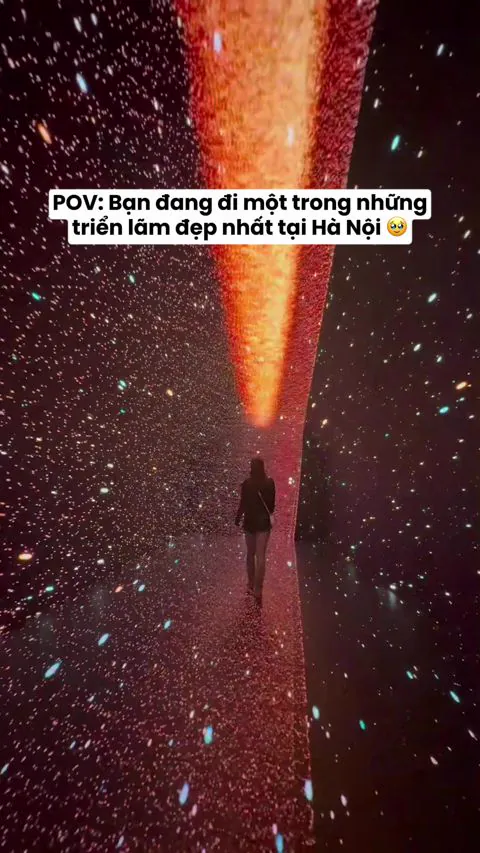
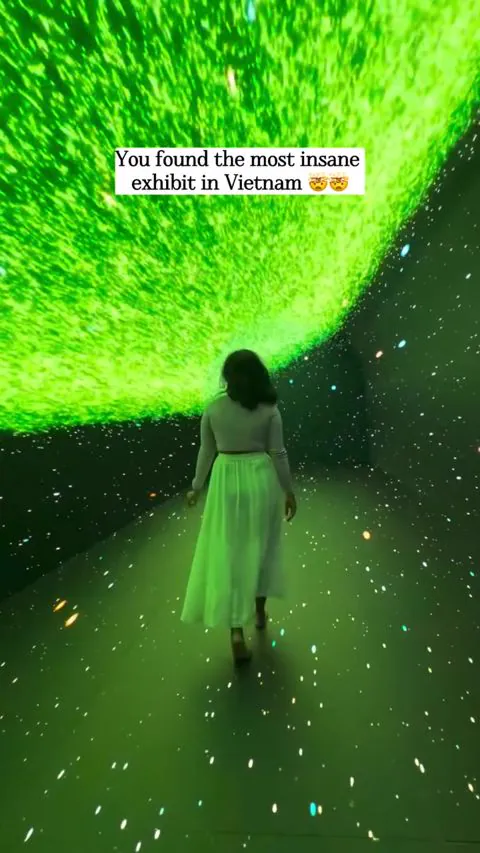
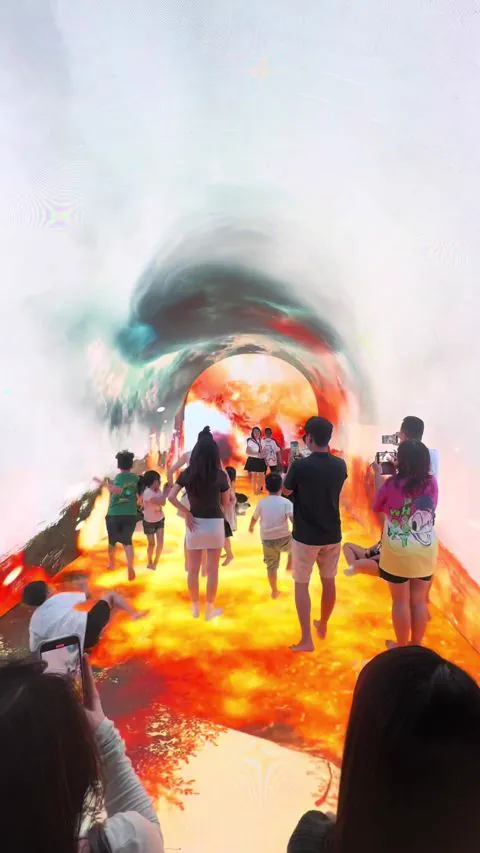
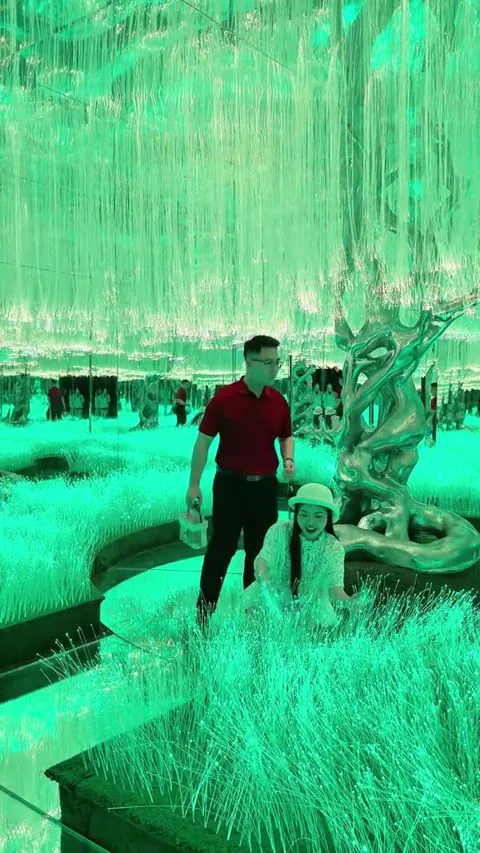
What if light, digital technology, sound, spatial design, and visual effects allow you to experience creativity from inside the artwork itself?
That is where the journey can take an exciting new direction.
Continue Your Journey From Traditional Art to Immersive Technology
One of the most fascinating things about exploring Hanoi today is seeing how different generations of creativity coexist.
Traditional ceramic art tells stories through materials shaped by hand.
Contemporary immersive experiences can tell stories through light, motion, sound, digital imagery, and technology.
The mediums may be different, but the desire behind them is remarkably similar: to create emotion, inspire curiosity, and invite people to see familiar ideas from a new perspective.
After discovering the Hanoi Ceramic Mosaic Mural, moving into an immersive environment therefore feels less like leaving one experience behind and more like continuing the same creative journey.
Outside, you observe thousands of ceramic fragments forming enormous images.
Inside an immersive space, visual worlds can expand around you.
Instead of looking only at an artwork, you may feel surrounded by the creative environment itself.
It is a shift from seeing art to stepping into it.
And for travelers who enjoy discovering the unexpected side of Hanoi, that contrast can make a day in the capital especially memorable.
Discover Experience X Space Immersive in Hanoi
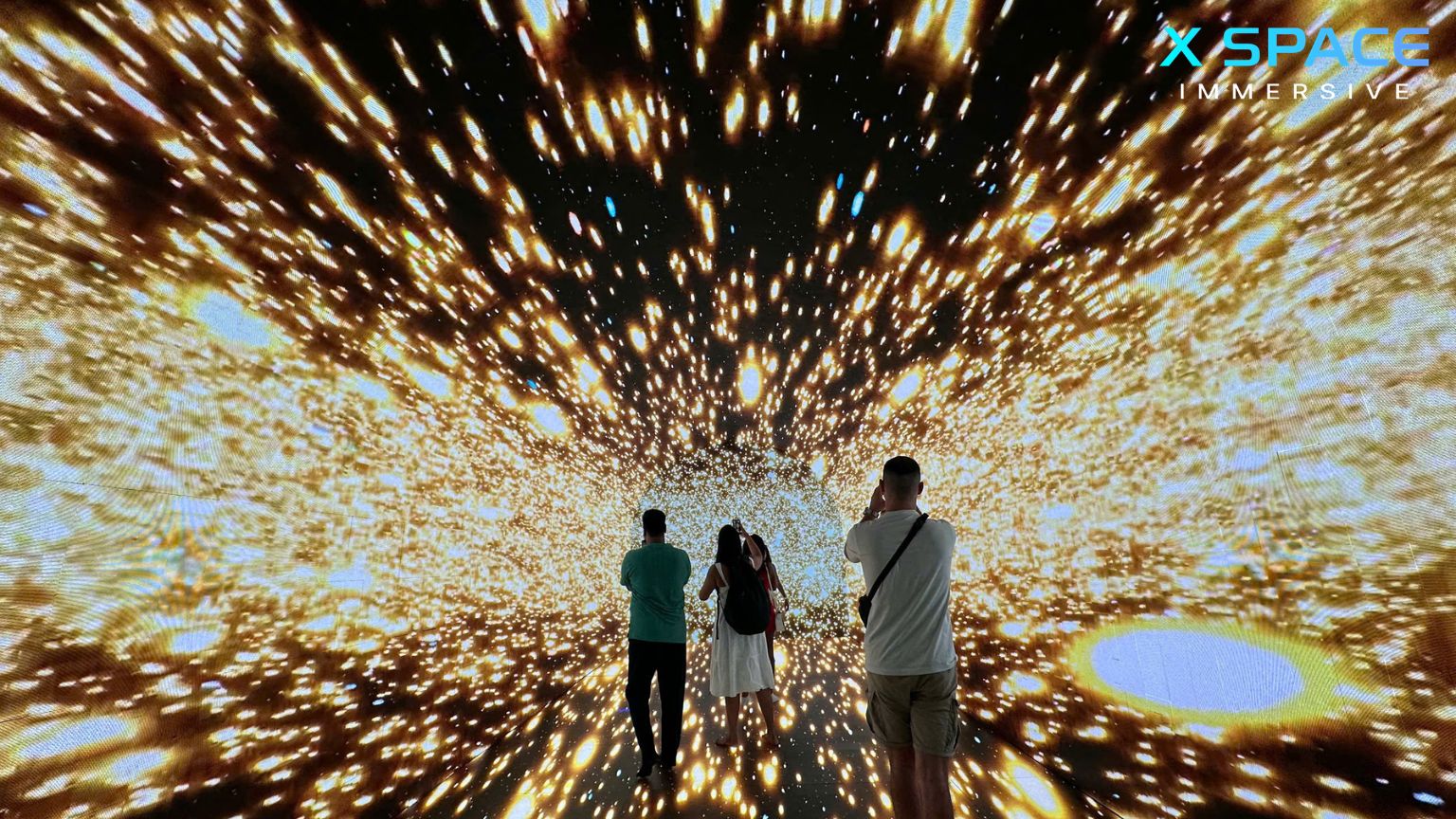
Visitors enjoying the X Space Immersive experience in Hanoi
For visitors who want to continue exploring creativity beyond Hanoi’s traditional and public art, Experience X Space Immersive offers a natural next chapter.
Think of the day as a journey between two expressions of imagination.
Begin with the Hanoi Ceramic Mosaic Mural, where ceramic craftsmanship, Vietnamese heritage, historical storytelling, and urban space come together.
Then move toward Experience X Space Immersive, where contemporary technology can open the door to a different form of visual exploration.
The contrast is part of the appeal.
One experience connects you with the textures, patterns, and cultural stories embedded in ceramic art. The other invites you toward a modern world shaped by immersive visuals and spatial experiences.
Together, they reveal something important about Hanoi.
This is not simply a city preserving its history.
It is a city where heritage and innovation can exist side by side.
Ancient traditions remain meaningful while new forms of creativity continue to emerge. Art can live on a wall beside a busy street, inside a centuries-old craft village, in a gallery—or within an immersive environment where the boundaries between visitor and visual experience begin to disappear.
So, when planning your Hanoi itinerary, leave room for both sides of the city.
Walk beside the Hanoi Ceramic Mosaic Mural and discover how tiny pieces of ceramic come together to tell an enormous cultural story. Take time to notice the colors, craftsmanship, historical references, and unexpected details hidden along the way.
Then allow your journey to move from heritage into innovation.
Step beyond observing art from the outside and discover a new perspective at Experience X Space Immersive.
Because Hanoi is at its most fascinating when you do not simply look at it.
Discover Hanoi Through Art and Immersive Experiences
The Hanoi Ceramic Mosaic Mural is more than a colorful landmark – it is a creative journey through Vietnamese history, craftsmanship, and culture. From intricate ceramic details to stories inspired by Hanoi’s past and present, every section reveals another side of the capital’s artistic identity.
And your journey through Hanoi’s creative world does not have to end there. After exploring traditional ceramic art, step into a new dimension at Experience X Space Immersive, where technology, light, sound, and visual storytelling transform the way you experience art. From heritage on the streets to immersive creativity, discover Hanoi not simply as a place to visit, but as a city to truly experience.
Was this article helpful?
Thanks for your feedback!