La Vong Grilled Fish: The Ultimate Guide to Hanoi’s Famous Dish

Hanoi is a city that reveals itself slowly. Sometimes, it begins with the aroma of coffee drifting from a tiny café tucked inside an old alley. Sometimes, it is the sound of motorbikes weaving through streets lined with weathered yellow houses. And sometimes, Hanoi introduces itself through food — a steaming bowl of pho in the morning, smoky bun cha at lunchtime, or a sizzling pan of la vong grilled fish arriving at the table surrounded by handfuls of fresh dill and green onions.
Known locally as Chả Cá Lã Vọng, this distinctive fish dish has become one of the culinary experiences most closely associated with Vietnam’s capital. Unlike dishes that arrive completely prepared, la vong grilled fish continues cooking right in front of you. Pieces of marinated fish sizzle in a hot pan alongside fragrant herbs, while rice noodles, roasted peanuts, fresh greens and dipping sauce wait nearby.
The result is more than a meal. It is warm, aromatic, interactive and unmistakably Hanoi.
For travelers wondering what makes la vong grilled fish hanoi so special, this guide explores its story, flavors, ingredients and traditional way of eating — along with helpful tips for enjoying it for the first time.
In this guide
What Is La Vong Grilled Fish?
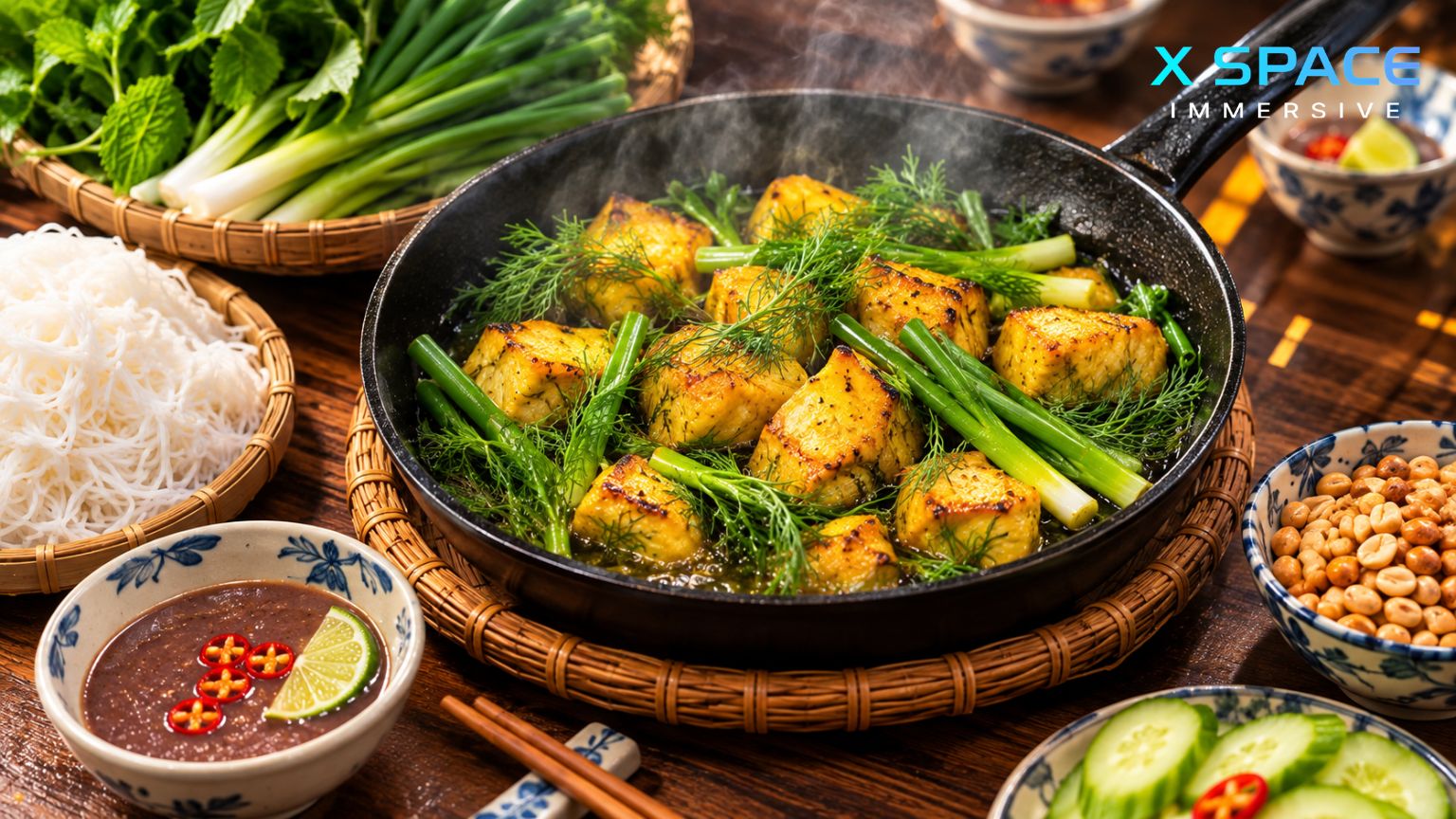
La Vong grilled fish sizzling in a pan with fresh dill and green onions
La vong grilled fish, or Chả Cá Lã Vọng, is a traditional Hanoi dish made with pieces of seasoned fish that are grilled before being finished at the table with generous amounts of fresh dill and green onions.
At first glance, the dish may appear surprisingly simple. There is fish, herbs, rice noodles, peanuts and dipping sauce. Yet its appeal comes from the way these ingredients work together.
The fish is usually marinated with spices that give it a warm golden color and deep aroma. After being partially grilled, it is placed in a hot pan at the table. Fresh dill and green onions are then added, immediately releasing their fragrance as they touch the hot oil.
Around the pan are several small bowls and plates: soft rice vermicelli, roasted peanuts, fresh herbs and dipping sauce — traditionally fermented shrimp paste, known as mắm tôm.
You build each bite yourself.
Take a little rice noodle, add a piece of hot fish, tuck in some dill and green onion, sprinkle roasted peanuts over the top and finish with a small amount of sauce.
One bite can be tender, nutty, herbal, savory and slightly tangy all at once.
Perhaps that is why la vong grilled fish feels less like ordering a single dish and more like participating in a small Hanoi dining ritual.
The History Behind La Vong Grilled Fish in Hanoi
Food in Hanoi is rarely separated from the streets where it was born. Certain dishes become so closely connected with particular neighborhoods that their names almost function like addresses.
Chả Cá Lã Vọng is one of the best-known examples.
The Origins of Cha Ca La Vong
The history of Chả Cá Lã Vọng is commonly associated with Hanoi’s Đoàn family and dates back to the late 19th century. Over time, the family’s fish dish became increasingly well known, eventually becoming associated with the name Chả Cá Lã Vọng.
The name “Lã Vọng” itself is traditionally linked to the image of Jiang Ziya — known in Vietnamese as Lã Vọng — an elderly fisherman and historical figure who became a symbol of patience and wisdom.
But what makes the story particularly interesting is how closely the dish became connected to its location.
The restaurant associated with Chả Cá Lã Vọng was located on a street that was historically known as Hàng Sơn. As the dish grew famous, the area became so strongly identified with it that the street eventually came to be known as Chả Cá Street.
Few dishes leave such a visible mark on the geography of a city.
How La Vong Grilled Fish Became a Hanoi Culinary Icon
Hanoi has changed dramatically over the decades, but its food culture continues to preserve small rituals from earlier generations.
Chả Cá is one of them.
Its appeal is not based only on flavor. The entire way the meal is served encourages people to gather around one table, watch the pan sizzling in the center and assemble their own bowls.
There is movement throughout the meal.
Someone adds another handful of dill.
Someone turns a piece of fish.
Someone passes the peanuts.
Someone cautiously tastes mắm tôm for the first time.
It creates the kind of dining experience that naturally invites conversation.
For international visitors, this combination of history, flavor and interaction has helped la vong grilled fish hanoi become a memorable introduction to the capital’s culinary identity.
What Makes La Vong Grilled Fish So Special?
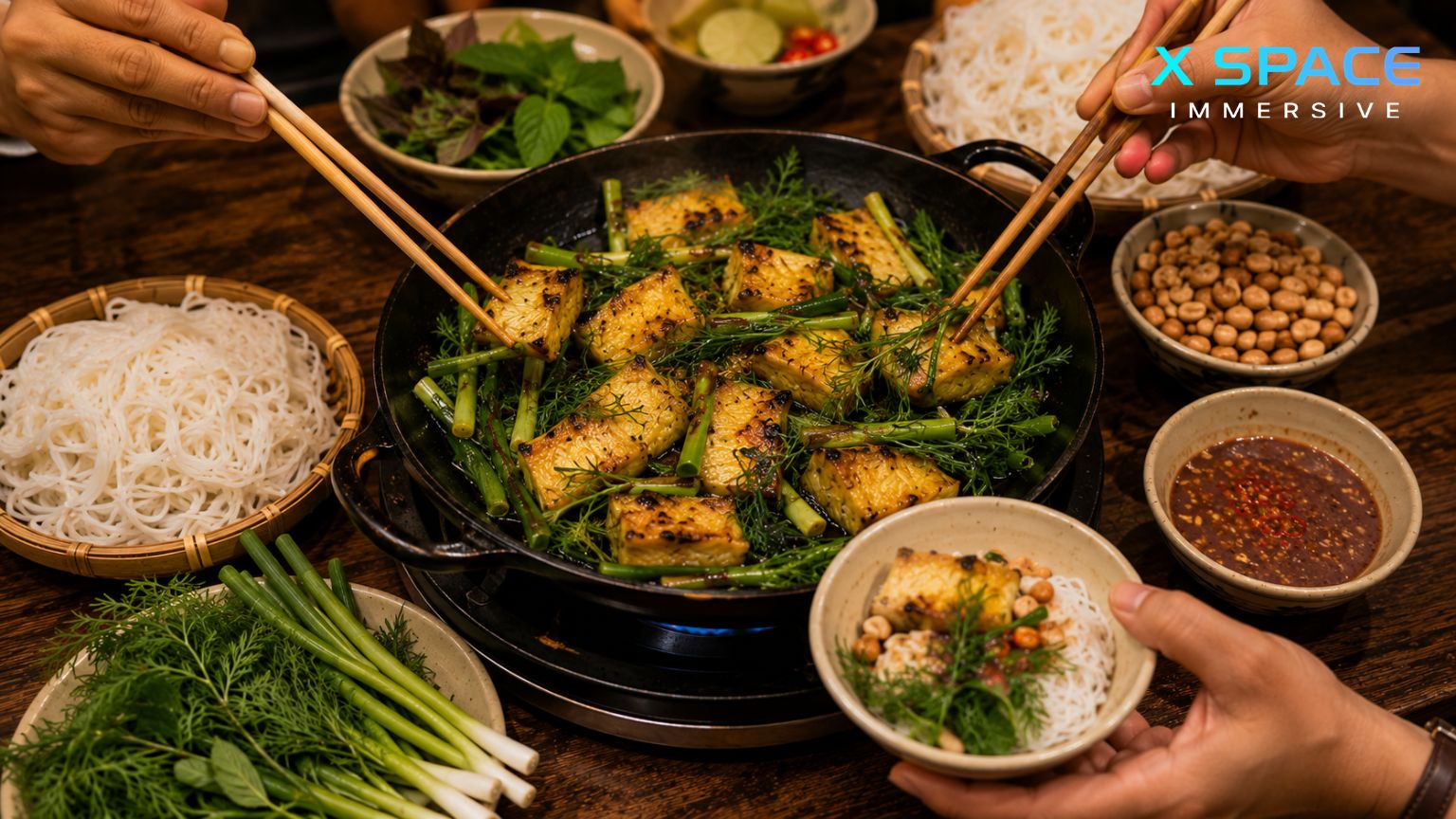
La Vong grilled fish served with fresh dill, rice noodles, peanuts and dipping sauce
Many Vietnamese dishes depend on balance, and Chả Cá Lã Vọng is an especially clear example.
No single ingredient needs to dominate. Instead, each component contributes something different: richness, fragrance, freshness, texture or intensity.
The Fish
Fish is naturally the centerpiece.
Traditionally, firm freshwater fish is preferred because the flesh needs to remain intact through marinating, grilling and the final cooking process at the table.
The fish is cut into bite-sized pieces and marinated before being grilled. Turmeric is commonly associated with its characteristic golden appearance, while other seasonings help build a savory base.
The grilling stage creates aroma and adds slight caramelization to the outside.
Then comes the part diners remember most.
The fish returns to heat at the table.
As it begins sizzling again, its surface becomes hotter and more fragrant while the inside remains tender. Instead of eating fish that has been sitting in a kitchen waiting to be served, you enjoy it moments after it leaves the pan.
Fresh Dill and Green Onions
If there is one visual detail that immediately distinguishes la vong grilled fish, it is the abundance of green surrounding the golden fish.
Dill is essential to the personality of the dish.
For visitors from countries where dill is used sparingly, the quantity can be surprising. Here, it is not merely decoration. Large handfuls go directly into the hot pan together with green onions.
Heat transforms them almost immediately.
The herbs soften while releasing an intense fragrance that mixes with the aroma of the fish and oil.
This contrast — golden fish against vivid green herbs — is also part of what makes a pan of Chả Cá so instantly recognizable.
Rice Noodles, Roasted Peanuts and Herbs
The supporting ingredients bring the dish into balance.
Rice vermicelli provides a soft, neutral base that absorbs the flavors of the fish and sauce without making the meal too heavy.
Roasted peanuts provide the opposite sensation: crunch.
That small textural contrast matters. A bite of tender fish and soft noodles becomes more interesting when finished with crushed or whole roasted peanuts.
Fresh herbs add another layer of brightness.
Rather than competing with one another, the ingredients create a progression of textures and aromas in every mouthful.
Mam Tom – The Bold Finishing Touch
Then there is mắm tôm.
Fermented shrimp paste is one of Vietnam’s most distinctive condiments, and its strong aroma can be challenging for first-time visitors.
But in Chả Cá, it makes sense.
Mắm tôm is typically mixed with ingredients such as lime or calamansi, sugar and sometimes chili, producing a dipping sauce that is salty, savory, slightly sweet and tangy.
A small amount is enough.
Combined with fish, noodles, herbs and peanuts, its intensity becomes part of a much larger balance of flavors.
If fermented shrimp paste feels too adventurous on your first attempt, some restaurants may provide fish sauce or another alternative. Still, tasting a little mắm tôm is worth considering if you want to understand the traditional flavor combination.
How to Eat La Vong Grilled Fish Like a Local
Seeing several plates, bowls and sauces arrive at once can make Chả Cá look complicated.
Fortunately, eating it is wonderfully simple.
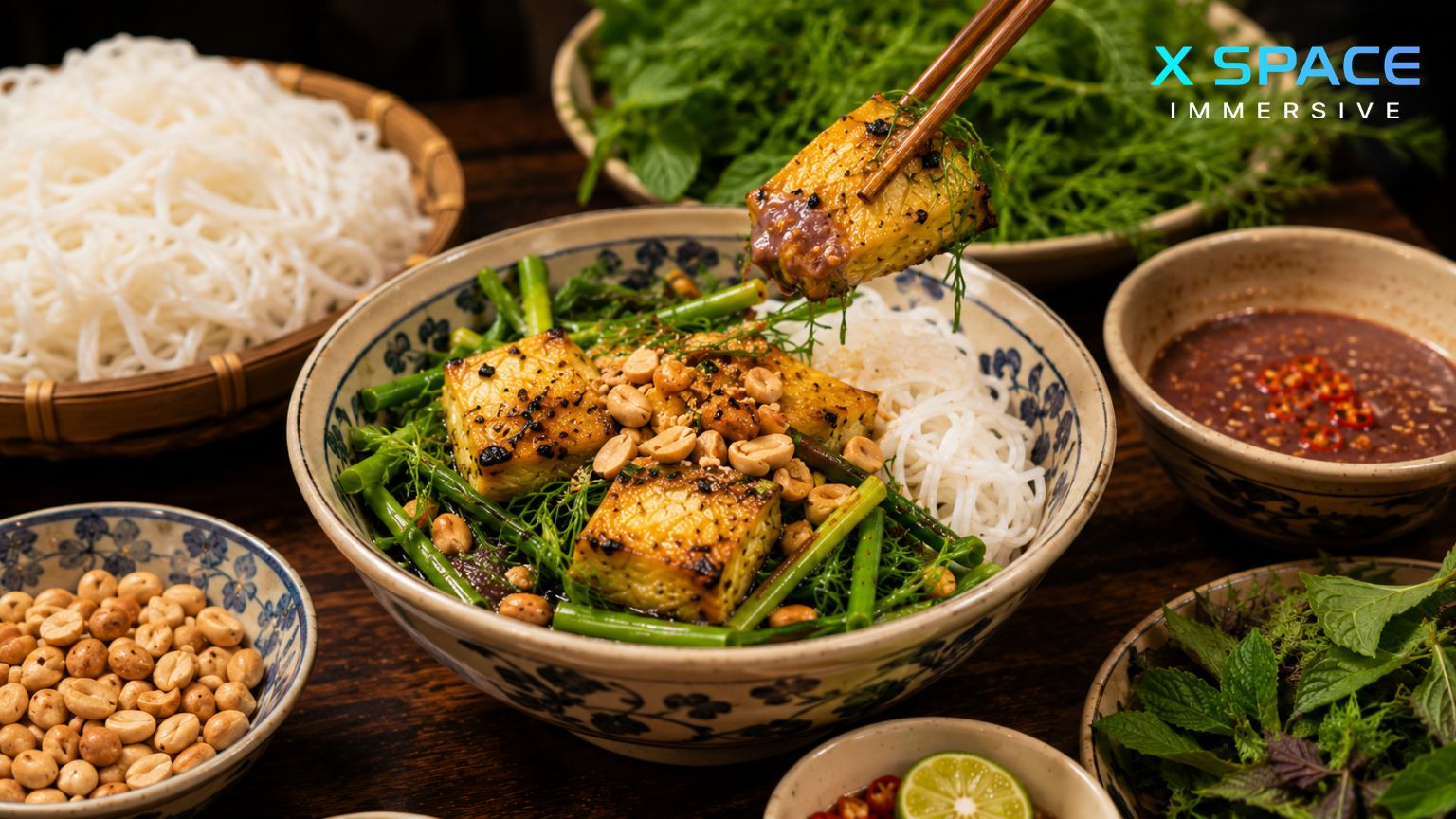
Diners enjoying La Vong grilled fish with rice noodles, herbs, peanuts and dipping sauce
Step 1 – Cook the Fish with Dill and Green Onions
Allow the fish to heat thoroughly in the pan before adding or mixing in plenty of dill and green onions.
You will know the moment the herbs hit the pan.
The fragrance rises almost instantly.
Gently move the fish and herbs around so everything becomes hot and aromatic, but avoid breaking the fish into tiny pieces.
Step 2 – Add Rice Noodles and Fresh Herbs
Place a modest portion of rice vermicelli in your individual bowl.
Then add one or two pieces of hot fish along with some cooked dill and green onions.
Add fresh herbs according to your preference.
There is no need to fill the bowl completely. Smaller portions allow you to adjust the balance with each round.
Step 3 – Top with Roasted Peanuts
Sprinkle roasted peanuts over the fish and noodles.
This small addition changes the texture dramatically, giving each bite a pleasant crunch and subtle nuttiness.
Step 4 – Mix with Mam Tom and Enjoy
Finish with a spoonful — or perhaps just a few drops for your first taste — of prepared mắm tôm.
Mix everything gently and take a bite.
Then adjust.
More peanuts?
Add them.
More herbs?
Go ahead.
More sauce?
Absolutely.
That freedom is part of the pleasure. There is no requirement for every bowl to taste exactly the same.
What Does La Vong Grilled Fish Taste Like?
Describing la vong grilled fish with a single flavor would miss what makes the dish interesting.
The first impression is usually aromatic.
The combination of hot fish, oil, dill and green onions creates a fragrance that reaches you before the first bite.
Then comes the fish itself: tender and savory, with seasoning running through the flesh and subtle grilled notes around the edges.
Dill contributes a fresh, slightly grassy aroma. Green onions add sweetness and fragrance as they soften in the pan.
Rice noodles mellow the stronger flavors.
Peanuts provide richness and crunch.
Mắm tôm adds the final punch of saltiness and fermented umami.
What might seem intense when each ingredient is tasted individually becomes remarkably balanced when everything is eaten together.
That is an important point for first-time visitors: don’t judge Chả Cá by tasting each component separately.
The dish is designed to be combined.
The magic happens in the bowl.
Where to Eat La Vong Grilled Fish in Hanoi
Finding Chả Cá in Hanoi is not difficult. Finding the experience that suits you, however, deserves a little thought.
The dish is served at restaurants throughout the capital, from longstanding establishments to contemporary restaurants introducing Hanoi cuisine to international travelers.
La Vong Grilled Fish in Hanoi’s Old Quarter
For many visitors, Hanoi’s Old Quarter is a natural place to begin.
Here, food and architecture exist almost on top of one another. Restaurants occupy narrow shophouses; scooters pass only meters from dining tables; vendors move between streets carrying baskets of fruit, flowers and snacks.
Eating la vong grilled fish hanoi in or around the Old Quarter allows the meal to become part of a wider exploration.
Before dinner, you might wander through streets that historically specialized in particular trades. Afterward, you can walk toward Hoàn Kiếm Lake, find a small café or simply continue exploring the illuminated streets.
In this setting, Chả Cá feels connected to the city around it rather than isolated as another item on a restaurant menu.
Traditional vs. Modern La Vong Grilled Fish Restaurants
Choosing between a traditional and contemporary restaurant largely depends on the experience you want.
Older establishments may offer a stronger sense of history and simplicity. The surroundings might be modest, the menu short and the focus almost entirely on Chả Cá.
Modern restaurants may provide more spacious interiors, English-language menus and service designed with international visitors in mind.
Neither approach is automatically better.
When choosing where to eat, consider the freshness and quality of the fish, recent customer feedback, menu transparency and whether the restaurant prepares the dish in the traditional tabletop style.
Location matters too.
If you have limited time in Hanoi, a restaurant near other places on your itinerary can make it easier to combine lunch or dinner with sightseeing.
How Much Does La Vong Grilled Fish Cost in Hanoi?
The cost of Chả Cá varies depending on the restaurant, location and portion size.
Some establishments price the dish by person, while others offer portions designed for sharing. Side dishes, drinks or additional servings may be charged separately.
For that reason, checking the current menu before ordering is more useful than relying on a fixed price found online, especially because restaurant prices can change.
When comparing restaurants, look beyond the headline price.
Ask yourself:
Is the portion intended for one person or two?
Are noodles and herbs included?
Are additional servings charged separately?
Is there a minimum order?
Understanding these details can prevent surprises when the bill arrives.
And remember that with la vong grilled fish, you are paying for more than a piece of grilled fish. The complete meal includes the tabletop cooking experience and a collection of accompaniments that make the dish what it is.
Tips for Trying La Vong Grilled Fish for the First Time
If this is your first encounter with Chả Cá Lã Vọng, a few simple tips can make the meal more enjoyable.
Come hungry, but consider sharing. Chả Cá is particularly enjoyable when eaten with other people because the central pan naturally creates a communal meal.
Don’t skip the herbs. A mountain of dill may look excessive, but it is fundamental to the dish. Eating the fish without it means missing one of Chả Cá’s defining flavors.
Start gently with mắm tôm. You do not need a large spoonful. Try a small amount with a complete bite of noodles, fish, herbs and peanuts before deciding whether you want more.
Eat while the fish is hot. The aroma and texture are at their best straight from the pan.
Build small bowls. Rather than mixing everything at once, prepare several small portions. This lets you experiment with different combinations of herbs, peanuts and sauce.
Most importantly, don’t worry about performing the ritual perfectly.
Watch what happens around the table, ask restaurant staff when you’re unsure and enjoy discovering your preferred combination.
La Vong Grilled Fish vs. Other Famous Hanoi Dishes
If you only have a few days in Hanoi, you may find yourself facing a delicious problem: there are far more dishes to try than meals available.
Pho, bun cha and Chả Cá are three excellent examples of how differently Hanoi can express itself through food.
La Vong Grilled Fish vs. Pho
Pho is comforting and understated.
A good bowl revolves around broth, noodles, meat and fresh garnishes. It can be eaten quickly in the morning or slowly on a cool evening.
Chả Cá is a different kind of experience.
Rather than arriving as a finished bowl, la vong grilled fish requires interaction. You cook, combine, taste and adjust throughout the meal.
Pho comforts.
Chả Cá engages.
Both, however, demonstrate Hanoi’s talent for building remarkable flavor from relatively simple ingredients.
La Vong Grilled Fish vs. Bun Cha
Bun cha may be a closer comparison because it also combines several separate elements.
With bun cha, smoky grilled pork is served alongside rice noodles, herbs and a sweet-savory dipping broth. Diners combine these components as they eat.
Chả Cá follows a similar philosophy but creates an entirely different flavor profile.
Instead of pork smoke and dipping broth, you get tender fish, fragrant dill, roasted peanuts and the unmistakable intensity of mắm tôm.
Why You Should Try All Three in Hanoi
Choosing one “best Hanoi dish” is almost impossible because these foods serve different moods.
Pho can be breakfast before the city fully wakes.
Bun cha can be a bustling lunch.
Chả Cá can become a relaxed dinner shared around a sizzling pan.
Try all three and you begin to understand something larger than individual recipes.
You begin to understand how Hanoi eats.
FAQs About La Vong Grilled Fish
What is la vong grilled fish made of?
La vong grilled fish, or Chả Cá Lã Vọng, is primarily made from seasoned fish cooked with fresh dill and green onions. It is typically served with rice vermicelli, roasted peanuts, herbs and dipping sauce, traditionally fermented shrimp paste (mắm tôm).
Is la vong grilled fish spicy?
Not necessarily. The basic dish is more aromatic and savory than spicy. Chili may be added to the dipping sauce according to personal preference, so diners can usually control the level of heat.
What is the best way to eat la vong grilled fish?
For a balanced bite, combine rice noodles with hot fish, cooked dill and green onions, fresh herbs and roasted peanuts. Finish with a small amount of prepared mắm tôm or your preferred dipping sauce.
Is la vong grilled fish the same as Cha Ca La Vong?
The terms are often used to refer to the same Hanoi specialty. “Chả Cá Lã Vọng” is its familiar Vietnamese name, while “La Vong grilled fish” is a common English description used by international visitors searching for the dish.
Where can you eat la vong grilled fish in Hanoi?
Chả Cá is available in many parts of Hanoi, with particularly strong historical associations with the Old Quarter and Chả Cá Street. Visitors can choose between longstanding traditional establishments and newer restaurants serving their own interpretations of the dish.
Is la vong grilled fish worth trying?
Yes, particularly if you want to explore Hanoi cuisine beyond internationally familiar dishes such as pho.
What makes Chả Cá memorable is not simply the fish. It is the combination of aroma, tabletop cooking, herbs, noodles, peanuts and sauce — all enjoyed together.
For many travelers, that makes it one of Hanoi’s most distinctive meals.
Beyond La Vong Grilled Fish: Discover a New Side of Hanoi at X Space Immersive

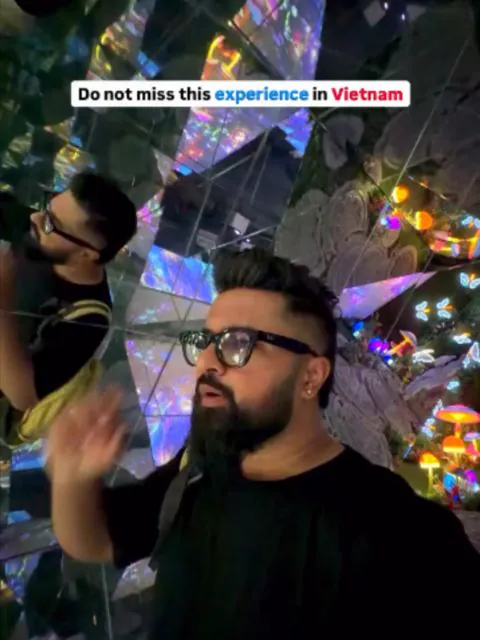
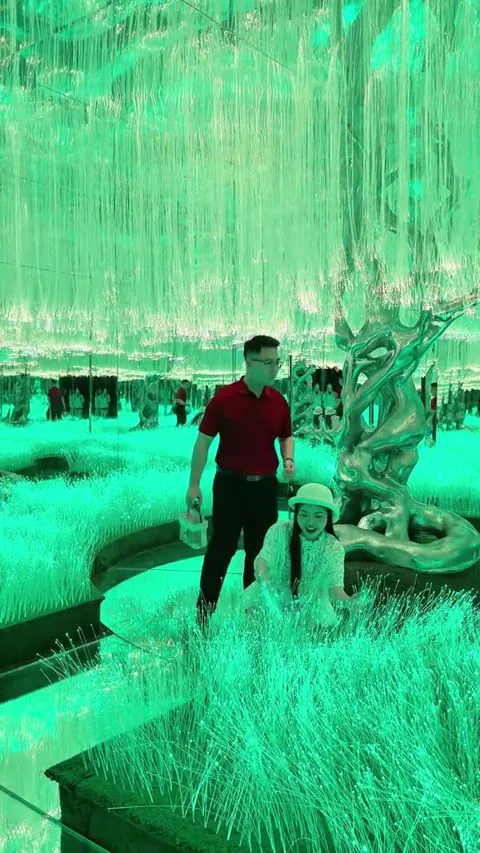
Visitors enjoying the X Space Immersive experience in Hanoi
After savoring the rich flavors of La Vong grilled fish, your journey through Hanoi does not have to end at the dining table. The capital is full of unexpected experiences, and beyond its historic streets and traditional cuisine, a more modern and imaginative side of the city is waiting to be discovered.
For something refreshingly different, step into X Space Immersive — a 3D light art experience where technology, visual art, sound, and space come together to create an immersive world.
Rather than simply looking at artworks from a distance, visitors are invited to step inside the experience. Dynamic 3D visuals and artistic lighting transform the surrounding space, creating scenes that shift and evolve around you. Light, movement, and sound work together to blur the boundaries between the physical environment and digital art, making every moment feel more vivid and engaging.
What Makes X Space Immersive Different?
What sets X Space Immersive apart from a traditional gallery or exhibition is the way you experience the art. There are no conventional frames separating you from the visual world. Instead, the space itself becomes part of the artwork.
Immersive projections and 3D light effects surround visitors, while carefully designed sound and visual elements create an atmosphere that encourages you to explore from different perspectives. As you move through the space, each area can reveal a new mood, composition, or visual surprise.
It is an experience designed not only to be seen, but also to be felt, explored, and remembered.
This contrast also makes X Space Immersive an interesting addition to a Hanoi itinerary. In one day, you can experience two very different sides of the capital: begin with the aroma of sizzling fish, fresh dill, and green onions in a traditional La Vong grilled fish meal, then move from Hanoi’s culinary heritage into a contemporary world of light and digital art.
From traditional flavors to immersive 3D light art, Hanoi always has something new to reveal.
After tasting one of the city’s most iconic dishes, step into X Space Immersive and discover a more unexpected, colorful, and imaginative side of Hanoi.
Was this article helpful?
Thanks for your feedback!