Best Bun Cha in Hanoi: Where to Eat This Vietnamese Classic
Hanoi is a city you can hear, see, and smell long before you fully understand it. Motorbikes weave through narrow streets, tiny cafés spill onto sidewalks, vendors carry baskets of fruit between old buildings, and somewhere nearby, smoke rises from a charcoal grill. Follow that smoky aroma and there is a good chance you will find bun cha.
Simple at first glance yet remarkably layered in flavor, bun cha is one of Hanoi’s most beloved dishes. A traditional serving brings together smoky grilled pork, soft rice vermicelli, fresh herbs, crisp vegetables, and a light dipping sauce that balances sweet, sour, salty, and savory notes. Each element has its own character, but the real magic happens when they meet in one bite.
For travelers searching for authentic bun cha Vietnam, Hanoi is where the story begins. This is not simply another noodle dish to tick off a food list. It is part of the capital’s everyday rhythm—a meal enjoyed at small neighborhood restaurants, busy street-side tables, family-run eateries, and famous addresses that have welcomed generations of diners.
So, where can you find the best bun cha in Hanoi? What makes authentic Vietnamese bun cha different from other Vietnamese noodle dishes? And, perhaps most importantly, how should you eat it like a local?
This guide takes you into the delicious world of Hanoi bun cha, from its ingredients and flavors to the places, traditions, and little details that make the experience memorable.
In this guide
What Is Bun Cha? Discover Hanoi’s Iconic Vietnamese Dish
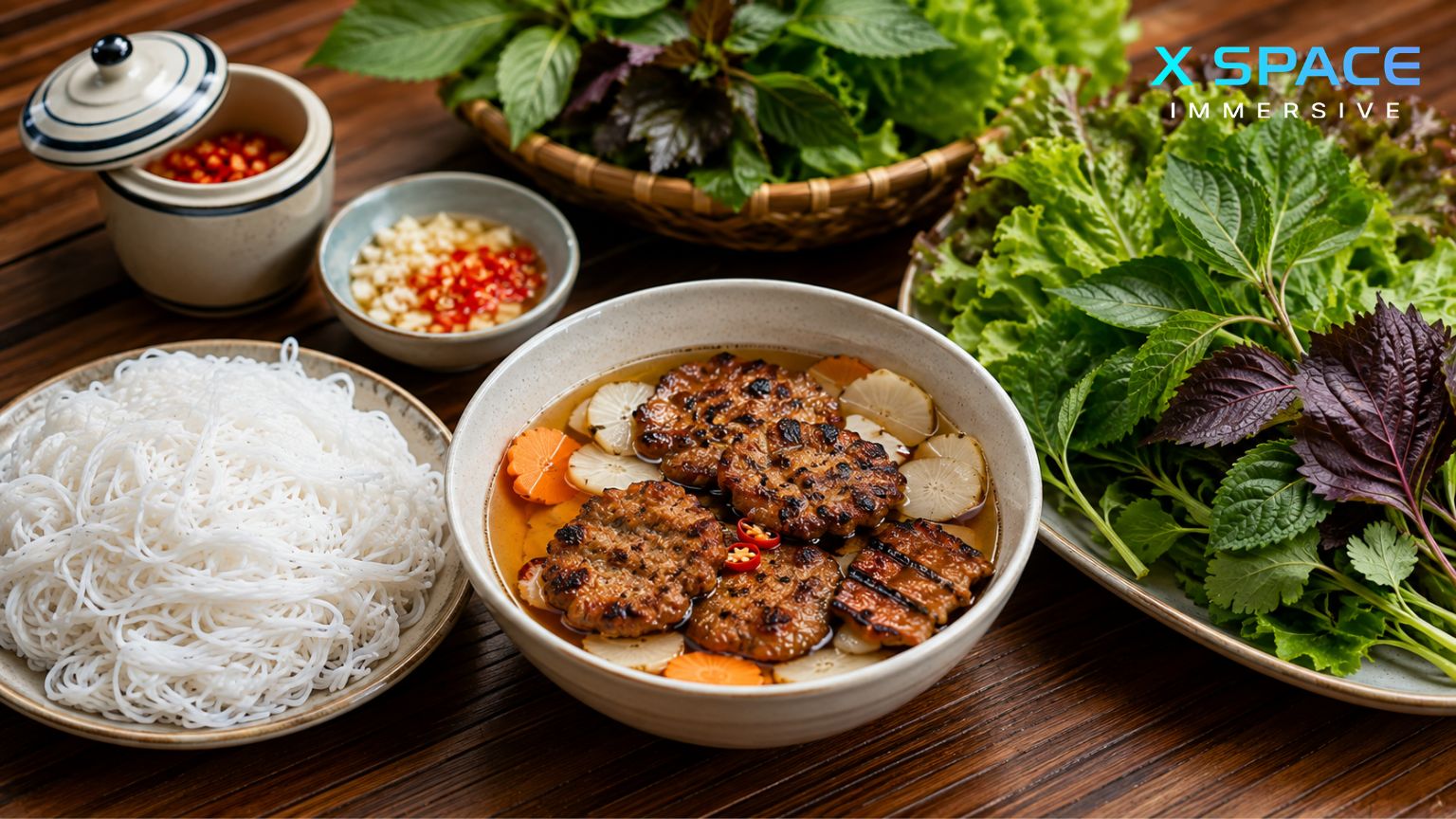
Traditional bun cha in Hanoi with grilled pork, rice vermicelli, herbs and Vietnamese dipping sauce
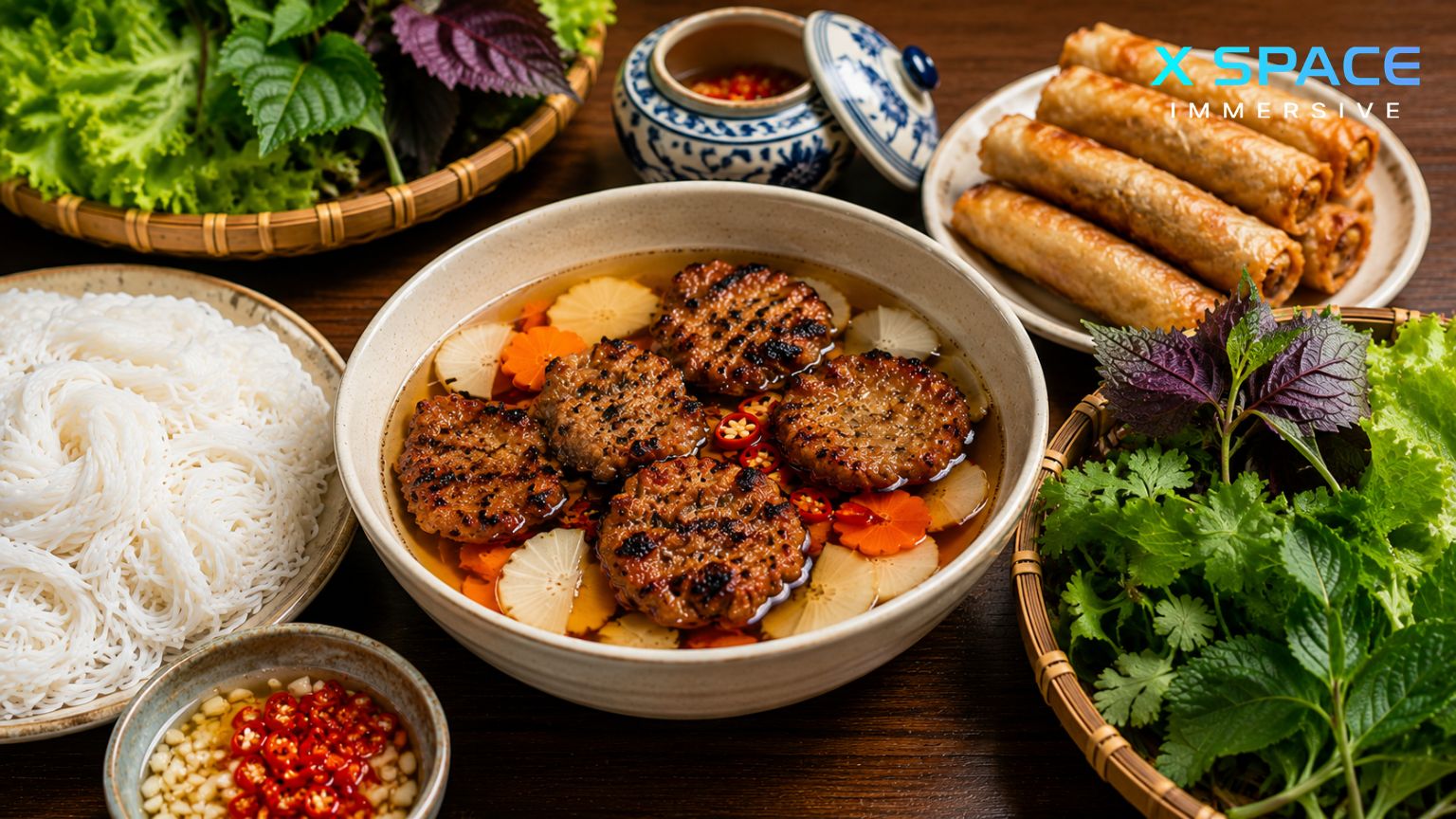
Bun cha is a traditional Vietnamese dish closely associated with Hanoi. At its heart, it consists of grilled pork served with rice vermicelli noodles, fresh herbs and vegetables, and a bowl of seasoned fish sauce for dipping.
Unlike noodle soups such as pho, bun cha keeps its main components separate. You receive a plate of white rice noodles, a generous basket of herbs and greens, and a bowl of dipping sauce containing grilled pork and often pickled vegetables.
That separation is important because bun cha is not meant to taste exactly the same in every mouthful. You build each bite yourself.
Take some noodles. Add a few herbs. Pick up a piece of smoky pork. Dip everything into the sauce. Perhaps add fresh chili or garlic if you enjoy stronger flavors.
The result changes slightly with every bite.
Traditional bun cha Vietnamese style usually features two types of pork. One is thinly sliced pork belly, marinated and grilled until the edges become caramelized. The other is a small minced-pork patty, shaped by hand and cooked over hot charcoal.
Then comes the dipping sauce.
Usually based on fish sauce, water, sugar, vinegar or another souring ingredient, the sauce is light rather than thick. Garlic, chili, and pickled green papaya or carrot may be added to create extra aroma and texture.
On the side are fresh rice vermicelli and herbs such as lettuce, perilla, coriander, or other locally available greens.
Nothing seems overly complicated. Yet when everything comes together, bun cha becomes a beautiful example of what Vietnamese cuisine does so well: creating complexity through balance rather than excess.
What Makes Authentic Bun Cha Vietnam So Special?
Vietnamese bun cha served with grilled pork, rice noodles, fresh herbs and crispy spring rolls
There are plenty of grilled pork and noodle dishes around Vietnam, but authentic bun cha Vietnam has a personality of its own.
Its appeal does not depend on one luxurious ingredient or an elaborate presentation. Instead, the dish succeeds because several contrasting elements support one another.
The Smoky Charcoal-Grilled Pork
Before you even see a bun cha restaurant, you may smell it.
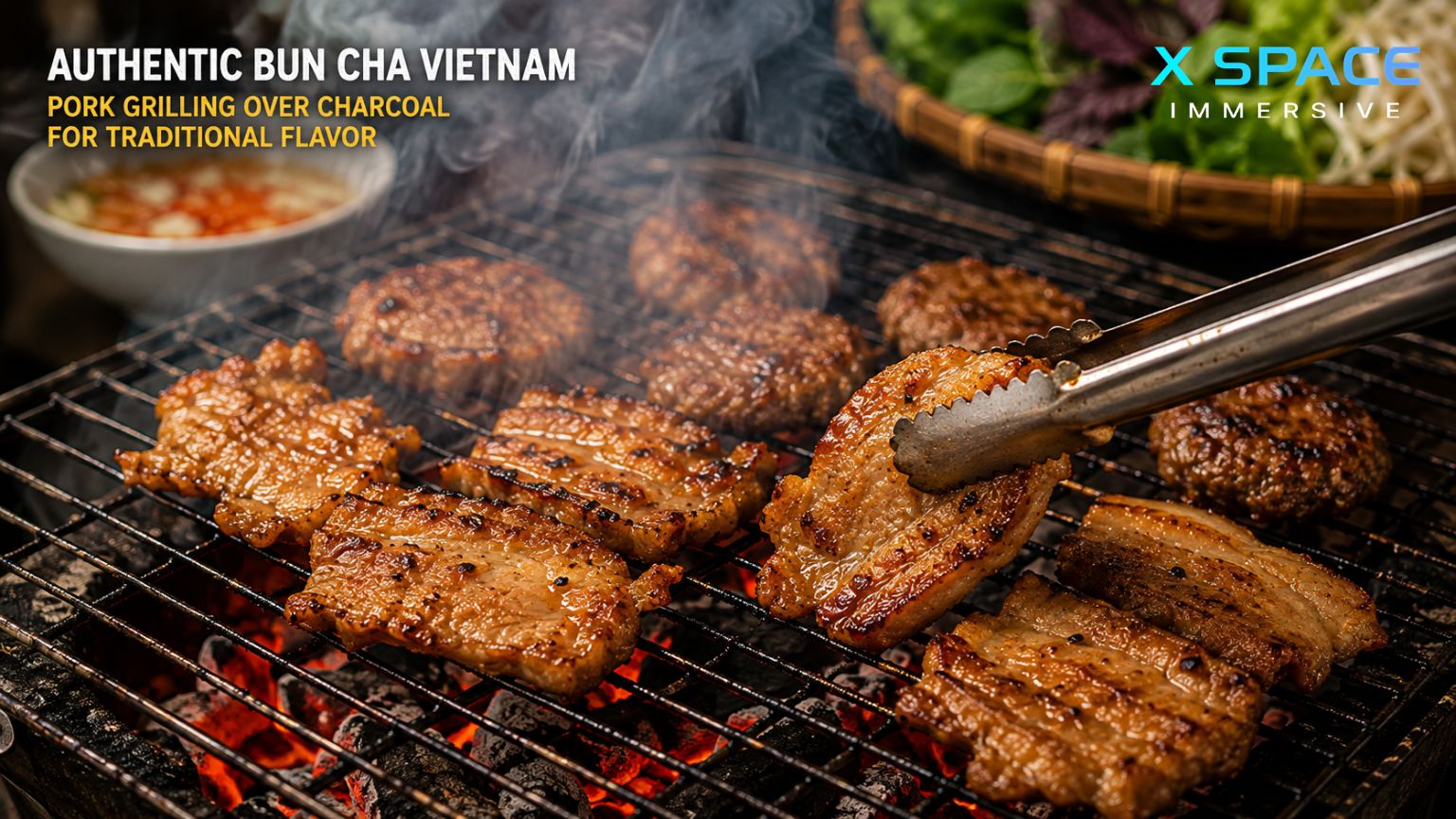
Charcoal grilling is one of the defining features of traditional bun cha. As marinated pork cooks over the heat, fat drips onto the charcoal, sending fragrant smoke back toward the meat.
The pork develops slightly charred edges while remaining juicy inside. The marinade caramelizes, creating a subtle sweetness that works beautifully with the salty and sour dipping sauce.
Good bun cha pork should not simply taste grilled. It should carry a gentle smokiness without becoming bitter or dry.
The two common cuts also provide different textures. Pork belly is rich, tender, and slightly chewy around the caramelized edges, while minced-pork patties are softer and particularly good at absorbing the dipping sauce.
Together, they give Vietnamese bun cha much of its distinctive character.
The Signature Vietnamese Dipping Sauce
If charcoal-grilled pork gives bun cha its aroma, the dipping sauce gives the dish its balance.
This is not a heavy sauce designed to coat everything. Instead, it is typically light, fragrant, and refreshing.
Fish sauce provides savory depth. Sugar softens the saltiness. Vinegar or another sour component brings brightness. Garlic adds fragrance, while chili can provide heat.
Thin slices of pickled green papaya or carrot are often added, introducing a crisp texture and refreshing acidity.
The best dipping sauce does not allow one flavor to dominate. It should be salty without being harsh, sweet without becoming sugary, and sour enough to lift the richness of the pork.
That delicate balance is one reason two bun cha restaurants located only a few streets apart can taste surprisingly different.
Every kitchen has its own touch.
Fresh Rice Noodles and Aromatic Herbs
The grilled pork may receive most of the attention, but the fresh ingredients are equally important.
Rice vermicelli gives bun cha its gentle, neutral base. Its soft texture absorbs the dipping sauce without competing with the pork.
Fresh herbs bring another layer entirely.
Depending on the restaurant and season, your basket may contain lettuce and several aromatic Vietnamese herbs. Some are refreshing, some slightly peppery, and others intensely fragrant.
These greens cut through the richness of the pork and keep the meal feeling surprisingly light.
This contrast between warm, smoky meat and cool, fresh herbs is central to the Vietnam bun cha experience.
A Perfect Balance of Vietnamese Flavors
What makes a memorable bowl of bun cha?
It is rarely one ingredient alone.
Instead, think about contrasts: hot grilled pork and cool noodles; rich meat and fresh herbs; salty fish sauce and sweet sugar; soft vermicelli and crunchy pickles.
A little smoke. A little acidity. A touch of sweetness. Freshness in every few bites.
That balance is one of the signatures of Vietnamese cuisine, and bun cha expresses it beautifully.
Bun Cha Hanoi vs. Other Vietnamese Noodle Dishes
Vietnam has an extraordinary noodle culture, so first-time visitors can understandably wonder how bun cha differs from other famous dishes.
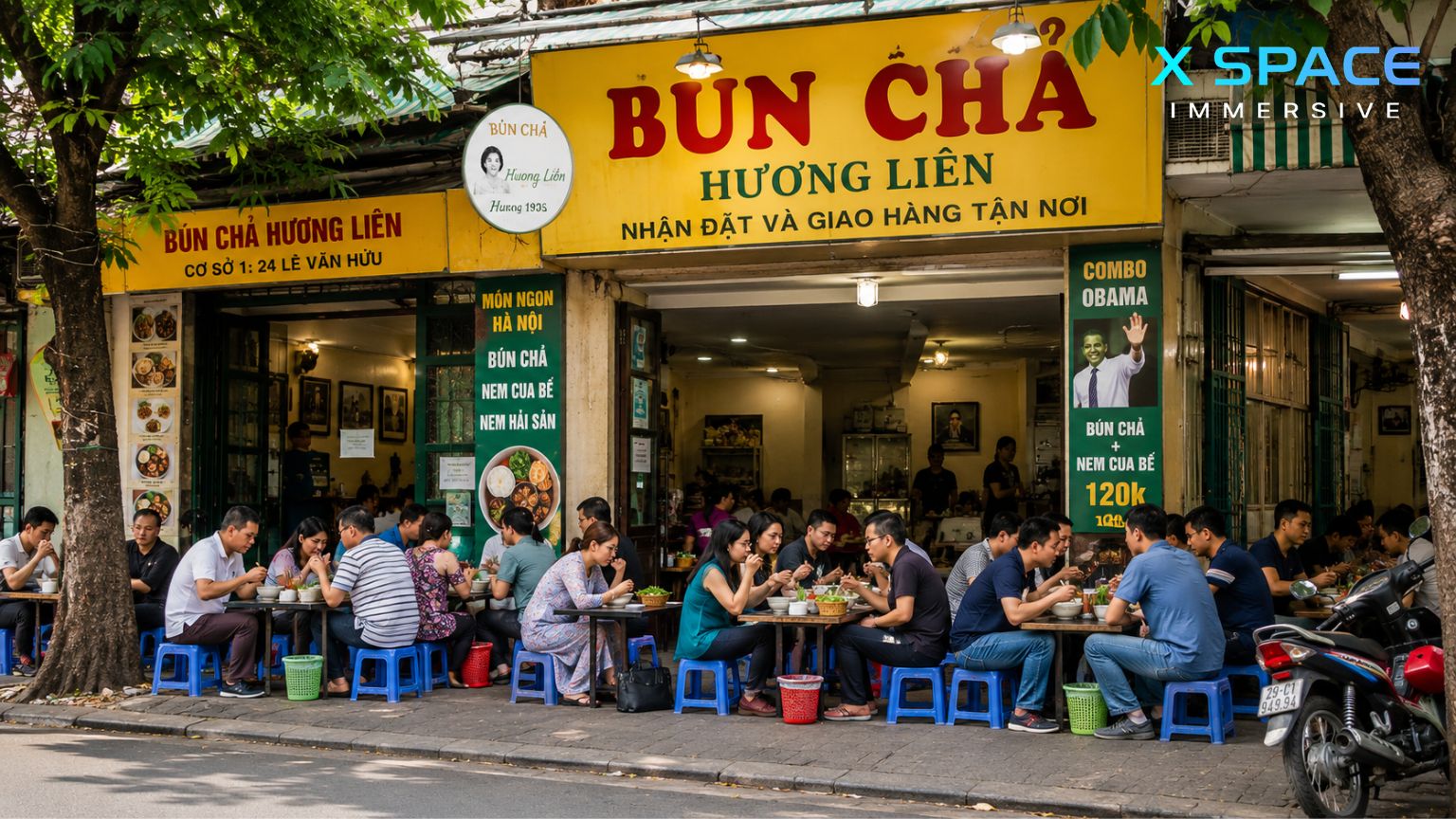
Authentic bun cha Vietnam pork grilled over charcoal for a traditional smoky flavor
Pho, for example, centers on broth. Noodles, meat, herbs, and aromatics come together inside one steaming bowl.
Bun cha takes almost the opposite approach.
Its ingredients remain separate until you combine them yourself. Instead of a rich broth, you have a light dipping sauce. Instead of boiled or gently cooked meat, you have pork grilled over charcoal.
Another dish sometimes compared with Vietnamese bun cha is bun thit nuong, which also features rice vermicelli and grilled pork. However, preparation, presentation, accompaniments, and regional traditions can differ. Bun cha remains particularly connected to Hanoi and northern Vietnamese food culture.
This connection to place matters.
Eating bun cha in Hanoi is not simply about finding the technically “correct” version of a recipe. The surrounding atmosphere becomes part of the experience—the charcoal smoke, the small tables, the sounds of the street, and the fast rhythm of a busy lunchtime restaurant.
That is why anyone interested in bun cha Vietnam should try it in Hanoi at least once.
How to Eat Bun Cha Like a Local in Hanoi
Your first serving of bun cha can look slightly confusing.
There are noodles on one plate, vegetables somewhere else, pork swimming in another bowl, and perhaps a small dish of chili and garlic nearby.
Where do you begin?
Fortunately, eating bun cha is wonderfully informal.
Start by taking a small portion of rice vermicelli. Add a few herbs or lettuce leaves, then dip the noodles and greens into the bowl of sauce containing the grilled pork.
Pick up a piece of pork and enjoy everything together.
There is no need to transfer all the noodles into the dipping sauce at once. Eating in smaller portions allows you to control each bite and experiment with different combinations.
If fresh garlic, chili, or vinegar is available, adjust the sauce according to your taste.
Want something brighter? Add a little vinegar.
Love spice? A few slices of fresh chili can transform the next bite.
Prefer the original flavor? Leave the sauce exactly as the kitchen serves it.
Many restaurants also offer fried spring rolls, often called nem, as a side dish. Their crispy texture provides another enjoyable contrast to the soft noodles and juicy grilled pork.
Most importantly, do not worry too much about perfect technique.
Part of the pleasure of Vietnamese bun cha is creating your own rhythm: noodles, herbs, pork, dip, bite, repeat.
Best Bun Cha in Hanoi: Where to Eat This Vietnamese Classic
Ask several Hanoi residents where to find the best bun cha and you may receive several different answers.
That is part of the fun.
Some people prefer famous restaurants that have been serving the dish for years. Others remain loyal to a tiny neighborhood shop that rarely appears in travel guides.
For visitors, exploring different styles can be more rewarding than searching for a single definitive “best” bowl.
Best bun cha in Hanoi restaurant serving traditional Vietnamese grilled pork noodles
Traditional Bun Cha in Hanoi’s Old Quarter
Hanoi’s Old Quarter is an obvious starting point.
Here, narrow streets packed with shops, cafés, street vendors, and traditional eateries create an atmosphere that feels naturally suited to a bowl of bun cha.
A small restaurant may not look elaborate from the outside. You might see a simple sign, low tables, a charcoal grill near the entrance, and a steady stream of local customers.
Do not underestimate these places.
Some of the most memorable food experiences in Hanoi happen in remarkably modest surroundings.
The Old Quarter is also convenient for travelers because a bun cha lunch can easily become part of a wider walking itinerary. Explore traditional streets in the morning, stop for lunch, enjoy Vietnamese coffee afterward, and continue toward Hoan Kiem Lake and nearby cultural attractions.
Famous Bun Cha Restaurants in Hanoi
Hanoi has several bun cha restaurants that have become well known among local diners and international travelers.
One of the most famous names is Bun Cha Huong Lien, often associated with the widely publicized 2016 meal shared there by former U.S. President Barack Obama and chef Anthony Bourdain.
Another familiar name among visitors is Bun Cha Dac Kim, located in Hanoi’s Old Quarter and known for generous portions of grilled pork, noodles, herbs, and dipping sauce.
Famous restaurants can be useful starting points, especially for first-time visitors. They are generally easy to locate and provide an accessible introduction to the dish.
However, popularity should not be your only criterion.
Hanoi’s bun cha culture is much bigger than a handful of famous addresses.
Hidden Local Spots for Authentic Vietnamese Bun Cha
Walk away from the busiest tourist streets and you may encounter small restaurants filled almost entirely with local diners.
These are worth noticing.
A cloud of fragrant charcoal smoke near lunchtime is often your first clue. Look for pork being grilled fresh rather than sitting prepared for long periods. Fresh herbs should look crisp and plentiful, and a busy lunch service can indicate good ingredient turnover.
Small local shops can offer a more everyday perspective on Vietnamese bun cha.
You may sit on a simple stool beside office workers having lunch or families stopping for a quick meal. There may be little decoration and no elaborate menu.
That simplicity is often precisely the point.
You are experiencing bun cha as a normal part of Hanoi life rather than as a dish presented exclusively for visitors.
How to Choose the Best Bun Cha in Hanoi
Finding good bun cha becomes easier once you know what to look for.
Start with the grill.
Freshly grilled pork should have caramelized edges and a noticeable smoky fragrance. If you can see the pork cooking over charcoal, even better.
Next, look at the herbs. Fresh greens should appear vibrant and crisp because they provide an essential contrast to the richness of the meat.
Then pay attention to the dipping sauce.
A good sauce should feel balanced rather than aggressively salty or sweet. It should enhance the pork while remaining refreshing enough for repeated dipping.
Busy restaurants can also be promising. High customer turnover often means ingredients are being prepared and replenished regularly.
But do not judge solely by décor.
Some excellent bun cha restaurants are simple, crowded, noisy, and extremely casual. In Hanoi, an unassuming dining room can hide extraordinary food.
The “best” bun cha also depends on personal preference. Some diners prefer sweeter marinades. Others love deeply smoky pork or sharper dipping sauces.
Try more than one place if your itinerary allows.
Comparing bowls is half the pleasure.
How Much Does Bun Cha Cost in Hanoi?
One of the joys of exploring Hanoi through food is that memorable meals do not necessarily require a large budget.
Bun cha is traditionally an everyday dish, and local restaurants often keep it accessible. Prices vary depending on location, portion size, restaurant style, and whether additional dishes are included.
Small neighborhood eateries are generally more affordable, while restaurants in busy tourist areas may charge more. Famous establishments can also have different pricing structures or set meals.
Extras matter too.
Spring rolls, additional grilled pork, drinks, or larger portions can increase the final bill.
Rather than choosing solely by the lowest price, consider freshness, cleanliness, portion size, location, and overall experience.
A slightly more expensive bowl that is freshly grilled and served with abundant herbs may offer much better value than simply choosing the cheapest option.
For travelers, Vietnam bun cha remains one of the most approachable ways to explore Hanoi through its food culture.
Best Time and Places to Enjoy Bun Cha in Hanoi
Traditionally, bun cha has strong associations with lunchtime in Hanoi.
Around midday, charcoal grills come alive and restaurants fill with office workers, students, families, and travelers.
For visitors, lunch remains an excellent time to experience bun cha at its liveliest. Arriving slightly before or after the busiest period can make the experience more relaxed, especially at popular restaurants.
The Old Quarter is convenient if food is only one part of your sightseeing day. However, venturing into surrounding neighborhoods can reveal a more local atmosphere and restaurants that receive fewer international visitors.
Weather can shape the experience as well.
On a cool Hanoi day, the warmth and aroma of freshly grilled pork feel especially comforting. In warmer weather, the fresh herbs, light dipping sauce, and rice noodles keep the dish from becoming too heavy.
A simple Hanoi itinerary might begin with morning sightseeing, continue with bun cha for lunch, and move into coffee, museums, galleries, shopping, or contemporary entertainment during the afternoon.
In other words, do not treat lunch as an interruption to exploring Hanoi.
With bun cha, lunch is part of the exploration.
Why Bun Cha Is More Than Just Vietnamese Street Food
Calling bun cha “street food” is not wrong, but the description can feel incomplete.
For Hanoi, bun cha represents something much more familiar and intimate.
It is smoke rising from a grill before lunch. It is a bowl placed quickly on a small table. It is the fragrance of herbs beside caramelized pork. It is a meal that does not need elaborate presentation to feel complete.
The dish also tells a broader story about Vietnamese cooking.
Vietnamese cuisine often celebrates balance rather than overwhelming richness. Fresh ingredients meet cooked ones. Herbs cut through fatty meats. Acidity brightens savory flavors. Textures shift from soft to crisp within a single mouthful.
Bun cha Vietnamese traditions capture all of those qualities.
The dish is also interactive. Instead of receiving a completed flavor combination chosen entirely by the chef, diners participate.
You decide how much noodle goes into each bite. You choose your herbs. You add chili or garlic. You control how long the pork and noodles sit in the sauce.
That participation makes the meal personal.
And perhaps this is why Vietnamese bun cha stays in the memory of so many visitors. The ingredients are straightforward, but the experience is rich with texture, aroma, place, and ritual.
You do not simply taste Hanoi.
For a few delicious minutes, you participate in its everyday life.
FAQs About Bun Cha in Vietnam
Is Bun Cha Originally From Hanoi?
Yes. Bun cha is strongly associated with Hanoi and is considered one of the capital’s signature dishes. While versions can now be found elsewhere in Vietnam and internationally, Hanoi remains the destination most closely connected with its culinary identity.
What Is Bun Cha Made Of?
Traditional bun cha generally consists of grilled pork, rice vermicelli noodles, fresh herbs and vegetables, pickled vegetables, and a light fish-sauce-based dipping sauce.
The pork often includes both grilled slices and minced-pork patties.
What Does Vietnamese Bun Cha Taste Like?
Vietnamese bun cha combines smoky, savory, sweet, sour, fresh, and occasionally spicy flavors.
The pork brings richness and smokiness, while the dipping sauce adds sweetness, acidity, and umami. Fresh herbs and vegetables create a refreshing contrast.
What Is the Difference Between Bun Cha and Bun Thit Nuong?
Both dishes can feature grilled pork and rice vermicelli, but they come from different regional traditions and can differ in preparation, accompaniments, sauce, and presentation.
Hanoi-style bun cha is especially recognizable for serving grilled pork inside a separate bowl of dipping sauce, with noodles and herbs alongside it.
How Do Vietnamese People Eat Bun Cha?
A common approach is to take a small portion of noodles and herbs, dip them into the sauce, and eat them together with the grilled pork.
Fresh chili, garlic, or other condiments can be added according to personal preference.
Is Bun Cha Spicy?
Bun cha does not necessarily have to be spicy.
Fresh chili is often available separately, allowing diners to control the heat. If you do not enjoy spicy food, you can usually eat bun cha comfortably without adding chili.
How Much Does Bun Cha Cost in Hanoi?
Prices vary significantly according to restaurant, neighborhood, portion size, and extras. Local neighborhood eateries are generally more affordable than establishments in heavily visited tourist areas.
Because prices can change, checking the current menu before ordering is always sensible.
Where Can I Find Authentic Bun Cha in Hanoi?
The Old Quarter is a convenient place to begin, but authentic bun cha can be found throughout Hanoi.
Famous restaurants provide an easy introduction, while smaller neighborhood eateries can offer a more local dining atmosphere.
Look for freshly grilled pork, abundant herbs, balanced dipping sauce, and a healthy flow of local customers.
Experience X Space Immersive After Exploring Hanoi’s Bun Cha

Visitors enjoying the X Space Immersive experience in Hanoi
A memorable day in Hanoi does not have to choose between tradition and modernity.
In fact, one of the most interesting ways to experience the city is to enjoy both.
Begin with the flavors that have shaped Hanoi’s culinary identity. Sit down for a plate of noodles, gather a handful of herbs, dip freshly grilled pork into fragrant sauce, and discover why bun cha remains such a beloved part of the capital.
Then let the day move in a completely different direction.
After exploring Hanoi through taste, Experience X Space Immersive offers an opportunity to continue your journey through a more contemporary form of experience.
The contrast is part of what makes the itinerary interesting.
At lunch, Hanoi speaks through charcoal smoke, traditional recipes, fresh herbs, and the everyday rhythm of local dining. Later, an immersive space can introduce another perspective—one shaped by visual storytelling, technology, creativity, and interaction.
Rather than simply observing, an immersive experience invites you to engage with the environment around you. That makes it a natural addition to a day built around discovery.
It can also provide a refreshing change of pace after walking through Hanoi’s busy streets, markets, historical areas, and food neighborhoods.
For couples, groups of friends, families, or curious travelers, combining traditional food with a contemporary attraction creates a more varied picture of the capital.
Because Hanoi is not only one thing.
It is old houses beside modern buildings. Quiet temples minutes away from busy shopping streets. Traditional coffee served near contemporary creative spaces. Recipes passed through generations existing alongside new forms of entertainment.
And that contrast is precisely what makes the city fascinating.
So when planning your Hanoi itinerary, do not stop after finding the best bun cha in Hanoi.
Taste the city first. Follow the smoke from the charcoal grill. Enjoy the noodles, herbs, dipping sauce, and beautifully caramelized pork. Take your time with a meal that has become part of Hanoi’s culinary identity.
Then continue the story beyond the dining table.
Experience X Space Immersive and discover a different side of Hanoi—where traditional inspiration, modern creativity, and immersive exploration can become part of the same unforgettable day.
Was this article helpful?
Thanks for your feedback!