Vietnam National Fine Arts Museum: Compelte Guide to Vietnam Art

Hanoi is a city where history rarely stays behind museum glass. It lives in old streets, temple courtyards, faded French architecture, family traditions, and the small details of everyday life. Yet if you want to understand how Vietnamese people have expressed their history, identity, spirituality, and changing society through art, the Vietnam National Fine Arts Museum is one of the most rewarding places to begin.
Located in the heart of Hanoi, the museum brings together centuries of Vietnamese artistic heritage. Ancient sculptures stand alongside delicate lacquer paintings, folk art, ceramics, and works reflecting Vietnam’s modern history. Rather than simply presenting beautiful objects, the museum offers a visual journey through the country’s cultural memory.
Whether you are passionate about art or simply looking for a meaningful cultural experience in Hanoi, this guide covers what to see, fine arts museum hours, admission information, Vietnam National Fine Arts Museum tickets, photography, visitor reviews, practical tips, and everything else you should know before your visit.
In this guide
Vietnam National Fine Arts Museum: An Icon of Vietnamese Art
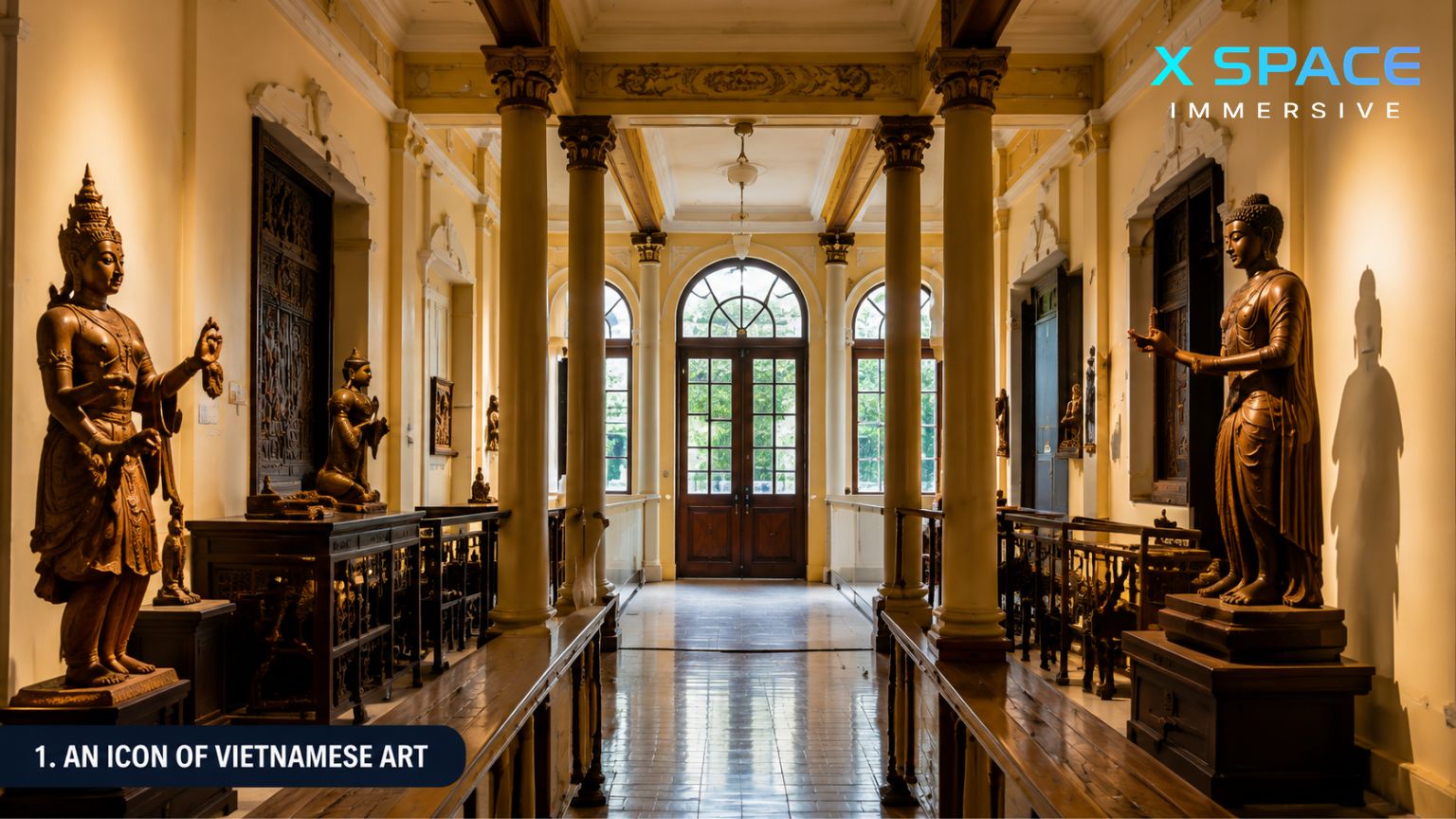
Vietnam National Fine Arts Museum interior with traditional Vietnamese Buddhist sculptures in Hanoi
The Vietnam National Fine Arts Museum is much more than a collection of paintings. It is one of Vietnam’s most important institutions dedicated to preserving, researching, exhibiting, and introducing the country’s artistic heritage.
Known by several variations in English, including the Vietnam Museum of Fine Arts, Vietnam National Museum of Fine Arts, and Fine Arts Museum of Vietnam, the museum provides a broad overview of Vietnamese visual culture across different historical periods.
A Brief History of the Vietnam National Museum of Fine Arts
The museum officially opened to the public in 1966. Its collection was developed to preserve and present significant examples of Vietnamese art, ranging from ancient and traditional works to modern artistic movements.
The museum building itself adds another layer to the experience. Originally constructed during the French colonial period, the architecture was later adapted with elements inspired by traditional Vietnamese communal houses.
The result is a distinctive combination of European structure and Vietnamese aesthetics.
As you walk through its corridors and exhibition rooms, this architectural blend creates an appropriate setting for a collection that tells a similarly layered story—one shaped by tradition, cultural exchange, historical upheaval, and artistic reinvention.
Why the Museum Matters to Vietnam’s Cultural Heritage
Vietnamese history stretches across thousands of years, and art has long played a role in recording how communities understood religion, nature, power, family, conflict, and everyday life.
At the Vietnam National Fine Arts Museum, these stories are told visually.
A Buddhist sculpture can reveal the spiritual values of its period. A lacquer painting can demonstrate both remarkable craftsmanship and a uniquely Vietnamese artistic language. A work created during wartime can communicate experiences that historical dates alone cannot fully express.
This is what makes the museum particularly interesting for international visitors. You do not need an academic background in art to appreciate it. Curiosity is enough.
Architecture and the Story Behind the Museum Building
Before looking closely at the collection, take a moment to notice the building.
Its warm exterior, decorative details, balconies, windows, tiled roofs, and interior courtyards create an atmosphere very different from the minimalist white galleries often associated with contemporary museums.
The architecture helps make a visit feel intimate rather than overwhelming. Moving from one gallery to another can feel like gradually uncovering different chapters of Vietnam’s cultural story.
It is also one reason Vietnam National Fine Arts Museum photos often capture more than individual artworks. The museum building itself becomes part of the visual experience.
Where Is the Vietnam Fine Arts Museum in Hanoi?
One of the advantages of visiting the Vietnam Fine Arts Museum Hanoi is its convenient central location.
The museum is situated at 66 Nguyen Thai Hoc Street, Ba Dinh District, Hanoi, within an area rich in cultural and historical landmarks.
Its location makes it relatively easy to include in a half-day or full-day Hanoi itinerary.
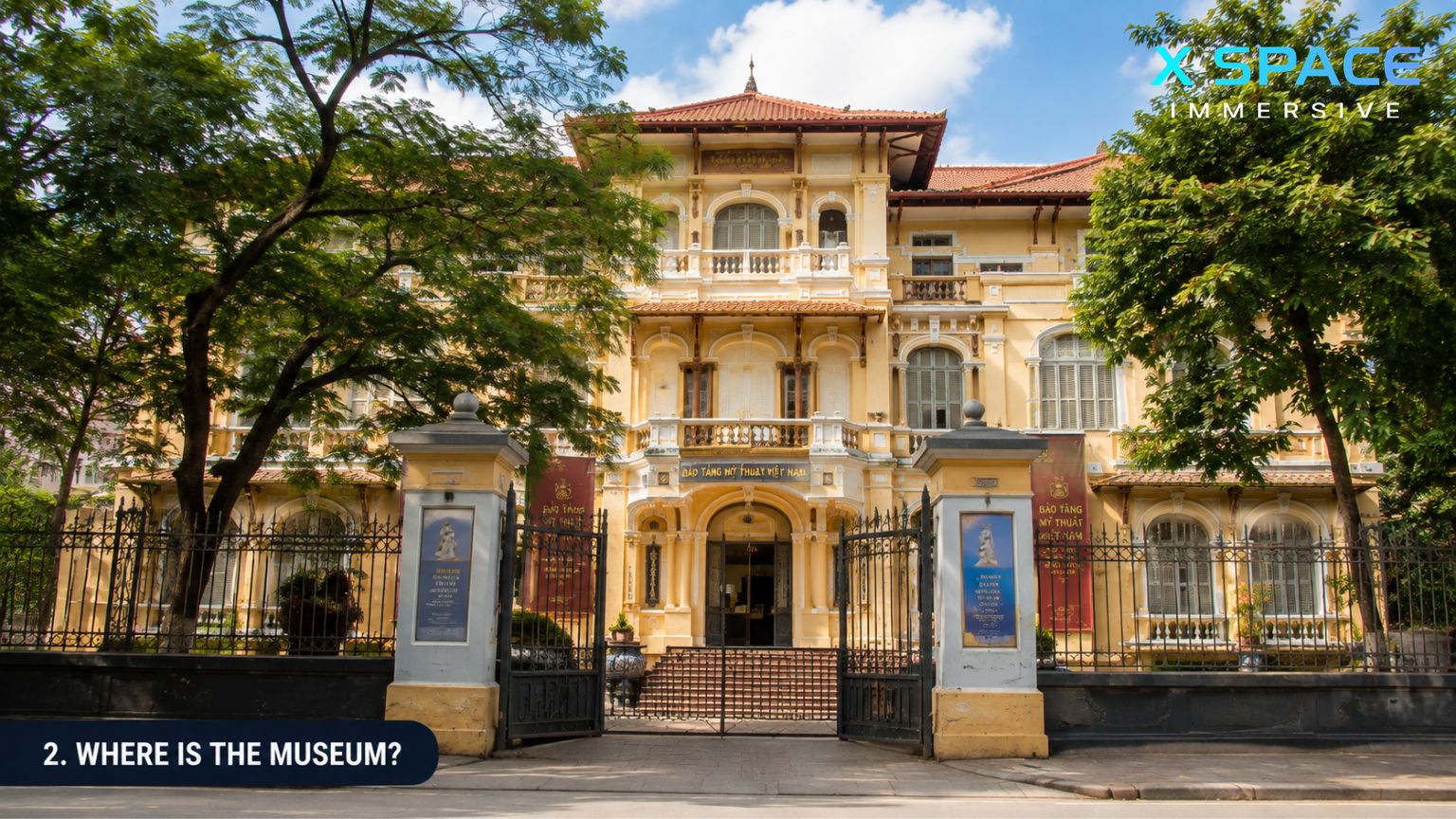
Vietnam Fine Arts Museum Hanoi exterior at Nguyen Thai Hoc Street in Ba Dinh District
Vietnam Fine Arts Museum Hanoi Location and Address
The main visitor address is:
Vietnam National Fine Arts Museum
66 Nguyen Thai Hoc Street, Ba Dinh District, Hanoi, Vietnam
The museum is close to several of Hanoi’s best-known historical attractions, making it particularly convenient for travelers who want to explore the city’s heritage without spending too much time moving between distant neighborhoods.
Before visiting, it is still wise to check the museum’s latest official information, particularly during public holidays or special events.
How to Get to the Museum from Hanoi Old Quarter
If you are staying in Hanoi’s Old Quarter, reaching the museum is straightforward.
A taxi or ride-hailing service is usually the most convenient choice, especially during hot, humid, or rainy weather. Walking can also be enjoyable for travelers who want to see more of central Hanoi along the way.
Hanoi traffic can feel intense if it is your first time in the city, so allow some flexibility in your schedule rather than planning your visit too tightly.
Nearby Hanoi Attractions Worth Combining with Your Visit
The Vietnam Fine Arts Museum Hanoi works particularly well as part of a cultural itinerary because several important attractions are nearby.
The Temple of Literature is an obvious companion destination. You can also build a broader itinerary around Ba Dinh Square, the Ho Chi Minh complex, historic architecture, and other cultural landmarks in central Hanoi.
A combination of the Temple of Literature and the Fine Arts Museum of Vietnam is especially appealing if you want a slower, more thoughtful morning or afternoon focused on Vietnamese history and culture.
What to See Inside the Vietnam National Fine Arts Museum
The collection is the real reason to visit.
Rather than focusing on one artistic movement, the Vietnam National Fine Arts Museum introduces visitors to a broad timeline of Vietnamese creativity.
Depending on your interests, you may find yourself drawn to ancient sculpture, religious imagery, folk traditions, lacquer painting, modern works, or art connected to Vietnam’s turbulent 20th-century history.
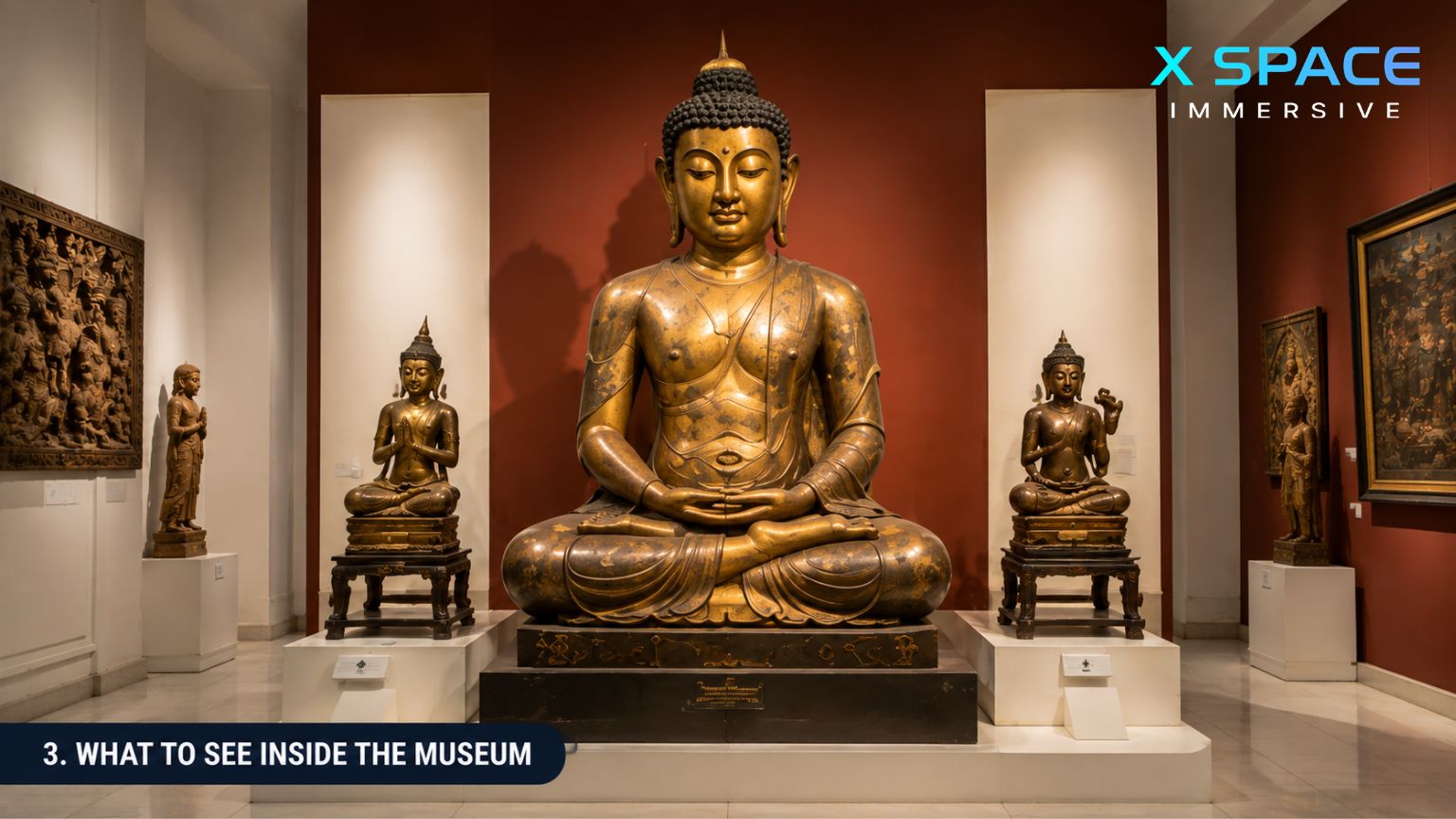
Buddhist sculpture exhibition inside the Vietnam National Fine Arts Museum in Hanoi
Ancient and Traditional Vietnamese Art
Some of the museum’s most fascinating objects connect visitors with Vietnam’s early artistic traditions.
Traditional art was often closely tied to communities, religious beliefs, rituals, architecture, and daily life. This relationship gives many pieces a meaning that goes beyond decoration.
Look carefully at the materials, forms, facial expressions, patterns, and symbolic details. Even without knowing every historical reference, you can often sense how craftsmanship and belief intersect.
Buddhist Art and Religious Sculptures
Religious sculpture is another important part of the collection.
Buddhist imagery has had a significant influence on Vietnamese visual culture, and sculptures from different periods reveal changes in style, technique, and spiritual expression.
Instead of rushing past these pieces, spend a little time observing their posture, hands, facial expressions, and decorative elements.
These details can transform what initially appears to be a simple statue into something much more expressive.
Lacquer Paintings and Vietnamese Fine Art
For many international visitors, lacquer painting becomes one of the most memorable discoveries at the Vietnam Museum of Fine Arts.
Traditional lacquer techniques involve a demanding process of applying, drying, polishing, and layering materials. Vietnamese artists developed lacquer beyond its decorative applications and transformed it into a powerful medium for fine art.
The resulting surfaces can possess remarkable depth and luminosity.
Seen in person, lacquer works often reveal subtle textures and visual effects that photographs cannot fully reproduce. If your schedule is limited, this is one area of the museum worth prioritizing.
Modern and Contemporary Vietnamese Art
The museum also allows visitors to see how Vietnamese artists responded to enormous social and political changes.
Modern works explore landscapes, portraits, labor, family, national identity, conflict, and ordinary life through a wide variety of artistic approaches.
This section can be especially powerful because it connects personal experiences with larger historical events.
Rather than reading history only through documents and timelines, you encounter it through color, composition, gestures, faces, and individual artistic perspectives.
National Treasures and Must-See Masterpieces
Some objects in the museum hold exceptional historical and artistic significance.
When exploring the galleries, look for works identified as national treasures or highlighted pieces within the collection. These can help you focus your visit if you have limited time.
However, do not concentrate exclusively on famous masterpieces.
One pleasure of the Fine Arts Museum of Vietnam is discovering a work you knew nothing about beforehand and unexpectedly spending several minutes in front of it.
Give yourself room for those moments.
Vietnam National Fine Arts Museum Photos: What to Expect
Search for Vietnam National Fine Arts Museum photos, and you will quickly notice the diversity of the experience.
There are elegant architectural spaces, traditional sculptures, paintings, historical artifacts, colorful details, and quiet gallery corners.
But photographs only tell part of the story.
Vietnam Fine Arts Museum Photos of the Galleries
The museum’s galleries have a more historical and intimate character than the large, ultra-modern exhibition halls found in many newer museums.
That atmosphere works particularly well with the collection.
Visitors interested in Vietnam Fine Arts Museum photos will find plenty of opportunities to capture the architecture and overall feeling of the museum, subject to the museum’s current photography rules.
The Most Photogenic Artworks and Exhibition Spaces
Lacquer works, sculptural pieces, architectural details, stairways, courtyards, and carefully arranged galleries can all make compelling photographs.
Still, try not to experience the entire museum through your phone.
Take the photographs you want, then give yourself a few moments to look at the works directly. Details of scale, surface, texture, and light are often far more impressive in person.
Photography Rules and Tips for Visitors
Photography policies can vary according to the exhibition, artwork, or gallery. Flash photography may be restricted, and some temporary exhibitions or individual works may have specific rules.
Always follow the signs displayed in the museum and instructions from staff.
If photography is permitted, avoid blocking pathways or standing in front of an artwork for too long while taking pictures. A little consideration makes the galleries more enjoyable for everyone.
Vietnam National Fine Arts Museum Tickets and Entrance Fee
Admission is one of the most practical things to check when planning your visit.
Information about Vietnam National Fine Arts Museum tickets and the national museum of fine arts entrance fee may change over time, so it is better to confirm the latest rates through the museum’s official channels before arriving.
How Much Is the National Museum of Fine Arts Entrance Fee?
The museum has traditionally been an affordable cultural attraction compared with many major international museums.
Admission categories may differ for adults, students, children, or other eligible visitors.
Because ticket prices and policies can be updated, travelers should treat prices found in older blogs and reviews with caution and verify the current national museum of fine arts entrance fee before visiting.
Is the Fine Arts Museum Free?
A common question from travelers is: Is the Fine Arts Museum free?
General admission should not automatically be assumed to be free. The museum normally operates an admission system, although exemptions, discounted categories, special occasions, or policy changes may apply.
If admission cost is important to your itinerary, check current information before you go rather than relying on an older travel post.
Where to Buy Vietnam Fine Arts Museum Tickets
For most independent visitors, buying Vietnam Fine Arts Museum tickets at the museum is the simplest approach.
If online ticketing or special exhibition booking is available for your travel date, check the museum’s official information for the latest purchasing options.
When purchasing Vietnam National Fine Arts Museum tickets, also check whether your admission includes all exhibition areas or whether any special exhibitions require separate access.
Discounts and Admission for Children, Students and Groups
Reduced admission may be available for eligible visitor categories.
If you are a student or qualify for a concession, bring appropriate identification. Families and organized groups should also check the latest admission policy before arriving.
This small amount of preparation can prevent confusion at the ticket counter.
Fine Arts Museum Hours: Best Time to Visit
Checking the current fine arts museum hours should be part of your planning, particularly if you are fitting several Hanoi attractions into one day.
Opening schedules can change because of public holidays, maintenance, special events, or other circumstances, so confirm the museum’s official schedule close to your visit.
Vietnam National Fine Arts Museum Opening Hours
The museum generally operates daytime visiting sessions, but visitors should verify current opening and closing times before departure.
Pay attention to more than the closing hour. Some museums stop selling tickets or admitting visitors before the galleries officially close.
Arriving comfortably ahead of closing time will give you a much better experience.
What Is the Best Time of Day to Visit?
For a calmer visit, morning is often an excellent choice.
Starting earlier gives you more freedom to move through the galleries at your own pace and leaves the rest of the day open for nearby attractions.
Late afternoon can also feel atmospheric, but avoid arriving so late that you have to rush through the collection.
How Long Should You Spend at the Museum?
Allow approximately 1.5 to 2 hours for a comfortable first visit.
If you have a strong interest in Vietnamese art or history, you could easily spend longer.
Travelers on a tight schedule can still have a rewarding one-hour visit by concentrating on major collection highlights, particularly traditional sculpture, lacquer art, and selected modern works.
Weekday vs Weekend: When Should You Go?
Weekdays are generally a sensible choice if you prefer quieter galleries.
Weekends may attract more domestic visitors, families, and groups. This does not necessarily make the experience less enjoyable, but anyone interested in slow observation or photography may appreciate a less busy period.
Vietnam National Fine Arts Museum Reviews: Is It Worth Visiting?
For most travelers interested in culture, the answer is yes.
Many Vietnam National Fine Arts Museum reviews focus on the museum’s cultural value, diverse collection, central location, and the opportunity to understand Vietnam beyond its most famous historical attractions.
What Visitors Love About the Museum
One of the museum’s greatest strengths is variety.
You can move from traditional religious sculpture to folk art and lacquer painting, then encounter modern works shaped by entirely different historical circumstances.
The experience is also manageable in scale. It offers substantial cultural depth without necessarily requiring an entire day.
Vietnam Fine Arts Museum Reviews: Common Visitor Feedback
When reading Vietnam Fine Arts Museum reviews, remember that expectations differ.
Someone expecting a vast museum comparable to the Louvre or Metropolitan Museum of Art may approach the experience differently from someone specifically interested in Vietnamese culture.
The museum’s appeal lies less in monumental scale and more in context.
It provides an opportunity to see Vietnamese history from the perspective of its artists.
That distinction matters.
Who Should Visit the Museum?
The museum is particularly worthwhile for:
- Art and design lovers
- Travelers interested in Vietnamese history
- Architecture and photography enthusiasts
- Families with older children interested in culture
- Students and researchers
- First-time visitors who want to understand Vietnam beyond sightseeing
- Repeat visitors looking for a deeper Hanoi experience
Even if museums are not normally at the top of your travel list, the relatively accessible scale makes this a good place to try something different.
Is the Vietnam National Fine Arts Museum Worth It?
If you want to understand Vietnamese culture rather than simply photograph Hanoi’s landmarks, the Vietnam National Fine Arts Museum deserves a place in your itinerary.
It gives context to many things you will encounter elsewhere in Vietnam: religious imagery, traditional materials, historical narratives, visual symbolism, and changing ideas of national identity.
You may leave with a better understanding not only of Vietnamese art, but also of the country itself.
Practical Tips for Visiting the Vietnam Museum of Fine Arts
A little preparation can make your visit considerably smoother.
You do not need to plan every gallery in advance, but knowing what interests you most helps—particularly if this is one stop in a busy Hanoi itinerary.
What to Know Before You Go
Check the latest fine arts museum hours and ticket information shortly before visiting.
Wear comfortable shoes, especially if you plan to combine the museum with nearby attractions. Hanoi’s weather can also be hot and humid, so choose clothing appropriate for both walking outdoors and spending time inside galleries.
Most importantly, avoid trying to see everything at the same speed.
Museums become much more enjoyable when you allow yourself to skip some pieces and spend longer with the ones that genuinely capture your attention.
Suggested 1-Hour and 2-Hour Museum Routes
If you have around one hour, focus on the museum’s signature areas: traditional Vietnamese art, Buddhist sculpture, lacquer painting, and selected modern masterpieces.
If you have around two hours, explore chronologically and give yourself time to read contextual information, compare artistic periods, and revisit pieces that stand out.
Visitors with more time can take a slower approach and pay greater attention to technique, symbolism, and historical context.
Accessibility, Facilities and Visitor Services
Accessibility and available visitor facilities can evolve as museum spaces are updated.
Travelers with specific mobility requirements should check the museum’s current accessibility information in advance.
The same applies if you require specialized services, group arrangements, guided interpretation, or other assistance.
What to Bring and What to Avoid
Bring only what you need.
A small bag, phone or camera, and water for before or after your visit will usually be sufficient. Avoid carrying unnecessarily bulky luggage, especially if you plan to spend a long time moving through galleries.
Always respect restrictions relating to food, drinks, touching artworks, flash photography, and restricted exhibition areas.
Tips for First-Time International Visitors
You do not need to understand every historical reference to enjoy the Vietnam Museum of Fine Arts.
Start with observation.
What materials are being used? What subjects appear repeatedly? How do representations of people change between historical periods? What happens to color, perspective, and composition as you move toward modern works?
Approaching the museum with questions rather than trying to memorize information makes the experience much more personal.
Vietnam National Fine Arts Museum FAQ
Where Is the Vietnam National Fine Arts Museum?
The Vietnam National Fine Arts Museum is located at 66 Nguyen Thai Hoc Street in Ba Dinh District, Hanoi. Its central location makes it convenient to combine with other major historical and cultural attractions.
How Much Are Vietnam National Fine Arts Museum Tickets?
Ticket prices can change, and different admission categories may apply. Check the museum’s latest official information for current Vietnam National Fine Arts Museum tickets and concession policies before visiting.
Is the Fine Arts Museum Free?
Visitors should not assume that general admission is free. Admission fees normally apply, although exemptions or discounts may exist for certain groups or occasions. Verify the current policy before your visit.
What Are the Fine Arts Museum Hours?
The museum generally welcomes visitors during daytime hours. Because schedules can change on holidays or for special circumstances, check current fine arts museum hours through official information before traveling to the museum.
How Long Does It Take to Visit the Vietnam Fine Arts Museum?
Around 1.5 to 2 hours is comfortable for most first-time visitors. One hour can be enough for selected highlights, while art enthusiasts may want considerably longer.
Can You Take Photos Inside the Vietnam National Fine Arts Museum?
Photography may be permitted in parts of the museum, but restrictions can apply to particular artworks or exhibitions. Follow current museum signage and staff instructions, and avoid flash where it is prohibited.
Is the Vietnam National Fine Arts Museum Worth Visiting?
Yes, particularly if you are interested in art, history, architecture, design, or Vietnamese culture. The museum provides cultural context that can deepen your understanding of other places you visit throughout Hanoi and Vietnam.
What Are the Must-See Artworks in the Museum?
Rather than focusing on a single piece, prioritize the museum’s important traditional sculptures, lacquer paintings, national treasures, and representative works of modern Vietnamese art. Together, they reveal how the country’s visual language has evolved across different periods.
Experience X Space Immersive: Step Into Art Beyond the Museum
A visit to the Vietnam National Fine Arts Museum is fundamentally about looking closely. You stand before an artwork, notice its materials and details, and gradually discover the history or emotion contained within it.
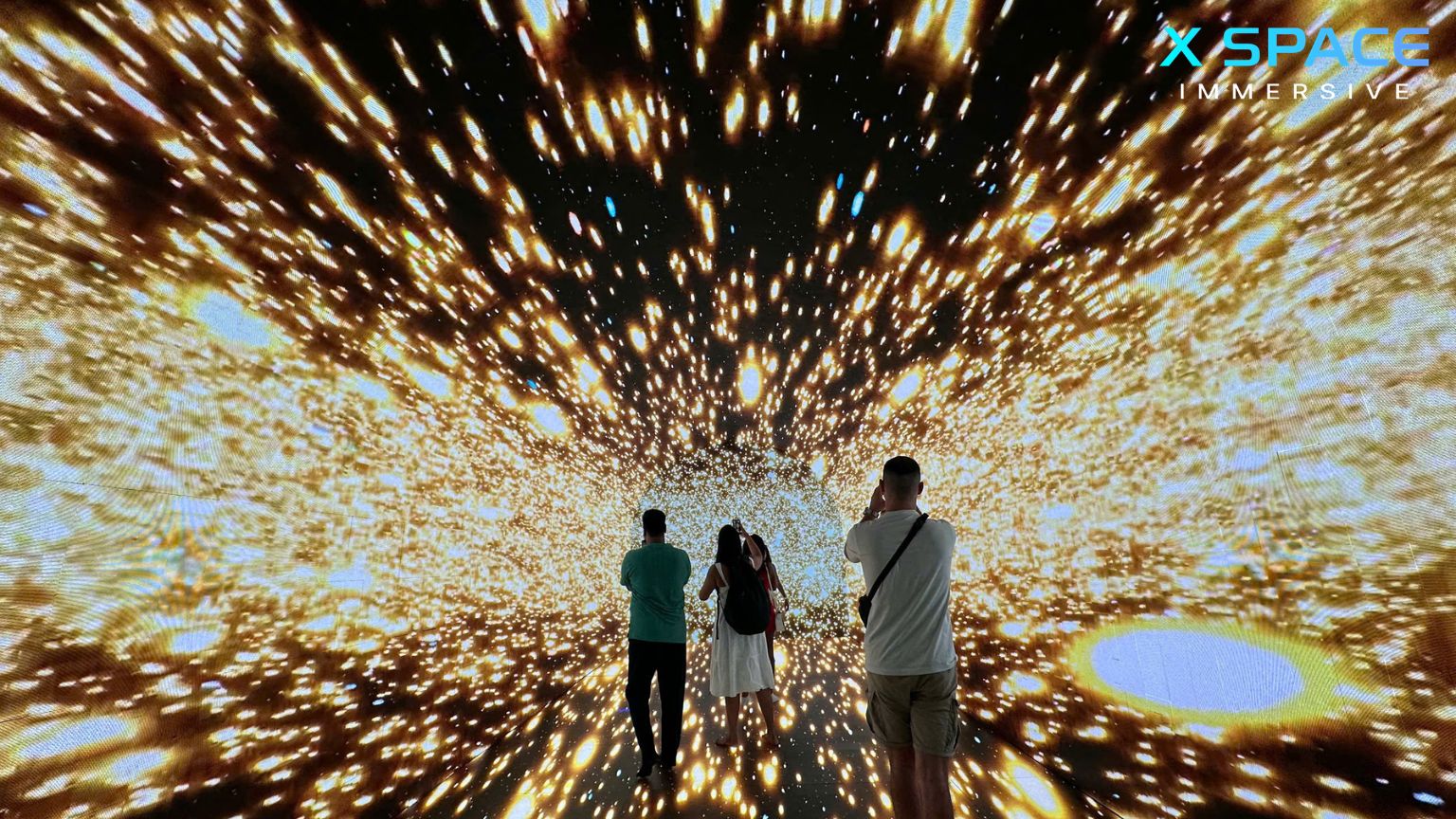
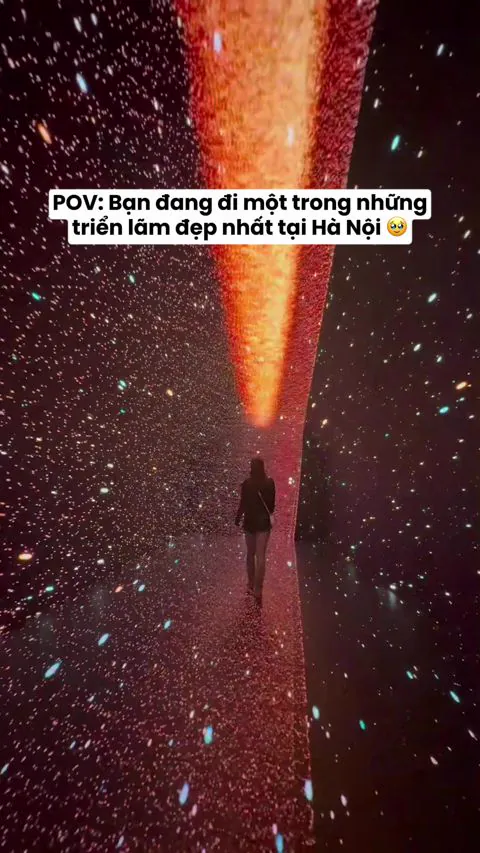
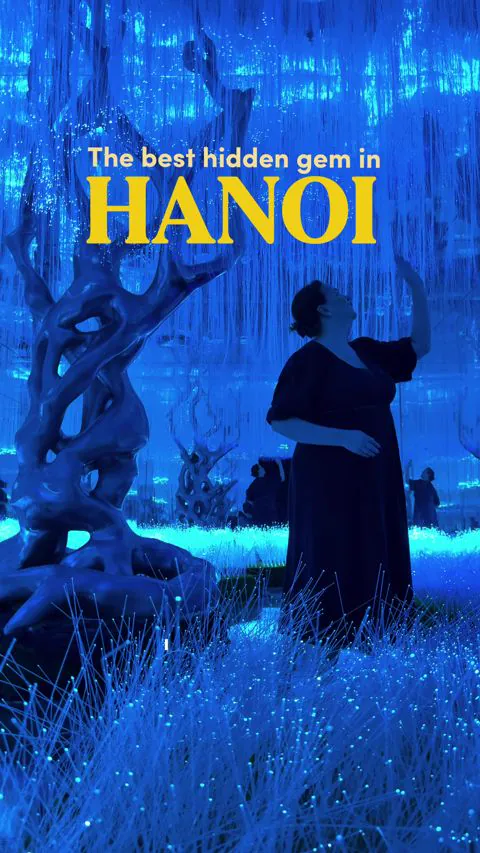
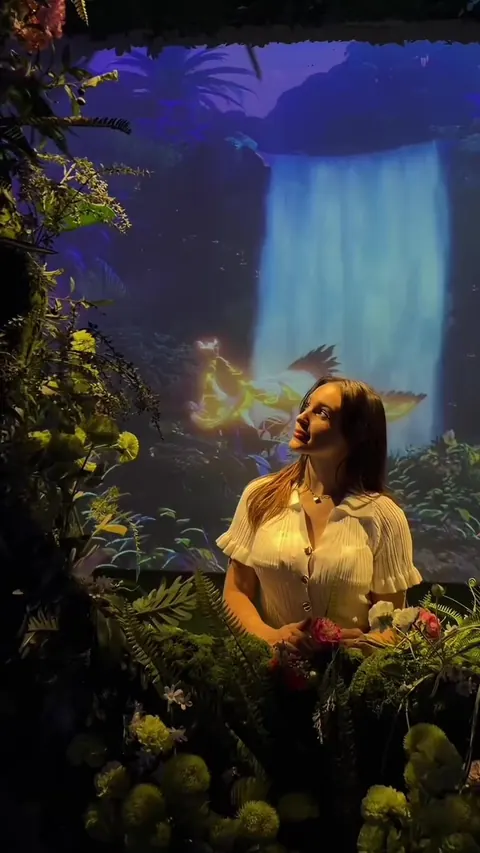
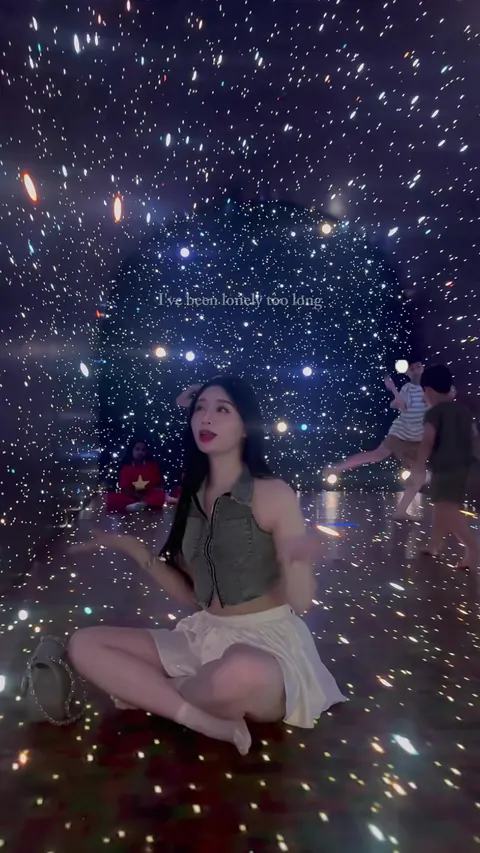
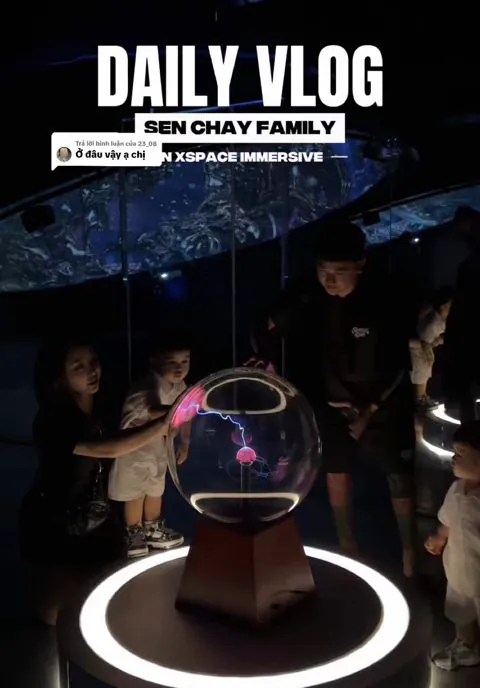
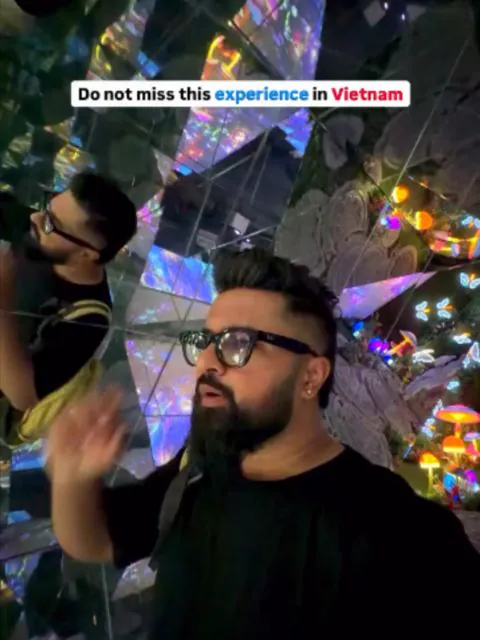
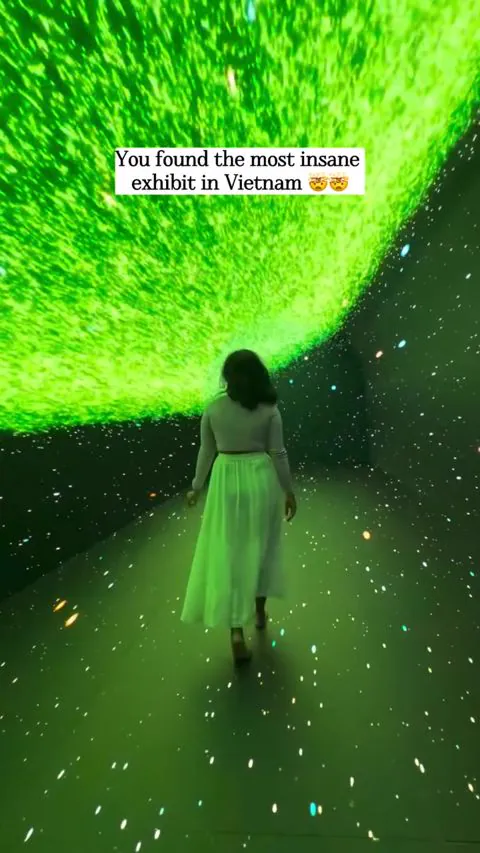
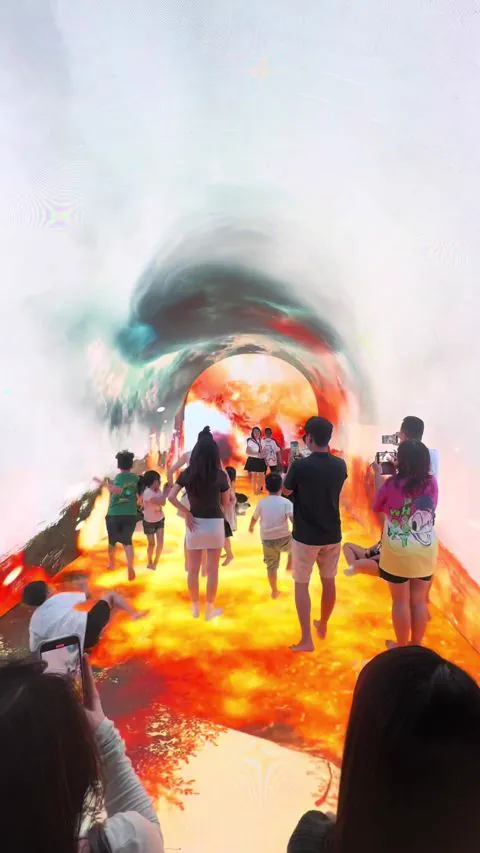
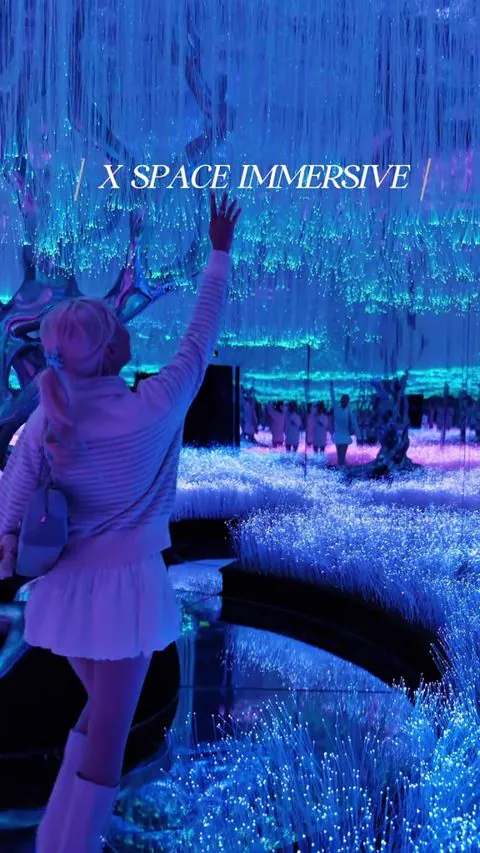
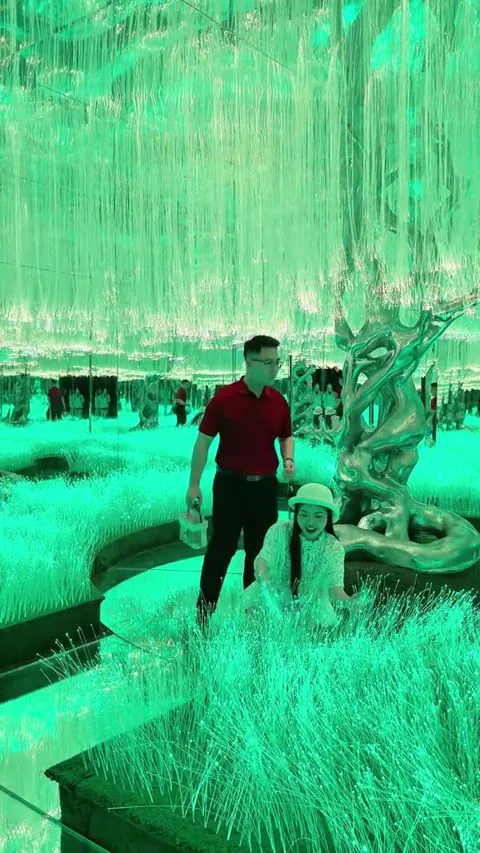
Visitors enjoying the X Space Immersive experience in Hanoi
But what happens when art moves beyond the frame?
That question opens the door to a very different type of cultural experience: X Space Immersive.
From Viewing Art to Stepping Inside It
Traditional museums create an important relationship between viewer and artwork. You observe an object preserved across time and connect with the story behind it.
Immersive experiences approach that relationship differently.
Instead of asking you only to stand in front of an image, they can surround you with visual storytelling, sound, light, movement, spatial design, and technology.
For travelers who enjoy exploring different ways of experiencing creativity, the contrast can be fascinating.
After spending time with centuries of Vietnamese artistic heritage at the Vietnam National Fine Arts Museum, an immersive space offers an opportunity to see how technology can reshape the way stories and visual experiences are presented today.
What Is X Space Immersive?
X Space Immersive is designed around the idea of moving beyond passive observation and bringing visitors closer to the experience itself.
Rather than treating art and technology as separate worlds, immersive environments can use large-scale imagery, spatial effects, sound, light, and interactive elements to create an atmosphere visitors can enter and explore.
The emphasis shifts from simply asking, “What am I looking at?” to something more personal:
“What does it feel like to be inside this story?”
What Makes the X Space Immersive Experience Different?
The biggest difference is perspective.
At a traditional fine arts museum, the original artwork is at the center of the experience. Its history, craftsmanship, authenticity, and preservation matter enormously.
At an immersive venue, the surrounding environment becomes part of the storytelling.
Scale can change. Images can move. Sound can influence emotion. Light can transform the atmosphere. Technology can make visitors feel less like spectators and more like participants.
These experiences should not be seen as replacements for museums.
They offer a different doorway into creativity.
Highlights You Shouldn’t Miss at X Space
When exploring an immersive space, resist the temptation to focus only on getting the perfect photograph.
Notice how the environment changes as you move.
Watch how projections interact with surfaces, how sound influences your perception of an image, and how different viewpoints create different experiences.
Immersive art is often most effective when you give yourself permission to slow down and simply be present inside the space.
Of course, the visual environment can also offer memorable photo opportunities, particularly for travelers, couples, families, and content creators looking for something different from conventional Hanoi sightseeing.
Who Is X Space Immersive Best For?
X Space can be particularly appealing to visitors who enjoy visual storytelling, digital creativity, photography, technology, and interactive cultural experiences.
It can also work well for families and younger visitors who may prefer a more dynamic environment.
For international travelers, combining a traditional institution such as the Vietnam National Fine Arts Museum with an immersive experience can create an interesting contrast between past and present.
One preserves and interprets artistic heritage. The other explores new ways of experiencing visual stories.
Together, they show just how broad the idea of “art” can be.
Plan Your X Space Immersive Experience
If the Vietnam National Fine Arts Museum helps you discover how Vietnamese art has developed through history, X Space offers a chance to continue your journey through a more contemporary, technology-driven perspective.
The transition feels natural: first, discover the paintings, sculptures, materials, and artistic traditions that have shaped Vietnamese visual culture. Then explore what happens when images, space, sound, technology, and imagination come together.
Hanoi has always been a city of contrasts—ancient and modern, quiet and energetic, traditional and experimental. Your art journey can reflect that same character.
Start by standing face-to-face with history at the Vietnam National Fine Arts Museum.
Then take one step further.
Ready to experience art beyond the frame? Discover X Space Immersive and step into a world where art, technology, storytelling, and imagination come together.
Was this article helpful?
Thanks for your feedback!