Bat Trang Pottery Village: Explore Vietnam’s Ceramic Heritage

Bat Trang Pottery Village is where centuries of Vietnamese craftsmanship come to life through clay, fire, and the skilled hands of local artisans. Just outside central Hanoi, this charming pottery village invites you to wander through traditional workshops, create your own ceramic piece, and discover the stories behind one of Vietnam’s most treasured crafts. More than a place to visit, Bat Trang offers a warm and authentic glimpse into Vietnam’s living cultural heritage.
In this guide
What Is Bat Trang Pottery Village?
Bat Trang is a traditional ceramic village on the outskirts of Hanoi, closely associated with one of Vietnam’s best-known pottery traditions.
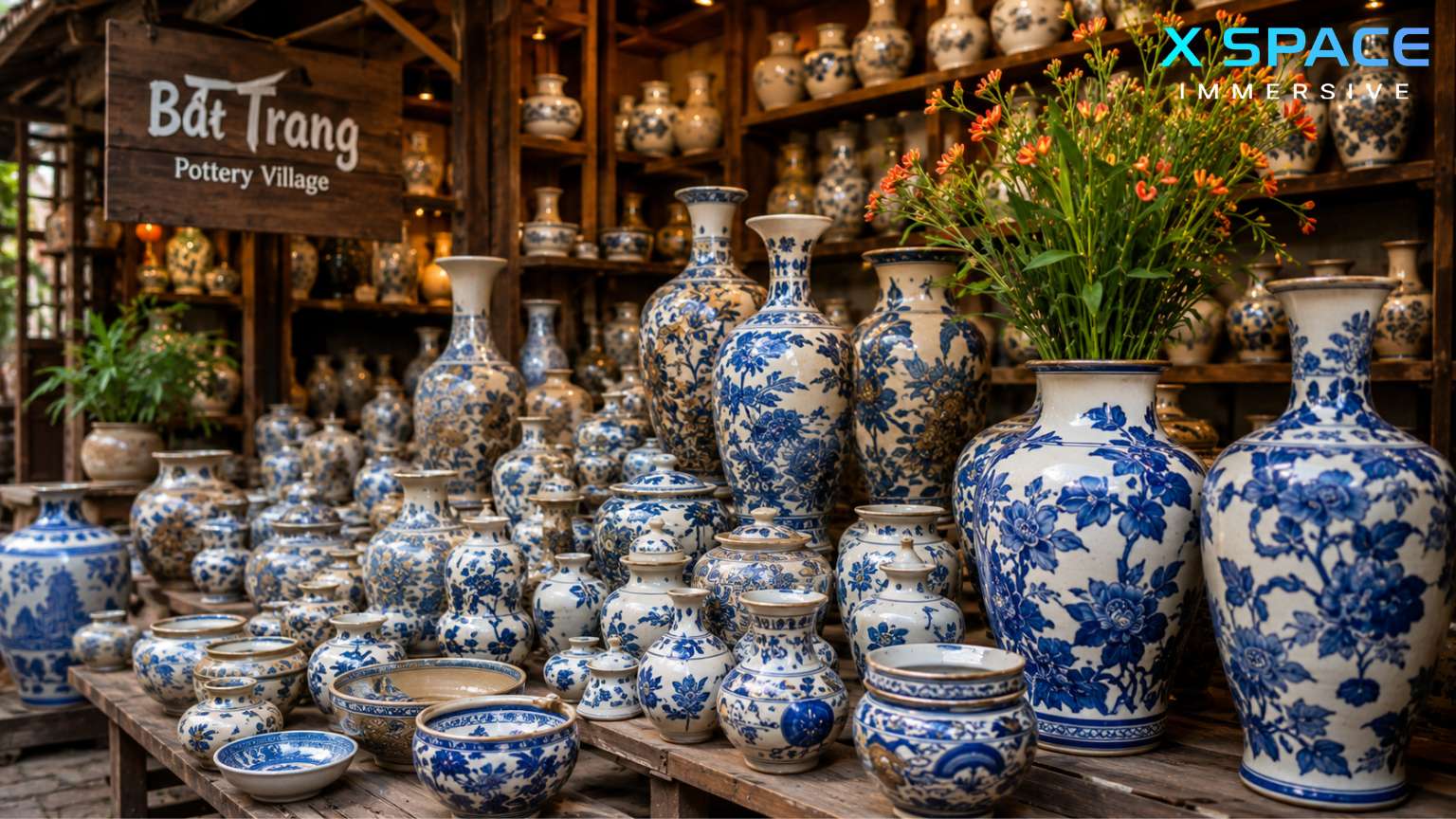
Traditional ceramics on display at Bat Trang Pottery Village
Unlike a conventional tourist attraction created primarily for visitors, Bat Trang remains a community where ceramics are part of everyday life. Workshops, stores, homes, cultural spaces, and pottery businesses exist side by side, giving the village a character that feels both historical and alive.
Walk through its streets and pottery appears almost everywhere. Bowls and teacups line shop shelves. Decorative vases stand beside contemporary ceramic art. Workshops reveal artisans shaping clay, applying patterns, glazing surfaces, and preparing pieces for firing.
This is what makes Bat Trang Pottery Village particularly interesting: its heritage is not frozen in the past.
The craft continues to evolve.
Traditional designs coexist with minimalist tableware, modern home décor, creative souvenirs, and contemporary artworks. Younger generations of craftspeople continue to reinterpret techniques that have been passed through families for generations.
For travelers, that combination of continuity and creativity makes Bat Trang an accessible introduction to Vietnamese craftsmanship.
Where Is Bat Trang Pottery Village Hanoi?
Bat Trang Pottery Village Hanoi is located in the Bat Trang area of Hanoi, on the eastern side of the Red River. Its position outside the historic center makes it convenient enough for a half-day excursion while still offering an atmosphere noticeably different from Hanoi’s busiest districts.
The journey itself creates a pleasant transition.
As you move away from central Hanoi, dense urban streets gradually give way to quieter surroundings. By the time you reach Bat Trang, ceramics, workshops, village houses, and craft stores begin to dominate the streetscape.
Bat Trang Pottery Village Hanoi Vietnam Location
For international travelers staying around Hanoi Old Quarter, Hoan Kiem, or nearby central districts, Bat Trang Pottery Village Hanoi Vietnam can generally be visited as a half-day destination.
Travel times vary depending on traffic, your departure point, and the type of transportation you choose. Because Hanoi traffic can change considerably throughout the day, leaving earlier in the morning often makes the journey more comfortable.
Once you arrive, many of Bat Trang’s main experiences can be explored on foot.
How to Get to Bat Trang Pottery Village
There are several ways to reach the village.
Public transportation can be an economical option for travelers who are comfortable navigating Hanoi independently. A taxi or ride-hailing service is usually more convenient, especially for first-time visitors who want a straightforward journey.
Travelers who prefer flexibility may choose a private car or motorbike, while those interested in understanding the village’s history and craftsmanship in greater depth can consider a Bat Trang Pottery Village tour with transportation and a guide.
Whichever option you choose, allow extra time for Hanoi traffic, particularly during peak periods.
The History Behind Bat Trang Pottery Village Vietnam

Traditional architecture and pottery at historic Bat Trang Pottery Village
To appreciate Bat Trang, it helps to understand that pottery here is not simply a souvenir industry.
Ceramics have shaped the identity of the community for centuries.
Bat Trang developed into an important center for pottery production thanks to generations of skilled craftspeople, access to trade routes, and accumulated knowledge of clay preparation, shaping, glazing, decoration, and firing.
Over time, Bat Trang ceramics became recognized well beyond the village itself.
Yet the most compelling part of its story is not simply how old the tradition is. It is how that tradition has survived.
The Origins of Bat Trang’s Ceramic Tradition
Traditional craft villages occupy an important place in Vietnamese cultural life. They are communities where specialized knowledge is often transmitted from one generation to another, gradually becoming part of a village’s collective identity.
Bat Trang is one of the most recognizable examples.
Families developed their own skills, methods, designs, and production knowledge. Children grew up surrounded by clay and kilns, while experienced artisans refined techniques through years of practice.
This accumulation of knowledge helped create a distinctive ceramic culture.
Today, modern production techniques and contemporary design have inevitably influenced the village, but traditional craftsmanship remains visible throughout Bat Trang.
What Makes Bat Trang Ceramics Unique?
A finished ceramic object can look deceptively simple.
Behind it is a sequence of carefully controlled stages.
Clay must be prepared. The form must be shaped. The surface may be carved, painted, or otherwise decorated. Glaze is applied, and the piece must then survive firing before it becomes a finished ceramic object.
At Bat Trang, these technical processes are combined with artistic expression.
Traditional motifs may draw inspiration from plants, animals, landscapes, calligraphy, folklore, or familiar symbols from Vietnamese culture. Alongside them are contemporary pieces with cleaner lines and modern aesthetics.
The result is an enormous range of ceramics, from practical household objects to decorative works and collectible pieces.
That diversity is one reason exploring Bat Trang Pottery Village Vietnam feels more like entering a creative ecosystem than visiting a single attraction.
Best Things to Do at Bat Trang Pottery Village
The best way to experience Bat Trang is not to rush from one attraction to another. Give yourself enough time to walk, observe, touch, create, and talk to people.
Here are some of the experiences worth including.
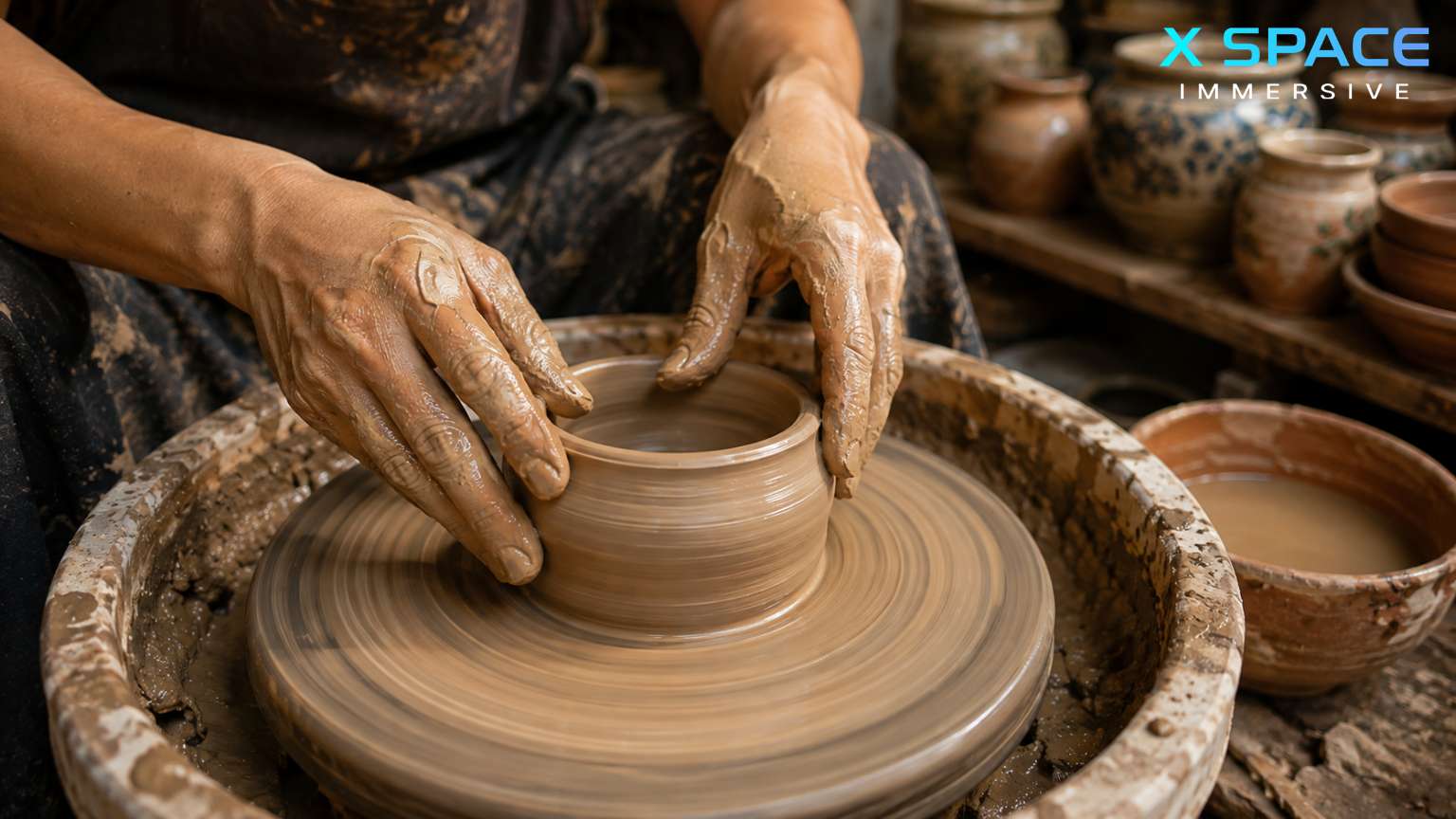
Artisan shaping clay during a pottery-making experience in Bat Trang
Walk Through Bat Trang Ancient Village
Begin with a slow walk.
Away from the busiest shopping areas, narrow lanes and older buildings reveal another side of Bat Trang. These quieter corners provide glimpses into how craft, family life, commerce, and community have developed together.
Look beyond the obvious storefronts.
Ceramic details, old walls, workshops, courtyards, and everyday village scenes often become some of the most memorable parts of the visit.
Walking also gives you time to notice the contrast between old and new Bat Trang: traditional houses and workshops existing alongside cafés, contemporary architecture, galleries, and modern ceramic stores.
Watch Local Artisans Make Traditional Pottery
Watching an experienced potter work can completely change the way you look at a simple bowl or vase.
A lump of clay begins to rotate. With a few controlled movements, the artisan gradually pulls the material upward, narrows it, widens it, and transforms it into a balanced form.
The process appears effortless.
It is not.
The fluid movements you see are the result of years of practice, sensitivity to the material, and an understanding of pressure that is difficult to appreciate until you try pottery yourself.
Whenever possible, spend time in a workshop rather than only browsing finished products. Seeing the making process adds context to everything you encounter later.
Make Your Own Pottery
For many travelers, this becomes the highlight of their Bat Trang Pottery Village experience.
Hands-on pottery sessions allow visitors to sit at a pottery wheel and attempt to shape clay themselves.
Your first creation may not be perfectly symmetrical.
That is part of the fun.
Clay responds instantly to your hands. Too much pressure can collapse the form; too little may leave it uneven. As the wheel turns, you begin to understand just how much control experienced artisans possess.
Depending on the workshop, visitors may also have opportunities to decorate or paint ceramic pieces.
The experience works particularly well for families, couples, groups of friends, and anyone who enjoys creative activities.
More importantly, it turns your visit from observation into participation.
Visit Bat Trang Pottery Market
If you love ceramics, leave room in your bag.
Bat Trang’s shopping areas offer an extraordinary variety of products, ranging from affordable everyday items to elaborate decorative pieces.
You may find cups, bowls, plates, tea sets, vases, plant pots, figurines, incense holders, home accessories, decorative tiles, and contemporary ceramic objects.
Rather than buying the first thing you see, browse several stores.
Styles, quality, craftsmanship, and prices can vary considerably. Exploring different shops also helps you recognize the enormous range of ceramic design produced in Bat Trang.
When buying something valuable or specifically looking for handmade work, ask sellers about where and how the piece was produced.
Visit the Bat Trang Museum
One of the most visually distinctive cultural stops in the area is the Bat Trang pottery museum.
Its contemporary architectural form creates an interesting contrast with the historic craft surrounding it.
Inside, exhibitions can help visitors understand ceramics beyond the shopping experience. Seeing finished objects alongside cultural and historical context reveals how pottery has changed across different periods and how artisans continue to reinterpret traditional techniques.
For design, architecture, art, and photography enthusiasts, the museum can be a particularly rewarding addition to a Bat Trang itinerary.
Bat Trang Pottery Village Photos: Best Photo Spots
Search for Bat Trang Pottery Village photos and you will quickly understand why photographers enjoy this destination.
The village offers several visual layers: handmade ceramics, artisans at work, architectural details, narrow lanes, contemporary museum design, colorful shops, and the tactile textures of clay and glaze.
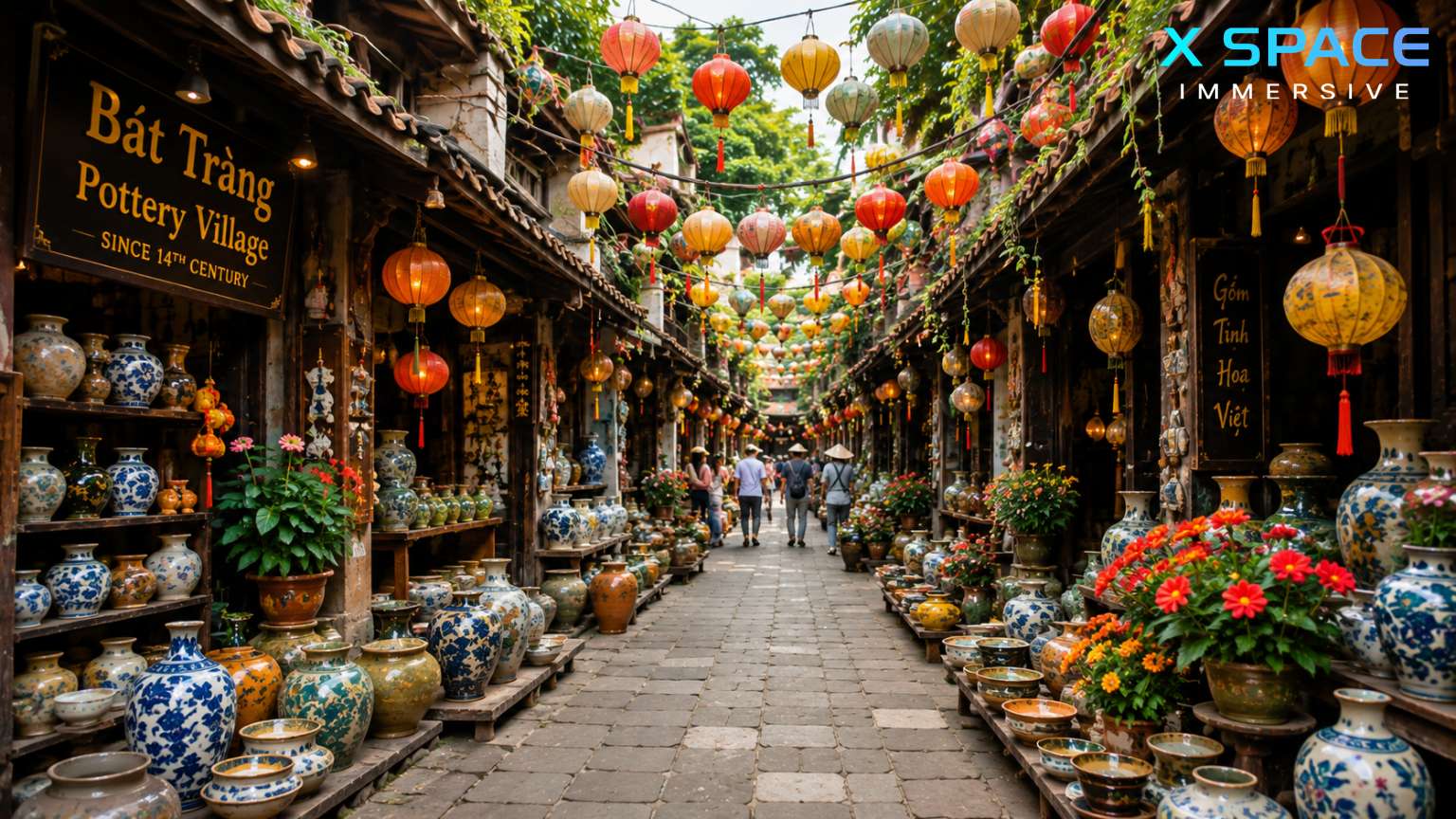
Colorful pottery street and ceramic shops at Bat Trang Pottery Village
Iconic Ceramic Architecture and Installations
The museum area is an obvious photography stop because of its distinctive architectural forms.
Rather than only taking a wide photograph, move closer.
Look for repeating curves, shadows, textures, patterns, and architectural details. Combining a person with the building can also communicate scale and create a stronger travel image.
Ceramic displays throughout Bat Trang offer similar opportunities.
Rows of bowls, stacked pottery, glazed surfaces, and colorful decorative objects can become interesting compositions when photographed closely.
Ancient Alleys and Village Life
Some of the strongest Bat Trang Pottery Village photos may come from the less polished corners.
Old walls, narrow alleys, workshop entrances, pottery stacked outside homes, and craftspeople concentrating on their work tell a more intimate story of the village.
Photography here is less about collecting landmarks and more about noticing details.
If you want to photograph an artisan closely, ask permission first. A respectful interaction often results in a more meaningful image anyway.
Tips for Taking Beautiful Bat Trang Pottery Village Photos
Morning light can be comfortable for walking and photography, while quieter periods make it easier to compose images without large crowds.
Try mixing wide shots with details.
Capture the village street, then the hands of an artisan. Photograph an entire pottery display, then focus on the glaze of a single bowl. Include architecture, people, tools, textures, and finished ceramics.
Together, those photographs will tell a richer story than a collection of posed snapshots.
Bat Trang Pottery Village Opening Hours and Best Time to Visit
One important distinction is that Bat Trang Pottery Village opening hours should not be treated as one universal schedule.
Bat Trang is a living village rather than a single gated attraction. Individual markets, workshops, museums, stores, cafés, and cultural venues can operate according to their own hours.
For that reason, travelers planning to visit a specific attraction should verify its current schedule before traveling.
Bat Trang Pottery Village Opening Hours
Daytime is generally the most practical period for exploring Bat Trang because workshops, stores, markets, and cultural attractions are more likely to be active.
Arriving in the morning gives you more flexibility and helps avoid turning the visit into a rushed afternoon excursion.
If a particular museum, workshop, or pottery class is essential to your itinerary, check its latest opening information directly before your visit, especially around public holidays or special events.
Best Time of Day to Explore Bat Trang
Morning is an excellent choice.
Temperatures can be more comfortable, streets may feel less crowded, and you have enough time to explore without watching the clock.
A typical first visit can comfortably occupy half a day.
Travelers particularly interested in pottery, photography, shopping, or local culture may want to stay longer.
Best Season to Visit
Hanoi’s seasons can noticeably affect your experience.
Hot and humid periods make lightweight clothing, water, and sun protection important. Cooler months can be pleasant for walking through the village, while rainy weather may make narrow streets less convenient.
Weekdays often provide a calmer atmosphere than busy weekends.
Regardless of season, comfortable shoes are essential.
Bat Trang Pottery Village Tour: Which Experience Should You Choose?
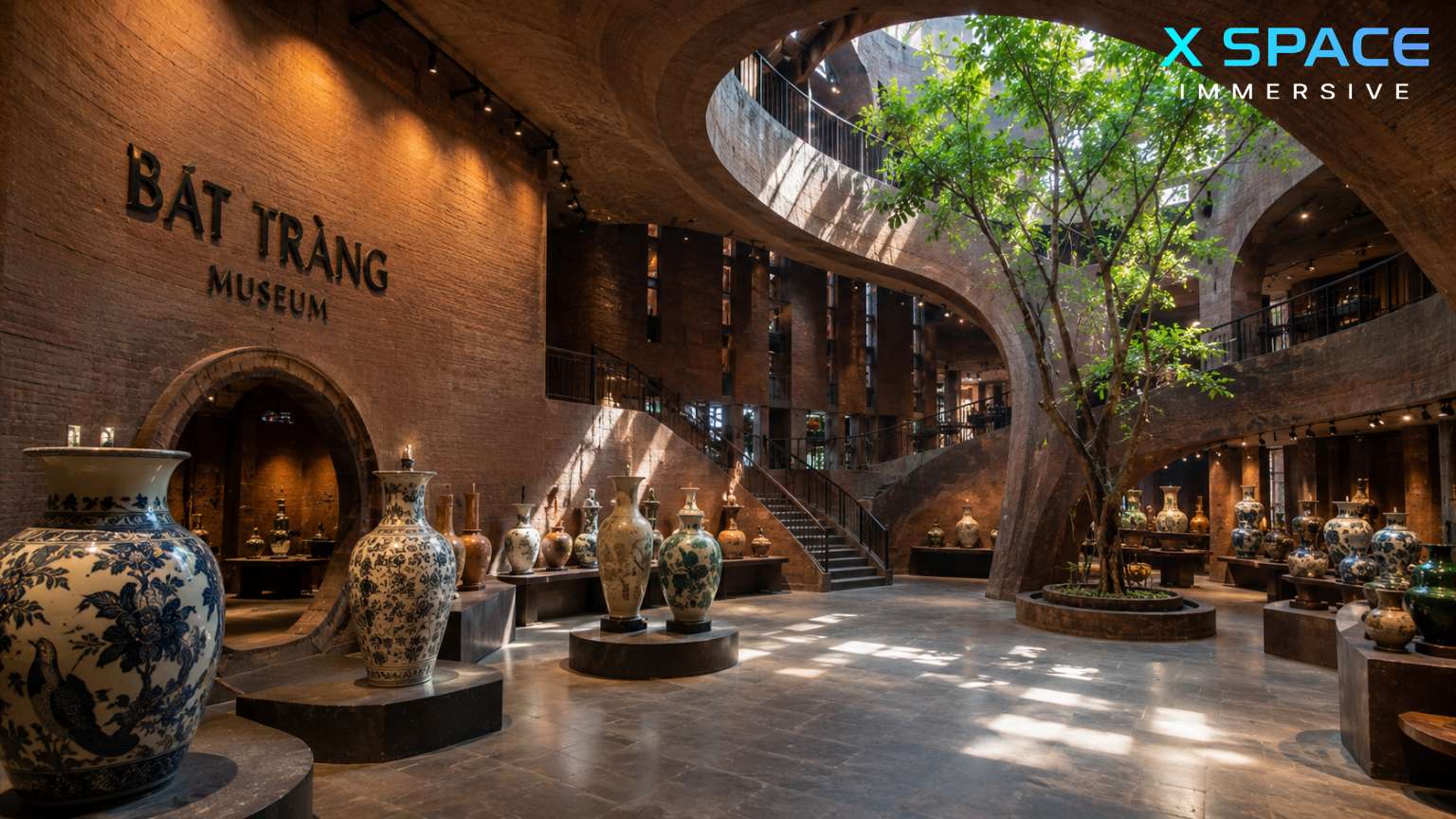
Bat Trang Pottery Museum displaying Vietnamese ceramics in Hanoi
A Bat Trang Pottery Village tour can be useful, but independent travel also works well. The better option depends on what you want from the visit.
Half-Day Bat Trang Pottery Village Tour
For most first-time visitors, half a day offers a good balance.
A typical experience might include walking through the village, observing pottery production, trying a hands-on activity, browsing the ceramic market, and visiting one or two cultural attractions.
This format works particularly well if Bat Trang is one part of a larger Hanoi itinerary.
Full-Day Cultural Tour
Travelers interested in craft, design, photography, or Vietnamese heritage may appreciate having more time.
A longer visit allows you to move beyond the most commercial areas, spend more time speaking with craftspeople, explore exhibitions, enjoy local food, and participate in pottery activities without rushing.
The difference is not necessarily how many places you see.
It is how deeply you experience them.
Self-Guided vs Guided Bat Trang Pottery Village Tour
Independent travel gives you maximum flexibility.
You can stay longer in workshops you enjoy, spend more time shopping, stop for photographs whenever you want, and structure the day around your own interests.
A guided Bat Trang Pottery Village tour, however, can provide context that is difficult to obtain simply by walking around.
A knowledgeable guide may help explain traditional techniques, cultural symbolism, village history, and the differences between various ceramic styles.
For first-time international visitors with a strong interest in Vietnamese heritage, that additional context can be valuable.
What to Buy at Bat Trang Pottery Village
Shopping in Bat Trang is not merely about souvenirs.
Ceramics can become practical reminders of your journey: a cup used every morning, a bowl placed on your dining table, or a vase that brings a small piece of Vietnamese craftsmanship into your home.
Popular Bat Trang Ceramic Souvenirs
Tea sets are a natural choice, particularly for visitors interested in Vietnamese tea culture.
Bowls, cups, plates, and serving dishes are practical alternatives. Decorative vases, figurines, incense holders, and ceramic art can make more distinctive gifts.
Smaller pieces are usually easier for international travelers to pack.
If you fall in love with a larger item, ask the seller about protective packaging and transportation options.
How to Choose Authentic Bat Trang Pottery
Take your time.
Look closely at shape, surface, glaze, decoration, and finishing. Handmade objects may carry subtle variations that give each piece its individual character.
If authenticity or craftsmanship matters to you, speak with the seller or artisan.
Ask where the item was produced, whether it was handmade, and what techniques were used.
Buying directly from a workshop can also create a more personal connection between the object and your visit.
Shopping and Packing Tips
Ceramics and suitcases are not natural friends.
Ask sellers to wrap fragile purchases carefully. When packing, place smaller ceramic objects inside clothing and keep them away from the edges of your suitcase.
For particularly delicate or valuable pieces, carrying them in hand luggage may be preferable when travel rules permit.
And remember: the cheapest piece is not always the best souvenir.
Sometimes a slightly more expensive handmade object carries far more meaning.
What to Eat in Bat Trang Pottery Village
Pottery may be the main reason people come to Bat Trang, but food adds another layer to the experience.
Traditional villages often reveal their character not only through craft but also through local eating habits, small eateries, snacks, and familiar Vietnamese flavors.
Traditional Bat Trang and Hanoi Specialties
Rather than treating lunch simply as a break between attractions, use it as another opportunity to experience the area.
Ask local guides, workshop hosts, or residents about dishes associated with Bat Trang and nearby Hanoi.
Small, simple places can sometimes provide a more memorable meal than restaurants designed specifically for tourists.
Where to Take a Food Break
If you are spending half a day in Bat Trang, a café or casual eatery offers a welcome pause after walking, shopping, and pottery making.
A slower lunch also gives you time to look at what you have bought, review your photographs, and decide whether there are parts of the village you want to revisit before leaving.
Bat Trang Pottery Village Reviews: Is It Worth Visiting?
For travelers researching Bat Trang Pottery Village reviews, the most important question is usually simple: is Bat Trang worth taking time away from central Hanoi?
For travelers interested in culture and craftsmanship, it certainly can be.
Bat Trang provides something quite different from Hanoi’s temples, lakes, colonial architecture, and Old Quarter streets.
Here, the attraction is not one monument.
It is the relationship between people, material, skill, and tradition.
What Visitors Love About Bat Trang
The hands-on element is one of Bat Trang’s strongest qualities.
You are not limited to looking.
You can watch clay being shaped, speak with craftspeople, try making pottery, browse objects produced in the area, and bring a piece of that craftsmanship home.
The village also appeals to different kinds of travelers.
Children can enjoy pottery activities. Photographers have abundant visual material. Design lovers can study forms and glazes. Shoppers can explore hundreds of ceramic objects. Culture-focused travelers can learn about a craft that has helped define the community for generations.
Things to Know Before You Go
Bat Trang is both a cultural destination and a commercial pottery center.
Some areas are naturally more tourism-oriented than others.
If you want a deeper experience, move beyond souvenir shopping. Seek out workshops, observe artisans, explore older streets, and learn about the processes behind the ceramics.
Weekends may also be busier, so travelers who prefer a quieter atmosphere may enjoy visiting on a weekday.
Who Should Visit Bat Trang Pottery Village?
Bat Trang is particularly suitable for travelers who want to experience more than famous Hanoi landmarks.
Families can enjoy creative activities together.
Couples can combine pottery making with photography and shopping.
Art and design enthusiasts can explore ceramic forms, architecture, colors, and textures.
Culture lovers can discover how traditional knowledge survives in contemporary Vietnam.
And even if you have never been interested in pottery before, trying to shape clay yourself may give you a completely new appreciation for the craft.
Suggested Bat Trang Pottery Village Hanoi Itinerary
If this is your first visit, a simple half-day plan keeps the experience relaxed.
Morning – Discover Bat Trang’s Heritage
Leave central Hanoi in the morning and begin with a walk through the village.
Rather than heading immediately into the largest shops, spend some time exploring the streets and observing the rhythm of local life.
Visit a traditional workshop and watch artisans at different stages of the ceramic-making process.
If photography is important to you, morning is also a good time to capture architectural details, workshops, pottery displays, and quieter village scenes.
Midday – Pottery, Shopping and Local Food
Next, try making pottery yourself.
This creates a natural transition from watching artisans to understanding the physical difficulty of their craft.
Afterward, explore the market and ceramic stores.
By this point, you will probably look at the objects differently. A perfectly balanced bowl or finely decorated vase becomes more impressive once you have experienced how challenging clay can be.
Take a break for lunch or a local snack before continuing.
Afternoon – Explore Bat Trang Museum
Finish your Bat Trang Pottery Village Hanoi experience with a museum or cultural visit.
The contrast works beautifully.
You begin with streets and workshops, interact with the material yourself, and then step into a curated space where ceramics can be understood through broader artistic and cultural perspectives.
Afterward, make any final purchases before returning to central Hanoi.
Essential Tips for Visiting Bat Trang Pottery Village Vietnam
A little preparation can make the trip much more enjoyable.
Wear comfortable shoes because exploring Bat Trang involves plenty of walking. Carry water during hot weather and consider sun protection during warmer months.
Keep some cash available for small purchases or activities, while recognizing that payment methods vary between businesses.
If you plan to purchase ceramics, bring enough space in your luggage and ask for protective wrapping.
Respect working spaces. Some workshops are genuine production environments rather than staged demonstrations, so follow instructions and avoid interfering with artisans while they work.
Ask before taking close-up photographs of people.
Most importantly, do not rush.
The charm of Bat Trang Pottery Village Vietnam often lies in small moments: watching hands covered in clay, noticing the imperfect texture of a handmade cup, talking to a seller about a glaze, or finding a quiet alley away from the busiest shops.
FAQs About Bat Trang Pottery Village
Is Bat Trang Pottery Village worth visiting?
Yes, especially if you are interested in Vietnamese culture, traditional crafts, ceramics, photography, or hands-on experiences.
Bat Trang offers a different perspective on Hanoi by allowing visitors to encounter a living craft tradition rather than simply visiting a historical monument.
How far is Bat Trang Pottery Village from Hanoi?
Bat Trang is located outside central Hanoi on the eastern side of the Red River and is suitable for a half-day excursion from areas such as Hanoi Old Quarter.
Actual journey times vary depending on traffic, transportation, and your starting point, so allow flexibility in your schedule.
What are Bat Trang Pottery Village opening hours?
Because Bat Trang is a living village rather than one enclosed attraction, there is no single opening schedule that applies to every part of it.
Individual workshops, markets, museums, shops, and cultural venues may have different operating hours. Check the current schedule of any specific attraction you intend to visit.
How much time do you need at Bat Trang Pottery Village?
Half a day is suitable for many first-time visitors.
That gives you enough time to walk around the village, visit workshops, try pottery making, shop for ceramics, and explore a cultural attraction without rushing excessively.
Art, photography, or craft enthusiasts may prefer a longer visit.
Can you make your own pottery at Bat Trang?
Pottery-making experiences are one of the activities commonly associated with a visit to Bat Trang.
They offer travelers a hands-on introduction to working with clay and a greater appreciation of the skill required to create traditional ceramics.
Availability and formats vary by workshop, so check locally when planning a specific activity.
What should you buy at Bat Trang Pottery Village?
Popular choices include cups, bowls, plates, tea sets, vases, decorative objects, figurines, and ceramic home accessories.
For international travelers, smaller pieces are usually easier to pack and transport.
If you specifically want handmade Bat Trang ceramics, ask about the origin and production process before purchasing.
Should I book a Bat Trang Pottery Village tour?
You do not necessarily need a tour.
Independent travelers can explore Bat Trang at their own pace, while a guided tour may be more rewarding if you want deeper explanations of ceramic techniques, village history, traditional symbolism, and local culture.
Choose according to whether flexibility or cultural interpretation matters more to you.
Experience X Space Immersive

Visitors enjoying the X Space Immersive experience in Hanoi
A visit to Bat Trang reveals something essential about Vietnamese culture: heritage does not survive simply because it is old.
It survives because each generation finds a way to experience, preserve, and reinterpret it.
At Bat Trang Pottery Village, that connection is tangible.
You feel clay beneath your fingers. You hear the pottery wheel turning. You see the marks left by an artisan’s hands. Objects that may appear ordinary at first begin to tell stories about families, craftsmanship, aesthetics, and centuries of cultural memory.
But Vietnamese culture can be experienced through more than traditional craft.
After discovering heritage through the physical world of ceramics, travelers looking for another perspective can continue their cultural journey through X Space Immersive — a cultural art space that approaches Vietnamese culture through an immersive experience.
Continue Your Journey Through Vietnamese Culture
Bat Trang and X Space Immersive represent two different ways of approaching culture.
One begins with clay, craftsmanship, and a tradition refined over generations.
The other invites visitors into an artistic environment where culture can be encountered through contemporary forms of expression.
Placed together in a Hanoi journey, these experiences can create an interesting dialogue between tradition and the present.
Instead of seeing Vietnamese heritage as something belonging only to museums or historical sites, visitors can discover how cultural stories continue to inspire new forms of art and experience.
Discover Vietnamese Heritage Through Immersive Storytelling
An immersive cultural space changes the role of the visitor.
Rather than standing outside and simply observing, you are encouraged to enter the atmosphere of the experience.
That makes X Space Immersive an interesting continuation for travelers who have already encountered Vietnam through temples, museums, craft villages, architecture, and traditional art.
After touching the raw material of Vietnamese craftsmanship in Bat Trang, an immersive art environment offers a different sensory perspective on cultural storytelling.
The contrast is part of the appeal.
Bat Trang connects you with heritage through objects made by hand. X Space Immersive extends the journey into a cultural art space shaped around experience and interpretation.
Why Add X Space Immersive to Your Hanoi Journey?
Hanoi rewards travelers who explore it through layers.
There is the Hanoi of ancient streets and temples. There is the Hanoi of traditional craft villages such as Bat Trang. There is the city of contemporary creativity, art, design, and evolving cultural expression.
Experiencing more than one of these layers can transform a sightseeing itinerary into a more meaningful cultural journey.
Start with the texture of clay at Bat Trang Pottery Village. Watch heritage take shape in the hands of an artisan. Understand why craftsmanship can carry memories across generations.
Then allow yourself to encounter Vietnamese culture from another angle through the artistic environment of X Space Immersive.
The two experiences do not need to compete.
They complement each other.
One reminds us where cultural traditions come from; the other suggests how those traditions and stories can continue to be experienced in new ways.
Experience X Space Immersive
Vietnamese culture is not something you can fully understand by checking landmarks off a list.
Sometimes, you need to slow down.
Touch the clay.
Watch an artisan work.
Notice the details.
Step inside a story.
From the centuries-old ceramic heritage of Bat Trang Pottery Village to the cultural art environment of X Space Immersive, Hanoi offers travelers opportunities to move beyond sightseeing and build a deeper connection with Vietnamese culture.
Continue your journey beyond the familiar and experience Vietnamese culture through a new artistic perspective at X Space Immersive.
Was this article helpful?
Thanks for your feedback!