Hang Dau Water Tower: History, Architecture & Visitor Guide

Hang Dau Water Tower is one of Hanoi’s most remarkable historical landmarks, blending French colonial architecture with the city’s rich cultural heritage. Built in 1894 as part of Hanoi’s first modern water supply system, the tower has evolved from a vital piece of infrastructure into a symbol of the capital’s history and transformation. Today, it attracts visitors who want to explore its fascinating past, distinctive design, and unique cultural experiences. In this guide, you’ll discover the history, architecture, visitor information, and everything you need to know before visiting Hang Dau Water Tower.
In this guide
What Is Hang Dau Water Tower?
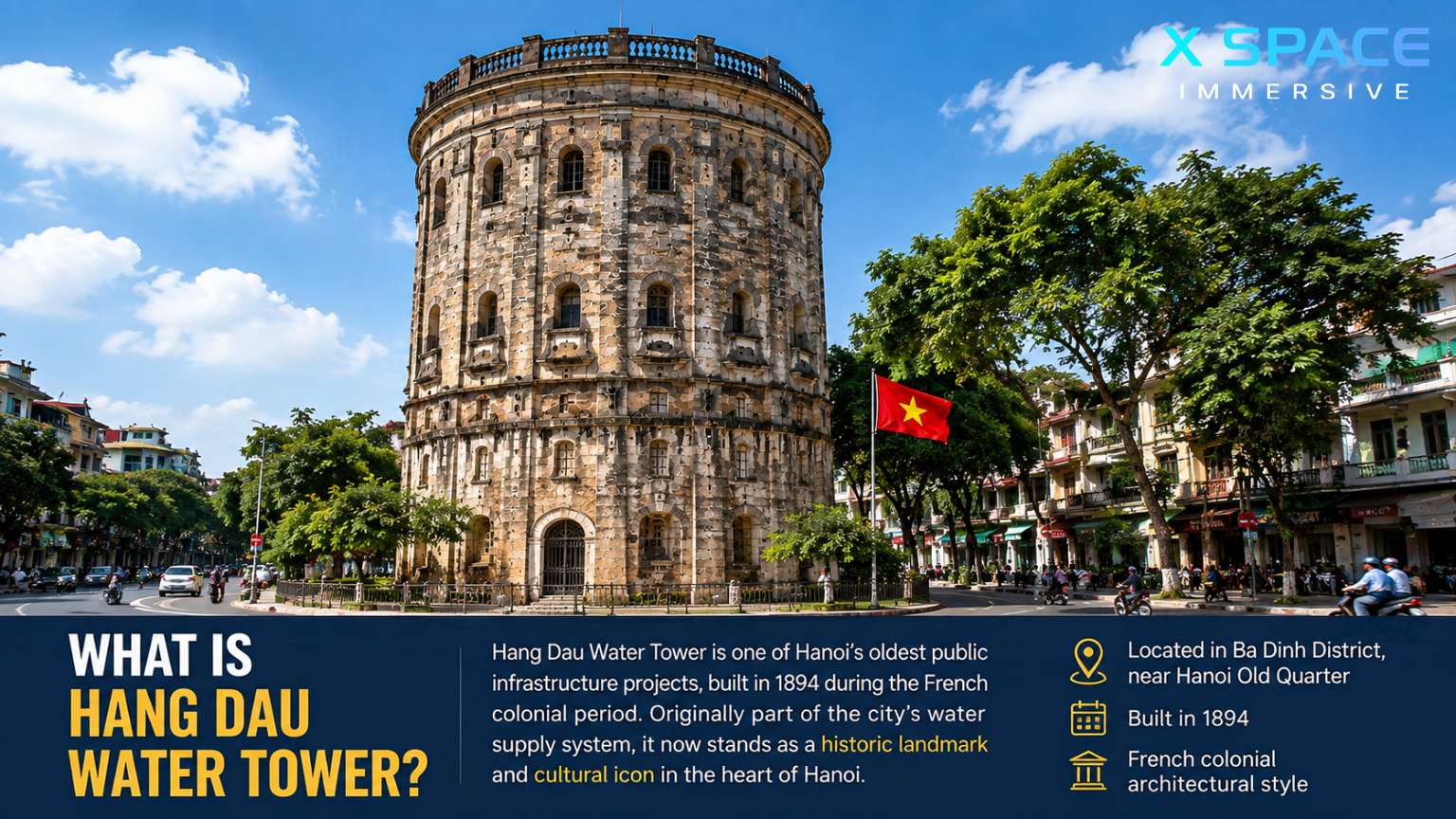
Hang Dau Water Tower, one of Hanoi’s oldest historical landmarks in Ba Dinh District
More than just an old building, Hang Dau Water Tower is one of Hanoi’s oldest surviving public infrastructure projects. Located at one of the city’s busiest intersections, the tower has witnessed over a century of political change, urban development, and cultural transformation.
Originally designed to distribute clean water across Hanoi during the French colonial era, the structure has gradually evolved into a historical monument that connects visitors with the city’s architectural heritage.
Unlike many historical landmarks that were built for religious or governmental purposes, Hang Dau Water Tower represents the modernization of Hanoi’s public utilities. Its solid stone walls, circular design, and commanding presence continue to make it one of the city’s most recognizable yet often overlooked landmarks.
Today, the tower serves not only as a reminder of Hanoi’s engineering history but also as a venue for artistic and cultural experiences that reinterpret its historical significance for modern audiences.
Where Is Hang Dau Water Tower Located?
Hang Dau Water Tower is situated at the intersection of Hang Dau Street, Quan Thanh Street, Phan Dinh Phung Street, and Hang Than Street in Ba Dinh District, Hanoi.
This strategic location has long made the tower an important urban landmark. During the colonial period, it occupied a central position within Hanoi’s expanding infrastructure network. Today, it serves as a convenient starting point for exploring many of the capital’s most famous attractions.
Within just a short walk, visitors can reach:
- Hanoi Old Quarter
- Dong Xuan Market
- Truc Bach Lake
- West Lake
- Quan Thanh Temple
- Long Bien Bridge
Because of its proximity to both historical neighborhoods and modern city life, Hang Dau Water Tower fits perfectly into a half-day or full-day sightseeing itinerary.
Whether you’re wandering through Hanoi’s charming streets or exploring the city’s French colonial architecture, the tower offers an excellent stop along the way.
Why Is Hang Dau Water Tower Famous?
Although it may not enjoy the same international recognition as Hoan Kiem Lake or the Temple of Literature, Hang Dau Water Tower has earned a special place in Hanoi’s cultural landscape for several compelling reasons.
A Symbol of Hanoi’s Urban Development
When the French administration began modernizing Hanoi in the late nineteenth century, reliable access to clean water became one of its highest priorities. Hang Dau Water Tower played a vital role in supplying water to public buildings, government offices, military facilities, and residential neighborhoods.
Its construction marked an important milestone in the modernization of the city, introducing advanced engineering techniques that were considered innovative for the time.
A Rare Example of French Colonial Infrastructure
Many visitors admire Hanoi’s colonial villas and government buildings, but fewer recognize that Hang Dau Water Tower is equally significant from an architectural perspective.
Unlike decorative colonial buildings, the tower combines functionality with aesthetic design. Built primarily from locally sourced stone and brick, it demonstrates how European engineering principles were adapted to Vietnam’s climate and urban environment.
Its circular silhouette has become one of the city’s most distinctive architectural features.
A Hidden Cultural Landmark
For decades, the interior of Hang Dau Water Tower remained inaccessible to the public, adding an element of mystery to the landmark.
In recent years, however, the tower has gained renewed attention through cultural events, art installations, and immersive exhibitions that invite visitors to experience the historic space in entirely new ways.
This blend of heritage preservation and contemporary creativity has transformed Hang Dau Water Tower into one of Hanoi’s emerging cultural destinations.
The History of Hang Dau Water Tower
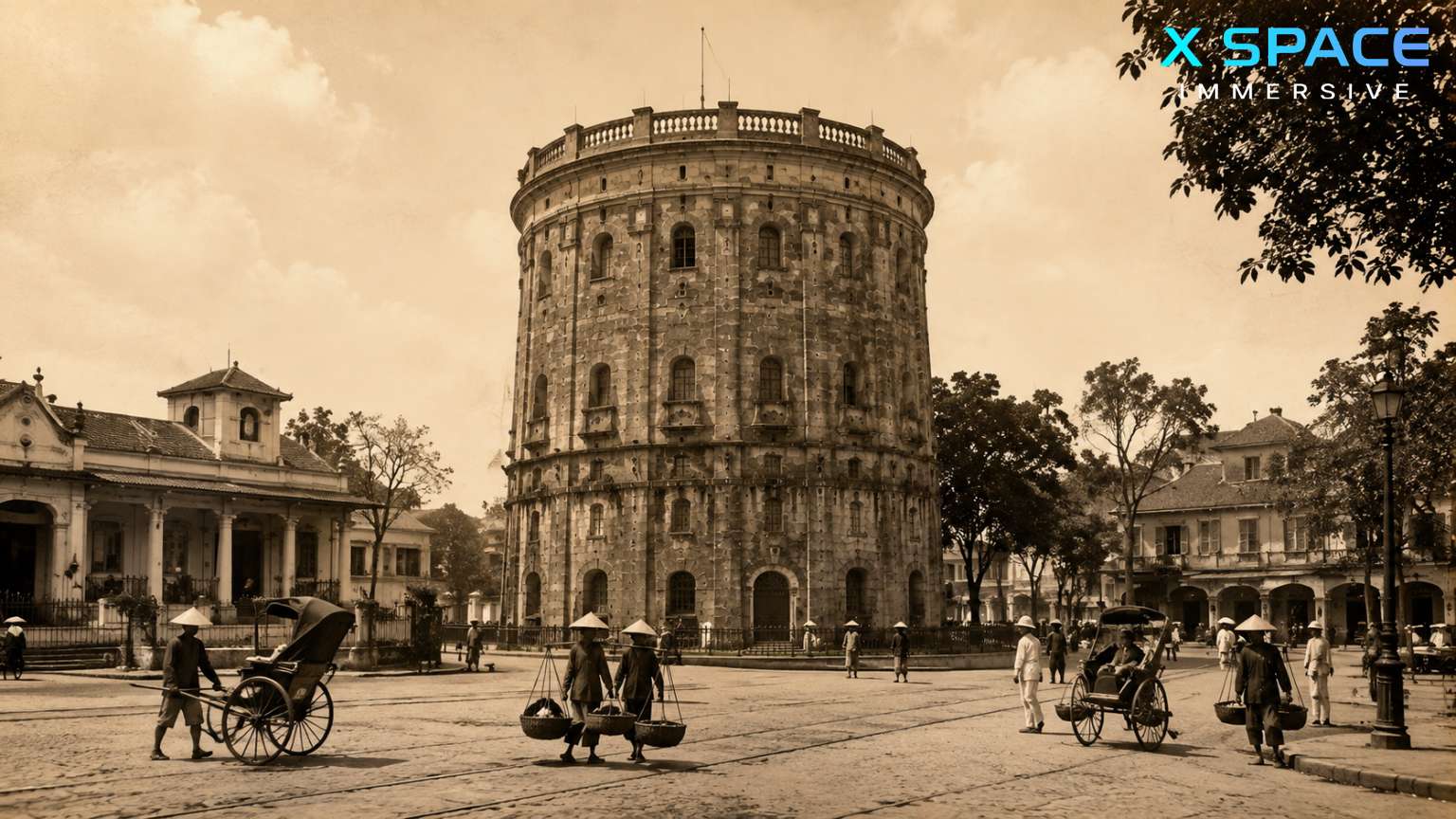
Historic view of Hang Dau Water Tower built in 1894 during the French colonial period in Hanoi
Understanding the history of Hang Dau Water Tower provides valuable insight into Hanoi’s remarkable journey from a traditional imperial city to a thriving modern capital.
Every stone within the tower reflects a chapter of Hanoi’s development, from colonial planning and wartime resilience to cultural preservation in the twenty-first century.
Construction During the French Colonial Era
The story of Hang Dau Water Tower begins in the late nineteenth century, when the French colonial administration introduced an ambitious program to modernize Hanoi’s infrastructure.
At the time, clean water distribution posed a major challenge. Traditional wells and ponds could no longer meet the demands of a rapidly growing population.
To address this issue, engineers designed a centralized water supply system that included pumping stations, underground pipelines, and elevated water storage facilities.
Completed in 1894, Hang Dau Water Tower became one of the most important components of this network.
Its elevated reservoir allowed water pressure to remain consistent throughout surrounding neighborhoods, ensuring that clean water could reach homes, public buildings, hospitals, and military installations.
Although modern visitors often admire the tower’s appearance, its true significance originally lay in its practical engineering function.
Engineering Innovation of Its Time
For its era, Hang Dau Water Tower represented a remarkable engineering achievement.
Rather than relying solely on gravity from natural water sources, the colonial system pumped treated water into the tower’s elevated reservoir before distributing it across the city through underground pipelines.
The tower’s thick masonry walls helped regulate interior temperatures, protecting the stored water from excessive heat during Hanoi’s hot summers.
Its circular design also distributed structural loads evenly, allowing the building to withstand decades of weather, changing urban conditions, and the passage of time.
More than 130 years later, the tower remains a testament to the durability of nineteenth-century engineering.
Witness to Hanoi’s Changing History
Over the decades, Hang Dau Water Tower has silently observed some of the most significant moments in Hanoi’s history.
It survived periods of political transition, witnessed wartime challenges, and remained standing as the city expanded around it.
As Hanoi modernized throughout the twentieth century, newer water infrastructure gradually replaced the tower’s original function. Yet instead of disappearing into history, Hang Dau Water Tower endured as an enduring landmark that connected generations of residents with the city’s past.
Today, while its role has shifted from public utility to cultural heritage, the tower continues to symbolize resilience, innovation, and the evolving identity of Vietnam’s capital.
Its preservation reminds visitors that even functional infrastructure can become an important part of a city’s cultural memory, carrying stories that extend far beyond bricks and stone.
Hang Dau Water Tower Architecture
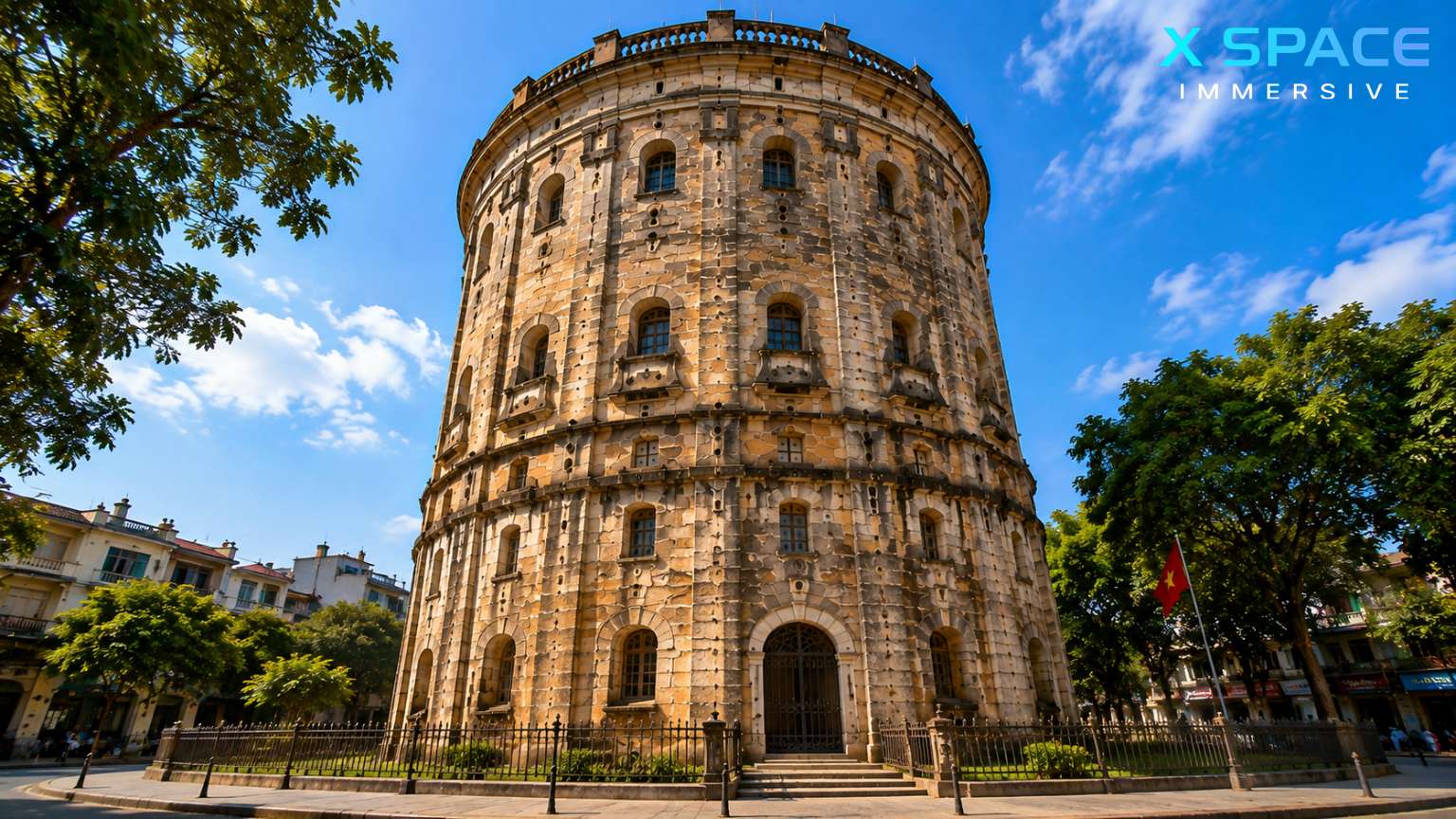
French colonial architecture of Hang Dau Water Tower with circular stone structure and arched windows
One of the reasons Hang Dau Water Tower continues to captivate visitors is its remarkable architecture. Although it was originally designed as a functional water reservoir, the structure demonstrates how engineering and aesthetics can coexist. More than 130 years after its construction, the tower remains one of the finest examples of French colonial infrastructure in Hanoi.
Unlike many modern water facilities hidden from public view, Hang Dau Water Tower was built to become a permanent feature of the city’s landscape. Its imposing stone façade, symmetrical form, and timeless design allow it to blend naturally into both the historic and contemporary streetscape of Hanoi.
Exterior Design and Materials
At first glance, Hang Dau Water Tower resembles a medieval fortress rather than a public utility. Its circular shape, thick stone walls, and narrow arched windows create a striking appearance that immediately distinguishes it from surrounding buildings.
The tower was primarily constructed using locally sourced stone and brick, materials chosen for their durability and ability to withstand Hanoi’s tropical climate. These robust masonry walls not only supported the immense weight of the water reservoir but also helped regulate the internal temperature, protecting the stored water from excessive heat.
Standing approximately 25 meters tall, the tower features:
- A circular stone structure with exceptional stability
- Thick masonry walls designed for long-term durability
- Small arched openings that provide ventilation and natural light
- Decorative brick detailing inspired by French colonial architecture
- A domed roof that completes its distinctive silhouette
Even after more than a century, much of the original exterior remains remarkably well preserved, making Hang Dau Water Tower a valuable example of nineteenth-century engineering.
Interior Structure
Although public access to the interior has traditionally been limited, the inside of Hang Dau Water Tower is equally fascinating from an engineering perspective.
At its core was a large elevated water reservoir connected to an extensive network of underground pipelines. Water was pumped into the tank before being distributed throughout the surrounding districts using gravity, ensuring a consistent water supply for homes, government buildings, and military facilities.
The tower’s internal layout was carefully designed to maximize both efficiency and structural integrity. Every element served a practical purpose, from the reinforced supporting walls to the distribution system hidden within the structure.
Today, parts of the interior have been adapted for cultural exhibitions and immersive art experiences, allowing visitors to appreciate not only the engineering behind the landmark but also its unique atmosphere.
French Colonial Architectural Features
Hang Dau Water Tower reflects the architectural philosophy of the French colonial period, when infrastructure was expected to be both functional and visually impressive.
Rather than constructing a simple industrial facility, French engineers created a landmark that would contribute to Hanoi’s urban identity.
Several architectural characteristics define the tower:
- Symmetrical circular proportions
- Solid stone masonry construction
- Roman-inspired arched windows
- Decorative brickwork around the upper sections
- Durable design adapted to Vietnam’s humid climate
These elements distinguish Hang Dau Water Tower from traditional Vietnamese architecture while highlighting the cultural exchange that shaped Hanoi during the colonial era.
Today, architecture enthusiasts often consider the tower one of the city’s most overlooked historical treasures.
Why Visit Hang Dau Water Tower?
Whether you’re visiting Hanoi for the first time or rediscovering the city from a new perspective, Hang Dau Water Tower offers an experience unlike any other. It is more than a historical monument – it is a place where history, architecture, culture, and creativity come together.
Here are several reasons why the landmark deserves a place on your itinerary.
Discover an Important Piece of Hanoi’s History
Every historic city has landmarks that tell the story of its development, and Hang Dau Water Tower is one of Hanoi’s most significant examples.
The tower represents the modernization of the city’s public infrastructure during the late nineteenth century. Its survival through decades of political change, rapid urbanization, and modernization makes it a symbol of Hanoi’s resilience and continuous evolution.
Walking around the tower offers visitors a chance to connect with a chapter of Hanoi’s history that often receives less attention than temples or colonial villas.
Admire Unique Colonial Architecture
For travelers interested in architecture, Hang Dau Water Tower is a hidden gem.
Its fortress-like appearance, carefully crafted stone walls, and elegant proportions make it one of the most photogenic colonial structures in Hanoi.
Unlike ornate government buildings or French villas, the tower demonstrates how beauty can emerge from practical engineering. This balance between functionality and design continues to inspire architects, historians, and photographers alike.
Experience a Different Side of Hanoi
Many tourists spend their time exploring the Old Quarter or visiting famous landmarks such as Hoan Kiem Lake. While these attractions are undoubtedly worth seeing, Hang Dau Water Tower offers a quieter and more authentic perspective on the city.
The surrounding neighborhood combines historical streets, local cafés, tree-lined boulevards, and nearby cultural attractions, creating an atmosphere that encourages visitors to slow down and appreciate Hanoi beyond its busiest tourist areas.
A Perfect Spot for Photography
Photography enthusiasts will find countless opportunities around Hang Dau Water Tower.
The tower’s circular form, textured stone walls, and changing natural light create striking compositions throughout the day.
Early morning and late afternoon provide particularly beautiful lighting, while nearby streets lined with mature trees offer excellent framing for architectural photography.
Whether you’re capturing travel memories or creating professional content, the tower provides a distinctive backdrop that reflects Hanoi’s historic character.
Visitor Guide to Hang Dau Water Tower
Planning ahead will help you make the most of your visit to Hang Dau Water Tower. Although the landmark is easy to reach, knowing the best time to visit and what to expect can enhance your overall experience.
Opening Hours
The exterior of Hang Dau Water Tower can be viewed at any time as it is located in a public space.
However, if the interior is open for special exhibitions, immersive experiences, or cultural events, operating hours may vary depending on the program.
It is advisable to check the latest event schedule before planning your visit.
Entrance Fee
Viewing the exterior of Hang Dau Water Tower is free of charge.
If temporary exhibitions or immersive installations are taking place inside the tower, admission fees may apply. Ticket prices and availability are typically announced by event organizers.
Best Time to Visit
The ideal time to visit Hang Dau Water Tower depends on the type of experience you’re seeking.
Morning (7:00–9:00 AM)
- Pleasant temperatures
- Softer lighting for photography
- Fewer visitors
Late Afternoon (4:00–6:00 PM)
- Beautiful golden-hour lighting
- Comfortable weather for walking
- Easy access to nearby attractions afterward
If you’re planning to visit during a special exhibition or cultural event, arriving early is recommended, especially on weekends and public holidays.
Photography Tips
To capture the best images of Hang Dau Water Tower, consider the following suggestions:
- Visit during golden hour for softer natural light.
- Use surrounding tree-lined streets to frame the tower.
- Experiment with wide-angle shots to emphasize its circular architecture.
- Include nearby colonial buildings to provide historical context.
- Visit after light rain for dramatic reflections on surrounding streets.
The combination of historic architecture and vibrant urban life makes the area particularly rewarding for street and travel photography.
Visitor Etiquette
As a protected historical landmark, Hang Dau Water Tower should be treated with care and respect.
When visiting, remember to:
- Keep the surrounding area clean.
- Follow instructions from event organizers during exhibitions.
- Avoid climbing or touching protected architectural features.
- Respect other visitors while taking photographs.
- Support local businesses and cafés nearby to help preserve the neighborhood’s vibrant atmosphere.
By practicing responsible tourism, visitors contribute to the long-term preservation of one of Hanoi’s most distinctive historical landmarks.
Things to Do Near Hang Dau Water Tower
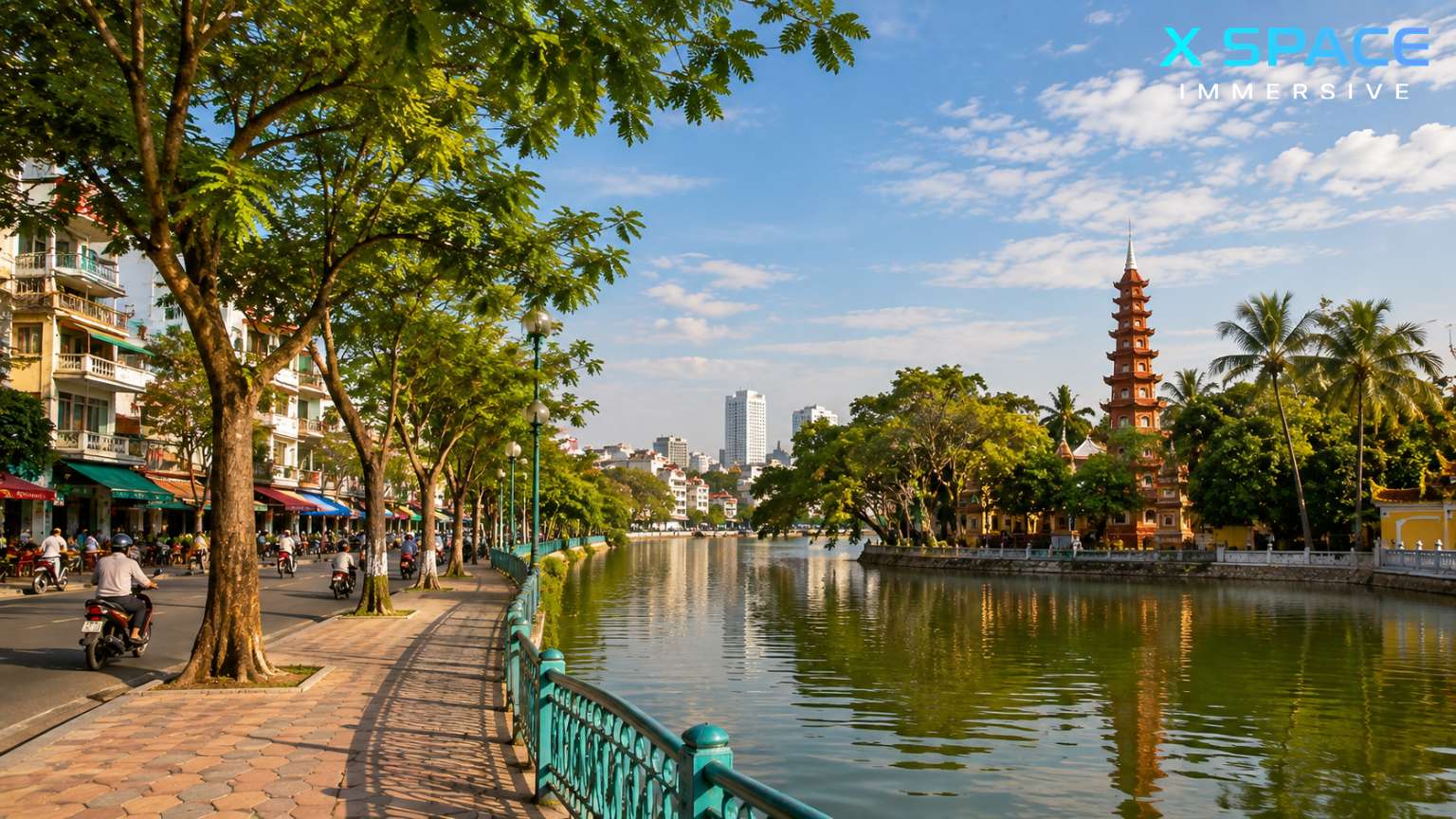
Scenic view of Truc Bach Lake near Hang Dau Water Tower in Hanoi
One of the greatest advantages of visiting Hang Dau Water Tower is its prime location. Situated on the edge of Hanoi’s Old Quarter, the landmark is surrounded by centuries-old streets, peaceful lakes, bustling markets, and cultural attractions. Whether you’re interested in history, local cuisine, shopping, or photography, you’ll find plenty to explore within walking distance.
Here are some of the best places to include in your itinerary after visiting Hang Dau Water Tower.
Explore Hanoi Old Quarter
Just a few minutes from Hang Dau Water Tower, the Hanoi Old Quarter is the cultural heart of Vietnam’s capital. Famous for its maze of narrow streets and centuries-old shop houses, this historic district offers an authentic glimpse into Hanoi’s daily life.
Each street was traditionally dedicated to a particular craft or trade, a tradition that continues to shape the neighborhood’s unique character today. As you wander through the Old Quarter, you’ll discover local boutiques, family-run cafés, artisan workshops, and lively street food vendors around every corner.
For first-time visitors, this area is perfect for:
- Walking tours
- Shopping for handcrafted souvenirs
- Sampling authentic Vietnamese cuisine
- Experiencing Hanoi’s vibrant street culture
The contrast between the bustling Old Quarter and the quiet elegance of Hang Dau Water Tower creates a fascinating journey through different chapters of Hanoi’s history.
Visit Dong Xuan Market
Located within walking distance of Hang Dau Water Tower, Dong Xuan Market is Hanoi’s largest traditional indoor market and one of the city’s most vibrant commercial centers.
Established during the French colonial period, the market remains a favorite destination for both locals and visitors. Inside, you’ll find everything from fresh produce and local snacks to textiles, clothing, handicrafts, and souvenirs.
The surrounding streets are equally lively, especially in the evening when food stalls serve some of Hanoi’s most iconic dishes, including:
- Pho
- Bun Cha
- Banh Cuon
- Grilled seafood
- Vietnamese desserts
A visit to Dong Xuan Market offers an excellent opportunity to experience Hanoi’s energetic atmosphere while discovering local flavors.
Relax Around Truc Bach Lake
If you’re looking for a peaceful escape after exploring the city’s busy streets, Truc Bach Lake is an ideal destination.
Located just a short stroll from Hang Dau Water Tower, this picturesque lake offers scenic walking paths, charming cafés, and beautiful waterfront views.
Unlike the more crowded Hoan Kiem Lake, Truc Bach provides a quieter setting where visitors can relax, enjoy a cup of Vietnamese coffee, or simply watch daily life unfold.
The area is particularly beautiful during sunrise and sunset, making it a favorite location for photographers and couples alike.
Discover West Lake
Continuing north from Truc Bach Lake brings you to West Lake, the largest freshwater lake in Hanoi.
Covering more than 500 hectares, West Lake is surrounded by luxury hotels, historic temples, stylish cafés, rooftop restaurants, and cycling routes.
Visitors often spend several hours exploring the lakeside, where they can:
- Rent a bicycle
- Enjoy lakeside coffee
- Visit Tran Quoc Pagoda
- Watch the sunset over the water
- Taste local specialties at nearby restaurants
Combining Hang Dau Water Tower, Truc Bach Lake, and West Lake creates one of the most enjoyable walking routes in Hanoi.
Experience Hanoi’s Café Culture
The neighborhoods surrounding Hang Dau Water Tower are home to numerous independent cafés that blend traditional Vietnamese coffee culture with modern design.
Many occupy restored French colonial buildings, creating a charming atmosphere where visitors can take a break between sightseeing destinations.
Popular drinks include:
- Vietnamese egg coffee
- Traditional drip coffee
- Coconut coffee
- Fresh tropical juices
- Vietnamese herbal tea
Sitting in a quiet café while overlooking Hanoi’s historic streets is one of the most memorable ways to experience the city’s slower pace of life.
Interesting Facts About Hang Dau Water Tower
Behind its impressive stone walls, Hang Dau Water Tower holds countless stories that many visitors never discover. These fascinating facts highlight why the landmark remains one of Hanoi’s most unique historical sites.
It Has Stood for More Than 130 Years
Completed in 1894, Hang Dau Water Tower has witnessed more than a century of Hanoi’s transformation.
From colonial rule and wartime challenges to rapid urban development, the tower has remained a constant presence in the city’s skyline.
Its remarkable preservation reflects both the quality of its original construction and Hanoi’s commitment to protecting its historical heritage.
It Once Supplied Water Across Hanoi
Few visitors realize that Hang Dau Water Tower originally served as a crucial part of Hanoi’s first centralized water supply network.
The elevated reservoir allowed water to flow through underground pipes using gravity, providing reliable access to clean water for government buildings, hospitals, military facilities, and surrounding neighborhoods.
At the time, this represented one of the city’s most advanced public infrastructure projects.
Its Fortress-Like Appearance Is No Coincidence
Although many people compare Hang Dau Water Tower to a medieval castle, its robust design was primarily intended for structural strength.
The thick stone walls support the enormous weight of the water tank while protecting it from Hanoi’s tropical climate.
Its distinctive appearance has since become one of the tower’s most recognizable architectural features.
It Has Been Reimagined as a Cultural Space
After decades of serving purely functional purposes, Hang Dau Water Tower has entered a new chapter in its history.
Rather than remaining a closed historical structure, the tower has become a venue for cultural events, artistic exhibitions, and immersive experiences that invite visitors to engage with Hanoi’s heritage in innovative ways.
This transformation demonstrates how historical preservation and contemporary creativity can successfully coexist.
It Remains One of Hanoi’s Hidden Gems
Despite its historical significance, Hang Dau Water Tower is still overlooked by many international tourists.
For travelers seeking destinations beyond Hanoi’s most famous attractions, the tower offers a rewarding experience that combines history, architecture, and local culture without the large crowds often found elsewhere.
Its understated charm is precisely what makes it so memorable.
FAQ About Hang Dau Water Tower
Visitors often have questions before adding Hang Dau Water Tower to their Hanoi itinerary. Here are answers to some of the most common queries.
Can Visitors Enter Hang Dau Water Tower?
Access to the interior is generally limited, as the tower is a protected historical structure. However, during special exhibitions, cultural programs, or immersive art events, visitors may have the opportunity to explore selected interior spaces.
It’s recommended to check current event schedules before your visit.
Is Hang Dau Water Tower Free to Visit?
Yes. The exterior of Hang Dau Water Tower can be visited free of charge at any time.
If special exhibitions or immersive experiences are being held inside the tower, separate admission tickets may be required.
How Much Time Should I Spend Here?
Most visitors spend around 20 to 45 minutes exploring the exterior, taking photographs, and learning about the tower’s history.
If you’re attending an exhibition or immersive experience, allow approximately 60 to 90 minutes to fully enjoy the visit.
When Is the Best Time to Visit?
The best time to visit Hang Dau Water Tower is during the cooler months from October to April, when Hanoi’s weather is more comfortable for walking.
For photography, early morning and late afternoon offer the most flattering natural light.
Weekday mornings are generally quieter than weekends.
Is Hang Dau Water Tower Suitable for Families?
Absolutely.
Families with children can enjoy learning about Hanoi’s history while exploring nearby attractions such as Truc Bach Lake, West Lake, and the Old Quarter.
If an immersive exhibition is taking place, it can provide an engaging educational experience for visitors of all ages.
Can I Combine Hang Dau Water Tower with Other Attractions?
Yes. Thanks to its central location, Hang Dau Water Tower is easily combined with several of Hanoi’s most popular destinations.
A suggested half-day itinerary includes:
- Hang Dau Water Tower
- Dong Xuan Market
- Hanoi Old Quarter
- Truc Bach Lake
- West Lake
- Tran Quoc Pagoda
This route offers a balanced mix of history, culture, local cuisine, and scenic views, making it an excellent choice for both first-time and returning visitors.
Experience X Space Immersive at Hang Dau Water Tower
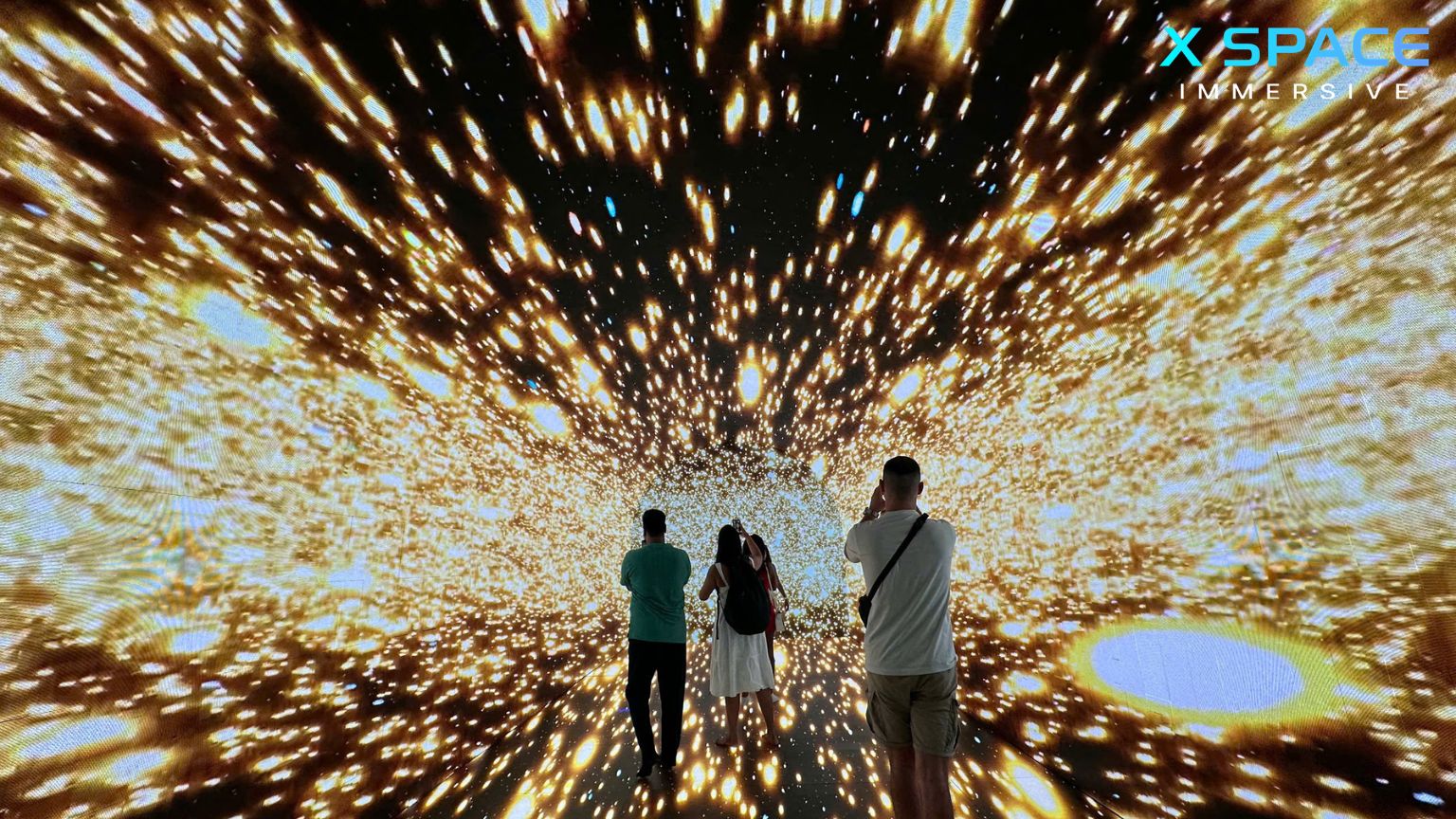
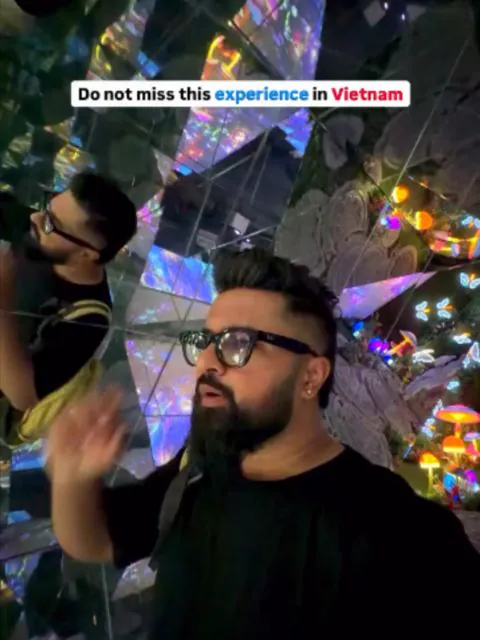
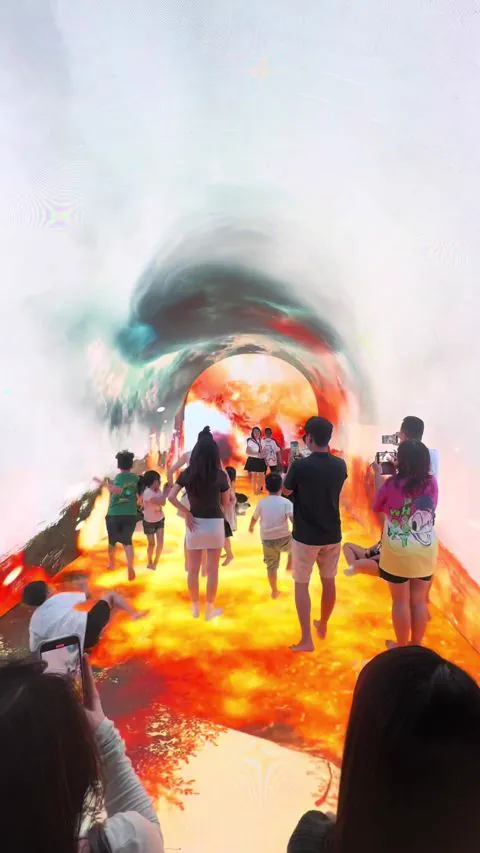
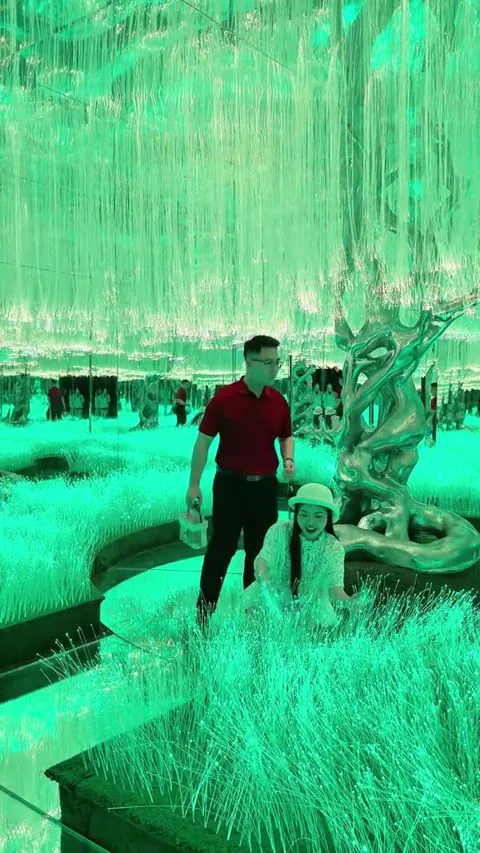
Visitors enjoying the X Space Immersive experience in Hanoi
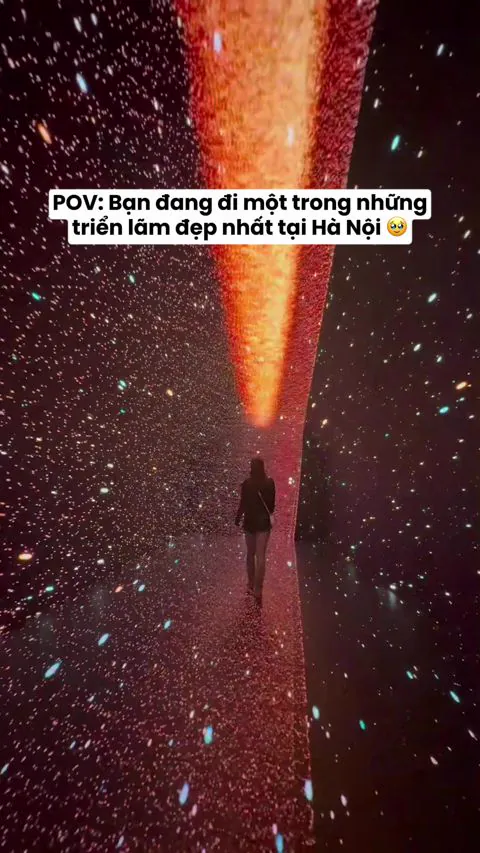
For more than a century, Hang Dau Water Tower has stood as a silent witness to Hanoi’s changing skyline. Today, this historic landmark is entering an exciting new chapter through Experience X Space Immersive – an innovative exhibition that transforms the tower into a captivating journey of light, sound, and storytelling.
Rather than simply observing history from the outside, visitors are invited to step inside the landmark and experience it in an entirely new way. By blending digital technology with the tower’s authentic architecture, the exhibition creates a dialogue between Hanoi’s past and its future, allowing every visitor to connect with the city’s heritage through immersive art.
Whether you’re passionate about history, architecture, contemporary art, or interactive experiences, Experience X Space Immersive offers a memorable way to rediscover one of Hanoi’s most iconic landmarks.
Discover Hang Dau Water Tower Through Immersive Storytelling
Unlike a traditional museum visit, Experience X Space Immersive uses multimedia technology to bring history to life.
As visitors move through the interior of Hang Dau Water Tower, carefully designed projections, synchronized lighting, ambient soundscapes, and digital installations transform the centuries-old space into an engaging storytelling environment.
Instead of reading information panels alone, guests experience Hanoi’s history through visual narratives that highlight the tower’s original purpose, its architectural beauty, and its role in the city’s development.
This combination of heritage and innovation creates a deeper emotional connection than conventional exhibitions, making the experience accessible to visitors of all ages.
What to Expect Inside Experience X Space Immersive
Every exhibition may vary depending on the creative concept, but visitors can generally expect a carefully curated journey that combines history, technology, and artistic expression.
Highlights often include:
Immersive Projection Mapping
Large-scale digital projections interact with the tower’s historic stone walls, revealing stories hidden within the architecture itself.
The visual effects enhance rather than replace the building’s authentic character, allowing visitors to appreciate both the original structure and the contemporary artwork.
Interactive Light and Sound Installations
Lighting plays a central role in creating atmosphere throughout the exhibition.
Combined with carefully designed soundscapes, these installations encourage visitors to slow down, observe details, and experience the historic space from new perspectives.
The changing interplay between light and architecture makes every corner of Hang Dau Water Tower feel alive.
Contemporary Digital Art
Many installations reinterpret Hanoi’s cultural identity through modern artistic techniques.
Historical themes, urban development, and local heritage are presented using immersive media, creating an experience that resonates with both local audiences and international visitors.
The exhibition demonstrates how technology can become a powerful tool for preserving and communicating cultural heritage.
An Extraordinary Photography Experience
One of the most popular aspects of Experience X Space Immersive is its visual appeal.
The combination of dramatic lighting, historic stone textures, and digital projections creates countless opportunities for photography.
Whether you’re capturing travel memories or creating content for social media, the exhibition offers unique backdrops that cannot be found elsewhere in Hanoi.
Why Experience X Space Immersive Is Worth Visiting
Adding Experience X Space Immersive to your itinerary offers much more than an opportunity to see the interior of Hang Dau Water Tower.
It provides a completely different perspective on one of Hanoi’s oldest landmarks.
Here are just a few reasons why the experience stands out.
Connect History with Modern Innovation
Many historical sites focus solely on preserving the past.
In contrast, Experience X Space Immersive demonstrates how heritage can remain relevant through contemporary technology and creative interpretation.
Visitors leave with a greater understanding not only of the tower itself but also of Hanoi’s ongoing cultural evolution.
Perfect for Every Type of Traveler
Whether you’re traveling alone, with family, friends, or colleagues, the immersive exhibition offers something for everyone.
History enthusiasts appreciate the stories behind the landmark.
Architecture lovers admire the preserved colonial structure.
Art enthusiasts enjoy the creative installations.
Families benefit from an educational yet entertaining experience.
Content creators discover visually stunning spaces ideal for photography and video.
A Hidden Cultural Experience in Hanoi
Many visitors spend their time exploring Hanoi’s better-known attractions, yet Experience X Space Immersive offers an opportunity to discover a side of the city that remains relatively undiscovered.
Its combination of historical authenticity and digital creativity creates a memorable experience that differs significantly from traditional sightseeing.
For travelers seeking something beyond the typical tourist itinerary, this exhibition is well worth including.
Tips Before Your Visit
To make the most of your experience, consider a few practical recommendations before visiting Hang Dau Water Tower.
Check Exhibition Schedules
As Experience X Space Immersive may feature seasonal exhibitions or special events, it’s advisable to confirm opening hours and ticket availability before arriving.
Allow Enough Time
Although the exhibition can be explored in under an hour, many visitors choose to spend additional time appreciating the installations, taking photographs, and exploring nearby attractions.
Plan approximately 60 to 90 minutes for a comfortable visit.
Bring Your Camera
The immersive lighting and historical setting create exceptional photography opportunities.
If photography is permitted during your visit, you’ll find countless visually striking compositions throughout the exhibition.
Continue Exploring the Neighborhood
After experiencing Hang Dau Water Tower, continue your journey through nearby destinations such as:
- Hanoi Old Quarter
- Dong Xuan Market
- Truc Bach Lake
- West Lake
- Tran Quoc Pagoda
Together, these attractions provide a deeper understanding of Hanoi’s rich history, vibrant culture, and evolving urban landscape.
Conclusion
Standing proudly for more than 130 years, Hang Dau Water Tower remains one of Hanoi’s most distinctive historical landmarks. From its origins as an essential part of the city’s first modern water supply system to its role today as a preserved cultural heritage site, the tower reflects Hanoi’s remarkable journey through time.
Its impressive French colonial architecture, fascinating engineering, and central location make it an essential stop for travelers interested in discovering the city’s lesser-known stories. Whether you’re exploring the surrounding Old Quarter, photographing its iconic stone façade, or learning about its historical significance, Hang Dau Water Tower offers an experience that goes far beyond a typical sightseeing destination.
For those seeking an even deeper connection with Hanoi’s heritage, Experience X Space Immersive adds a contemporary dimension to the visit. By combining digital art, immersive storytelling, and historic architecture, it reimagines the tower as a space where the past and future meet.
If you’re planning your next journey through Vietnam’s capital, be sure to include Hang Dau Water Tower on your itinerary. It is not only a remarkable piece of history but also a living cultural landmark that continues to inspire curiosity, creativity, and discovery.
Was this article helpful?
Thanks for your feedback!