Hoa Lo Prison: Everything You Need to Know Before Visiting

Hoa Lo Prison is one of Hanoi’s most iconic historical landmarks, offering visitors a powerful glimpse into Vietnam’s colonial and wartime past. Located in the heart of the capital, this former prison has been transformed into a museum where authentic artifacts, preserved prison cells, and compelling exhibitions bring history to life. Whether you’re a history enthusiast or a first-time visitor to Hanoi, Hoa Lo Prison is a must-visit destination that offers a meaningful and unforgettable cultural experience.
In this guide
What Is Hoa Lo Prison?
The Origin of Hoa Lo Prison
The story of Hoa Lo Prison begins in 1896, during the period of French colonial rule in Vietnam. Constructed by the French administration, the prison was originally named Maison Centrale, meaning “Central Prison.” It was designed to detain Vietnamese political prisoners, revolutionaries, intellectuals, and independence activists who opposed colonial authority.
The name “Hoa Lo” has an interesting origin. Before the prison existed, the surrounding neighborhood was famous for producing traditional wood-burning stoves and pottery. The Vietnamese words “Hỏa Lò” literally translate to “fiery furnace” or “stove street,” reflecting the area’s long-standing craft traditions. Although the neighborhood has transformed dramatically over the past century, the historical name remains, linking the prison to the local heritage of Hanoi.
When first completed, Hoa Lo Prison covered more than 12,000 square meters, making it one of the largest prisons in French Indochina. Built with thick stone walls, reinforced watchtowers, iron gates, and electric security systems, it represented one of the most advanced prison facilities of its time. The architecture itself was intended to prevent escape while creating an atmosphere of isolation and control.
However, despite its imposing design, the prison quickly became overcrowded. Thousands of Vietnamese prisoners were held within walls originally intended for far fewer inmates. Over time, the prison became not only a detention center but also a symbol of colonial oppression and the enduring struggle for national independence.
Today, although much of the original complex has been replaced by modern urban development, the preserved section of Hoa Lo Prison Museum continues to protect many original structures, allowing visitors to witness this important chapter of Vietnamese history firsthand.
Hoa Lo Prison During the French Colonial Period
The French colonial period remains the defining chapter in the history of Hoa Lo Prison.
From the late nineteenth century until 1954, the prison housed thousands of Vietnamese patriots who fought against colonial rule. Many of these prisoners were teachers, journalists, scholars, students, and political leaders who believed Vietnam deserved independence. Their imprisonment reflected the broader conflict between colonial authorities and the growing nationalist movement throughout the country.
Life inside Hoa Lo Prison was notoriously harsh. Prisoners were confined to overcrowded communal cells where dozens of people shared limited space. Heavy iron shackles secured inmates to long wooden platforms, restricting movement for extended periods. Ventilation was poor, sanitation was inadequate, and diseases spread quickly under such difficult conditions.
Food was scarce and basic, while medical treatment remained extremely limited. Many prisoners endured forced labor, physical punishment, and long periods of isolation. Despite these hardships, historical records show that prisoners found ways to educate one another, exchange political ideas, and maintain hope for Vietnam’s future independence.
One of the most remarkable aspects of this period was the resilience displayed by Vietnamese revolutionaries. Secret meetings, handwritten documents, and coded communication helped preserve revolutionary ideals even within prison walls. Many individuals who later became influential leaders in Vietnam spent time imprisoned at Hoa Lo.
Today, visitors exploring Hoa Lo Prison Museum can see reconstructed prison cells, preserved shackles, original guard towers, and historical photographs that vividly illustrate daily life during this era. These carefully curated exhibits provide valuable context without sensationalizing the difficult realities experienced by former prisoners.
Hoa Lo Prison During the Vietnam War
Following the end of French colonial rule in northern Vietnam in 1954, Hoa Lo Prison entered a new historical chapter.
During the Vietnam War, part of the prison was used to detain captured American military personnel, particularly pilots whose aircraft had been shot down during bombing missions over North Vietnam. It was during this period that American prisoners of war gave the facility the nickname “Hanoi Hilton,” a phrase that has since become widely recognized in international media and historical literature.
This chapter of the prison’s history remains one of the most discussed and sometimes debated aspects of the museum. Today, Hoa Lo Prison Museum presents exhibits featuring photographs, uniforms, personal belongings, and recreated living quarters that document the experiences of American prisoners while also placing them within the broader historical context of the war.
Among the most well-known prisoners held here was U.S. Senator John McCain, whose capture and imprisonment became internationally recognized after the war. His story remains an important part of discussions surrounding the prison’s modern history.
Visitors will notice that the museum carefully divides its exhibitions into different historical periods, allowing guests to understand both the French colonial era and the Vietnam War through chronological storytelling. This balanced presentation encourages visitors to examine historical events from multiple perspectives while reflecting on the lasting impact of conflict on individuals and nations alike.
Rather than focusing solely on military history, the museum emphasizes themes of peace, reconciliation, and remembrance. This thoughtful approach helps transform Hoa Lo Prison Hanoi into more than just a preserved prison—it becomes a place for learning, reflection, and dialogue.
Where Is Hoa Lo Prison in Hanoi?
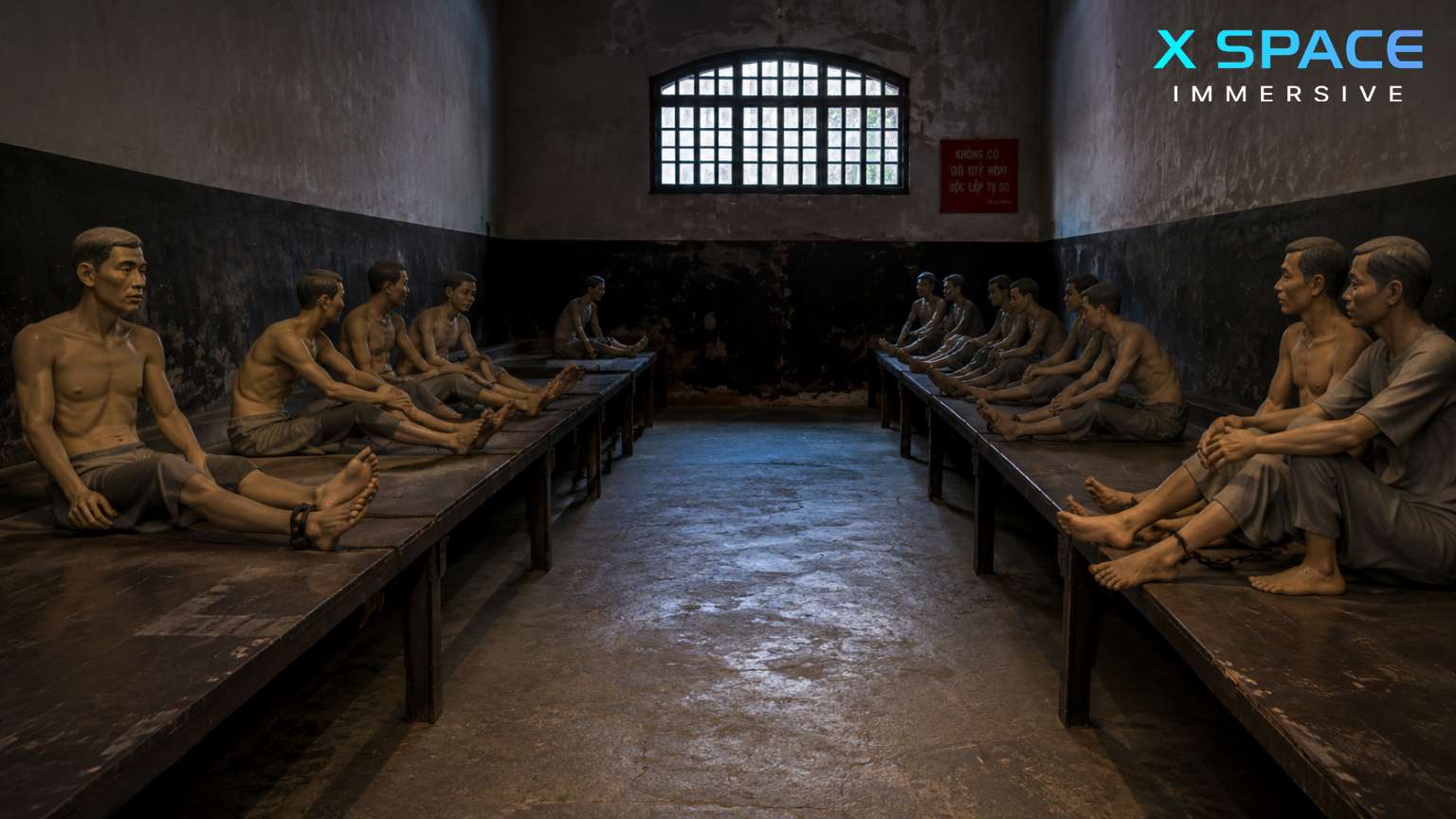
Historic prison cells inside Hoa Lo Prison Museum in Hanoi
Located in the center of Hanoi, Hoa Lo Prison Hanoi is one of the city’s easiest historical attractions to reach. The museum is situated at No. 1 Hoa Lo Street, Hoan Kiem District, placing it within walking distance of many of Hanoi’s most famous landmarks.
For travelers staying in the Old Quarter, reaching Hoa Lo Prison in Hanoi typically takes only 15 to 20 minutes on foot. The pleasant walk passes colonial-era buildings, charming cafés, and tree-lined streets, making the journey itself part of the experience.
Its central location also makes it easy to combine with several nearby attractions, including:
- Hoan Kiem Lake
- St. Joseph’s Cathedral
- Vietnamese Women’s Museum
- Hanoi Opera House
- Trang Tien Plaza
- Hanoi Book Street
Many visitors choose to explore Hoa Lo Prison Museum Hanoi during the morning before continuing to nearby cultural attractions in the afternoon. This creates a well-balanced itinerary that combines history, architecture, local culture, and leisure.
Another advantage of the museum’s location is the abundance of restaurants, coffee shops, and hotels nearby. After an emotionally engaging visit, travelers can easily relax at one of Hanoi’s traditional cafés or enjoy authentic Vietnamese cuisine just a short walk away.
How to Get to Hanoi Hoa Lo Prison
Whether you’re staying in Hanoi’s city center or arriving from elsewhere, reaching Hanoi Hoa Lo Prison is straightforward thanks to the city’s diverse transportation options.
Walking
If you’re staying in the Old Quarter or near Hoan Kiem Lake, walking is often the most enjoyable choice. The route is safe, relatively flat, and allows visitors to discover charming colonial architecture, local boutiques, and hidden cafés along the way.
Walking time:
- Hoan Kiem Lake: approximately 10 minutes
- Hanoi Old Quarter: approximately 15–20 minutes
- St. Joseph’s Cathedral: around 5 minutes
Taxi and Ride-Hailing Services
For greater convenience, visitors can use taxis or ride-hailing apps such as Grab. Fares within central Hanoi are generally affordable, and travel times rarely exceed 15 minutes outside of peak traffic hours.
This option is particularly recommended during Hanoi’s hot summer months or rainy season.
Public Bus
Several public bus routes stop near Hoa Lo Prison Museum, making it an economical option for budget-conscious travelers. Although buses can become crowded during rush hour, they provide easy access from many districts throughout Hanoi.
Motorbike and Bicycle
Renting a motorbike or bicycle offers greater flexibility for travelers planning to explore multiple attractions in one day. Parking is available near the museum, although visitors should arrive early during weekends and holidays when demand is higher.
Regardless of your chosen transportation, arriving before mid-morning allows you to enjoy a quieter atmosphere and spend more time appreciating the museum’s exhibitions before larger tour groups arrive.
What to See Inside Hoa Lo Prison Museum
Stepping inside Hoa Lo Prison Museum is unlike visiting a traditional history museum. Instead of simply reading information panels, visitors walk through preserved prison buildings, reconstructed detention areas, and carefully curated exhibitions that tell the stories of those who lived behind these walls. Every section offers a different perspective on Vietnam’s history, allowing visitors to understand the prison’s role during both the French colonial period and the Vietnam War.
Whether you’re interested in architecture, history, or cultural heritage, the museum provides an engaging experience that typically takes between 1.5 and 2 hours to explore.
Original Prison Cells and Detention Areas
One of the most striking parts of Hoa Lo Prison Museum Hanoi is the preserved prison cells. These rooms have been restored to resemble their original appearance, allowing visitors to better understand the harsh conditions endured by prisoners more than a century ago.
Walking through the narrow stone corridors, you’ll encounter:
- Collective detention rooms with rows of wooden platforms
- Heavy iron shackles once used to restrain prisoners
- Thick stone walls and barred windows
- Solitary confinement cells with minimal natural light
Life inside these cells was extremely difficult. Many prisoners were chained together for long periods, living in overcrowded conditions with limited ventilation and sanitation. Informative displays throughout the museum explain how these living conditions reflected the realities of colonial imprisonment.
Although some exhibits include life-sized figures to recreate historical scenes, the presentation remains respectful and educational rather than overly dramatic.
Historical Artifacts and Documents
Another highlight of Hoa Lo Prison Museum is its impressive collection of historical artifacts. These original objects help transform historical events into personal stories, allowing visitors to connect with individuals rather than simply reading dates and facts.
The exhibitions include:
- Original prison records
- Historical photographs
- Letters written by prisoners
- Personal belongings
- Revolutionary publications
- Maps and architectural drawings
- Uniforms and prison equipment
Many exhibits explain how political prisoners secretly communicated, educated one another, and maintained hope despite their imprisonment. These stories illustrate remarkable resilience and determination, offering visitors valuable insight into Vietnam’s struggle for independence.
Interactive displays and multimedia presentations throughout the museum also make the historical information more accessible for international visitors.
The Guillotine and Death Row Area
Among the museum’s most memorable exhibits is the preserved French guillotine.
Originally brought to Vietnam during the colonial period, this execution device was used to carry out death sentences against political prisoners. Today, it stands as a solemn reminder of one of the darkest chapters in the prison’s history.
Nearby exhibits explain:
- How capital punishment was carried out
- Historical legal procedures during French colonial rule
- Stories of notable prisoners sentenced to death
- The broader context of colonial repression
This section can be emotionally powerful for many visitors. While the displays are presented respectfully, some photographs and descriptions may not be suitable for very young children.
Exhibitions About American Prisoners of War
A separate section of Hoa Lo Prison Museum Hanoi focuses on the Vietnam War.
During this period, the prison housed captured American military personnel, particularly pilots whose aircraft had been shot down over North Vietnam. Internationally, many of these prisoners referred to the facility as the “Hanoi Hilton.”
Visitors can explore exhibitions featuring:
- Prison uniforms
- Reconstructed living quarters
- Historical photographs
- Personal belongings
- Documents relating to prisoner exchanges
- Multimedia presentations about the war
Among the well-known individuals held here was U.S. Senator John McCain, whose imprisonment became internationally recognized after the war.
Rather than presenting a single narrative, the museum encourages visitors to examine this historical period through multiple perspectives. The exhibitions emphasize remembrance, historical understanding, and reconciliation while placing the events within the wider context of Vietnam’s modern history.
Hoa Lo Prison Museum Hanoi: Visitor Information
Planning your visit in advance will help you make the most of your experience at Hoa Lo Prison Museum Hanoi. Before arriving, it’s useful to know the museum’s opening hours, admission fees, and ticket options.
Hoa Lo Prison Hanoi Opening Hours
The regular Hoa Lo Prison Hanoi opening hours are:
- Monday to Sunday
- 8:00 AM – 5:00 PM
The museum remains open every day of the week, including weekends, making it easy to fit into almost any Hanoi itinerary.
For the most enjoyable experience, consider visiting:
- Early morning (8:00–10:00 AM) for a quieter atmosphere
- Late afternoon (after 3:00 PM) when many tour groups have already left
Weekends and Vietnamese public holidays generally attract more visitors, so arriving early is recommended.
Hoa Lo Prison Museum Opening Hours for Night Tours
In addition to daytime visits, Hoa Lo Prison Museum occasionally offers immersive evening experiences that explore the prison through theatrical storytelling, lighting effects, and guided historical narratives.
These special programs often include:
- Guided storytelling tours
- Dramatic sound and lighting
- Interactive historical performances
- Access to selected exhibition areas after dark
Because availability varies throughout the year, visitors should check the museum’s latest schedule before planning an evening visit.
Night tours are especially popular with travelers seeking a more immersive cultural experience and often sell out during peak tourist seasons.
Hoa Lo Prison Entrance Fee
One of the reasons Hoa Lo Prison remains popular among travelers is its affordable admission.
The standard Hoa Lo Prison entrance fee is budget-friendly, making the museum accessible to both domestic and international visitors.
Discounts are often available for:
- Vietnamese students
- Children
- Senior citizens
- Eligible policy beneficiaries
Visitors may be asked to present valid identification to receive discounted admission.
Considering the quality of the exhibitions and historical significance of the site, many travelers consider the museum excellent value for money.
Hoa Lo Prison Ticket Price and Booking Options
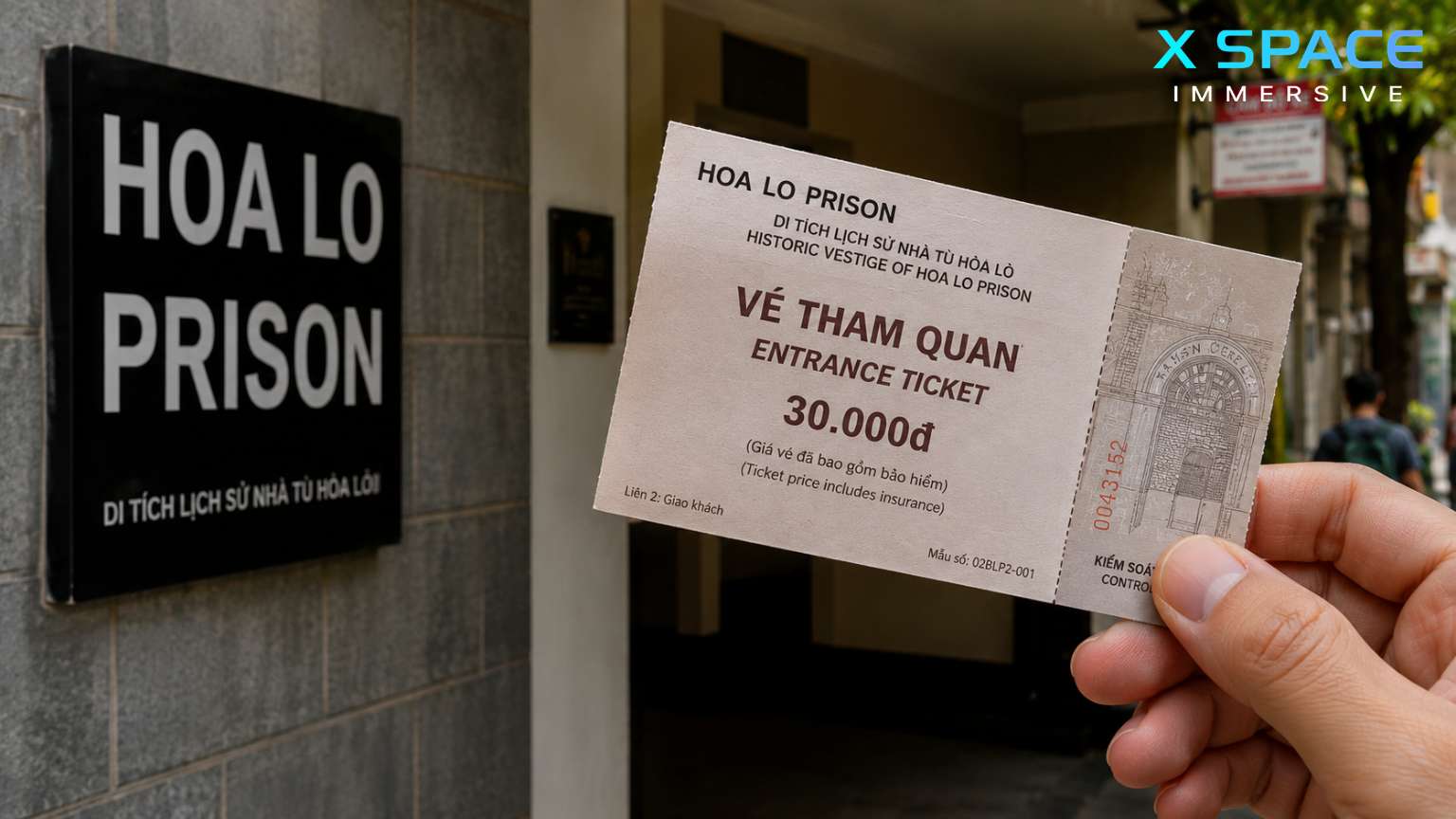
Hoa Lo Prison entrance ticket and visitor information in Hanoi
The current Hoa Lo Prison ticket price is generally inexpensive compared with many museums around the world.
Visitors have several options for purchasing tickets:
Buy Tickets at the Entrance
Most visitors simply purchase tickets at the museum entrance. Queues are usually short during weekdays.
Online Booking
For special exhibitions or evening experiences, advance online booking may be available. Reserving ahead can help secure your preferred visiting time, especially during holidays.
Audio Guides and Guided Tours
Visitors who wish to explore the museum in greater depth may choose additional services such as:
- Multilingual audio guides
- Guided historical tours
- Educational group programs
Although these services require an additional fee, they provide valuable historical context that enhances the overall experience.
How Long Should You Spend at Hoa Lo Prison Museum?
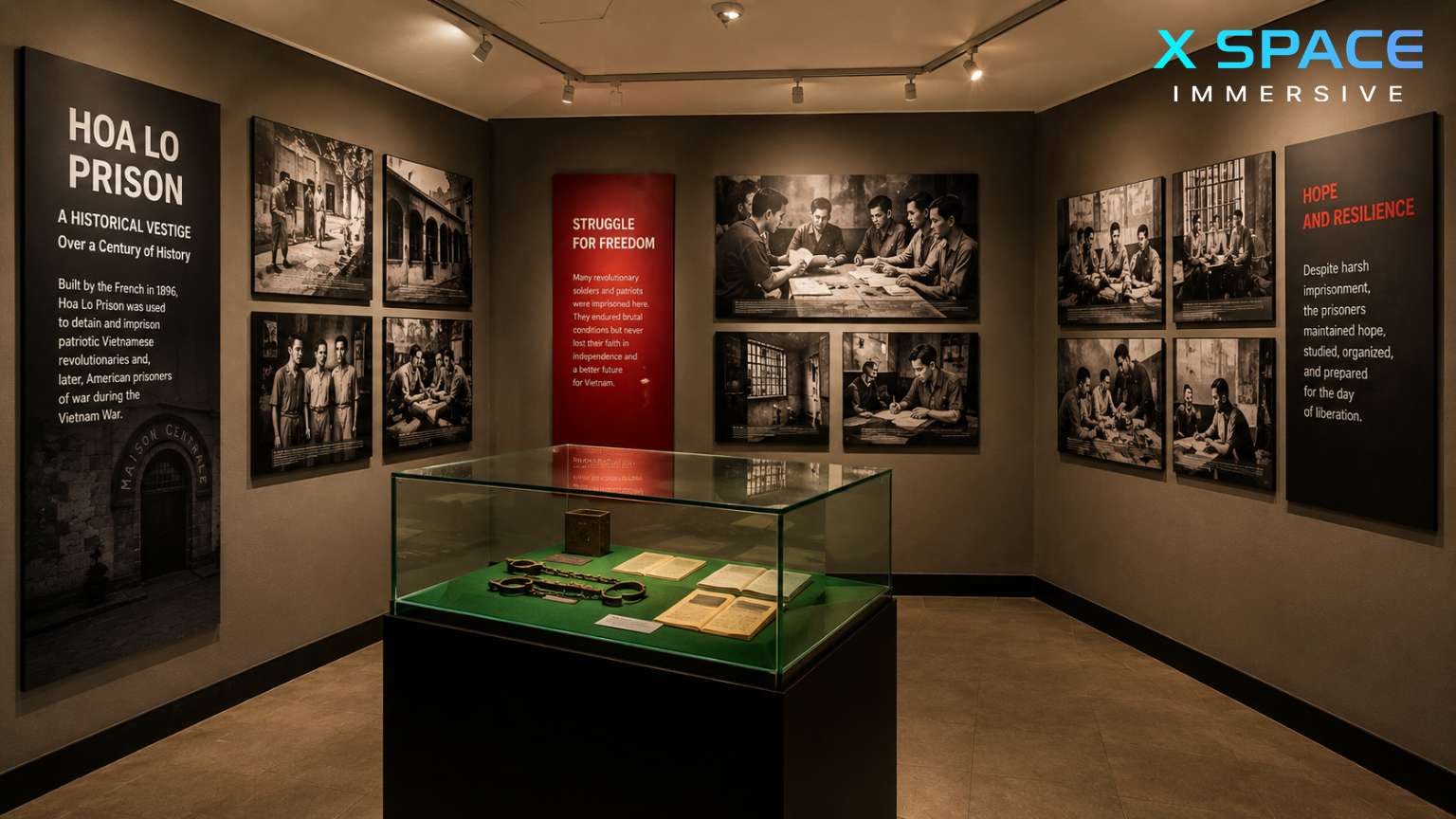
Historical exhibition inside Hoa Lo Prison Museum Hanoi
A typical visit to Hoa Lo Prison Museum takes approximately 1.5 to 2 hours.
This allows enough time to:
- Explore the preserved prison cells
- Read exhibition panels
- Watch multimedia presentations
- View historical artifacts
- Take photographs where permitted
History enthusiasts often spend closer to three hours, particularly if they use an audio guide or carefully read every exhibition.
If you’re planning a broader cultural itinerary around central Hanoi, allocating half a day for Hoa Lo Prison in Hanoi is ideal.
Best Time to Visit Hoa Lo Prison Hanoi Vietnam
Although Hoa Lo Prison Hanoi Vietnam welcomes visitors throughout the year, choosing the right time can make your experience even more enjoyable.
Best Season
The most comfortable months to visit are:
- October to April
During this period, Hanoi experiences cooler temperatures and lower humidity, making it pleasant to explore both indoor and outdoor attractions.
Best Time of Day
Morning visits offer several advantages:
- Smaller crowds
- Cooler weather
- Better lighting for photography
- More time to continue sightseeing afterward
Late afternoons also provide a quieter atmosphere compared with midday.
Avoid Peak Crowds
If possible, avoid:
- National holidays
- Weekend afternoons
- School excursion periods
Visiting during weekdays generally allows more space to appreciate the exhibitions at your own pace.
What to Expect When Visiting Hoa Lo Prison Relic
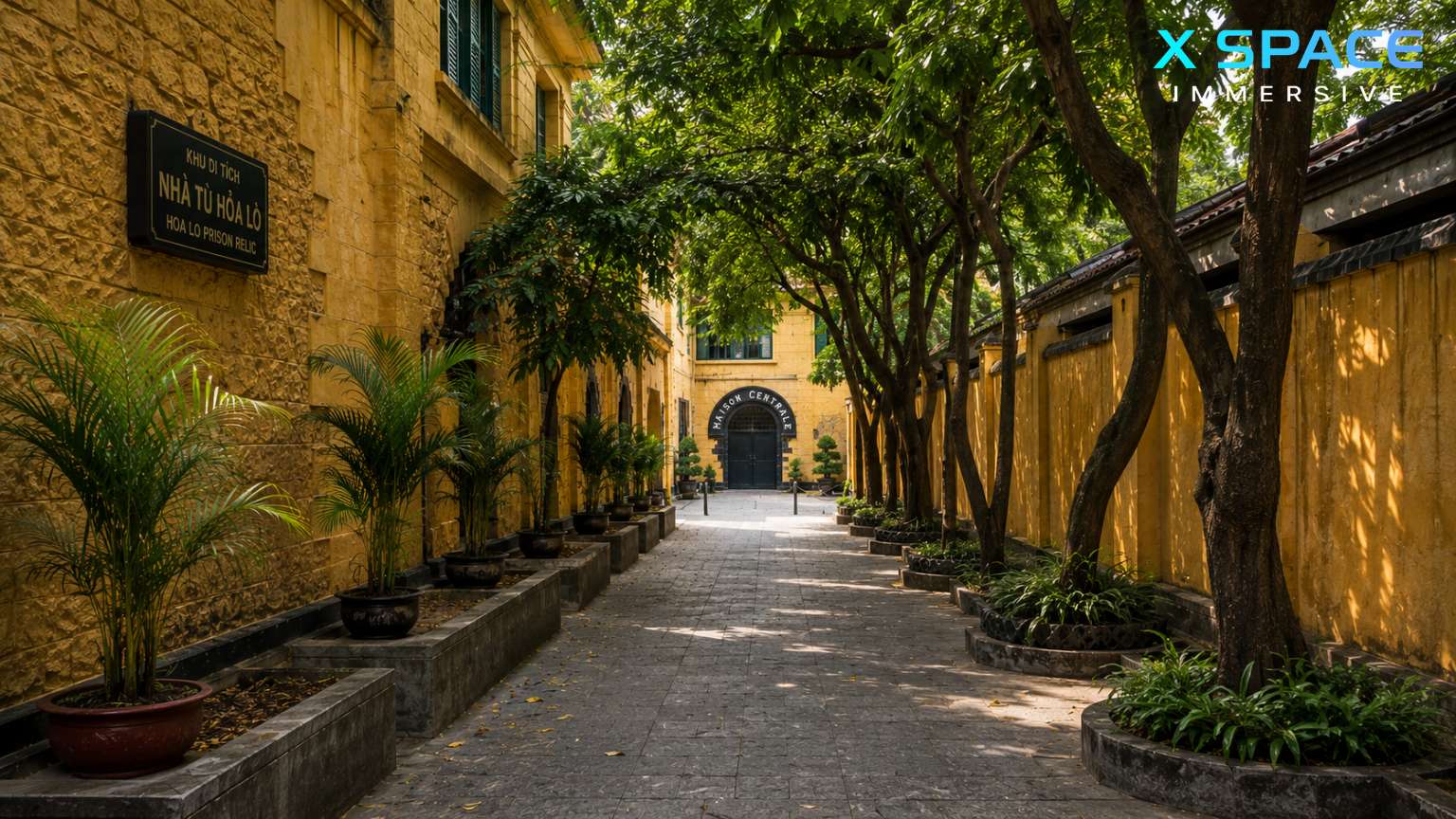
Peaceful courtyard at the Hoa Lo Prison historical relic in Hanoi
Recognized as an important Hoa Lo Prison relic, the museum offers far more than a collection of historical objects.
Visitors should expect an experience that is educational, emotional, and reflective.
Throughout the museum, you’ll encounter:
- Authentic prison architecture
- Original historical artifacts
- Multimedia exhibitions
- Detailed historical timelines
- Quiet memorial spaces
The atmosphere encourages respectful exploration rather than entertainment.
Because many exhibits portray imprisonment, war, and human suffering, some areas may be emotionally intense. Families traveling with young children should consider this before visiting.
The museum is generally well organized, with English translations available for most major exhibits, making it accessible to international travelers.
Facilities include:
- Clean restrooms
- Souvenir shop
- Drinking water
- Seating areas
- Accessible pathways in many exhibition zones
Overall, Hoa Lo Prison Museum offers one of Hanoi’s most rewarding cultural experiences, combining historical authenticity with thoughtful storytelling that leaves a lasting impression on visitors.
Hoa Lo Prison Reviews: Is It Worth Visiting?
Among Hanoi’s many cultural attractions, Hoa Lo Prison consistently receives positive feedback from travelers around the world. Whether you’re browsing travel blogs, guidebooks, or reading Hoa Lo Prison reviews, one thing becomes clear: this museum leaves a lasting impression on visitors.
Unlike attractions that focus primarily on entertainment, Hoa Lo Prison Museum invites visitors to pause, reflect, and better understand Vietnam’s complex history. Its well-preserved architecture, authentic artifacts, and thoughtfully curated exhibitions create an experience that is both educational and emotionally engaging.
For travelers interested in history, culture, or meaningful travel experiences, Hoa Lo Prison in Hanoi is often considered one of the city’s most worthwhile destinations.
What Visitors Appreciate Most
A Powerful Historical Experience
Many visitors describe Hoa Lo Prison Museum as one of the most moving historical sites in Vietnam. Walking through the preserved prison corridors and detention cells offers a tangible connection to the people who once lived there.
Rather than relying solely on text, the museum combines original artifacts, reconstructed spaces, photographs, and multimedia presentations to tell stories that are both informative and deeply human.
Well-Preserved Architecture
One of the highlights frequently mentioned in Hoa Lo Prison reviews is the preservation of the prison’s original architecture.
Visitors can still see:
- Massive stone walls
- Original iron gates
- Watchtowers
- Prison cells
- Solitary confinement rooms
- Historic courtyards
These preserved structures help visitors visualize what life inside the prison was like more than a century ago.
Informative Exhibitions
The museum strikes a balance between historical detail and accessibility.
English translations accompany most exhibits, making the information easy for international visitors to understand. Interactive displays and multimedia presentations further enhance the learning experience without overwhelming guests.
Many travelers also appreciate that the exhibitions present different historical periods chronologically, making the museum easy to navigate.
Excellent Central Location
Another reason visitors recommend Hoa Lo Prison Hanoi is its convenient location.
Situated within walking distance of Hoan Kiem Lake, St. Joseph’s Cathedral, and the Old Quarter, the museum fits easily into almost any sightseeing itinerary.
Many travelers combine their visit with nearby attractions, cafés, and local restaurants to create a rewarding half-day cultural experience.
Common Concerns Mentioned in Hoa Lo Prison Reviews
Although reviews are overwhelmingly positive, some visitors mention a few considerations worth knowing before your visit.
Crowds During Peak Hours
As one of Hanoi’s best-known museums, Hoa Lo Prison Museum can become busy on weekends, holidays, and during school excursions.
Visiting early in the morning or later in the afternoon usually provides a quieter experience.
Emotionally Intense Exhibits
The museum covers themes of imprisonment, war, colonialism, and human suffering.
Some exhibitions—including preserved prison cells and execution-related displays—may be emotionally challenging, particularly for younger children.
Visitors looking for a lighthearted tourist attraction may find the experience more reflective than expected.
Limited Space in Some Galleries
Since only part of the original prison remains today, certain exhibition areas are relatively compact.
During busy periods, visitors may need to wait briefly before viewing popular displays or taking photographs.
Despite this, most travelers agree that the museum is well organized and easy to explore.
Who Should Visit Hoa Lo Prison Museum?
Hoa Lo Prison Museum appeals to a wide range of travelers.
It is particularly recommended for:
- History enthusiasts interested in Vietnam’s colonial and wartime history
- Cultural travelers seeking meaningful experiences
- Students studying history, politics, or international relations
- First-time visitors wanting to understand Hanoi beyond its famous food and nightlife
- Families with older children interested in educational attractions
Even visitors with limited historical knowledge often leave with a greater appreciation for Vietnam’s resilience and cultural identity.
Practical Tips for Visiting Hoa Lo Prison in Hanoi
A little preparation can make your visit to Hoa Lo Prison in Hanoi even more enjoyable.
Arrive Early
Morning visits generally offer cooler temperatures and fewer crowds, allowing you to explore the museum at a comfortable pace.
Allow Enough Time
Although many visitors spend around 90 minutes inside the museum, allocating two hours gives you enough time to read exhibition panels and appreciate the historical displays without rushing.
Wear Comfortable Shoes
The museum involves walking through multiple exhibition rooms, stone corridors, and outdoor courtyards.
Comfortable footwear makes exploring much more pleasant.
Use an Audio Guide if Available
An audio guide provides additional historical context and personal stories that are not fully covered on exhibition panels.
It is especially worthwhile for international visitors interested in a deeper understanding of the museum.
Respect Museum Etiquette
Remember that Hoa Lo Prison is a place of remembrance.
Visitors should:
- Speak quietly.
- Avoid touching historical artifacts.
- Follow photography regulations.
- Respect restricted exhibition areas.
- Be mindful of other visitors.
These simple practices help preserve the museum for future generations.
Suggested Itinerary Around Hoa Lo Prison Hanoi
Because Hoa Lo Prison Hanoi sits in the heart of the city, it’s easy to combine your visit with several nearby attractions.
Half-Day Historical Hanoi Itinerary
If you only have a few hours, consider this route:
8:00 AM – 10:00 AM
Visit Hoa Lo Prison Museum while crowds are still light.
10:15 AM
Walk to St. Joseph’s Cathedral.
11:00 AM
Explore Hoan Kiem Lake.
12:00 PM
Enjoy authentic Vietnamese cuisine at a nearby local restaurant.
This itinerary combines history, architecture, and local culture within a comfortable walking distance.
Full-Day Cultural Hanoi Itinerary
For travelers wanting a deeper cultural experience:
Morning
- Temple of Literature
- Hoa Lo Prison Museum
Lunch
- Traditional Vietnamese restaurant
Afternoon
- Vietnamese Women’s Museum
- Hanoi Old Quarter
Evening
- Thang Long Water Puppet Theatre
- Traditional Vietnamese dinner
This itinerary offers an excellent introduction to Hanoi’s history, heritage, and everyday life.
FAQ About Hoa Lo Prison
Is Hoa Lo Prison the same as the Hanoi Hilton?
Yes. During the Vietnam War, American prisoners of war referred to Hoa Lo Prison as the “Hanoi Hilton.” Today, this period forms one section of the museum’s permanent exhibitions.
Can I buy tickets at the entrance?
Yes. Most visitors purchase tickets directly at the museum entrance. During busy periods or for special evening tours, advance booking may also be available.
What is the Hoa Lo Prison ticket price?
The Hoa Lo Prison ticket price is generally affordable and offers excellent value considering the museum’s historical significance and exhibition quality.
What are the Hoa Lo Prison Museum opening hours?
The regular Hoa Lo Prison Museum opening hours are typically 8:00 AM to 5:00 PM, Monday through Sunday. Visitors should check for updated schedules during national holidays or special events.
Is photography allowed?
Photography is permitted in many areas of the museum.
However, flash photography and photography in designated restricted areas may not be allowed. Visitors should follow museum signage and staff instructions.
Is Hoa Lo Prison suitable for children?
Yes, although parents should be aware that some exhibits contain sensitive historical themes involving imprisonment and war.
Older children and teenagers generally find the museum educational and engaging.
How far is Hoa Lo Prison from Hanoi Old Quarter?
The museum is approximately a 15 to 20-minute walk from Hanoi Old Quarter, making it one of the easiest historical attractions to include in a city itinerary.
Is an audio guide worth using?
Yes. For visitors interested in learning about the personal stories behind the exhibits, an audio guide greatly enriches the museum experience.
Experience X Space Immersive

Visitors enjoying immersive digital art experience at X Space Hanoi
After exploring the powerful history preserved within Hoa Lo Prison, many travelers look for a different way to continue discovering Hanoi’s rich cultural identity. One inspiring option is Experience X Space Immersive, where storytelling meets cutting-edge technology to create a completely new perspective on the city.
Unlike traditional museums, Experience X Space Immersive combines digital art, immersive projections, surround sound, and interactive installations to transform history, culture, and creativity into a multisensory journey. Rather than simply observing exhibits, visitors become part of the experience, engaging with stories through sight, sound, and movement.
For those who have just visited Hoa Lo Prison Museum, this modern attraction offers an interesting contrast. While Hoa Lo Prison encourages reflection on Vietnam’s past through authentic historical spaces, Experience X Space Immersive showcases how innovative technology can bring cultural narratives to life in fresh and engaging ways.
Whether you’re traveling with friends, family, or exploring Hanoi on your own, combining these two attractions creates a well-rounded itinerary that blends heritage with contemporary creativity. It’s an opportunity to appreciate both the historical depth and the dynamic cultural evolution of Vietnam’s capital.
If you’re planning a full day of sightseeing in Hanoi, consider ending your journey at Experience X Space Immersive—a memorable destination where history, technology, and imagination come together to create an unforgettable cultural experience.
Final Thoughts
A visit to Hoa Lo Prison is much more than a stop at a historical landmark—it is an opportunity to gain a deeper understanding of Vietnam’s past through authentic spaces, personal stories, and carefully preserved artifacts. From its origins during the French colonial era to its role in the Vietnam War, the museum offers a thoughtful journey through some of the country’s most significant historical moments.
With its central location, affordable admission, and engaging exhibitions, Hoa Lo Prison Museum remains one of the most rewarding cultural attractions in Hanoi. Whether you’re passionate about history or simply looking to explore the city beyond its famous streets and cuisine, this remarkable site promises an experience that is both educational and unforgettable.
Was this article helpful?
Thanks for your feedback!