Immersive Technology: Benefits, Trends, and Future Growth

Immersive technology is transforming the way people interact with digital content by creating experiences that feel more engaging, interactive, and lifelike. From virtual reality training and augmented reality shopping to immersive exhibitions and entertainment, these technologies are reshaping industries and redefining user experiences.
As innovation continues to accelerate, immersive solutions are becoming more accessible for businesses and consumers alike. In this guide, you’ll discover what is immersive technology, understand the immersive technology meaning, explore the broader immersive technologies meaning, and learn about the key benefits, emerging trends, and future growth shaping this rapidly evolving industry.
In this guide
What Is Immersive Technology? A Clear Introduction
If you’ve ever asked yourself what is immersive technology, the simplest answer is this:
Immersive technology refers to digital technologies that create realistic, interactive experiences by blending virtual content with the physical world or by transporting users into entirely digital environments.
What Is Immersive Technology? A Clear Introduction
Unlike traditional digital media, immersive experiences encourage users to actively participate rather than passively observe. Instead of simply viewing content on a screen, users can move, interact, explore, and even influence the environment around them.
Imagine walking through a museum where digital artworks respond to your movements, trying on furniture inside your own living room before making a purchase, or participating in a virtual emergency simulation for professional training. These are all examples of immersive technology in action.
At its core, immersive technology is designed to make digital experiences feel natural, intuitive, and emotionally engaging.
Immersive Technology Meaning in Simple Terms
The immersive technology meaning becomes much easier to understand when we think about the word immersive itself.
To be immersed means feeling completely involved in an experience—as though you are actually inside it instead of simply looking at it from the outside.
Immersive technology creates this feeling by combining several elements, including:
- Realistic visual environments
- Spatial audio that changes as users move
- Motion tracking and gesture recognition
- Interactive digital objects
- Real-time system responses
Together, these components create a powerful sense of presence—the psychological feeling of “being there.”
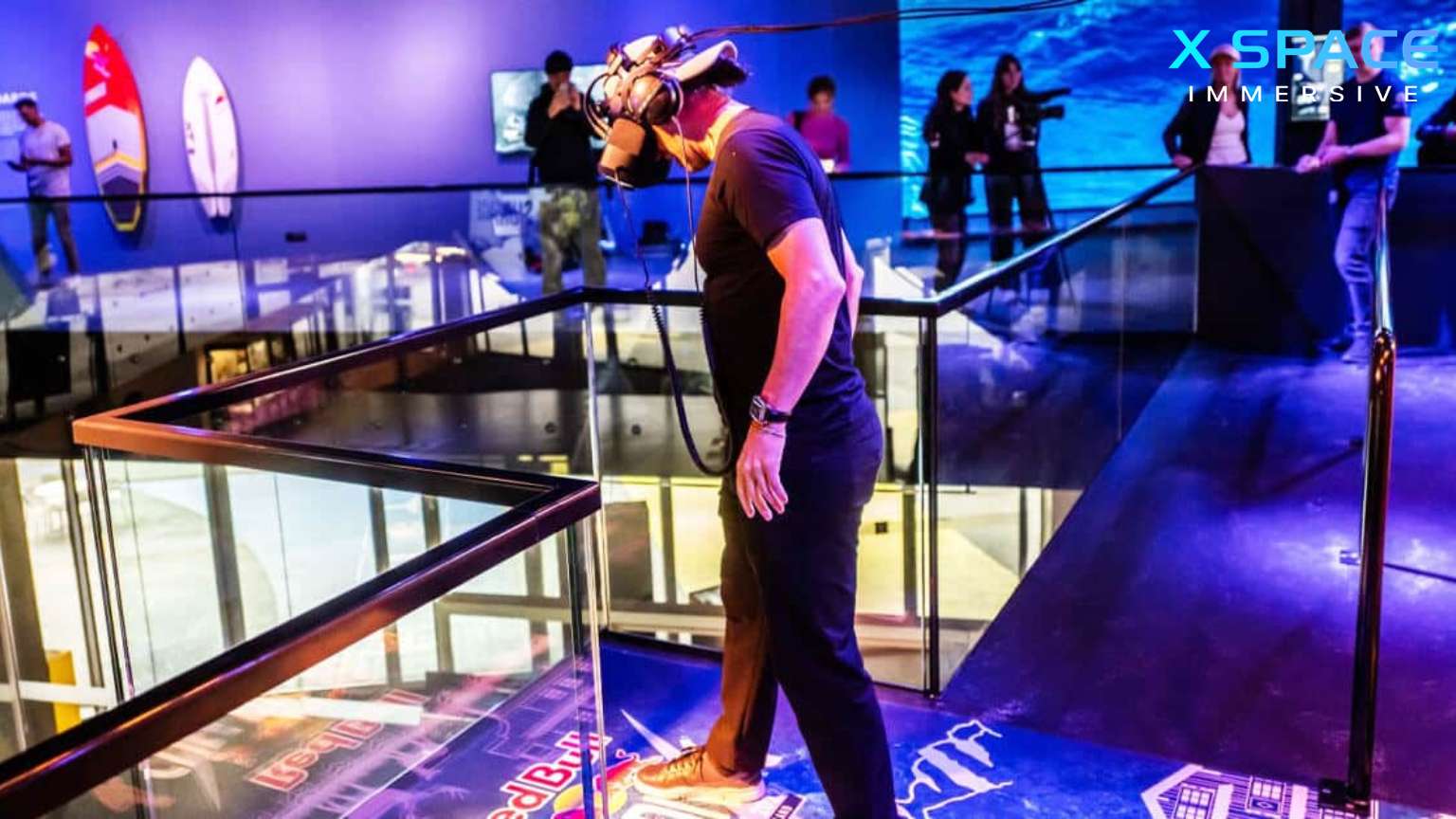
For example, wearing a Virtual Reality (VR) headset during a flight simulator doesn’t simply show an aircraft cockpit on a screen. It makes the user feel as though they are sitting inside the cockpit, looking around naturally, interacting with controls, and responding to changing conditions.
The stronger this feeling of presence becomes, the more immersive the experience feels.
Immersive Technologies Meaning and Core Concepts
While many people use the singular phrase immersive technology, you may also encounter the term immersive technologies meaning in articles, research papers, and industry reports.
The plural form refers to the broader ecosystem of technologies that work together to create immersive experiences.
These technologies commonly include:
- Virtual Reality (VR)
- Augmented Reality (AR)
- Mixed Reality (MR)
- Extended Reality (XR)
- Spatial Computing
- Artificial Intelligence
- Motion Tracking
- Haptic Feedback
- Projection Mapping
- 3D Visualization
Although each technology functions differently, they all share the same objective: reducing the distance between users and digital content.
Instead of treating technology as something people simply use, immersive technologies transform technology into an environment that people can experience.
This shift is why immersive technology is increasingly becoming one of the most influential trends in digital transformation.
How Does Immersive Technology Work?
Understanding what is immersive technology also means understanding the technologies working behind the scenes.
An immersive experience is rarely powered by a single device. Instead, it combines hardware, software, sensors, and intelligent computing systems that work together in real time.
A typical immersive system follows a continuous cycle:
- It captures information from the user.
- It processes that information instantly.
- It updates the digital environment.
- It delivers immediate visual, audio, or physical feedback.
Because this cycle happens within milliseconds, interactions feel smooth and natural.
For example, if a user turns their head while wearing a VR headset, built-in sensors instantly detect the movement. The graphics engine then renders a new perspective before the user notices any delay, creating the illusion of looking around a real environment.
Modern immersive systems rely heavily on AI and cloud computing to improve responsiveness, personalize content, and optimize performance across different devices.
Key Components Behind Immersive Experiences
Although every immersive solution is different, most experiences rely on several essential components.
Display Technologies
These include VR headsets, AR glasses, LED walls, holographic displays, and high-resolution projection systems that generate realistic digital environments.
Motion Tracking
Cameras, depth sensors, infrared systems, and wearable trackers continuously monitor head position, hand gestures, eye movements, and body motion, allowing digital content to respond naturally.
Spatial Audio
Instead of playing sound from fixed speakers, immersive systems position audio within three-dimensional space. Users hear sounds from different directions, making virtual environments feel more believable.
Haptic Feedback
Some immersive experiences incorporate vibration, resistance, or force feedback, allowing users to physically feel digital interactions. This technology is particularly valuable in medical simulations, industrial training, and gaming.
Real-Time Rendering
Powerful graphics engines generate high-quality visuals while continuously adapting to user interactions. The faster this rendering process occurs, the smoother and more convincing the experience becomes.
Artificial Intelligence
AI increasingly serves as the intelligence layer behind immersive environments. It enables adaptive storytelling, intelligent virtual assistants, realistic digital humans, automated content generation, and personalized user experiences.
When these technologies work together seamlessly, users no longer feel like they’re interacting with software. Instead, they feel fully engaged within an experience—one that responds naturally to every movement, decision, and action.
This seamless integration is precisely what makes immersive technology one of the most exciting innovations shaping the future of digital interaction.
Main Types of Immersive Technologies
As immersive experiences become more common across industries, it’s important to understand that immersive technology is not a single innovation. Instead, it is an umbrella term that encompasses several technologies designed to blend digital content with the physical world or create entirely virtual environments.
Each type offers a different level of immersion and interaction, making it suitable for specific applications. Choosing the right technology depends on the goals of the experience, the available hardware, and the needs of the end user.
Virtual Reality (VR)
Virtual Reality (VR) delivers the highest level of immersion by placing users inside a fully digital environment. Wearing a VR headset blocks out the physical world and replaces it with a computer-generated space where users can look around, move, and interact naturally.
VR is widely used for:
- Professional training and simulations
- Gaming and interactive entertainment
- Virtual tourism and museums
- Healthcare education
- Product demonstrations
One of VR’s greatest strengths is its ability to recreate environments that would otherwise be expensive, dangerous, or impossible to experience in real life. Pilots, surgeons, firefighters, and engineers can all practice complex scenarios in a safe virtual setting before applying their skills in the real world.
Augmented Reality (AR)
Unlike VR, Augmented Reality (AR) enhances the real world instead of replacing it. Digital images, animations, or information are layered onto a user’s physical surroundings through smartphones, tablets, or smart glasses.
Because users remain aware of their environment, AR is particularly effective for everyday applications.
Common examples include:
- Virtual furniture placement before purchasing
- Interactive product packaging
- Navigation overlays
- Retail virtual try-ons
- Educational visualizations
Retail brands increasingly use AR to improve online shopping experiences by allowing customers to visualize products in their homes or try on clothing, accessories, and cosmetics before making a purchase.
Mixed Reality (MR)
Mixed Reality (MR) combines the best aspects of VR and AR by allowing physical and digital objects to interact with one another in real time.
Instead of simply displaying virtual content, MR understands the surrounding environment and enables digital objects to respond realistically.
For example, a virtual machine displayed on a factory floor can remain anchored to the same physical location while technicians walk around it, inspect components, and interact with controls using hand gestures.
This capability makes MR particularly valuable for:
- Industrial maintenance
- Engineering collaboration
- Medical visualization
- Architectural design
- Remote assistance
As hardware continues to improve, MR is expected to become one of the most important technologies for enterprise digital transformation.
Extended Reality (XR)
You may also encounter the term Extended Reality (XR) when researching immersive technology.
XR is not a separate technology. Instead, it serves as an umbrella category that includes:
- Virtual Reality (VR)
- Augmented Reality (AR)
- Mixed Reality (MR)
Rather than referring to a specific device, XR represents the entire ecosystem of immersive experiences across different levels of digital interaction.
This broader classification reflects how immersive experiences are increasingly moving beyond individual technologies toward seamless digital environments.
Spatial Computing and 360-Degree Experiences
Another fast-growing area of immersive technology is spatial computing, where computers understand the physical world through cameras, sensors, artificial intelligence, and depth mapping.
Instead of interacting through keyboards or touchscreens, users can control digital content using natural behaviors such as:
- Hand gestures
- Eye tracking
- Voice commands
- Body movement
Spatial computing is driving the next generation of smart devices and immersive workspaces by making interactions feel more intuitive.
In addition, many organizations are embracing projection mapping, panoramic environments, and 360-degree video experiences to create immersive exhibitions, museums, brand activations, and live events that don’t require wearable headsets.
Together, these innovations demonstrate that immersive technology extends far beyond VR alone.
Key Benefits of Immersive Technology
The rapid growth of immersive technology is not simply driven by technological innovation. Organizations across industries are adopting immersive solutions because they deliver measurable value—from improving learning outcomes to increasing customer engagement and supporting more informed decision-making.
As the technology matures, its benefits continue to expand.
Higher Engagement and Stronger Emotional Connections
Traditional digital content often relies on passive viewing, where users simply watch or read information.
Immersive experiences encourage active participation.
Instead of observing, users explore.
Instead of clicking, they interact.
Instead of reading instructions, they experience them firsthand.
This deeper level of participation creates stronger emotional connections, improves focus, and significantly increases information retention.
For brands, immersive storytelling also creates memorable customer experiences that are far more impactful than conventional advertising.
Safer and More Effective Training
Training is one of the most successful applications of immersive technology.
Organizations can simulate real-world situations without exposing employees to unnecessary risks.
Examples include:
- Medical surgery simulations
- Firefighter emergency response exercises
- Aircraft pilot training
- Manufacturing safety procedures
- Military mission rehearsals
Employees gain valuable hands-on experience while avoiding the costs, dangers, and logistical challenges associated with traditional training environments.
Research has also shown that experiential learning often leads to higher confidence and better long-term knowledge retention.
Better Visualization and Faster Decision-Making
Many industries depend on visualizing complex information before making critical decisions.
Immersive environments allow users to examine products, buildings, machinery, or data from multiple perspectives.
Architects can walk through buildings before construction begins.
Manufacturers can inspect production lines virtually.
Retailers can preview store layouts before implementation.
These capabilities reduce design errors, improve collaboration, and accelerate decision-making throughout project lifecycles.
Personalized and Interactive User Experiences
Modern immersive platforms increasingly incorporate Artificial Intelligence to create adaptive experiences.
Instead of delivering identical content to every user, immersive systems can respond dynamically based on:
- User behavior
- Preferences
- Location
- Previous interactions
- Learning progress
This level of personalization creates experiences that feel more relevant and engaging, leading to higher customer satisfaction and stronger long-term relationships.
New Business Opportunities
Beyond improving existing processes, immersive technology is creating entirely new business models.
Companies are launching:
- Virtual product launches
- Interactive exhibitions
- Digital showrooms
- Immersive brand experiences
- Virtual tourism
- Hybrid entertainment events
These experiences help organizations reach global audiences while offering something far more memorable than traditional online content.
As consumer expectations continue to evolve, immersive experiences are becoming a powerful competitive advantage rather than simply a technological novelty.
Businesses that invest in immersive technology today are not only enhancing customer experiences—they are positioning themselves for the next generation of digital engagement.
Immersive Technology Applications Across Industries
The true value of immersive technology lies in its versatility. While many people associate immersive experiences with gaming, today’s applications extend far beyond entertainment. Businesses, educational institutions, healthcare providers, manufacturers, and cultural organizations are leveraging immersive solutions to improve efficiency, enhance customer engagement, and solve real-world challenges.
As hardware becomes more affordable and software more sophisticated, immersive technology is evolving from an emerging innovation into a practical business tool.
Education and Professional Training
Education is one of the sectors experiencing the greatest transformation through immersive technology.
Rather than relying solely on textbooks or video lectures, educators can create interactive environments where students actively participate in the learning process. This experiential approach helps learners retain information more effectively while developing practical skills in realistic settings.
Examples include:
- Virtual science laboratories that allow students to conduct experiments safely.
- Historical recreations that let learners explore ancient civilizations.
- Language learning environments that simulate real-life conversations.
- Technical training programs for engineers and mechanics.
- Corporate onboarding experiences that familiarize new employees with workplaces before their first day.
Professional training also benefits significantly from immersive simulations. Industries such as aviation, healthcare, and emergency services use virtual environments to prepare professionals for high-pressure situations without exposing them to unnecessary risk.
Healthcare and Medical Simulation
Healthcare has become one of the fastest-growing adopters of immersive technology.
Medical schools use virtual anatomy models that allow students to examine organs and body systems in three dimensions. Surgeons can rehearse complex procedures before entering the operating room, while hospitals employ immersive simulations to train staff for emergency scenarios.
Beyond education, immersive solutions are also improving patient care.
Current applications include:
- Surgical planning using 3D visualization.
- Physical rehabilitation through interactive therapy programs.
- Mental health treatments for anxiety and post-traumatic stress disorder (PTSD).
- Pain management using calming virtual environments.
- Medical collaboration between specialists located in different regions.
These technologies enhance both learning and patient outcomes by making healthcare more precise, accessible, and engaging.
Retail, E-Commerce, and Marketing
Consumer expectations have changed dramatically in recent years, and immersive technology is helping brands create richer shopping experiences.
Instead of relying on static images or product descriptions, customers can interact with products before making a purchase.
Popular retail applications include:
- Virtual fitting rooms for clothing and accessories.
- AR furniture placement inside customers’ homes.
- Interactive product demonstrations.
- Virtual automotive showrooms.
- Digital brand experiences during promotional campaigns.
For marketers, immersive storytelling offers an opportunity to build stronger emotional connections with audiences. Customers spend more time engaging with interactive experiences than traditional advertisements, leading to improved brand awareness and higher conversion rates.
Architecture, Real Estate, and Construction
Architects and developers increasingly rely on immersive technology to communicate design concepts more effectively.
Instead of reviewing two-dimensional blueprints, clients can walk through buildings before construction begins.
Immersive visualization enables stakeholders to:
- Explore room layouts.
- Evaluate lighting conditions.
- Compare interior design options.
- Identify design issues early.
- Improve collaboration between architects, engineers, and contractors.
Real estate professionals also benefit by offering virtual property tours, allowing buyers to explore homes remotely and make more informed purchasing decisions.
Manufacturing and Engineering
Manufacturing environments are becoming increasingly digital, and immersive technology plays an important role in improving operational efficiency.
Factories use immersive systems to support:
- Equipment maintenance.
- Worker safety training.
- Production planning.
- Factory layout optimization.
- Remote technical assistance.
Engineers can visualize machinery in three dimensions, detect design conflicts before production, and collaborate with global teams inside shared virtual workspaces.
These capabilities reduce downtime, lower operational costs, and improve overall productivity.
Entertainment, Events, and Tourism
Entertainment remains one of the most recognizable applications of immersive technology, but today’s experiences extend well beyond traditional gaming.
Museums, cultural institutions, concert organizers, and tourism companies are creating immersive environments that transform passive audiences into active participants.
Examples include:
- Interactive art exhibitions.
- Projection-mapped storytelling experiences.
- Immersive theatre productions.
- Virtual travel experiences.
- Multi-sensory museum installations.
- Location-based entertainment venues.
These experiences combine digital storytelling with physical environments to create memorable moments that cannot be replicated through conventional media.
Current Immersive Technology Trends
The immersive technology landscape continues to evolve rapidly as advances in artificial intelligence, spatial computing, and connected devices unlock entirely new possibilities.
Several key trends are shaping the future of immersive experiences across industries.
AI-Powered Immersive Experiences
Artificial Intelligence is becoming the intelligence layer behind immersive environments.
Instead of following pre-programmed interactions, modern immersive experiences can adapt dynamically based on user behavior.
AI enables:
- Personalized content recommendations.
- Intelligent virtual assistants.
- Real-time language translation.
- Adaptive learning experiences.
- AI-generated digital characters.
- Interactive storytelling.
As generative AI continues to evolve, immersive environments are becoming increasingly responsive, creating experiences that feel more natural and engaging.
The Rise of Spatial Computing
Spatial computing is redefining how people interact with digital content.
Rather than limiting interactions to keyboards, mice, or touchscreens, spatial computing enables users to control digital environments through natural behaviors such as eye movement, gestures, voice commands, and body positioning.
This shift is creating more intuitive user interfaces while reducing the gap between physical and digital experiences.
Many experts believe spatial computing will become one of the defining technologies of the next decade.
Lighter, Smarter, and More Accessible Devices
Early immersive hardware was often expensive, bulky, and designed primarily for enthusiasts.
Today’s devices are becoming:
- Smaller
- Lighter
- More comfortable
- Wireless
- Higher resolution
- More energy efficient
These improvements make immersive technology increasingly practical for everyday business and consumer applications.
As hardware costs continue to decline, adoption is expected to accelerate across both enterprise and consumer markets.
Web-Based XR and Cross-Platform Experiences
Organizations are increasingly developing immersive experiences that run directly through web browsers instead of requiring dedicated applications.
WebXR technologies reduce barriers to entry by allowing users to access immersive content from multiple devices with minimal setup.
Benefits include:
- Faster deployment.
- Lower development costs.
- Improved accessibility.
- Cross-platform compatibility.
- Easier content updates.
This flexibility enables businesses to reach larger audiences without requiring specialized hardware.
Growth of Location-Based Immersive Experiences
Physical immersive attractions continue to gain popularity worldwide.
Museums, entertainment venues, cultural centers, shopping malls, and event organizers are investing heavily in interactive environments that combine digital technology with physical architecture.
These experiences often feature:
- Large-scale projection mapping.
- Interactive floors and walls.
- Motion-sensitive installations.
- Multi-room storytelling.
- Immersive soundscapes.
- Digital art environments.
Unlike home-based VR experiences, location-based installations encourage social interaction and shared exploration, making them particularly attractive for tourism, education, and experiential marketing.
Multi-Sensory Experiences Beyond Vision
The future of immersive technology extends beyond visuals alone.
Developers are increasingly integrating multiple human senses into immersive environments.
Emerging innovations include:
- Advanced haptic feedback.
- Spatial audio.
- Environmental lighting.
- Temperature simulation.
- Wind effects.
- Scent technology.
By stimulating multiple senses simultaneously, immersive experiences become more emotionally engaging and memorable.
This multi-sensory approach is expected to influence the next generation of education, entertainment, retail, healthcare, and live events.
As immersive technology continues to mature, the focus is shifting from simply displaying digital content to creating meaningful experiences that people can see, hear, touch, and truly feel.
Challenges and Limitations of Immersive Technology
While immersive technology offers exciting opportunities across industries, adopting it is not without challenges. From hardware costs to privacy concerns, organizations must carefully evaluate both the benefits and the practical considerations before investing in immersive solutions.
Understanding these limitations helps businesses build more sustainable strategies and deliver experiences that are not only innovative but also effective and user-friendly.
High Development and Hardware Costs
One of the biggest barriers to adopting immersive technology is the initial investment.
Creating a high-quality immersive experience often requires specialized hardware, custom software, 3D content production, and skilled development teams. Depending on the complexity of the project, costs can increase significantly, particularly for large-scale enterprise applications.
Organizations may need to invest in:
- VR or AR headsets
- Motion tracking systems
- High-performance computers
- 3D modeling and animation
- Software development platforms
- Ongoing maintenance and updates
Although hardware prices continue to decline, building meaningful immersive experiences still requires careful planning and a clear return on investment (ROI).
Privacy and Data Security Concerns
Immersive experiences collect far more information than traditional digital applications.
Depending on the platform, systems may process:
- Eye movement
- Facial expressions
- Hand gestures
- Voice interactions
- Body movements
- Location data
- Environmental mapping
This information enables highly personalized experiences, but it also raises important questions about privacy, consent, and cybersecurity.
Organizations must ensure they follow data protection regulations while maintaining transparency about how user information is collected, stored, and used.
Building trust will remain essential as immersive technology becomes more integrated into daily life.
User Comfort and Accessibility
Although immersive experiences continue to improve, they are not equally comfortable for everyone.
Some users may experience:
- Motion sickness
- Eye fatigue
- Physical discomfort
- Sensory overload
- Device fatigue during long sessions
Accessibility also remains an important consideration.
Designers should create experiences that accommodate users with different physical abilities, cognitive needs, and levels of technical familiarity.
Inclusive design not only improves usability but also allows organizations to reach a broader audience.
Content Quality and Technical Compatibility
Technology alone cannot create an engaging immersive experience.
Poor storytelling, low-quality visuals, or confusing interactions can quickly reduce user engagement, regardless of how advanced the hardware may be.
At the same time, compatibility between devices continues to present challenges.
Different headsets, operating systems, tracking technologies, and software platforms often require separate optimization, increasing both development time and maintenance costs.
Creating flexible, cross-platform experiences is becoming an important priority for developers seeking long-term scalability.
The Future Growth of Immersive Technology
Despite these challenges, the long-term outlook for immersive technology remains exceptionally strong.
As artificial intelligence, cloud computing, 5G connectivity, and spatial computing continue to evolve, immersive experiences are expected to become faster, smarter, and more accessible than ever before.
Rather than replacing traditional digital interfaces, immersive technology is likely to become a natural extension of how people work, communicate, learn, and interact with the world.
From Headsets to Everyday Spatial Interfaces
Today’s immersive experiences often rely on dedicated devices such as VR headsets or AR glasses.
However, future interactions are expected to move beyond specialized hardware.
Advances in lightweight wearables, smart glasses, and spatial computing will enable users to access immersive content more naturally throughout their daily routines.
Instead of switching between physical and digital environments, people will interact with both simultaneously.
This evolution could transform everything from office collaboration to navigation, shopping, education, and entertainment.
The Convergence of AI, XR, and Digital Twins
One of the most significant developments shaping the future is the convergence of multiple emerging technologies.
Artificial Intelligence provides adaptive decision-making and personalized interactions.
Extended Reality (XR) creates immersive environments.
Digital twins generate real-time virtual representations of physical objects, buildings, or industrial systems.
When combined, these technologies allow organizations to simulate, analyze, and optimize complex processes before implementing changes in the real world.
For manufacturers, city planners, healthcare providers, and engineers, this integration offers tremendous opportunities to improve efficiency while reducing operational risks.
Enterprise Adoption and New Business Models
Businesses are increasingly recognizing immersive technology as a strategic investment rather than an experimental tool.
Across industries, organizations are developing new services and revenue streams based on immersive experiences.
Examples include:
- Virtual product launches
- Digital collaboration spaces
- Interactive customer experiences
- Immersive training platforms
- Subscription-based virtual services
- Hybrid physical-digital events
As consumer expectations evolve, companies that deliver engaging and memorable experiences will have a stronger competitive advantage.
Immersive technology is becoming an important part of broader digital transformation strategies rather than a standalone innovation.
A More Connected Physical and Digital World
Perhaps the most exciting aspect of immersive technology is its ability to reduce the separation between physical and digital environments.
Future experiences will feel increasingly seamless, allowing users to interact with digital information naturally within real-world spaces.
Imagine collaborating with colleagues through life-sized holographic workspaces, exploring historical sites enhanced by interactive storytelling, or attending immersive exhibitions where physical architecture and digital art respond to every visitor.
These experiences are no longer distant concepts—they are rapidly becoming reality.
How Businesses Can Adopt Immersive Technology
For organizations considering immersive solutions, success depends less on adopting the latest technology and more on understanding the needs of users.
A thoughtful implementation strategy can maximize both customer value and business outcomes.
Define Clear Business Objectives
Before selecting any immersive platform, organizations should first identify the problem they want to solve.
Common objectives include:
- Improving customer engagement
- Enhancing employee training
- Increasing operational efficiency
- Supporting product visualization
- Creating memorable brand experiences
Clear goals make it easier to select the right technology while measuring long-term success.
Choose the Right Immersive Solution
Not every project requires Virtual Reality.
Depending on the desired experience, businesses may benefit more from:
- Augmented Reality for retail.
- Mixed Reality for industrial collaboration.
- Projection mapping for exhibitions.
- Interactive installations for events.
- Spatial computing for workplace productivity.
Selecting the appropriate technology ensures both better user experiences and more efficient investment.
Start Small and Scale Gradually
Many successful organizations begin with pilot projects before expanding immersive initiatives across the business.
Small-scale implementations allow teams to:
- Test user engagement.
- Collect customer feedback.
- Identify technical challenges.
- Measure performance.
- Refine future experiences.
This iterative approach reduces risk while improving long-term outcomes.
Measure Results and Optimize Continuously
Immersive experiences generate valuable performance data that organizations can use to improve future projects.
Key performance indicators may include:
- Visitor engagement time
- Interaction rates
- Training completion
- Customer satisfaction
- Sales conversion
- Brand awareness
- Return on investment
Continuous optimization ensures immersive technology remains aligned with evolving business objectives and user expectations.
As immersive experiences become increasingly integrated into everyday life, organizations that prioritize meaningful storytelling, intuitive interaction, and measurable value will be best positioned to succeed in the next era of digital innovation.
Experience X Space Immersive

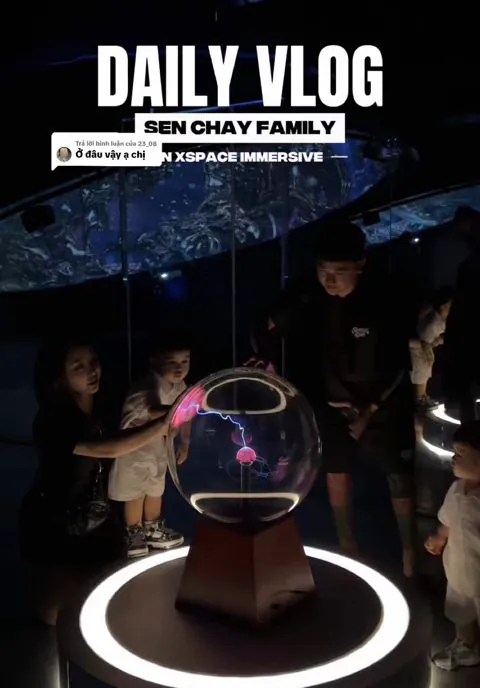
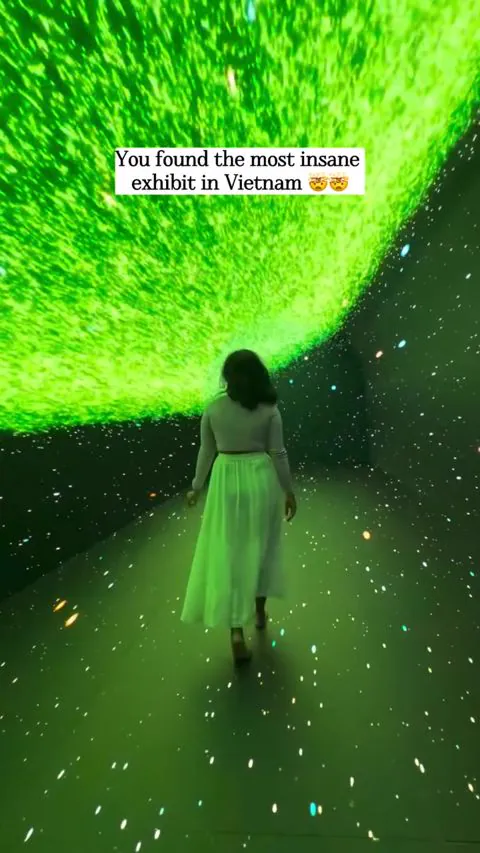
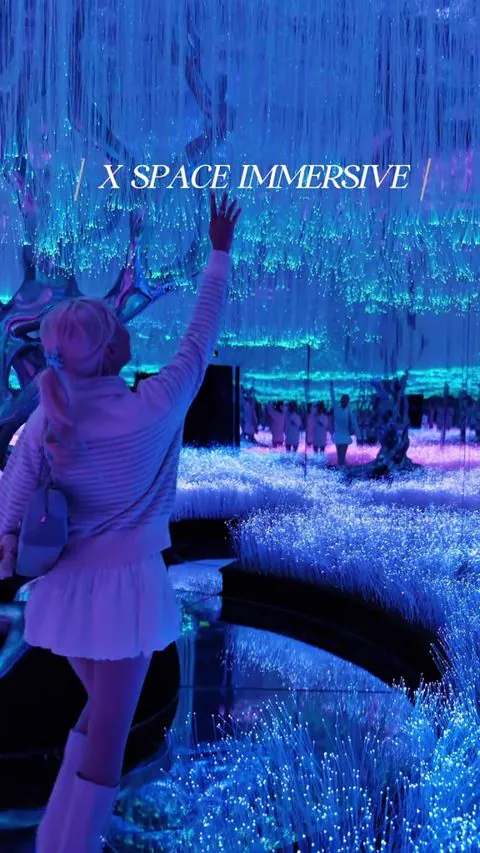
Visitors enjoying immersive digital art experience at X Space Hanoi
Reading about immersive technology is the first step—but experiencing it firsthand is what truly reveals its potential.
At X Space Immersive, technology, creativity, and storytelling come together to create unforgettable multi-sensory experiences. Whether you’re exploring interactive digital art, participating in an immersive exhibition, or discovering innovative brand activations, every experience is designed to engage, inspire, and leave a lasting impression.
Beyond entertainment, X Space Immersive demonstrates how immersive technology can transform education, culture, marketing, and live events by turning audiences from passive observers into active participants.
If you’re looking to discover how immersive experiences can elevate customer engagement, enrich learning environments, or create memorable events, X Space Immersive offers an exciting opportunity to see the future of digital interaction in action.
Step beyond the screen. Explore the possibilities. Experience X Space Immersive.
Conclusion
As digital experiences continue to evolve, immersive technology is becoming a driving force behind innovation across industries. From education and healthcare to retail and entertainment, it is changing how people interact, learn, and connect with the world around them. By understanding its capabilities and embracing emerging trends, businesses and individuals can unlock new opportunities to create more engaging, meaningful, and future-ready experiences.
Was this article helpful?
Thanks for your feedback!