Imperial Citadel of Thang Long: A Complete Visitor’s Guide

The Imperial Citadel of Thang Long is one of Hanoi’s most remarkable historical landmarks and a UNESCO World Heritage Site that reflects more than 1,000 years of Vietnamese history. Once the political heart of successive dynasties, this ancient complex offers visitors a fascinating journey through royal architecture, archaeological discoveries, and cultural heritage.
Whether you’re visiting for the first time or planning a deeper exploration, this guide covers everything you need to know about the Imperial Citadel of Thang Long, including its history, top attractions, visitor tips, and the best ways to experience this iconic destination.
In this guide
What Is the Imperial Citadel of Thang Long?
If you’re wondering what is the Imperial Citadel of Thang Long, the answer goes far beyond a collection of ancient buildings. It is the historic center of power that shaped Vietnam for over thirteen centuries.
Located in central Hanoi, the Imperial Citadel of Thang Long in Hanoi served as the political and administrative headquarters for successive Vietnamese dynasties, beginning with the Ly Dynasty in the 11th century. Although parts of the site date back even earlier, it became the imperial capital after Emperor Ly Thai To moved the nation’s capital from Hoa Lu to Thang Long in 1010.
For centuries, emperors governed the country from within these fortified walls. Royal ceremonies, diplomatic meetings, military planning, and cultural development all took place inside the citadel. As dynasties rose and fell, the complex continuously evolved, with each era leaving behind architectural layers that archaeologists continue to uncover today.
Today, the site represents one of Southeast Asia’s most significant archaeological discoveries. Visitors can walk through ancient gateways, admire royal foundations, explore military command centers, and view priceless artifacts that reveal the evolution of Vietnamese civilization.
In 2010, UNESCO recognized the Imperial Citadel of Thang Long as a World Heritage Site for its outstanding historical, cultural, and archaeological value. This recognition reflects not only the site’s impressive architecture but also its exceptional testimony to over a millennium of continuous cultural exchange and state development.
A Brief History of the Thang Long Imperial Citadel
The history of the Thang Long Imperial Citadel is, in many ways, the history of Vietnam itself. Every dynasty added new chapters, new structures, and new stories that continue to shape the country today.
The Origins of Vietnam’s Ancient Capital
The origins of the citadel stretch back to the 7th century, when Chinese rulers established a military fortress known as Dai La. Thanks to its strategic location near the Red River, the area quickly became an important administrative and defensive center.
Everything changed in 1010 when Emperor Ly Thai To made one of the most significant decisions in Vietnamese history. Recognizing the region’s favorable geography and economic potential, he moved the capital from Hoa Lu to Dai La.
Legend says that upon arriving, the emperor witnessed a golden dragon soaring into the sky. Seeing this as a good omen, he renamed the city Thang Long, meaning “Ascending Dragon.” This symbolic event marked the beginning of a new era for Vietnam.
Construction soon began on a magnificent royal citadel that would serve as the heart of the kingdom for centuries to come.
Growth Through Successive Dynasties
Over the following centuries, the Imperial Citadel of Thang Long expanded under several powerful dynasties.
During the Ly Dynasty (1009–1225), elegant palaces, ceremonial halls, temples, and defensive walls were constructed, establishing the city as the country’s political and cultural center.
The Tran Dynasty continued to strengthen the citadel while successfully defending Vietnam against Mongol invasions during the 13th century. Their victories became defining moments in Vietnamese history, and the citadel played a crucial role in military strategy.
Later, the Le Dynasty introduced grand ceremonial architecture and expanded royal residences. Many of the archaeological remains discovered today belong to this prosperous period, revealing sophisticated urban planning and artistic craftsmanship.
Even after the Nguyen Dynasty moved the capital to Hue in the early 19th century, the citadel retained considerable political and military importance.
From Royal Palace to Modern Heritage
The story of the Imperial Citadel of Thang Long Hanoi did not end with Vietnam’s imperial era.
During the French colonial period, parts of the royal complex were demolished or repurposed for military administration. While much of the original architecture disappeared, important sections survived beneath the ground.
Ironically, these buried remains became one of the site’s greatest treasures.
Beginning in the early 2000s, large-scale archaeological excavations uncovered palace foundations, ancient wells, ceramic artifacts, dragon sculptures, bricks bearing imperial inscriptions, and thousands of historical objects dating back over a thousand years.
The site also played a pivotal role during the Vietnam War. House D67 and its underground command bunker became the headquarters where military leaders directed major national operations.
Today, visitors experience both ancient royal history and modern national history in one extraordinary destination.
Where Is the Imperial Citadel of Thang Long in Hanoi?
The Imperial Citadel of Thang Long in Hanoi is located at 19C Hoang Dieu Street, Ba Dinh District, one of the city’s most historically significant neighborhoods.
Its central location makes it remarkably easy to include in any Hanoi itinerary.
From Hoan Kiem Lake, the journey takes approximately 10–15 minutes by taxi or ride-hailing service. Visitors staying in Hanoi’s Old Quarter can also reach the citadel within a pleasant 30-minute walk, passing tree-lined boulevards and colonial-era architecture along the way.
The citadel is also surrounded by many of Hanoi’s most famous landmarks, including:
- Ho Chi Minh Mausoleum
- One Pillar Pagoda
- Vietnam Military History Museum
- Hanoi Flag Tower
- Temple of Literature
Because these attractions are located close together, many travelers choose to explore them all in a single day.
Public buses regularly stop nearby, while taxis and Grab services provide convenient transportation for international visitors.
Upon arrival, the spacious entrance and well-organized visitor facilities make the experience comfortable for families, solo travelers, and guided tour groups alike.
Why Is the Imperial Citadel of Thang Long Important?
Many travelers ask what is the imperial citadel of thang long famous for, especially when comparing it with other UNESCO heritage sites across Asia.
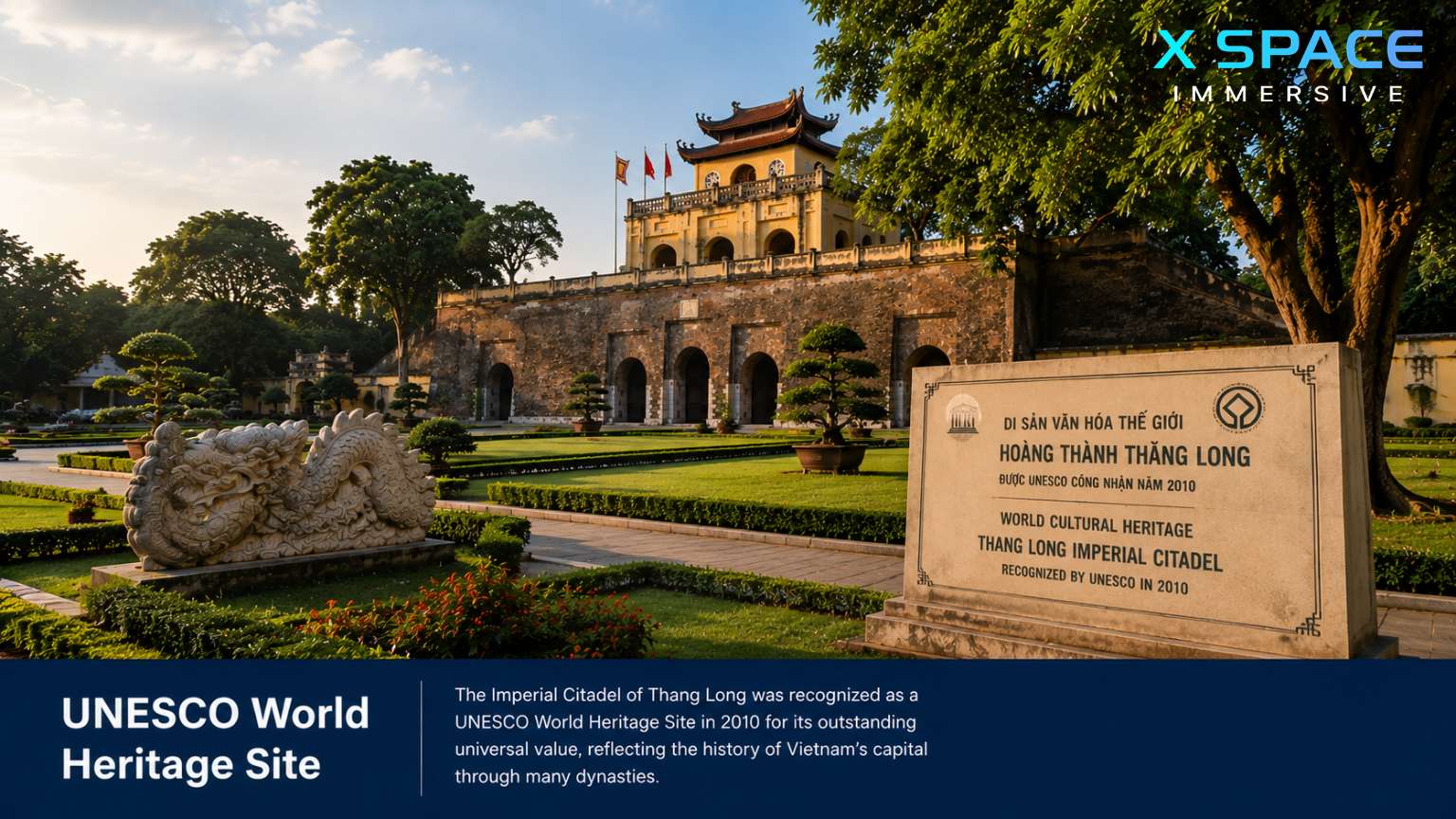
Imperial Citadel of Thang Long UNESCO World Heritage Site in Hanoi surrounded by historic gardens and ancient architecture
The answer lies in its extraordinary continuity.
Unlike many ancient capitals that flourished briefly before disappearing, the Imperial Citadel of Thang Long remained the center of Vietnamese political authority for nearly thirteen consecutive centuries.
Very few historical sites in the world can demonstrate such uninterrupted importance.
Its significance extends across several dimensions.
A Thousand Years of Political Power
For generations of Vietnamese emperors, the citadel served as the country’s administrative heart.
National policies, royal ceremonies, diplomatic negotiations, and military decisions all originated here, making it one of the most influential locations in Vietnamese history.
Exceptional Archaeological Value
The archaeological discoveries beneath the citadel have transformed historians’ understanding of medieval Southeast Asia.
Excavations reveal multiple construction layers from different dynasties stacked upon one another, offering rare insight into how Vietnamese architecture, engineering, and urban planning evolved over centuries.
These findings continue to attract archaeologists from around the world.
Cultural Identity
Beyond its physical structures, the Thang Long Imperial Citadel symbolizes the resilience and continuity of Vietnamese civilization.
It represents national independence, cultural development, and the enduring spirit of Hanoi itself.
Walking through the ancient gates today is not simply a sightseeing experience—it is an opportunity to connect with the people, traditions, and historical milestones that shaped modern Vietnam.
UNESCO World Heritage Recognition
In 2010, UNESCO officially recognized the Imperial Citadel of Thang Long for its Outstanding Universal Value.
The designation highlights three remarkable qualities:
- More than 1,300 years of continuous history.
- Outstanding archaeological discoveries.
- Exceptional testimony to Vietnam’s political and cultural evolution.
Today, it stands alongside the world’s most important heritage sites, attracting visitors who seek not only beautiful architecture but also meaningful historical experiences.
Top Attractions Inside the Imperial Citadel of Thang Long
Stepping inside the Imperial Citadel of Thang Long is like walking through more than a thousand years of Vietnamese history. Unlike many historical sites that feature a single architectural style, this UNESCO World Heritage Site showcases layers of history left behind by different dynasties. Each landmark tells a unique story, offering visitors a deeper understanding of Vietnam’s royal heritage and national identity.
Here are the highlights you shouldn’t miss during your visit.
Doan Mon Gate
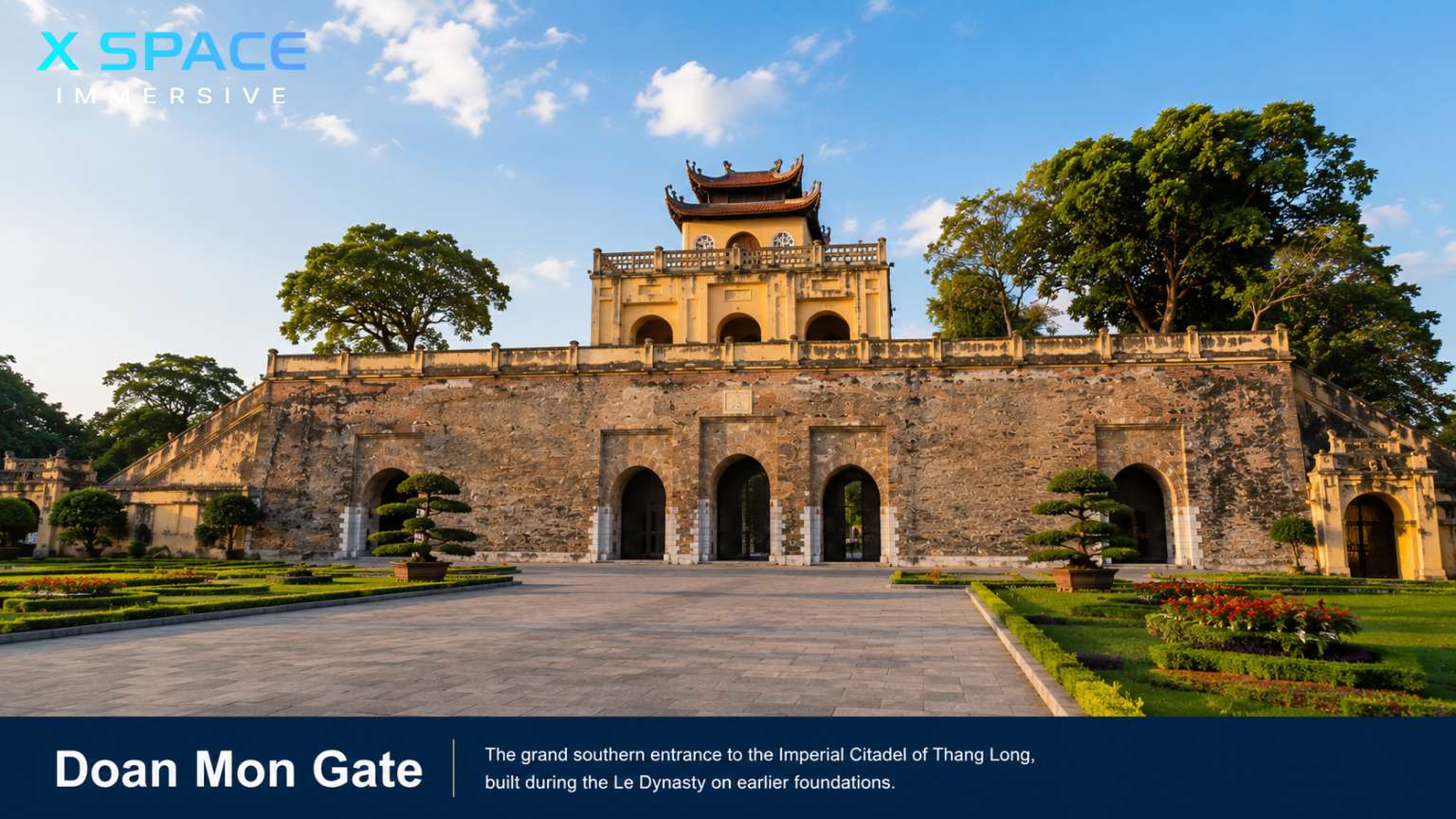
Doan Mon Gate at the Imperial Citadel of Thang Long in Hanoi, the historic southern entrance to the royal citadel
As the ceremonial southern entrance to the royal palace, Doan Mon Gate is one of the most recognizable landmarks within the Thang Long Imperial Citadel.
Built during the Le Dynasty on earlier foundations, this impressive stone gate once welcomed emperors, royal families, and high-ranking officials. Ordinary citizens were not permitted to pass through its central entrance, making it a symbol of imperial authority and prestige.
Today, visitors can walk beneath its ancient arches and admire the harmonious blend of traditional Vietnamese architecture and military engineering. The elevated terrace also provides an excellent viewpoint overlooking the main courtyard, making it one of the best places to begin exploring the citadel.
Travel Tip: Visit early in the morning for fewer crowds and softer natural light, perfect for photography.
Kinh Thien Palace Foundation
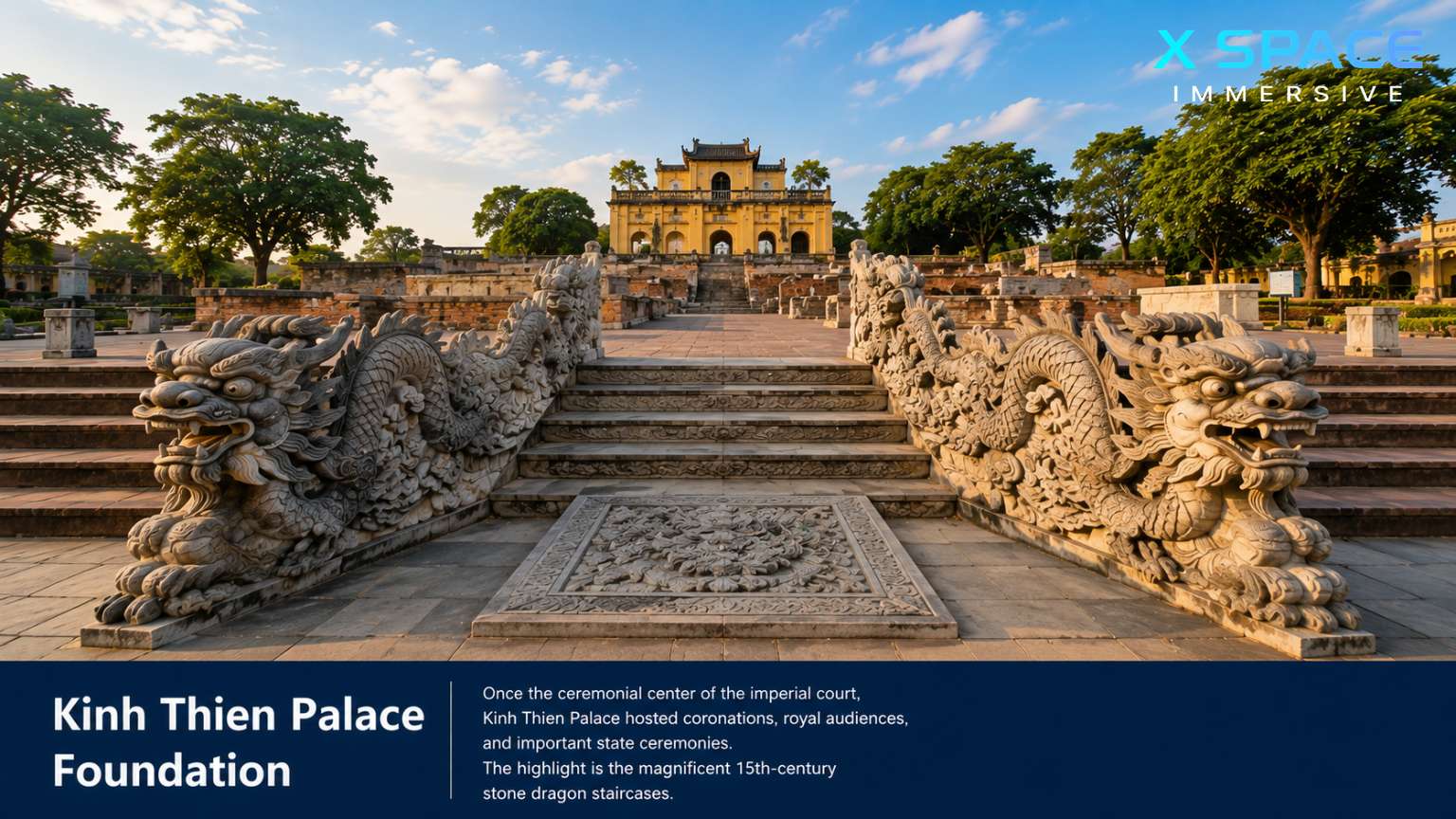
Stone dragon staircase at Kinh Thien Palace Foundation inside the Imperial Citadel of Thang Long Hanoi
Although the original palace no longer stands, the Kinh Thien Palace Foundation remains one of the most historically significant areas of the Imperial Citadel of Thang Long Hanoi.
Once the ceremonial center of the imperial court, this palace hosted coronations, royal audiences, diplomatic receptions, and important state ceremonies.
The highlight here is the magnificent pair of stone dragon staircases, carved during the 15th century. Their intricate craftsmanship reflects the artistic excellence of the Le Dynasty and has become one of the defining symbols of the citadel.
Standing on the palace platform, it’s easy to imagine the grandeur that once filled this royal complex. Informational displays around the site help visitors visualize the palace’s original appearance and understand its role in Vietnam’s imperial history.
Hanoi Flag Tower
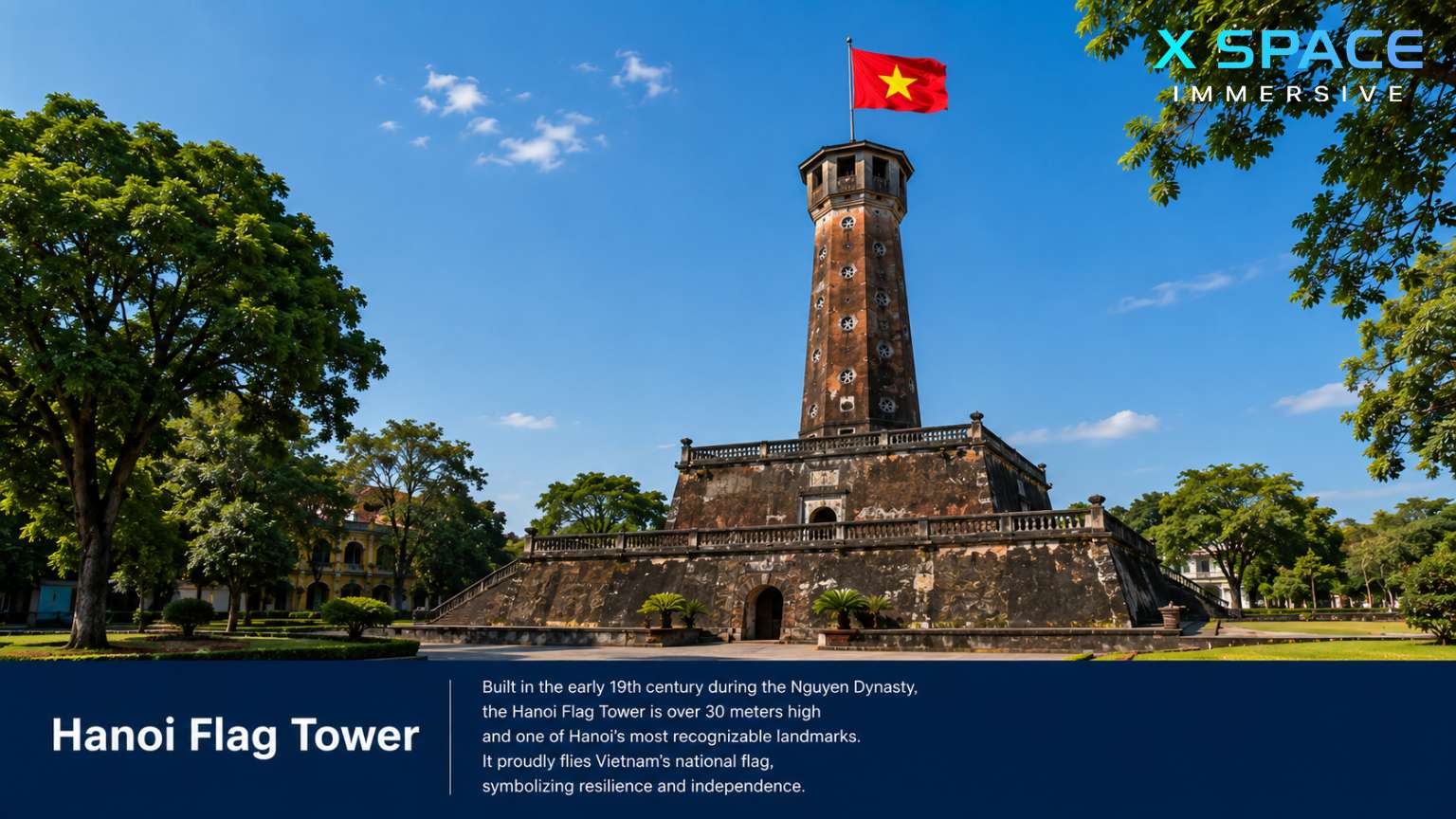
Hanoi Flag Tower located within the Imperial Citadel of Thang Long, one of Hanoi’s most iconic landmarks
Located near the entrance of the citadel, the Hanoi Flag Tower is one of the few original structures to survive both wars and colonial reconstruction.
Built in the early 19th century during the Nguyen Dynasty, the tower rises over 30 meters high and has become one of Hanoi’s most recognizable landmarks.
Visitors can climb inside to enjoy panoramic views of the surrounding historic district. Along the way, you’ll notice narrow spiral staircases, arched windows, and centuries-old brickwork that showcase traditional Vietnamese military architecture.
Today, the tower proudly flies Vietnam’s national flag, symbolizing the country’s resilience and independence.
Its close proximity to the Imperial Citadel of Thang Long in Hanoi makes it an essential stop during your visit.
House D67 and Underground Command Bunker
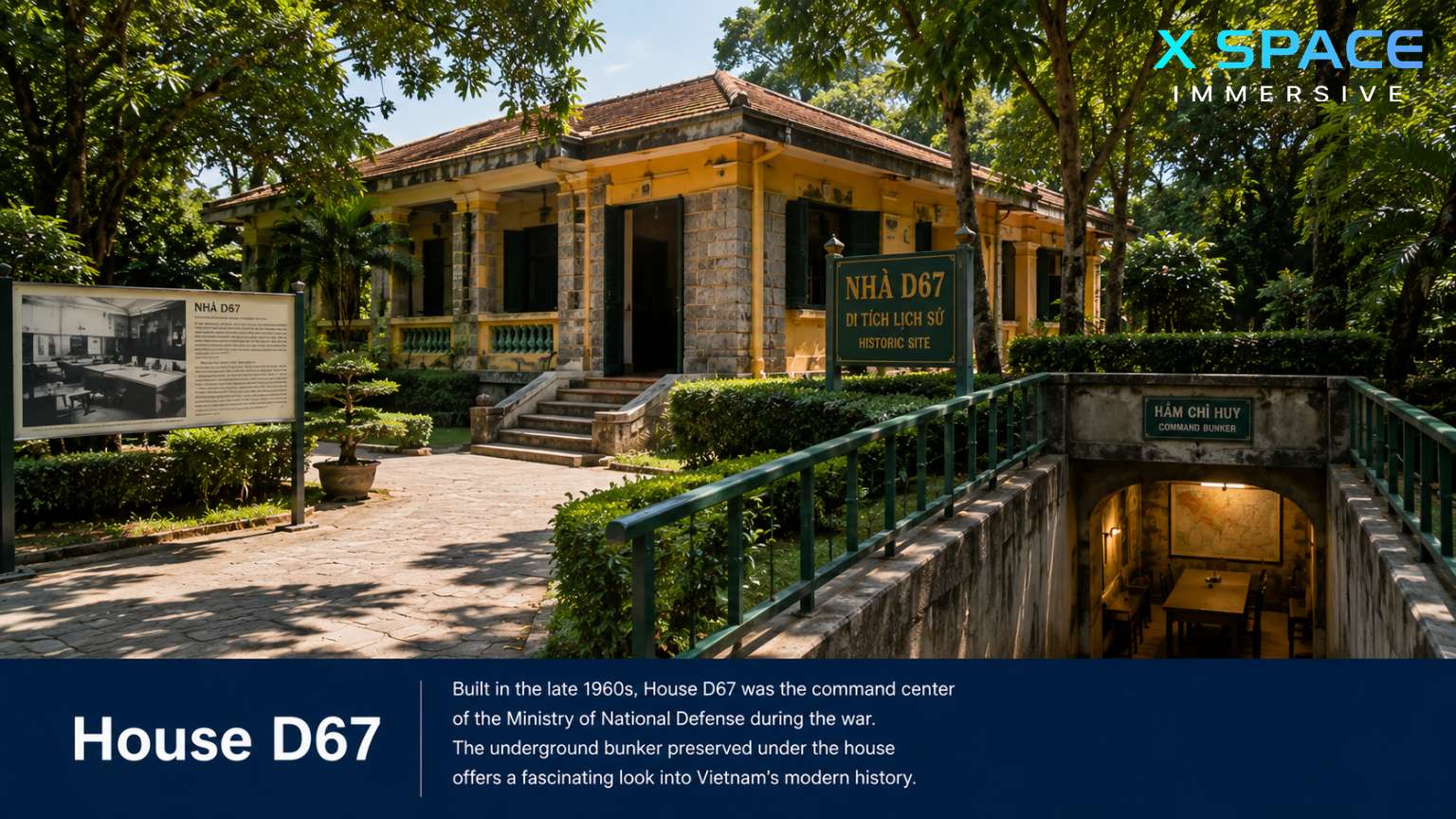
House D67 and underground command bunker at the Imperial Citadel of Thang Long in Hanoi
One of the most fascinating contrasts within the Imperial Citadel of Thang Long is the transition from ancient royal history to modern military history.
House D67, completed in 1967, served as the headquarters of Vietnam’s military leadership during the Vietnam War.
Inside, visitors can see preserved meeting rooms, original communication equipment, strategic maps, and workspaces where major national decisions were made.
Descending into the underground bunker reveals reinforced tunnels, command rooms, and emergency communication facilities that remained operational during air raids.
This section of the citadel offers a powerful reminder that the site continued to play a crucial role in Vietnamese history long after the imperial era had ended.
Hau Lau (Princess Palace)
Often overlooked by first-time visitors, Hau Lau, also known as the Princess Palace, offers a quieter and more peaceful atmosphere.
Originally built to accommodate royal women, the building has undergone several restorations throughout its history. While much of its original structure has changed, Hau Lau still reflects the elegance of traditional Vietnamese palace architecture.
Surrounded by gardens and shaded pathways, it provides an ideal place to slow down and appreciate the tranquil side of the Imperial Citadel of Thang Long Hanoi.
Photography enthusiasts particularly enjoy this area thanks to its charming architectural details and fewer crowds.
Archaeological Site at 18 Hoang Dieu
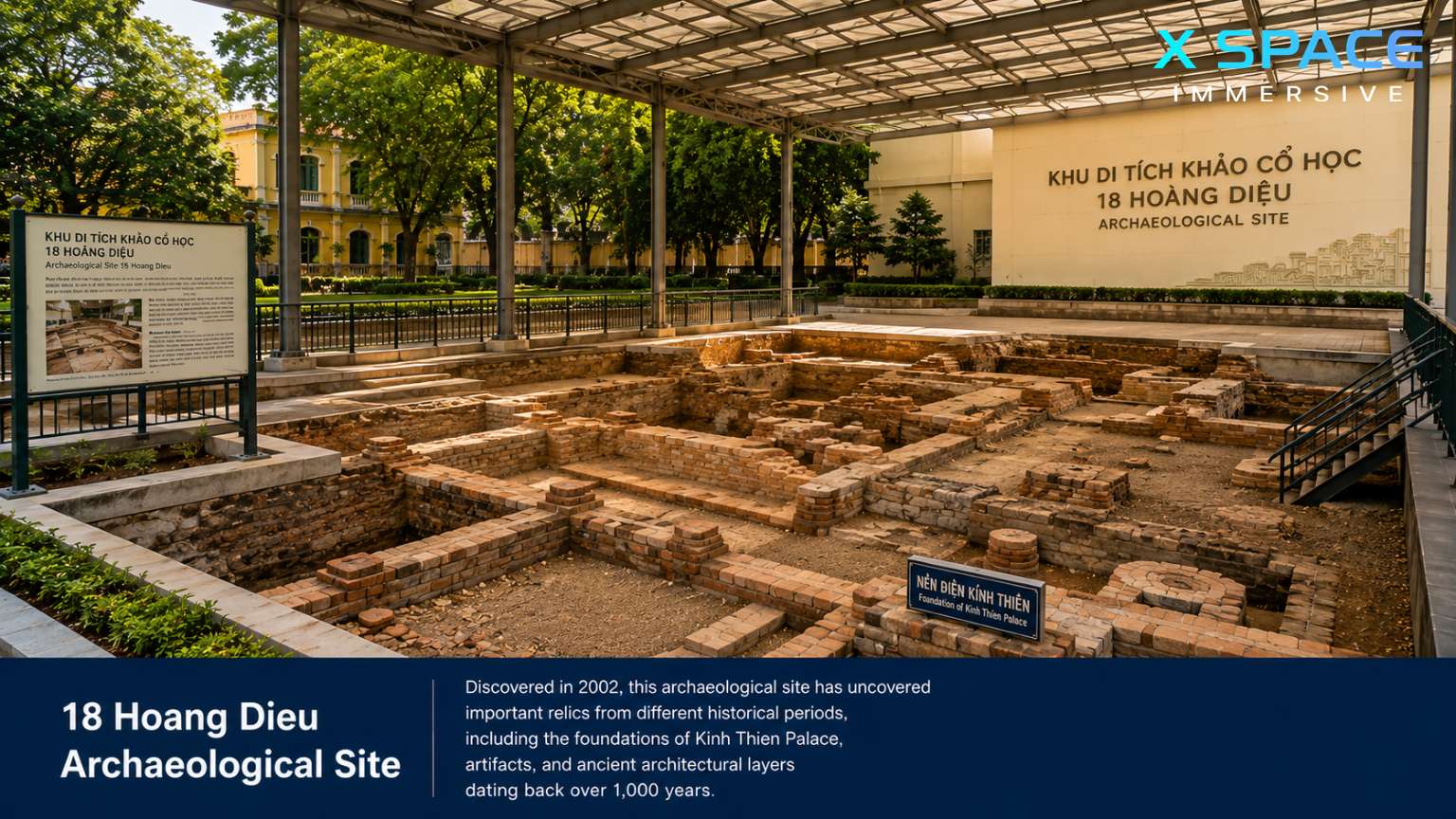
18 Hoang Dieu archaeological site at the Imperial Citadel of Thang Long featuring ancient royal palace remains
For history lovers, the archaeological site at 18 Hoang Dieu is undoubtedly one of the most extraordinary parts of the Thang Long Imperial Citadel.
Discovered during excavations in the early 2000s, this area revealed thousands of artifacts spanning more than thirteen centuries.
Visitors can observe:
- Ancient palace foundations
- Wells from different dynasties
- Decorative ceramics
- Stone dragon sculptures
- Royal bricks bearing imperial inscriptions
- Drainage systems showcasing advanced engineering
These discoveries demonstrate how each dynasty built upon the remains of its predecessor, creating one of Southeast Asia’s richest archaeological landscapes.
Interactive exhibitions and detailed information panels make the site accessible even for visitors without a background in history or archaeology.
Imperial Citadel of Thang Long Opening Hours and Entrance Fees
Before planning your visit, it’s helpful to know the practical information that will help you make the most of your day at the Imperial Citadel of Thang Long.
Opening Hours
The citadel is generally open throughout the week, allowing visitors plenty of flexibility when planning their itinerary.
Typical opening hours are:
- Morning: 8:00 AM – 12:00 PM
- Afternoon: 1:00 PM – 5:00 PM
Opening times may vary slightly during national holidays or special cultural events, so it’s always a good idea to check the latest schedule before your visit.
If you prefer a quieter experience, weekday mornings are usually the least crowded.
Entrance Fees
The Imperial Citadel of Thang Long Hanoi remains one of the best-value historical attractions in the city.
General admission is affordable, with discounted tickets available for students, children, senior citizens, and certain groups under Vietnamese regulations.
Your ticket provides access to the main heritage areas, including:
- Doan Mon Gate
- Kinh Thien Palace Foundation
- House D67
- Archaeological exhibition areas
- Hau Lau
- Outdoor heritage zones
Special exhibitions or cultural events may require an additional ticket.
Visitor Facilities
The Imperial Citadel of Thang Long is well-equipped for both domestic and international travelers.
Facilities include:
- Visitor information center
- Clean restrooms
- Drinking water stations
- Souvenir shop
- Exhibition galleries
- Guided tour services
- Audio guides (subject to availability)
- Accessible walking paths across most outdoor areas
Comfortable footwear is highly recommended, as exploring the entire heritage complex involves a fair amount of walking.
If you have two to three hours available, you’ll have enough time to visit the major landmarks at a relaxed pace while stopping to enjoy the exhibitions and archaeological displays.
Best Time to Visit the Imperial Citadel of Thang Long
The Imperial Citadel of Thang Long is open year-round, but choosing the right time to visit can make your experience far more enjoyable. Since much of the heritage complex is outdoors, weather and visitor numbers play an important role in planning your trip.
Visit During Autumn and Spring
The most pleasant seasons to explore the Imperial Citadel of Thang Long Hanoi are autumn (September to November) and spring (March to April).
During these months, Hanoi enjoys cooler temperatures, lower humidity, and clear skies, making it comfortable to walk between the historical landmarks and archaeological sites.
Autumn, in particular, is considered one of the most beautiful times to visit Hanoi. The gentle sunshine and tree-lined pathways create an ideal setting for sightseeing and photography.
Morning or Late Afternoon?
For the best experience, arrive between 8:00 AM and 10:00 AM or after 3:00 PM.
Morning visits offer:
- Cooler temperatures
- Softer natural light
- Fewer tour groups
- Better photography conditions
Late afternoon is equally enjoyable, especially if you prefer a quieter atmosphere and warmer golden-hour lighting.
If you’re visiting during the summer months (May to August), avoid midday when temperatures and humidity are typically at their highest.
How Much Time Should You Spend?
Most visitors spend two to three hours exploring the Thang Long Imperial Citadel.
This allows enough time to:
- Visit the main historical buildings
- Explore the archaeological site
- Read the exhibition displays
- Take photographs
- Enjoy a leisurely walk through the heritage grounds
History enthusiasts may wish to spend half a day discovering every exhibition and learning about the site’s fascinating evolution through different dynasties.
How to Plan Your Visit to the Imperial Citadel of Thang Long Hanoi
With several important landmarks spread across the complex, having a simple itinerary can help you make the most of your visit.
Suggested One-Hour Itinerary
If you’re short on time, focus on the highlights that best represent the history of the Imperial Citadel of Thang Long.
Recommended route:
- Enter through Doan Mon Gate
- Walk to the Kinh Thien Palace Foundation
- Visit the Hanoi Flag Tower
- Explore House D67
- Stop briefly at the archaeological exhibition before leaving
This route provides an excellent overview of both Vietnam’s imperial past and modern history.
Suggested Two- to Three-Hour Itinerary
If you have more time, a slower pace allows you to appreciate the details that make the Imperial Citadel of Thang Long Hanoi so special.
A recommended itinerary includes:
- Begin at Doan Mon Gate
- Explore Kinh Thien Palace Foundation
- Visit Hau Lau
- Discover House D67 and the underground bunker
- Spend time at the archaeological site at 18 Hoang Dieu
- Browse the museum exhibitions
- Relax in the gardens before finishing your visit
This itinerary offers a balanced combination of architecture, archaeology, military history, and cultural heritage.
What to Bring
Although the site is easy to explore, a few essentials can make your visit much more comfortable.
Consider bringing:
- Comfortable walking shoes
- A refillable water bottle
- Sunscreen
- A hat or umbrella
- Sunglasses
- A fully charged phone or camera
- Portable power bank
- Cash or card for tickets and souvenirs
Because you’ll spend much of your time outdoors, lightweight clothing is recommended during warmer months.
Travel Tips for First-Time Visitors
If this is your first visit to the Imperial Citadel of Thang Long in Hanoi, these simple tips will help you enjoy the experience even more.
- Arrive early to avoid tour groups.
- Read the information panels—they provide valuable historical context.
- Join a guided tour if you’re interested in Vietnamese history.
- Respect restricted archaeological areas.
- Wear comfortable footwear, as some paths are uneven.
- Allow extra time if you enjoy museums or historical exhibitions.
Combining your visit with nearby attractions such as the Ho Chi Minh Mausoleum or the Temple of Literature also makes for a rewarding full-day itinerary.
Photography Tips and Best Photo Spots
The Imperial Citadel of Thang Long is one of Hanoi’s most photogenic heritage sites. Ancient stone gates, centuries-old architecture, lush gardens, and archaeological remains create endless opportunities for memorable photographs.
Whether you’re using a smartphone or a professional camera, planning where and when to shoot can make a noticeable difference.
Best Photo Spots
Doan Mon Gate
The grand entrance is one of the most iconic images of the Thang Long Imperial Citadel.
Its symmetrical design, weathered stone walls, and historic atmosphere make it perfect for wide-angle photographs.
Morning light works particularly well here.
Kinh Thien Palace Dragon Staircase
The carved stone dragons are among the most famous architectural features within the Imperial Citadel of Thang Long Hanoi.
Capture them from a low angle to emphasize their intricate craftsmanship and historical significance.
This location is especially popular with architecture enthusiasts.
Hanoi Flag Tower
Standing beneath the towering national flag creates an impressive composition that reflects both Vietnam’s history and national pride.
A wide-angle lens helps include both the tower and surrounding landscape.
Hau Lau
Compared with the busier sections of the citadel, Hau Lau offers a quieter setting.
Its elegant architecture, surrounding greenery, and peaceful atmosphere make it ideal for portrait photography and travel content.
Archaeological Excavation Area
The excavation site provides a completely different visual experience.
Ancient foundations, exposed brick structures, and preserved artifacts create fascinating documentary-style images that tell the story of Vietnam’s layered history.
Best Lighting Conditions
Professional photographers often recommend visiting during:
- 8:00–10:00 AM
- 3:30–5:00 PM
These periods offer softer light, more balanced shadows, and pleasant colors throughout the heritage complex.
Golden hour before sunset creates particularly beautiful images around the palace foundations and gardens.
Photography Etiquette
While photography is generally permitted throughout the Imperial Citadel of Thang Long, visitors should follow a few simple guidelines.
- Avoid climbing on historical structures.
- Respect barriers protecting archaeological remains.
- Do not use drones unless officially authorized.
- Turn off flash inside exhibition galleries if requested.
- Be considerate of other visitors when taking photos.
Respecting these rules helps preserve the site for future generations while ensuring everyone enjoys a pleasant experience.
Make the Most of Your Visit
A visit to the Imperial Citadel of Thang Long is much more than checking another landmark off your travel list. It is an opportunity to experience over a thousand years of Vietnamese history through architecture, archaeology, and living heritage.
By arriving early, planning your route, and allowing enough time to explore each section, you’ll gain a deeper appreciation for why this UNESCO World Heritage Site remains one of Hanoi’s most significant cultural treasures. Whether you’re captivated by the royal legacy, intrigued by archaeological discoveries, or simply searching for one of the city’s best photography locations, the Imperial Citadel of Thang Long Hanoi promises a memorable journey through Vietnam’s past.
Imperial Citadel of Thang Long Reviews: Is It Worth Visiting?
If you’re searching for Imperial Citadel of Thang Long reviews, you’ll quickly notice a common theme: visitors appreciate the site’s unique ability to combine over a thousand years of history with a peaceful atmosphere in the heart of Hanoi.
Unlike some of the city’s busier attractions, the Imperial Citadel of Thang Long offers spacious walking paths, beautifully preserved heritage areas, and informative exhibitions that allow visitors to explore at their own pace. Whether you’re a history enthusiast or simply curious about Vietnam’s cultural heritage, the site provides an enriching experience that goes beyond sightseeing.
What Visitors Love Most
Many travelers praise the citadel for its historical significance and well-preserved landmarks. The combination of ancient royal architecture, archaeological excavations, and wartime command centers creates a fascinating journey through different periods of Vietnamese history.
Highlights frequently mentioned in visitor reviews include:
- The impressive Doan Mon Gate and Kinh Thien Palace Foundation.
- The underground bunker at House D67.
- The archaeological site at 18 Hoang Dieu.
- The peaceful gardens and open spaces.
- Well-maintained walking routes with multilingual information boards.
Photography enthusiasts also appreciate the site’s beautiful scenery, while families often enjoy the relaxed atmosphere compared to other popular attractions in Hanoi.
Things to Keep in Mind
Although the Imperial Citadel of Thang Long Hanoi receives overwhelmingly positive reviews, visitors should keep a few things in mind.
Some palace buildings no longer exist, meaning you’ll see foundations rather than complete royal structures. Understanding the historical background beforehand—or joining a guided tour—can greatly enhance your appreciation of the site.
Because much of the complex is outdoors, visiting during cooler hours is also recommended, especially in summer.
Is It Worth Visiting?
Absolutely.
For anyone interested in Vietnamese history, UNESCO World Heritage Sites, archaeology, or cultural travel, the Thang Long Imperial Citadel is one of Hanoi’s must-visit attractions.
Even if history isn’t usually your main interest, the peaceful environment, beautiful architecture, and fascinating exhibitions make it well worth adding to your itinerary.
Essential Visitor Tips for a Better Experience
A little preparation can help you enjoy a smoother and more rewarding visit to the Imperial Citadel of Thang Long.
Here are a few practical tips to keep in mind.
Arrive Early
Morning visits usually offer cooler weather, fewer tour groups, and better lighting for photography.
Wear Comfortable Shoes
The heritage complex covers a large area, so expect to spend several hours walking between historical buildings and archaeological sites.
Stay Hydrated
Hanoi can be hot and humid, particularly during summer. Bringing a reusable water bottle is highly recommended.
Read the Information Panels
Each landmark includes detailed explanations that help visitors understand its historical importance.
If you’re passionate about history, consider hiring a local guide to gain deeper insights into the evolution of the Imperial Citadel of Thang Long in Hanoi.
Respect the Heritage Site
Remember that this is one of Vietnam’s most important historical monuments.
Please avoid:
- Climbing on ancient structures.
- Crossing restricted archaeological areas.
- Touching fragile artifacts.
- Leaving litter behind.
Preserving the site ensures future generations can continue learning from this remarkable piece of Vietnamese history.
Attractions Near the Imperial Citadel of Thang Long
One of the greatest advantages of visiting the Imperial Citadel of Thang Long Hanoi is its location.
Several of Hanoi’s most iconic attractions are just a short walk or drive away, making it easy to create a full day of cultural exploration.
Ho Chi Minh Mausoleum
Located less than one kilometer away, the Ho Chi Minh Mausoleum is one of Vietnam’s most visited landmarks.
Here, visitors can pay their respects to President Ho Chi Minh while exploring the surrounding presidential grounds, gardens, and historic buildings.
One Pillar Pagoda
Just a few minutes from the citadel stands the famous One Pillar Pagoda.
Built in the 11th century during the Ly Dynasty, this unique Buddhist temple is one of Hanoi’s most recognizable cultural symbols.
Its elegant architecture makes it an excellent addition to any heritage-focused itinerary.
Vietnam Military History Museum
History lovers shouldn’t miss the Vietnam Military History Museum.
The museum complements your visit to the Imperial Citadel of Thang Long by showcasing Vietnam’s military development through centuries of conflict and independence.
Outside, visitors can see tanks, aircraft, and military equipment, while indoor galleries feature fascinating historical exhibits.
Temple of Literature
Around ten minutes away lies the Temple of Literature, Vietnam’s first national university.
Dedicated to Confucius and generations of scholars, this peaceful complex offers another perspective on Vietnam’s cultural and educational heritage.
Combining the temple with the Thang Long Imperial Citadel creates a deeper understanding of the country’s royal and intellectual history.
Hanoi Old Quarter
After exploring the historical sites, spend the evening wandering through Hanoi’s vibrant Old Quarter.
Here you’ll discover:
- Local street food
- Traditional cafés
- Boutique shops
- Night markets
- Cultural performances
It’s the perfect way to end a day of historical exploration.
FAQ About the Imperial Citadel of Thang Long
What Is Imperial Citadel of Thang Long Famous For?
The Imperial Citadel of Thang Long is famous for serving as Vietnam’s political center for over 1,000 years. It is also recognized as a UNESCO World Heritage Site thanks to its remarkable archaeological discoveries and historical significance.
What Is the Imperial Citadel of Thang Long Used for Today?
Today, the site functions as a protected cultural heritage destination, museum, and archaeological research center.
Visitors can explore historical landmarks, exhibitions, cultural events, and educational programs throughout the year.
How Long Should You Spend Here?
Most travelers spend between two and three hours exploring the major attractions.
If you enjoy museums and history, you may wish to allow half a day for a more in-depth experience.
Is the Imperial Citadel Suitable for Families?
Yes. Families with children often enjoy the spacious grounds, open-air environment, and educational exhibits.
Older children interested in history usually find the archaeological discoveries particularly fascinating.
Can You Visit Without a Guide?
Absolutely. The Imperial Citadel of Thang Long Hanoi includes clear information panels in multiple languages.
However, joining a guided tour provides additional historical context and stories that many independent visitors might otherwise miss.
Is the Site Accessible?
Most outdoor pathways are wide and relatively easy to navigate.
While certain historical structures include stairs, much of the heritage complex is accessible for elderly visitors and those with limited mobility.
Experience X Space Immersive

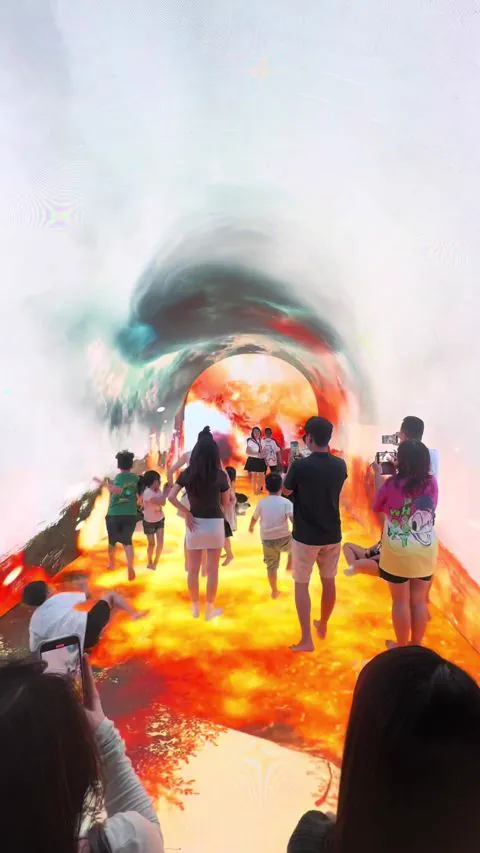
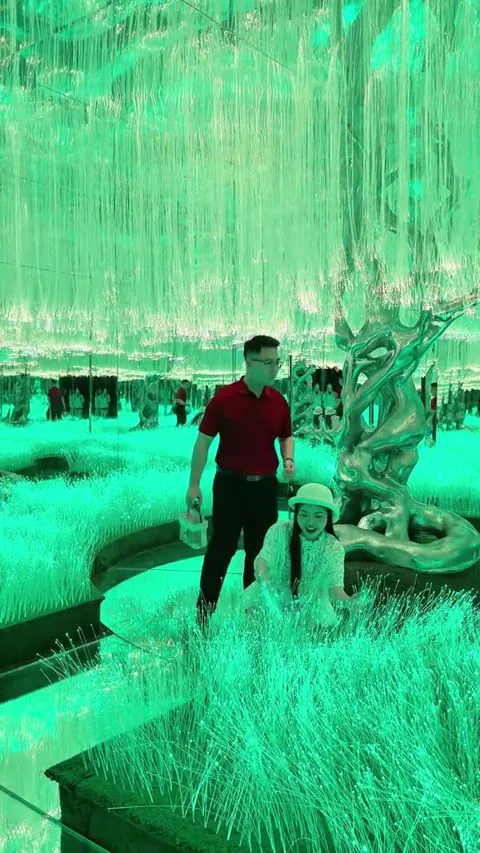
Visitors exploring X Space Immersive digital art exhibition in Hanoi
After discovering the thousand-year history of the Imperial Citadel of Thang Long, why not continue your cultural journey in an entirely different way?
Experience X Space Immersive offers a modern interpretation of Vietnamese heritage through cutting-edge projection technology, immersive sound, and interactive storytelling. Rather than viewing history through traditional exhibits alone, visitors are surrounded by vivid visuals and multi-sensory experiences that bring culture, art, and history to life.
For travelers interested in seeing how Vietnam blends tradition with innovation, combining the Imperial Citadel of Thang Long with Experience X Space Immersive creates a well-rounded itinerary. Spend the morning exploring the ancient royal citadel, then step into a digital environment where historical narratives are reimagined through immersive technology.
This combination appeals to a wide range of visitors—from history enthusiasts and families to photographers and international travelers looking for unique experiences beyond conventional sightseeing.
Whether you’re uncovering the legacy of Vietnam’s imperial past or engaging with its cultural stories through immersive media, these two destinations offer complementary perspectives on the country’s rich heritage.
Plan your visit today and experience Hanoi from both historical and contemporary viewpoints, where centuries of tradition meet the possibilities of modern technology.
Was this article helpful?
Thanks for your feedback!