One Pillar Pagoda Hanoi Vietnam: Complete Travel Guide 2026

One Pillar Pagoda Hanoi Vietnam is one of the country’s most iconic cultural landmarks, attracting visitors with its extraordinary lotus-inspired architecture and nearly 1,000 years of history. Nestled in the heart of Hanoi, this unique Buddhist temple offers far more than a beautiful photo opportunity – it tells the story of Vietnam’s rich heritage, spiritual traditions, and timeless craftsmanship. In this complete 2026 travel guide, you’ll discover everything you need to know before visiting, from its fascinating history and opening hours to entrance fees, dress code, and expert travel tips.
In this guide
Why Visit One Pillar Pagoda Hanoi Vietnam?
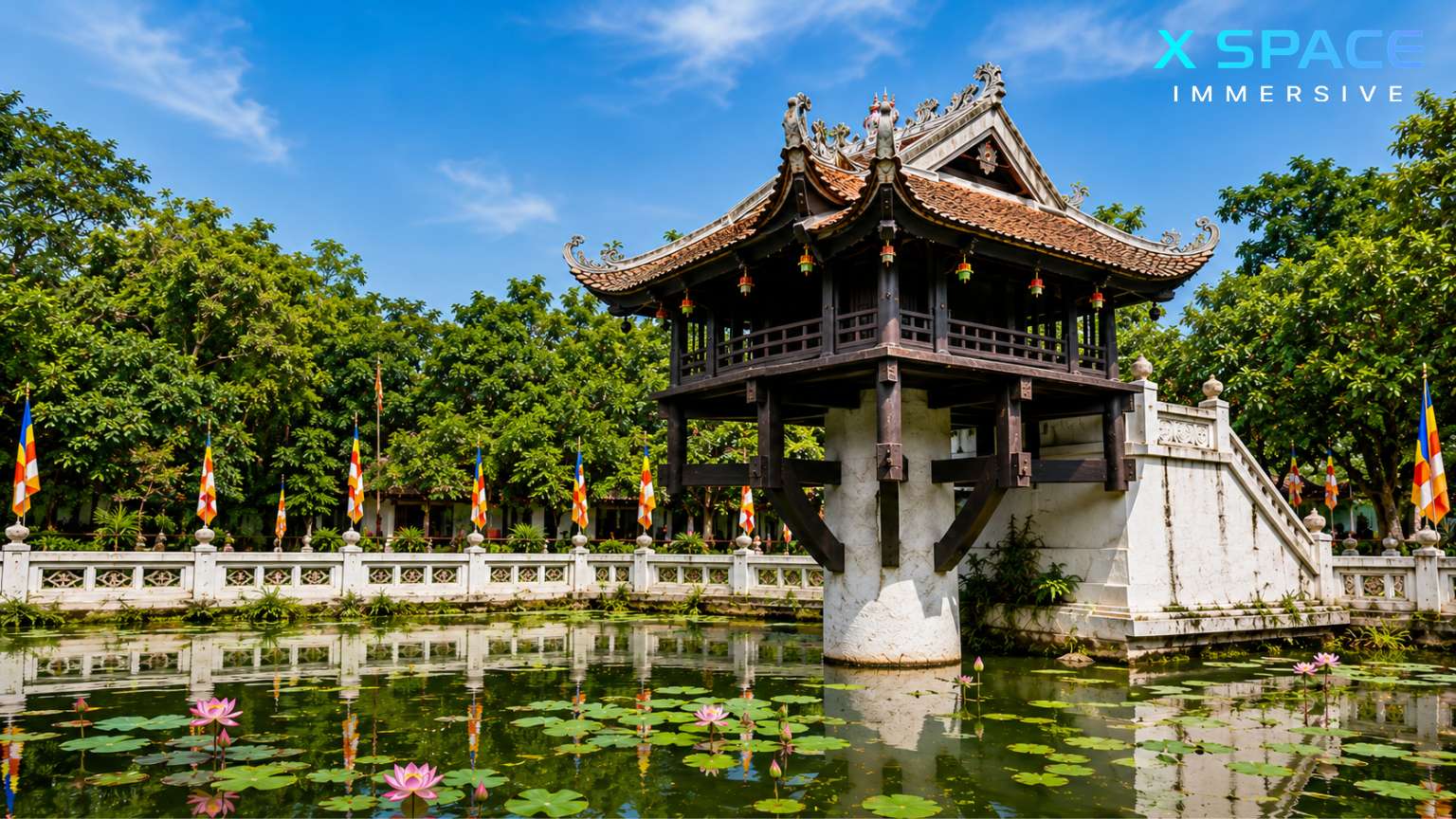
One Pillar Pagoda Hanoi Vietnam viewed from the lotus pond on a sunny day
When planning a trip to Hanoi, you’ll find countless attractions competing for your attention. Yet among the bustling Old Quarter, peaceful lakes, and grand colonial buildings, One Pillar Pagoda Hanoi Vietnam remains one of the city’s most treasured landmarks.
So what makes this small temple so extraordinary?
A Symbol of Vietnam’s Spiritual Heritage
Unlike many famous temples that impress visitors with their immense size, One Pillar Pagoda Vietnam captivates through symbolism.
Built to resemble a blooming lotus flower rising from muddy water, the pagoda reflects one of Buddhism’s most meaningful teachings: purity emerging from adversity. This elegant concept has transformed the temple into a national icon recognized far beyond Vietnam’s borders.
For Vietnamese people, the pagoda is not only a religious monument but also a place where generations have prayed for peace, prosperity, and family happiness.
Even today, locals frequently visit to light incense, make offerings, and seek blessings, giving travelers an opportunity to witness authentic spiritual traditions rather than a site preserved solely for tourism.
One of the World’s Most Unique Temple Designs
At first glance, many visitors are surprised by the temple’s compact appearance.
However, what makes One Pillar Pagoda remarkable is its engineering.
Instead of standing on a conventional foundation, the wooden sanctuary rests atop a single massive stone pillar approximately four meters high, creating the illusion of a lotus blossom floating above the water.
This innovative design has made the pagoda one of Vietnam’s most photographed cultural landmarks and a favorite subject among architects and historians worldwide.
Its elegant simplicity proves that extraordinary architecture does not always require monumental scale.
A Perfect Stop on Any Hanoi Itinerary
Another reason travelers love One Pillar Pagoda Hanoi is its excellent location.
The temple sits within Hanoi’s historic Ba Dinh District, allowing visitors to easily combine multiple attractions in one morning or afternoon, including:
- Ho Chi Minh Mausoleum
- Ho Chi Minh Museum
- Presidential Palace
- Imperial Citadel of Thang Long
Because these landmarks are located within walking distance, visiting the pagoda requires very little extra travel time, making it an ideal addition to almost any itinerary.
Experience Nearly 1,000 Years of Vietnamese History
Every stone, beam, and decorative carving tells part of Vietnam’s story.
Although the current structure has undergone restoration throughout history, the original pagoda dates back to the Ly Dynasty, making it one of Hanoi’s oldest surviving cultural symbols.
Standing beside the lotus pond, it’s easy to imagine emperors, monks, and pilgrims gathering here centuries ago.
This remarkable continuity between past and present is one of the reasons One Pillar Pagoda Vietnam continues to inspire visitors from around the world.
One Pillar Pagoda History: The Story Behind Hanoi’s Icon
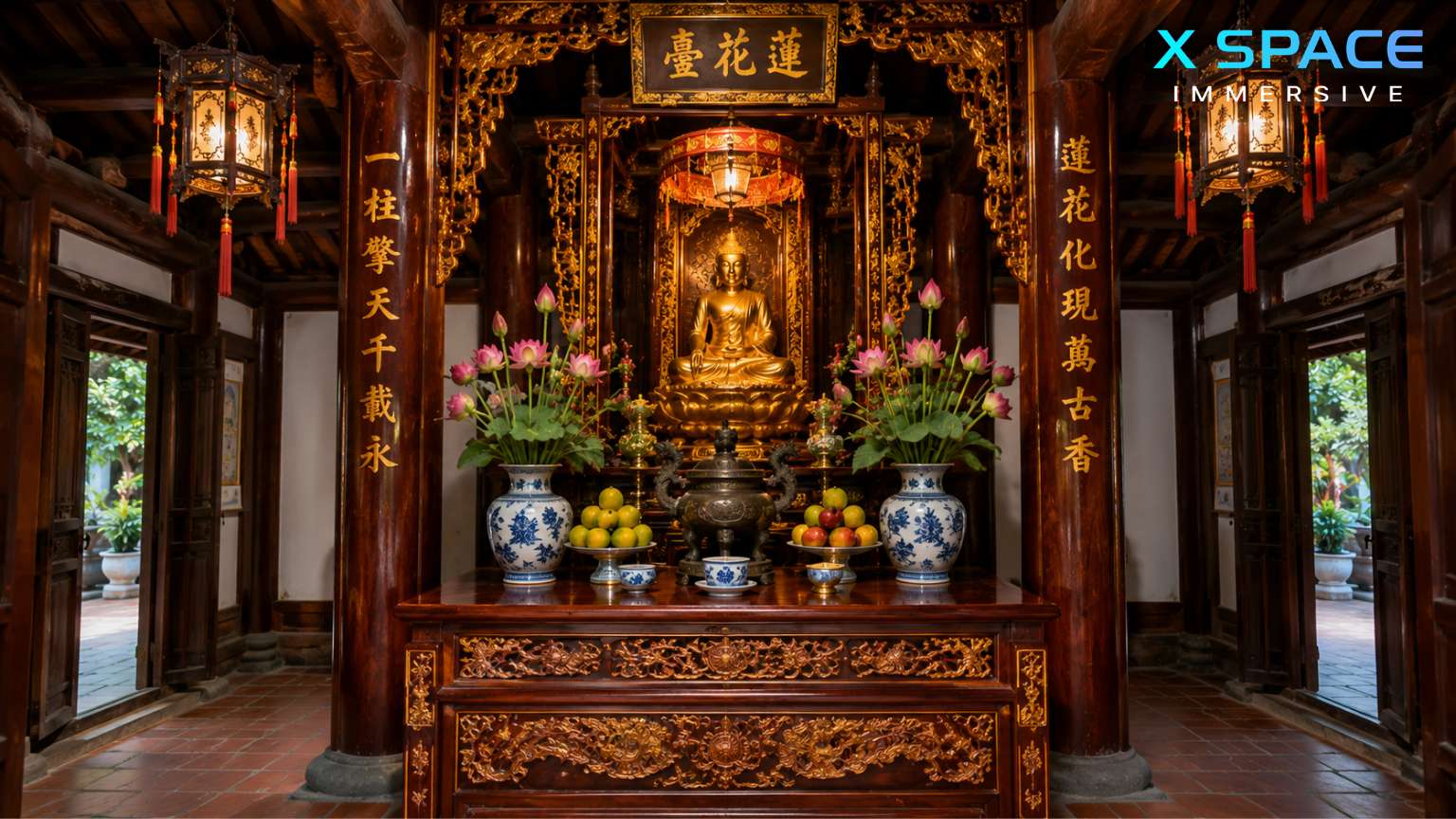
Interior of One Pillar Pagoda showcasing Buddhist altar and traditional Vietnamese architecture
Behind the elegant architecture lies a legend that has been passed down through generations.
Understanding the One Pillar Pagoda history allows visitors to appreciate not only its beauty but also its deep spiritual meaning.
The Dream That Changed Vietnamese History
According to historical records and local legend, Emperor Ly Thai Tong ruled Vietnam during the early 11th century.
Although respected as a wise ruler, the emperor had one great sorrow—he had no heir.
One night, he dreamed of the Bodhisattva Avalokiteshvara (Quan Am), who appeared seated upon a magnificent lotus flower emerging from the water.
The Bodhisattva gently handed him a baby boy.
Shortly afterward, the emperor married a young woman who gave birth to his son.
Believing this miracle was a blessing from the Buddha, Emperor Ly Thai Tong ordered the construction of a unique temple in 1049.
The pagoda would recreate the sacred lotus from his dream, forever commemorating the divine message that had changed his life.
Even today, many couples visit the temple to pray for fertility, healthy children, and family happiness.
Built During Vietnam’s Golden Ly Dynasty
The Ly Dynasty is widely regarded as one of the most influential periods in Vietnamese history.
It marked an era of political stability, cultural prosperity, and the flourishing of Buddhism throughout the kingdom.
During this time, numerous pagodas, temples, and educational institutions were established across northern Vietnam.
Among them, One Pillar Pagoda Hanoi Vietnam became one of the dynasty’s greatest architectural achievements.
Its design perfectly embodied Buddhist philosophy while demonstrating the exceptional craftsmanship of Vietnamese builders nearly one thousand years ago.
Destruction and Remarkable Restoration
Like many historic landmarks, the pagoda has endured centuries of conflict and natural disasters.
The original structure experienced damage from weather, wars, and changing political periods.
Perhaps its darkest moment came in 1954 when the retreating French forces destroyed much of the temple before leaving Hanoi.
Fortunately, thanks to historical documents, photographs, and traditional craftsmanship, the pagoda was carefully reconstructed shortly afterward.
Today’s visitors see a faithful restoration that preserves the spirit and appearance of the original monument while ensuring its survival for future generations.
This remarkable journey of destruction and renewal mirrors Vietnam’s own resilience throughout history.
Why the Pagoda Still Matters Today
Although almost one thousand years have passed since its construction, the pagoda continues to serve multiple roles.
It remains:
- an active place of Buddhist worship,
- an architectural masterpiece,
- a national cultural symbol,
- one of Hanoi’s most visited attractions,
- and a reminder of Vietnam’s enduring traditions.
For many Vietnamese families, visiting the pagoda is not simply sightseeing—it is a meaningful cultural experience that connects them with their ancestors and spiritual heritage.
What Makes One Pillar Pagoda Architecture Unique?
Among all religious sites in Southeast Asia, few are as instantly recognizable as One Pillar Pagoda.
Its graceful appearance combines symbolism, engineering, and traditional Vietnamese aesthetics into one unforgettable landmark.
Inspired by the Lotus Flower
The lotus occupies a special place in Vietnamese culture.
Growing from muddy ponds while blooming into pristine beauty, it represents purity, wisdom, resilience, and enlightenment.
Rather than simply decorating the temple with lotus motifs, ancient architects transformed the entire building into a giant lotus blossom.
The elevated wooden sanctuary represents the flower itself, while the stone pillar beneath acts as its stem emerging from the water.
This poetic design perfectly reflects Buddhist philosophy, making One Pillar Pagoda Vietnam unlike any other temple in the country.
The Famous Single Stone Pillar
The temple’s most remarkable feature is undoubtedly the solitary stone column supporting the entire wooden structure.
Carved from a massive block of stone, the pillar provides both structural support and symbolic meaning.
For nearly one thousand years, this unique engineering concept has fascinated architects, historians, and travelers alike.
Its minimalist elegance demonstrates how ancient Vietnamese builders successfully combined technical expertise with religious symbolism.
Rather than emphasizing grandeur, the pagoda celebrates harmony between architecture and nature.
Traditional Vietnamese Wooden Craftsmanship
Although relatively small, every detail of the pagoda reflects centuries of traditional craftsmanship.
Visitors can admire:
- curved tiled roofs with graceful upward corners,
- finely carved wooden beams,
- intricate decorative motifs,
- Buddhist altars,
- elegant lacquerwork,
- and harmonious proportions inspired by classical Vietnamese architecture.
These details create an atmosphere of tranquility that contrasts beautifully with the busy streets surrounding the temple.
The Peaceful Lotus Pond
The surrounding pond is far more than an attractive landscape feature.
It completes the temple’s symbolic composition.
During the summer months, blooming lotus flowers enhance the scene, filling the air with subtle fragrance and transforming the pagoda into one of Hanoi’s most picturesque locations.
Early morning light reflecting across the water creates especially beautiful photography opportunities, making sunrise one of the best times to visit.
Where Is One Pillar Pagoda Hanoi?
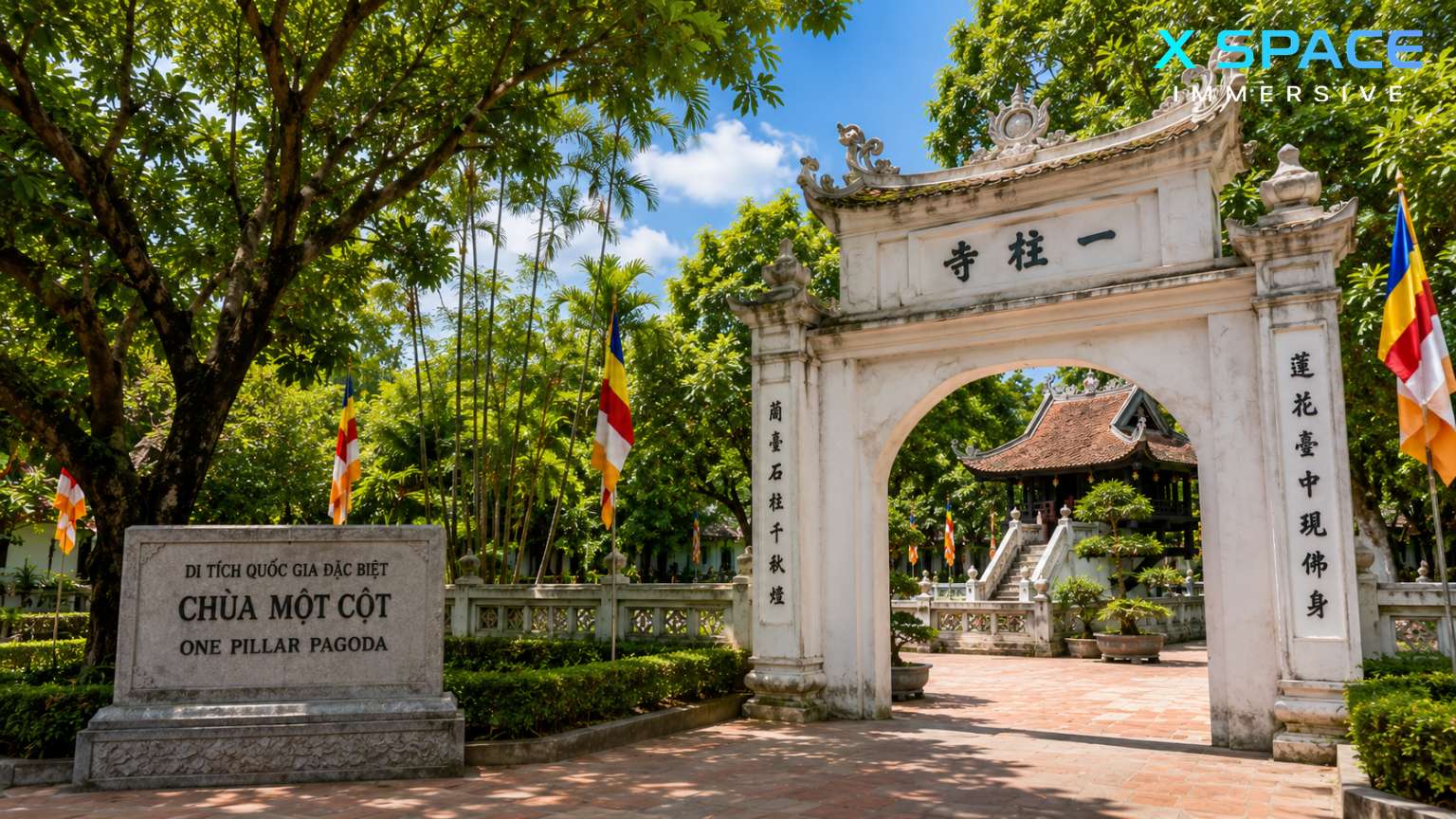
Entrance gate of One Pillar Pagoda in Ba Dinh District Hanoi Vietnam
One of the greatest advantages of visiting One Pillar Pagoda Hanoi is its convenient location.
Situated in Ba Dinh District, the temple lies within Hanoi’s political and historical center, only a short distance from many of the city’s most famous attractions.
Its official address is:
Chua Mot Cot Street, Doi Can Ward, Ba Dinh District, Hanoi, Vietnam.
Because the pagoda is located inside the Ho Chi Minh historical complex, most visitors combine several landmarks into one walking route.
This makes the area ideal for travelers interested in Vietnam’s modern history as well as its ancient cultural heritage.
How to Get to One Pillar Pagoda
Getting to One Pillar Pagoda Hanoi Vietnam is simple regardless of your travel style.
If you’re staying in Hanoi’s Old Quarter, the journey typically takes just 10–15 minutes by taxi or ride-hailing services such as Grab.
For budget-conscious travelers, several public bus routes stop near Ba Dinh Square, while renting a motorbike offers additional flexibility for exploring the city.
Many visitors also enjoy walking from nearby attractions, allowing them to experience Hanoi’s tree-lined boulevards, French colonial architecture, and vibrant local life along the way.
Once you arrive, the pagoda’s compact size means that a leisurely visit can easily fit into a broader day of sightseeing without feeling rushed.
One Pillar Pagoda Hanoi Opening Hours in 2026
Before planning your visit, it’s helpful to know the latest One Pillar Pagoda Hanoi opening hours so you can make the most of your time in Ba Dinh District.
The pagoda is generally open every day, welcoming both worshippers and tourists throughout the week.
Opening Hours (Typical Schedule)
- Monday – Sunday
- 7:00 AM – 6:00 PM
Since the pagoda is an active place of worship, opening times may vary slightly during major Buddhist festivals, national holidays, or maintenance periods. If you’re visiting during Tet (Vietnamese Lunar New Year) or other religious celebrations, it’s worth checking local updates before your trip.
For most travelers, arriving between 7:30 AM and 9:00 AM offers the best experience. The weather is cooler, tour groups are still limited, and the soft morning light beautifully illuminates the lotus pond surrounding the pagoda.
Late afternoon is another excellent time to visit, especially for photography enthusiasts who prefer warmer natural lighting.
Best Time of Day to Visit
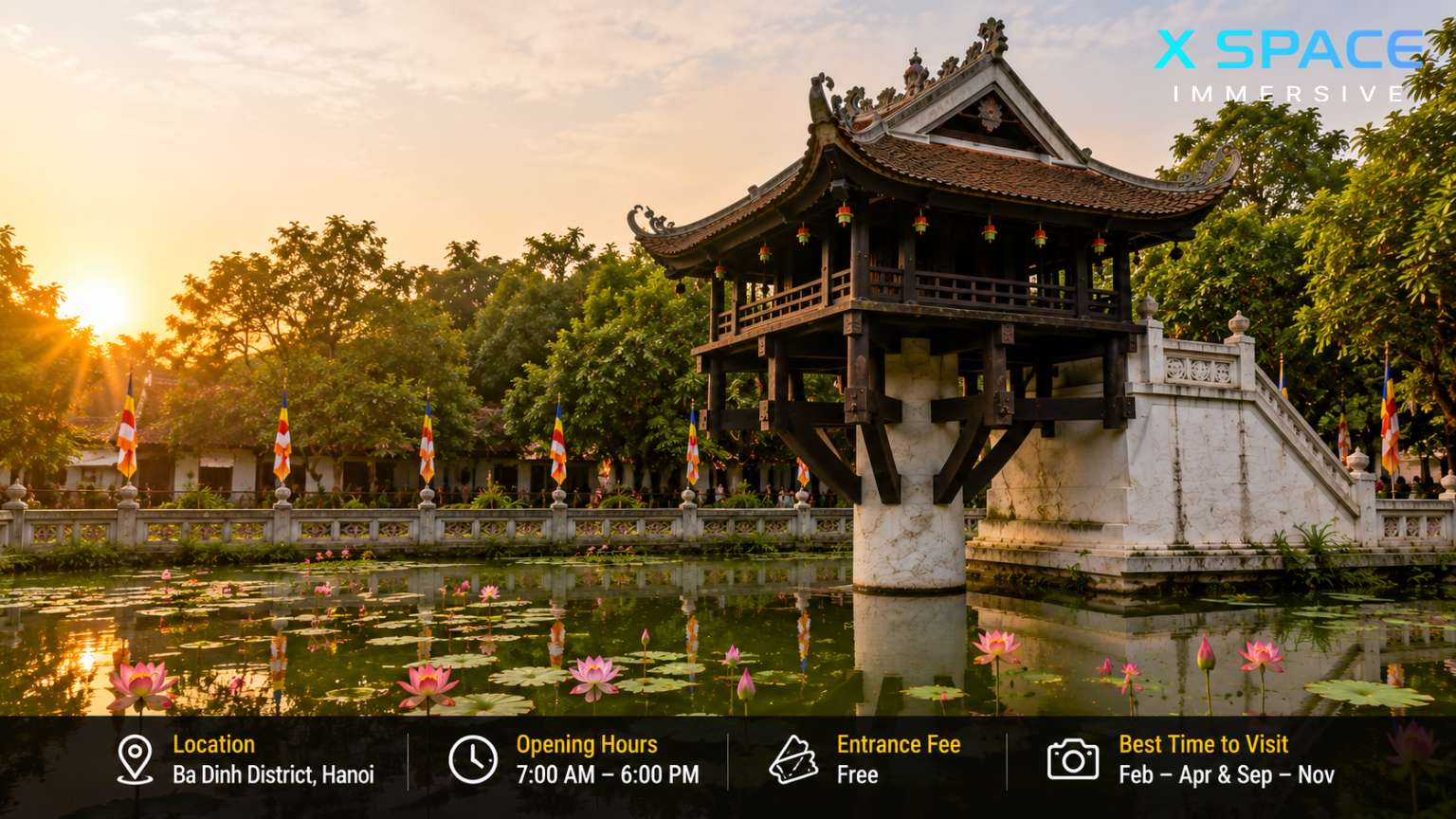
One Pillar Pagoda Hanoi at sunset showing the best time to visit the historic temple
Although One Pillar Pagoda opening hours allow visitors throughout the day, your overall experience can vary depending on when you arrive.
Morning Visits
Early mornings offer:
- Fewer crowds
- Comfortable temperatures
- Peaceful atmosphere
- Better photography conditions
- Opportunities to observe local worshippers
This is often the most rewarding time for visitors seeking a quiet cultural experience.
Midday Visits
Between late morning and early afternoon, the temple becomes noticeably busier, especially during weekends and holidays.
Temperatures in Hanoi can also become quite warm, particularly from May to September.
Sunset Visits
Late afternoon provides a different atmosphere.
Golden sunlight reflects beautifully across the pond, creating stunning views of the temple and making it one of the best times for memorable travel photos.
One Pillar Pagoda Entrance Fee and Visitor Costs
One question almost every traveler asks is whether there’s a One Pillar Pagoda entrance fee.
The good news is that visiting this iconic landmark remains one of the most affordable cultural experiences in Hanoi.
Is One Pillar Pagoda Free?
Yes. There is no separate One Pillar Pagoda entrance fee for visitors.
The temple itself can generally be visited free of charge, making it an excellent destination for budget travelers and families.
However, because the pagoda is located within the Ho Chi Minh historical complex, some nearby attractions—including museums or exhibitions—may charge their own admission fees.
Other Costs to Consider
Although entering the pagoda is free, you may want to budget for a few additional expenses:
| Expense | Estimated Cost |
| Parking (motorbike) | Small local fee |
| Taxi or Grab | Depends on distance |
| Souvenirs | Optional |
| Local guide | Optional |
| Drinks nearby | Affordable |
Most travelers can comfortably visit the pagoda without spending much money.
Is It Worth Visiting?
Absolutely. Considering its historical importance, unique architecture, and central location, One Pillar Pagoda Vietnam offers exceptional value.
Even if you only spend 20–30 minutes exploring the site, you’ll experience one of Vietnam’s most recognizable cultural symbols at virtually no cost.
One Pillar Pagoda Dress Code and Visitor Etiquette
Although One Pillar Pagoda Hanoi is a popular tourist attraction, it remains an active Buddhist temple.
Showing respect through appropriate clothing and behavior helps preserve the peaceful atmosphere for everyone.
One Pillar Pagoda Dress Code
There is no strict uniform, but visitors are expected to dress modestly.
Recommended clothing includes:
- Shirts covering the shoulders
- T-shirts or blouses
- Long pants
- Knee-length skirts
- Comfortable walking shoes
Avoid wearing:
- Crop tops
- Sleeveless shirts
- Very short shorts
- Mini skirts
- Clothing with offensive graphics
Following the recommended One Pillar Pagoda dress code demonstrates respect for local customs and religious traditions.
Temple Etiquette
Beyond clothing, visitors should observe several simple etiquette guidelines.
Keep Your Voice Low
The pagoda remains a place of prayer.
Speaking quietly helps maintain its peaceful environment.
Respect Worshippers
Many local visitors come specifically to pray.
Avoid interrupting ceremonies or standing directly in front of people making offerings.
Photography
Photography is welcome throughout much of the site.
However:
- Avoid using flash inside worship areas.
- Do not climb onto restricted structures.
- Be mindful of other visitors while taking photos.
Protect the Heritage Site
Please avoid touching historical structures unnecessarily.
Help preserve the temple by disposing of litter properly and following staff instructions.
Small acts of respect ensure this treasured landmark remains beautiful for future generations.
Best Time to Visit One Pillar Pagoda Vietnam
Choosing the right season can make your visit significantly more enjoyable.
Fortunately, One Pillar Pagoda Vietnam can be visited year-round, although each season offers a different experience.
Spring (February–April)
Many travelers consider spring the ideal time.
Advantages include:
- Pleasant weather
- Blooming flowers
- Comfortable temperatures
- Festive atmosphere after Lunar New Year
This season is particularly popular among photographers.
Autumn (September–November)
Autumn is another favorite.
Hanoi enjoys:
- Cooler temperatures
- Clear blue skies
- Lower humidity
- Beautiful natural light
Many locals believe autumn showcases Hanoi at its most beautiful.
Summer (May–August)
Summer brings lush greenery around the lotus pond.
While temperatures can be high, early morning visits remain enjoyable.
Travelers should carry:
- Water
- Sunscreen
- A hat
- Sunglasses
Winter (December–January)
Winter offers fewer crowds and cooler weather.
Although lotus flowers may not be blooming, the peaceful atmosphere creates a different kind of charm.
What to See and Do at One Pillar Pagoda
Although relatively compact, the pagoda offers plenty to appreciate.
Rather than rushing through in a few minutes, take time to observe its many fascinating details.
Admire the Lotus Architecture
The temple’s unique appearance deserves careful attention.
Walk around the lotus pond to appreciate how the structure changes from different angles.
Notice:
- The elegant curved roof
- Traditional wooden construction
- Stone pillar foundation
- Lotus-inspired proportions
Every perspective reveals another beautiful composition.
Learn About Vietnamese Buddhism
The pagoda provides a wonderful introduction to Vietnamese Buddhist traditions.
Observe how locals:
- Burn incense
- Offer flowers
- Pray quietly
- Respect sacred spaces
Watching these traditions respectfully offers valuable insight into Vietnamese culture beyond what guidebooks can provide.
Capture Beautiful Photographs
For many travelers, One Pillar Pagoda Hanoi becomes one of the most photographed stops in the city.
Excellent photo opportunities include:
- Reflection in the lotus pond
- Side profile of the temple
- Traditional staircase
- Lotus flowers during summer
- Wide-angle views with surrounding greenery
Morning light usually produces the best results.
Enjoy the Peaceful Garden
The landscaped grounds surrounding the pagoda offer a welcome escape from Hanoi’s busy streets.
Take a few moments to sit quietly beneath the trees and appreciate the calm atmosphere.
Many visitors say this peaceful setting becomes one of their favorite memories of Hanoi.
One Pillar Pagoda Reviews: What Visitors Say
Browsing One Pillar Pagoda reviews reveals a remarkably consistent pattern.
Although visitors come from different countries and backgrounds, many share similar impressions.
What Visitors Love Most
Across travel platforms, reviewers frequently praise:
Unique Architecture
Most visitors are amazed that such a small structure carries so much historical significance.
Its distinctive appearance leaves a lasting impression.
Rich Cultural History
Travelers appreciate learning the fascinating legend behind the temple’s construction.
The story of Emperor Ly Thai Tong adds emotional depth to the visit.
Convenient Location
Because the pagoda sits near several major attractions, many visitors enjoy combining multiple landmarks into one itinerary.
Peaceful Atmosphere
Despite receiving many tourists each year, the pagoda often retains a quiet, spiritual feeling – especially during the morning.
Common Criticisms
Some reviewers note that:
- The site is smaller than expected.
- It becomes crowded during weekends.
- Visits are relatively short.
However, most agree these minor drawbacks are outweighed by its cultural significance and unique design.
Is One Pillar Pagoda Worth Visiting?
Without question, yes.
If you’re interested in Vietnamese history, Buddhist culture, photography, or architecture, One Pillar Pagoda Vietnam deserves a place on your itinerary.
Its combination of historical importance, symbolic design, free admission, and convenient location makes it one of Hanoi’s highest-value attractions.
Even travelers with limited time can comfortably include the pagoda in a half-day exploration of Ba Dinh District.
Top Attractions Near One Pillar Pagoda Hanoi
One of the biggest advantages of visiting One Pillar Pagoda Hanoi is its proximity to several of Vietnam’s most important historical landmarks. Exploring these attractions together allows you to gain a deeper understanding of the country’s history, politics, and culture in just half a day.
Ho Chi Minh Mausoleum
Just a short walk from the pagoda, the Ho Chi Minh Mausoleum is one of Vietnam’s most significant national monuments. Visitors can pay their respects to President Ho Chi Minh while learning about his role in shaping modern Vietnam.
Tip: Arrive early in the morning, as visitor numbers increase quickly and the mausoleum follows a stricter opening schedule than the pagoda.
Ho Chi Minh Museum
Located nearby, the Ho Chi Minh Museum presents the life, achievements, and legacy of Vietnam’s revolutionary leader through exhibitions, photographs, and historical artifacts. It’s an excellent stop for travelers interested in Vietnamese history.
Presidential Palace
Although the main building isn’t open to the public, visitors can stroll through the beautifully maintained gardens and view the stilt house where Ho Chi Minh once lived and worked. The peaceful surroundings make it a pleasant addition to your visit.
Imperial Citadel of Thang Long
A UNESCO World Heritage Site, the Imperial Citadel of Thang Long showcases more than 1,300 years of Vietnamese history. Ancient archaeological remains, royal buildings, and interactive exhibitions make it one of Hanoi’s must-see historical attractions.
Suggested One Pillar Pagoda Hanoi Itinerary
Although One Pillar Pagoda Hanoi is relatively small, its central location makes it easy to include in a well-planned sightseeing route. Whether you have just an hour or an entire day, there are several ways to experience this historic landmark while discovering more of Hanoi’s cultural treasures.
One-Hour Quick Visit
Short on time? You can still enjoy one of Vietnam’s most iconic landmarks in about an hour.
Start by taking a leisurely walk around the lotus pond to admire the pagoda’s unique architecture from different angles. Pause to appreciate the intricate wooden details, observe local worshippers offering incense, and capture a few memorable photographs while the peaceful surroundings sink in.
If you’re visiting early in the morning, you’ll likely enjoy a quieter atmosphere with fewer tour groups, allowing you to fully appreciate the temple’s spiritual character.
A one-hour visit is ideal for travelers who want to experience One Pillar Pagoda Vietnam before continuing to nearby attractions.
Half-Day Ba Dinh Cultural Tour
If you have a morning or afternoon available, consider exploring Ba Dinh District, Hanoi’s political and historical center.
A recommended itinerary includes:
1. Ho Chi Minh Mausoleum
Begin your day early at the Ho Chi Minh Mausoleum, where visitors can learn about one of Vietnam’s most influential leaders. Morning visits are recommended due to shorter queues and cooler temperatures.
2. One Pillar Pagoda
After leaving the mausoleum, walk just a few minutes to One Pillar Pagoda Hanoi. Spend around 30–45 minutes exploring the temple, admiring its architecture, and learning about its fascinating history.
3. Ho Chi Minh Museum
Continue your journey at the nearby Ho Chi Minh Museum, where exhibitions provide deeper insight into Vietnam’s modern history and President Ho Chi Minh’s life.
4. Presidential Palace
End your half-day tour by strolling through the peaceful gardens surrounding the Presidential Palace and Ho Chi Minh’s traditional stilt house.
This route combines Vietnam’s ancient Buddhist heritage with its modern political history, offering a balanced cultural experience within a compact area.
Full-Day Hanoi Heritage Itinerary
Travelers with a full day in Hanoi can easily combine One Pillar Pagoda with several of the city’s most celebrated landmarks.
A suggested itinerary might look like this:
Morning
- Ho Chi Minh Mausoleum
- One Pillar Pagoda
- Ho Chi Minh Museum
- Presidential Palace
Lunch
Enjoy authentic Vietnamese cuisine at a local restaurant in Ba Dinh District before continuing your journey.
Popular choices include:
- Bun Cha
- Pho Bo
- Fresh spring rolls
- Vietnamese egg coffee
Afternoon
Visit the Imperial Citadel of Thang Long, a UNESCO World Heritage Site that showcases over thirteen centuries of Vietnamese history.
Later, continue to the Temple of Literature, Vietnam’s first national university and one of Hanoi’s best-preserved historical monuments.
Evening
Finish your day around Hoan Kiem Lake and Hanoi’s Old Quarter, where lively streets, local cafés, and traditional markets offer a completely different atmosphere from the peaceful temple grounds you explored earlier.
This itinerary allows visitors to experience the remarkable diversity of Hanoi—from ancient dynasties and Buddhist traditions to colonial architecture and modern city life.
Practical Tips for Visiting One Pillar Pagoda
A little preparation can make your visit to One Pillar Pagoda Vietnam even more enjoyable. Here are some practical tips to help you make the most of your experience.
How Long Should You Spend There?
Most visitors spend between 30 and 45 minutes exploring the pagoda itself.
If you enjoy photography, architecture, or history, you may wish to stay longer to appreciate the finer details and peaceful surroundings.
When combined with nearby attractions in Ba Dinh District, it’s easy to dedicate an entire morning or afternoon to this part of Hanoi.
Arrive Early for the Best Experience
Early mornings remain the best time to visit.
Benefits include:
- Cooler weather
- Softer natural lighting
- Smaller crowds
- Better photo opportunities
- A quieter atmosphere for reflection
If possible, aim to arrive shortly after opening hours.
Wear Comfortable Shoes
Although the pagoda is compact, you’ll likely spend time walking between nearby attractions.
Comfortable footwear is especially useful if you’re planning to continue exploring the Ho Chi Minh complex, the Imperial Citadel, or the Temple of Literature afterward.
Respect Local Customs
Remember that One Pillar Pagoda is still an active place of worship.
Simple gestures of respect go a long way:
- Speak quietly.
- Dress modestly.
- Avoid blocking worshippers.
- Follow posted signs.
- Do not touch religious objects unnecessarily.
Showing cultural awareness helps preserve the peaceful environment for everyone.
Bring Water During Summer
Hanoi’s summer months can be hot and humid.
If you’re visiting between May and September, remember to bring:
- A reusable water bottle
- Sunscreen
- Sunglasses
- A hat or umbrella
These small preparations will make your walking tour much more comfortable.
Keep Cash for Small Purchases
Although many businesses in Hanoi now accept digital payments, carrying a small amount of Vietnamese Dong is still useful.
You may need cash for:
- Parking fees
- Street food
- Souvenirs
- Drinks
- Local vendors
Having small denominations also makes transactions quicker.
Photography Tips
For photographers, One Pillar Pagoda Hanoi offers beautiful compositions throughout the day.
Some useful tips include:
Shoot During Golden Hour
Morning sunlight gently illuminates the pagoda while minimizing harsh shadows.
Late afternoon also provides warm tones that complement the temple’s wooden architecture.
Include the Lotus Pond
Rather than photographing only the building itself, use the surrounding lotus pond to create more balanced compositions.
Reflections often produce some of the most striking images.
Use Different Angles
Walk around the entire pond before taking photos.
Each viewpoint highlights different architectural details, allowing you to capture the pagoda from unique perspectives.
Respect Other Visitors
While photography is encouraged, remember that many people come here for prayer.
Avoid interrupting ceremonies or occupying narrow pathways for extended photo sessions.
Accessibility Information
Because the temple stands on an elevated platform, visitors must climb a short staircase to reach the sanctuary.
As a result, wheelchair accessibility is somewhat limited.
However, the surrounding grounds are relatively flat and easy to navigate, allowing most visitors to enjoy excellent views of the pagoda even without climbing the steps.
Safety Tips
One of the reasons travelers consistently recommend One Pillar Pagoda Vietnam is that the area is generally safe and well-maintained.
Nevertheless, standard travel precautions are always advisable.
- Keep personal belongings secure.
- Stay hydrated during warmer months.
- Follow staff instructions.
- Be aware of tour groups during busy periods.
- Watch your step on wet stone surfaces after rain.
With just a little preparation, your visit is likely to be both comfortable and memorable.
Make Time to Slow Down
Many travelers arrive expecting to spend only a few minutes at the pagoda before moving on.
However, those who take the time to slow down often discover that its greatest charm lies not in its size, but in its atmosphere.
Listen to the sound of birds in the surrounding trees, watch incense smoke drift gently through the air, and take a moment to appreciate a monument that has stood as a symbol of Vietnamese faith and resilience for nearly a thousand years.
Sometimes, the most meaningful travel experiences come from simply pausing to observe.
FAQ About One Pillar Pagoda
What Is One Pillar Pagoda Famous For?
One Pillar Pagoda is famous for its distinctive lotus-inspired design, where a small wooden temple stands on a single stone pillar rising from a lotus pond. Built in 1049 during the Ly Dynasty, it is one of Vietnam’s most recognizable cultural landmarks and a symbol of Buddhist architecture.
Where Is One Pillar Pagoda Located?
One Pillar Pagoda Hanoi is located in Ba Dinh District, near the Ho Chi Minh Mausoleum, Ho Chi Minh Museum, and Presidential Palace. Its central location makes it easy to include in a half-day or full-day sightseeing itinerary around Hanoi’s historical center.
What Are the One Pillar Pagoda Opening Hours?
The typical One Pillar Pagoda opening hours are:
- Daily: 7:00 AM – 6:00 PM
Opening hours may vary slightly during major holidays or Buddhist festivals, so it’s always advisable to check local updates before visiting.
Is There a One Pillar Pagoda Entrance Fee?
No. There is currently no separate One Pillar Pagoda entrance fee, making it one of the best free cultural attractions in Hanoi.
However, nearby museums and historical sites may charge their own admission fees.
What Should I Wear?
Visitors should follow the recommended One Pillar Pagoda dress code by wearing modest clothing that covers the shoulders and knees.
Suitable attire includes:
- T-shirts or shirts
- Long pants
- Knee-length skirts
- Comfortable walking shoes
Avoid revealing clothing out of respect for this active Buddhist temple.
How Long Does It Take to Visit One Pillar Pagoda?
Most travelers spend between 30 and 45 minutes exploring the pagoda.
If you also plan to visit nearby attractions in Ba Dinh District, you should allow at least half a day.
Can Visitors Take Photos?
Yes. Photography is permitted in most outdoor areas, making One Pillar Pagoda Vietnam one of Hanoi’s most photogenic cultural landmarks.
Visitors are encouraged to photograph respectfully without disturbing worshippers or religious ceremonies.
When Is the Best Time to Visit?
The best seasons are:
- Spring (February–April)
- Autumn (September–November)
For the most peaceful experience, visit early in the morning shortly after the pagoda opens.
Is One Pillar Pagoda Worth Visiting?
Absolutely. Although relatively small, the pagoda offers a unique combination of history, architecture, spirituality, and cultural significance. Its free admission, central location, and remarkable design make it one of the most rewarding stops for first-time visitors to Hanoi.
Experience X Space Immersive After Visiting One Pillar Pagoda Hanoi

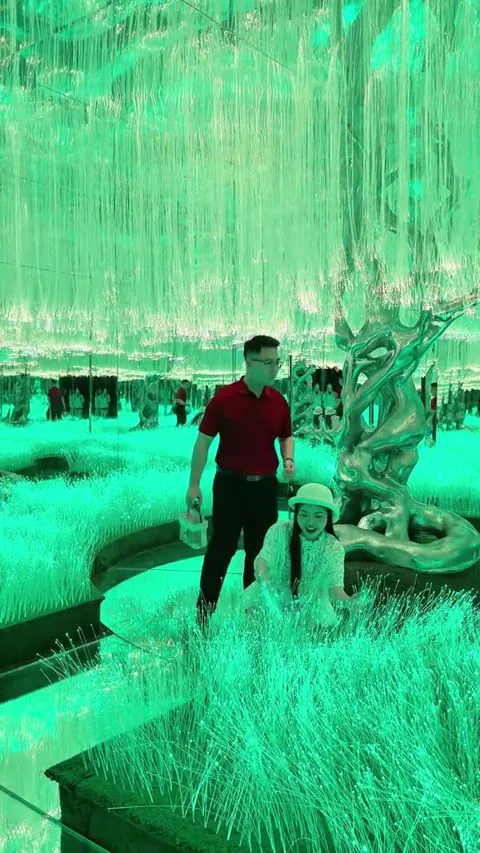
Visitors exploring X Space Immersive digital art exhibition in Hanoi
After exploring the timeless beauty of One Pillar Pagoda Hanoi, many travelers look for new ways to deepen their understanding of Vietnam’s culture beyond traditional sightseeing.
One inspiring option is Experience X Space Immersive, where digital technology and storytelling come together to present Vietnamese art, history, and heritage from a fresh perspective.
Unlike conventional museums, immersive exhibitions allow visitors to interact with light, sound, projection, and multimedia installations, creating an engaging experience that appeals to both adults and children.
Rather than simply observing history, visitors become part of it.
For travelers interested in combining ancient traditions with modern creativity, this makes an excellent complement to a visit to One Pillar Pagoda Vietnam.
Why Add X Space Immersive to Your Hanoi Itinerary?
Hanoi is a city where centuries-old temples stand alongside innovative cultural spaces.
Experiencing both offers a richer understanding of how Vietnam preserves its heritage while embracing contemporary creativity.
Adding Experience X Space Immersive to your itinerary allows you to:
- Continue discovering Vietnamese culture through interactive storytelling.
- Enjoy a different perspective after visiting historical landmarks.
- Experience cutting-edge digital art inspired by local traditions.
- Create memorable moments suitable for families, couples, and solo travelers alike.
- Balance outdoor sightseeing with an engaging indoor cultural activity.
Together, these experiences reveal two complementary sides of Hanoi—one rooted in history and the other looking toward the future.
A Perfect Cultural Journey Through Hanoi
A rewarding day in Hanoi doesn’t have to end after leaving the pagoda.
Imagine beginning your morning surrounded by the peaceful lotus pond of One Pillar Pagoda, learning about nearly a thousand years of Vietnamese history, then spending the afternoon immersed in interactive exhibitions that reinterpret culture through technology and contemporary art.
This combination creates a well-rounded itinerary that blends:
- Ancient architecture
- Buddhist heritage
- Vietnamese history
- Digital creativity
- Modern cultural experiences
It’s an ideal choice for travelers who want more than sightseeing—they want meaningful connections with the places they visit.
Final Thoughts
Despite its modest size, One Pillar Pagoda Hanoi Vietnam remains one of the country’s most treasured cultural landmarks. From its legendary origins during the Ly Dynasty to its extraordinary lotus-inspired architecture, every element of the pagoda reflects Vietnam’s rich spiritual heritage and enduring craftsmanship.
Whether you’re drawn by history, architecture, photography, or a desire to experience authentic local culture, the pagoda offers an unforgettable glimpse into Hanoi’s past. Its central location, free admission, and proximity to many of the city’s top attractions make it an easy addition to any itinerary.
If time allows, consider extending your cultural journey beyond the temple by exploring contemporary experiences like Experience X Space Immersive. Together, these destinations showcase both the timeless traditions and the creative future of Vietnam, leaving you with a deeper appreciation of Hanoi’s unique character.
No matter how long you stay in the capital, a visit to One Pillar Pagoda Vietnam is more than just checking off a famous landmark – it’s an opportunity to connect with nearly a thousand years of history, faith, and artistic expression that continue to inspire visitors from around the world.
Was this article helpful?
Thanks for your feedback!