Thay Pagoda: History, Architecture and Essential Travel Guide

Away from Hanoi’s busy streets, constant traffic and energetic rhythm lies a place where time seems to move more slowly. At the foot of Sai Son Mountain, Thay Pagoda welcomes visitors with ancient tiled roofs, peaceful courtyards, a tranquil lake and centuries of spiritual heritage.
Located around 20 kilometers west of central Hanoi, Thay Pagoda is one of the capital’s remarkable historic Buddhist sites. Dating back to the Ly Dynasty and closely associated with the legendary Zen Master Tu Dao Hanh, the pagoda offers much more than beautiful architecture. It is a place where Buddhism, folk beliefs, traditional arts and the natural landscape come together.
For travelers who want to look beyond Hanoi’s most familiar attractions, a visit to Thay Pagoda offers a quieter and more contemplative side of the city. You can admire centuries-old structures, walk across traditional bridges, discover temples and caves around Sai Son Mountain, or simply pause beside the lake and enjoy the stillness.
This guide explores the history of Thay Pagoda, its architecture, cultural significance, major attractions, festival traditions and essential travel tips to help you plan a rewarding visit.
In this guide
Thay Pagoda Overview: What Makes This Ancient Temple Special?
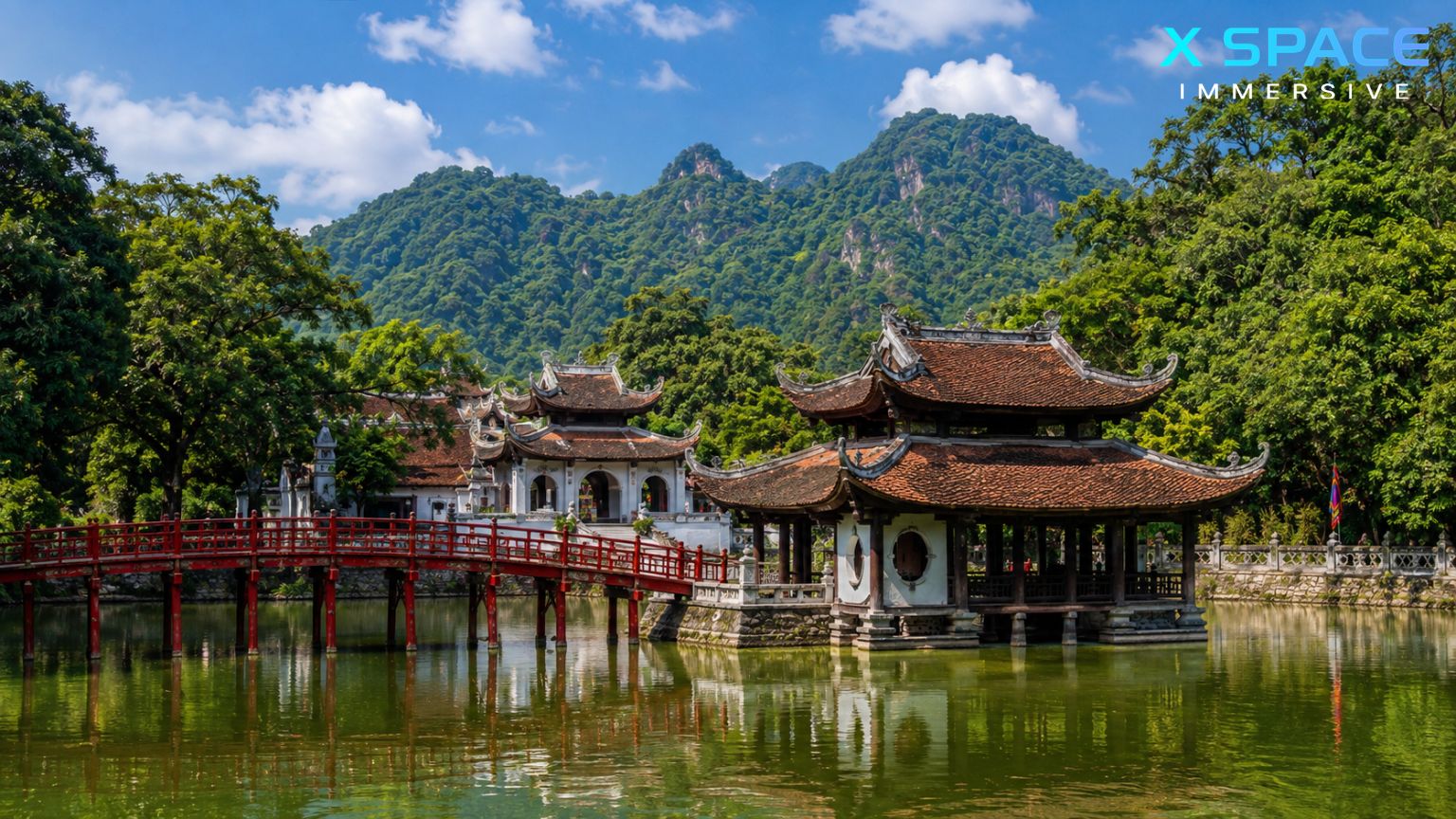
Thay Pagoda Hanoi with Thuy Dinh pavilion and scenic mountain landscape
Known in Vietnamese as Chùa Thầy, Thay Pagoda is an important Buddhist complex situated at the foot of Sai Son Mountain in the Quoc Oai area of Hanoi.
Its setting is one of the first things that makes the pagoda memorable. Instead of standing in the middle of a dense urban neighborhood, Thay Pagoda is framed by mountains, water and a landscape that still evokes the atmosphere of northern Vietnam’s countryside.
The main complex looks toward Long Tri Lake, creating a harmonious composition of architecture and nature. In the middle of the water stands the picturesque Thuy Dinh pavilion, traditionally associated with water puppet performances. Ancient covered bridges stretch across the water, while Sai Son Mountain rises behind the temple complex.
The result is a destination that feels simultaneously spiritual, historical and scenic.
Where Is Thay Pagoda Located?
Thay Pagoda is located in the Sai Son area of Hanoi, approximately 20 kilometers west of the city center.
Although it belongs to Hanoi, its atmosphere feels far removed from the crowded streets of the Old Quarter. This makes the pagoda particularly appealing for travelers looking for an easy cultural escape without planning a long journey outside the capital.
Depending on traffic and your chosen mode of transport, reaching the area from central Hanoi generally makes for a convenient half-day or day trip.
Why Is Thay Pagoda Famous?
Thay Pagoda is especially known for its association with Zen Master Tu Dao Hanh, an influential religious figure surrounded by both historical accounts and fascinating legends.
The pagoda is also celebrated for its traditional Vietnamese architecture, Buddhist sculptures, picturesque bridges and the Thuy Dinh water pavilion.
Its connection with Vietnamese water puppetry adds another layer to its cultural identity. During traditional celebrations, the water in front of the pagoda becomes more than scenery—it becomes a stage where an old Vietnamese performing art comes alive.
Cultural and Spiritual Significance of Thay Pagoda
For local communities and Buddhist visitors, Thay Pagoda is not simply a tourist attraction.
People have come here for generations to worship, pray for peace and connect with spiritual traditions. Its buildings, statues and ceremonies preserve traces of different periods of Vietnamese religious and cultural history.
This living relationship between the pagoda and the surrounding community is important. You are not entering an abandoned monument or a museum frozen in time; you are visiting a sacred place that continues to have meaning in contemporary life.
The History of Thay Pagoda
To appreciate Thay Pagoda fully, it helps to understand the history behind its quiet courtyards and weathered roofs.
The site is believed to date back to the 11th century, during the Ly Dynasty, a period when Buddhism played an important role in Vietnamese political, intellectual and spiritual life.
Its history became inseparable from that of Zen Master Tu Dao Hanh.
The Origins and Development of Thay Pagoda
According to historical and cultural accounts, the earliest site was a modest place of religious practice associated with Tu Dao Hanh.
Over the centuries, the complex was expanded, restored and transformed by successive generations. Structures were added and repaired while the pagoda continued to serve as a religious center.
Today, what visitors encounter is therefore not the product of a single moment in history. Thay Pagoda represents layers of Vietnamese architecture, spirituality and artistic expression accumulated across many centuries.
The wider Thay Pagoda and Sai Son Mountain complex was recognized as a Special National Relic, reflecting its considerable historical and cultural importance.
Zen Master Tu Dao Hanh and the Pagoda’s Legacy
Few figures are more closely connected with Thay Pagoda than Tu Dao Hanh.
He was a Buddhist monk who lived during the Ly Dynasty, but stories about his life move between history, spirituality and legend. Over time, he became deeply rooted in local belief and cultural memory.
Tu Dao Hanh is also traditionally associated with the development of water puppetry in this area. That connection helps explain why water puppet performances remain such a recognizable part of the cultural identity surrounding Thay Pagoda.
For visitors, knowing this background transforms the experience. The lake, pavilion and temple are no longer isolated architectural features; they become pieces of a much larger cultural story.
Thay Pagoda Through Different Historical Periods
Like many historic religious monuments in Vietnam, Thay Pagoda has experienced numerous restorations.
Vietnam’s tropical climate, wars and the natural deterioration of wooden architecture meant that preservation required constant attention. Different dynasties and communities contributed to rebuilding and expanding the complex.
Yet despite these changes, the pagoda has maintained a strong sense of historical continuity.
Walk slowly through its halls and courtyards and you may notice that sense of accumulated time: darkened timber, curved roofs, carved details and statues that connect the present with centuries of worship.
The Role of Thay Pagoda in Vietnamese Buddhism and Culture
Thay Pagoda is valuable not only because of its age but because it demonstrates how religion, architecture, folklore and community traditions interact in Vietnamese culture.
Buddhist worship exists here alongside stories surrounding Tu Dao Hanh and elements of Vietnamese folk belief.
This layered identity is one reason Thay Pagoda is particularly interesting for international visitors. Rather than presenting Vietnamese Buddhism as something isolated, the site reveals how spiritual traditions became woven into everyday cultural life.
Thay Pagoda Architecture: A Journey Through Traditional Vietnamese Design
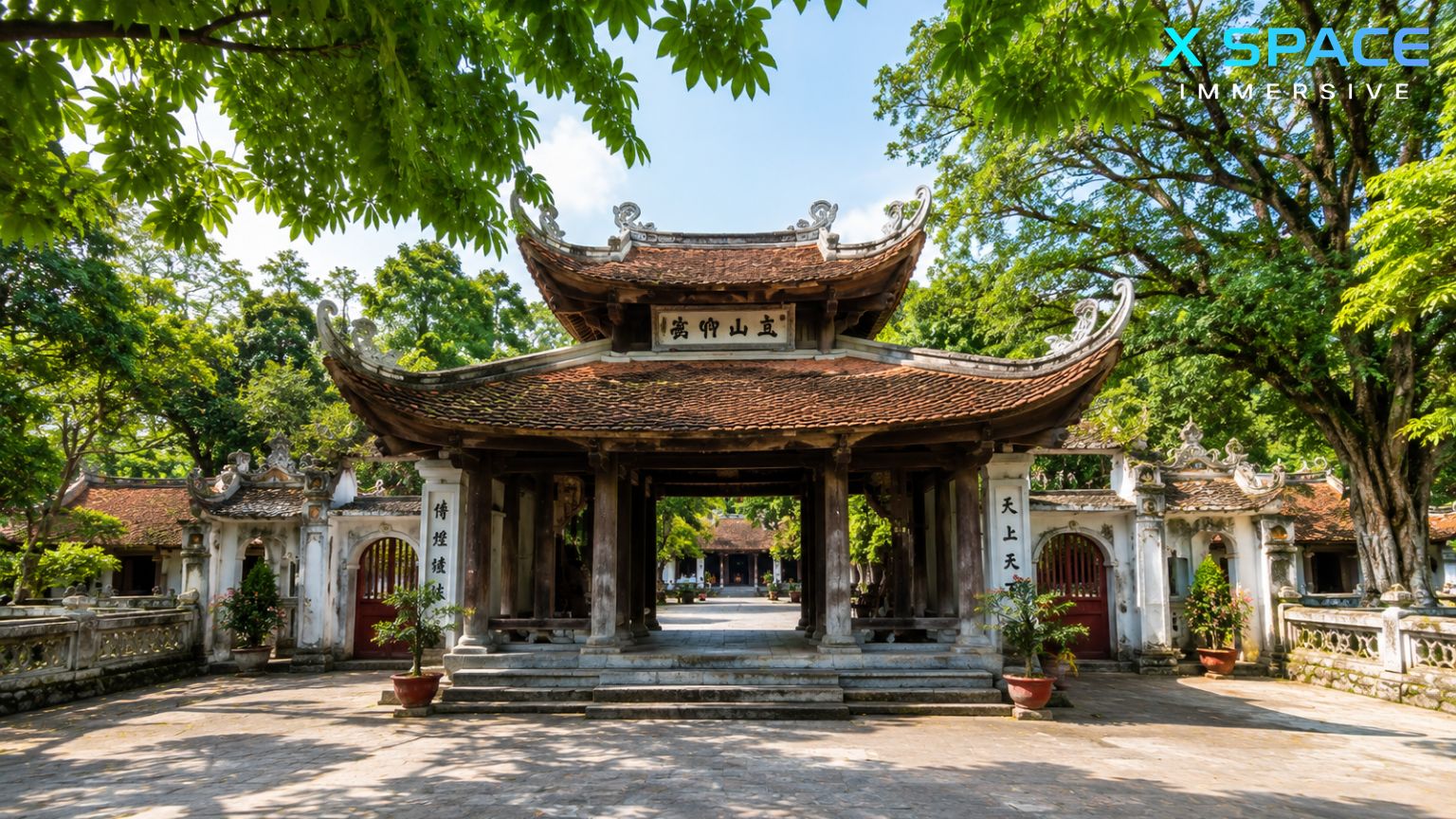
Traditional architecture of Thay Pagoda with ancient tiled roofs and courtyard
Architecture is one of the greatest reasons to visit Thay Pagoda.
At first glance, the complex may appear simple and understated. Yet its beauty becomes clearer when you pay attention to the relationship between buildings, courtyards, water and mountain.
Traditional Vietnamese religious architecture often works with the surrounding landscape rather than attempting to dominate it. Thay Pagoda is an excellent place to experience this philosophy.
The Unique Architectural Layout of Thay Pagoda
The main structures are arranged along an axis, creating a gradual progression from the exterior world toward increasingly sacred spaces.
Courtyards act as transitions between different buildings, while tiled roofs, wooden frames and decorative details create visual continuity throughout the complex.
The architecture feels balanced rather than monumental.
That restraint is part of its charm.
Instead of overwhelming visitors with scale, Thay Pagoda invites them to notice smaller details: the curve of a roof, a carved wooden element, an old stone surface or the way a temple doorway frames the landscape outside.
Ha Pagoda, Trung Pagoda and Thuong Pagoda
The main complex is traditionally understood through interconnected sections commonly referred to as the lower, middle and upper areas.
Each contributes to the religious and architectural journey through the site.
Moving from one space to another creates a gradual change in atmosphere. Open courtyards lead toward darker, quieter interiors filled with altars, statues and the scent of incense.
Visitors interested in architecture should avoid rushing through these spaces. Some of the most rewarding details are easy to miss when the pagoda is treated simply as a photography stop.
Thuy Dinh Pavilion and the Traditional Water Puppet Stage
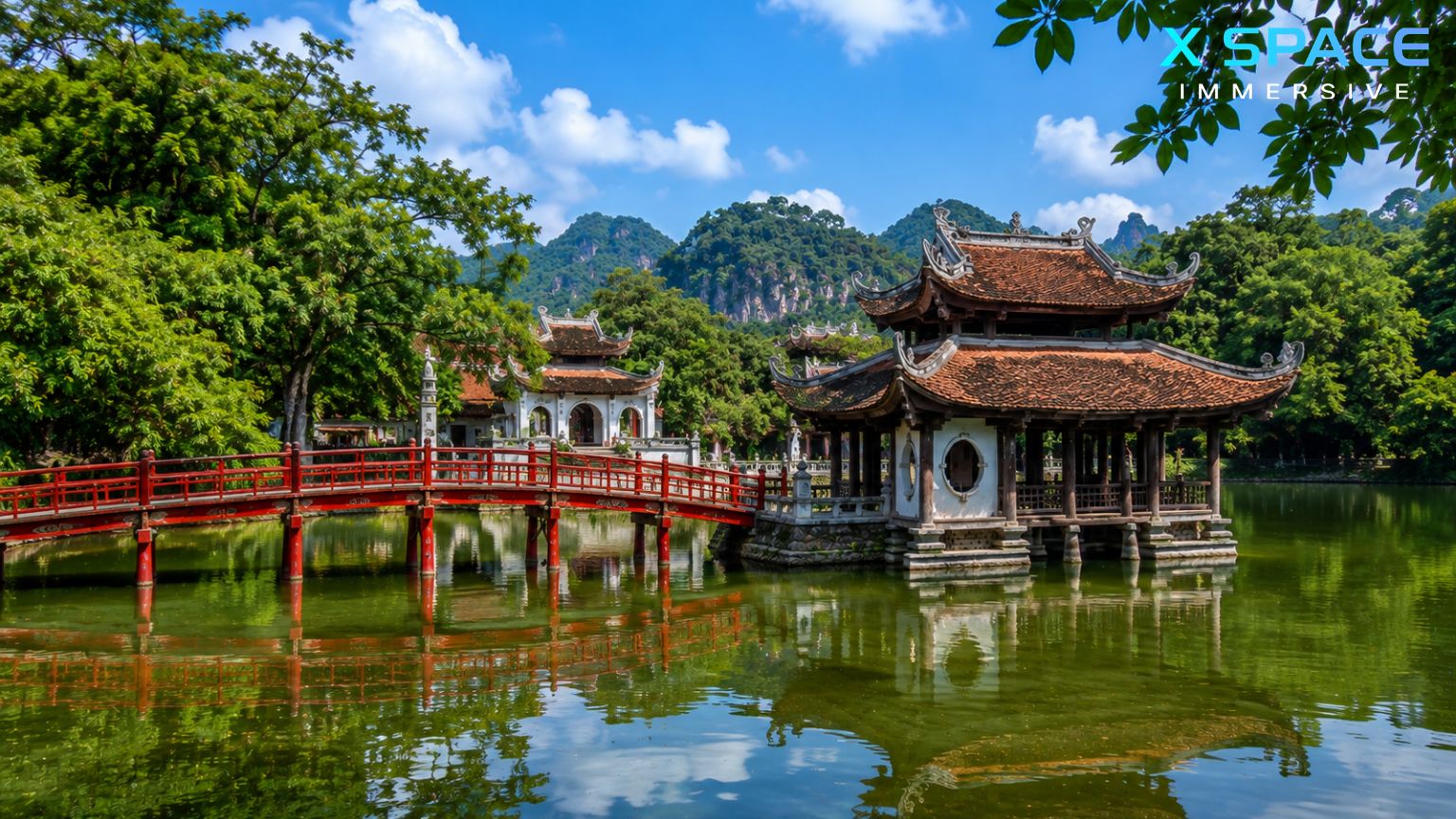
Thuy Dinh pavilion at Thay Pagoda beside the red bridge and Long Tri Lake
Perhaps the most instantly recognizable structure at Thay Pagoda is Thuy Dinh, the elegant pavilion standing in Long Tri Lake.
Its position on the water creates one of the classic views of the complex.
Historically, the pavilion has been used in connection with traditional water puppet performances, particularly during festival periods. Water puppetry is one of Vietnam’s distinctive performing arts, traditionally using ponds and lakes as stages.
With temple roofs and mountains forming the backdrop, it is easy to understand why the scene has become so closely associated with Thay Pagoda.
Ancient Bridges and Architectural Details
Two traditional covered bridges add further character to the landscape around the lake.
Their tiled roofs and graceful forms connect different parts of the complex while also contributing to the symbolic composition of the site.
From a photographer’s perspective, the combination of bridges, water, pavilion and mountain creates numerous beautiful compositions.
But these structures are more than picturesque details. Together they demonstrate how Vietnamese architects incorporated functionality, symbolism and landscape into a unified environment.
Ancient Statues, Carvings and Religious Artifacts
Inside Thay Pagoda, visitors can discover an impressive collection of Buddhist sculptures and religious objects.
Among the pagoda’s cultural treasures are historic Buddhist statues and other artifacts reflecting the craftsmanship of earlier periods.
Wood carving, sculptural forms and decorative motifs reveal another dimension of the complex. Look carefully rather than trying to photograph everything.
The quiet observation of a statue or carving can sometimes communicate more about a place than a dozen quick photographs.
The Surrounding Mountains, Caves and Natural Landscape
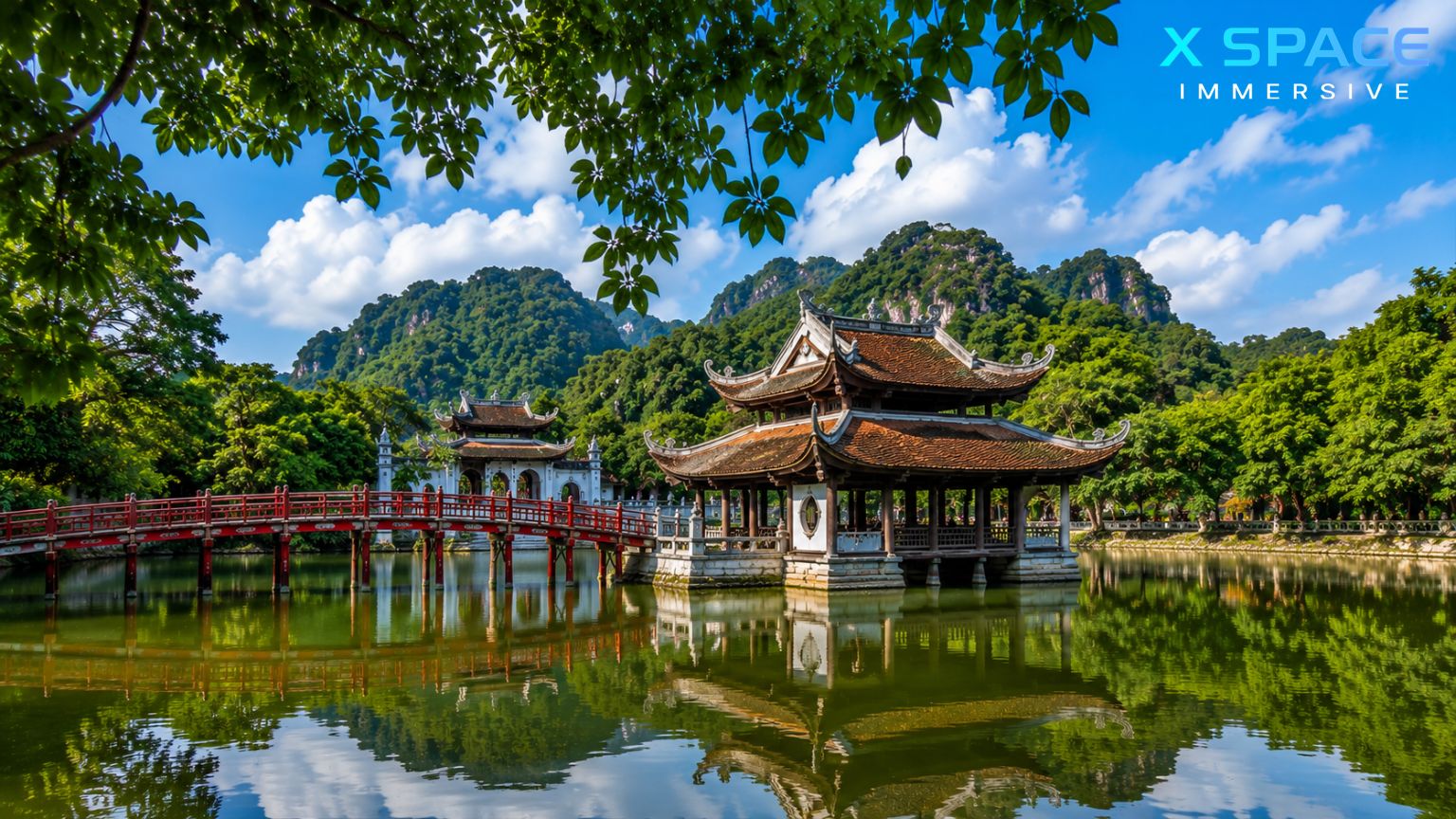
Thay Pagoda surrounded by Sai Son Mountain, lake and lush green landscape
Sai Son Mountain is an essential part of the Thay Pagoda experience.
Paths around the mountain lead toward additional religious sites, caves and viewpoints. This creates an interesting contrast between the ordered architecture of the main complex and the more rugged landscape above it.
For travelers with enough time and suitable footwear, exploring beyond the main courtyard can turn a short temple visit into a much richer cultural and nature experience.
What to See and Do at Thay Pagoda
You do not need a complicated itinerary to enjoy Thay Pagoda.
The best approach is often simply to slow down.
Explore the Main Temple Complex
Begin with the main buildings and allow yourself enough time to absorb the atmosphere.
Observe the rooflines, timber architecture and arrangement of altars. Notice how light changes as you move from bright courtyards into darker worship halls.
If ceremonies are taking place, remain respectful and avoid interrupting worshippers.
Walk Across the Ancient Bridges
The covered bridges around Long Tri Lake are among the most photogenic features of Thay Pagoda.
Walk across them slowly and look back toward the main complex.
From different angles, the relationship between mountain, lake, pavilion and temple becomes much clearer.
Discover Caves and Temples on Sai Son Mountain
Travelers who enjoy walking can continue toward Sai Son Mountain.
The mountain contains additional religious structures and caves associated with local stories and beliefs. The climb also provides a different perspective on the surrounding landscape.
Paths may be steep or slippery, particularly after rain, so comfortable footwear is recommended.
Enjoy the Peaceful Surroundings
One of the most rewarding things to do at Thay Pagoda is also the simplest: nothing.
Find a quiet place near the lake or courtyard and pause for a few minutes.
Listen to bells, footsteps, birds or the distant voices of visitors. Watch reflections move across the water.
After spending several days navigating Hanoi’s energetic streets, this slower rhythm can feel surprisingly refreshing.
Experience Vietnamese Spiritual Culture
Remember that Thay Pagoda remains a sacred site.
Watching local visitors light incense, make offerings and pray provides a glimpse into Vietnamese spiritual life, but these moments should be observed respectfully.
Avoid treating ceremonies as performances staged for tourists.
Thay Pagoda Festival: A Unique Cultural Experience
For travelers interested in traditional Vietnamese culture, the annual Thay Pagoda Festival offers a very different experience from visiting on an ordinary day.
The festival commemorates Zen Master Tu Dao Hanh and brings together Buddhist rituals, community activities and traditional performances.
In 2026, Hanoi authorities described the festival as an occasion both to commemorate Tu Dao Hanh and to preserve and promote local cultural values. The festival has also received recognition as national intangible cultural heritage.
Traditional Rituals and Buddhist Ceremonies
Religious rituals remain central to the festival.
Pilgrims and local residents visit the complex to offer incense, worship and participate in ceremonies connected with the pagoda’s spiritual traditions.
The peaceful site becomes significantly more lively during this period, filled with visitors, sounds and activity.
Water Puppetry and Local Cultural Performances
Water puppetry is one of the festival’s most distinctive cultural highlights.
The Thuy Dinh pavilion and lake provide an evocative setting for this traditional Vietnamese art form.
For international travelers, seeing water puppetry in an environment so closely linked to its cultural history can feel very different from watching a performance in a conventional theater.
What Travelers Should Know Before Attending
Festival periods bring energy and cultural richness—but also crowds.
If you want to experience Thay Pagoda at its quietest, choose an ordinary weekday outside major holidays and festival dates.
If you are more interested in ceremonies, community traditions and performances, visiting during the festival may be worth the additional crowds.
Essential Thay Pagoda Travel Guide for First-Time Visitors
A little preparation can make your trip significantly more enjoyable.
Best Time to Visit Thay Pagoda
Spring is particularly atmospheric because of traditional festivals and the mild northern Vietnamese weather.
Autumn is another pleasant period, often offering comfortable temperatures for walking around the temple and mountain.
If visiting during summer, arriving earlier in the day can help you avoid the strongest heat.
For photographers and travelers looking for tranquility, weekday mornings are often preferable to weekends and public holidays.
Opening Hours and Entrance Information
Opening arrangements and any applicable visitor charges can change, particularly during festivals, holidays or special events.
For that reason, it is best to verify current information locally or through official tourism channels shortly before your visit rather than relying on old online listings.
How Long Should You Spend at Thay Pagoda?
Allow around two to three hours if you want to explore the main complex at a relaxed pace.
If you plan to climb Sai Son Mountain, explore caves or spend significant time photographing the area, a half-day is more comfortable.
Travelers combining Thay Pagoda with another attraction should consider making it part of a full-day itinerary west of central Hanoi.
What to Wear When Visiting the Pagoda
Dress respectfully.
Clothing that covers the shoulders and knees is the safest choice when entering Buddhist worship spaces.
Lightweight, breathable clothes work well in warmer months, while comfortable walking shoes are particularly useful if you plan to explore Sai Son Mountain.
Etiquette and Important Visitor Tips
Keep your voice low inside worship halls and avoid standing directly in front of people who are praying.
Ask or check posted rules before photographing interiors, statues or ceremonies. Restrictions can vary between sacred spaces.
Do not touch religious objects, statues or offerings.
Above all, approach Thay Pagoda as a living spiritual site rather than simply a backdrop for photographs.
How to Get to Thay Pagoda from Hanoi
Because Thay Pagoda lies roughly 20 kilometers west of central Hanoi, it is relatively easy to include in a Hanoi itinerary.
Traveling by Motorbike or Private Car
A motorbike or private car provides the most flexibility.
You can leave early, spend as much time as you want at the pagoda and potentially combine the visit with other destinations west of Hanoi.
If riding a motorbike, make sure you are legally permitted and properly insured to drive in Vietnam.
Getting to Thay Pagoda by Public Transport
Public buses can provide a budget-friendly alternative, although routes and connections may require additional walking or local transport.
Because Hanoi’s bus network changes over time, check a current navigation or transport application on the day of your journey.
Taxi and Private Transfer Options
For international travelers unfamiliar with Hanoi, a taxi, ride-hailing service or private transfer is usually the simplest option.
This is particularly convenient for families or small groups, as the cost can be shared.
Arrange your return journey in advance if necessary, especially when visiting later in the day.
Suggested Hanoi to Thay Pagoda Day Trip Itinerary
A relaxed itinerary might begin with an early departure from central Hanoi.
Spend the morning exploring Thay Pagoda, Long Tri Lake and the main temple buildings. Continue toward Sai Son Mountain if weather and fitness levels allow.
After lunch, return toward central Hanoi and transition from ancient heritage to contemporary visual culture with an immersive digital art experience.
That contrast can make the day especially memorable.
Thay Pagoda vs Other Famous Pagodas in Hanoi
Hanoi has many Buddhist temples and pagodas, but each offers a different experience.
Thay Pagoda vs Perfume Pagoda
Perfume Pagoda is known for its large pilgrimage landscape and journey through mountains and waterways.
Thay Pagoda is considerably easier to reach from central Hanoi and works well for travelers who want a shorter cultural excursion.
Choose Perfume Pagoda for a larger pilgrimage adventure; choose Thay Pagoda for a more compact combination of history, architecture and landscape.
Thay Pagoda vs Tran Quoc Pagoda
Tran Quoc Pagoda is conveniently located near West Lake and is easy to incorporate into a central Hanoi sightseeing itinerary.
Thay Pagoda requires more travel time but rewards visitors with a more expansive historic environment involving mountain scenery, bridges, caves and the water pavilion.
Which Hanoi Pagoda Experience Is Right for You?
If your schedule is extremely limited, central temples may be more convenient.
If you have half a day and want to move beyond Hanoi’s familiar tourist route, Thay Pagoda is an excellent choice.
It combines cultural depth with a landscape that feels surprisingly removed from the city.
Tips for Making the Most of Your Thay Pagoda Visit
A successful visit is less about checking off every attraction and more about giving the site enough time.
Visit Early for a Quieter Experience
Morning light can be beautiful around Long Tri Lake, while temperatures are generally more comfortable.
Arriving early may also help you experience the complex before larger groups appear.
Combine Culture, Architecture and Nature
Do not stop after seeing the main temple.
Explore the lake, bridges and—if conditions permit—Sai Son Mountain. The relationship between these elements is what gives Thay Pagoda much of its distinctive character.
Photography Tips and the Best Viewpoints
Long Tri Lake is the obvious starting point.
Try photographing Thuy Dinh with the mountains or temple architecture behind it. The covered bridges also create excellent framing opportunities.
Early morning and late afternoon generally provide softer light than midday.
When photographing religious spaces, however, respect should always come before getting the perfect shot.
Nearby Attractions Worth Adding to Your Itinerary
The western side of Hanoi offers several opportunities to explore traditional villages, countryside landscapes and cultural attractions.
Rather than rushing back to the Old Quarter immediately, consider turning your trip into a broader exploration of Hanoi beyond its historic urban center.
FAQs About Thay Pagoda
Is Thay Pagoda Worth Visiting?
Yes. Thay Pagoda is particularly worthwhile for travelers interested in Vietnamese history, Buddhist culture, traditional architecture and quieter destinations outside central Hanoi.
Its combination of ancient buildings, Long Tri Lake, traditional bridges and Sai Son Mountain creates an experience that is both cultural and scenic.
How Far Is Thay Pagoda from Hanoi?
Thay Pagoda is approximately 20 kilometers west of central Hanoi, although the exact travel distance depends on your starting point and route.
Is There an Entrance Fee for Thay Pagoda?
Visitor policies and fees may change. Check current information shortly before traveling, particularly during festivals or special events.
How Much Time Do You Need at Thay Pagoda?
Two to three hours is suitable for the main complex.
Allow half a day if you want to explore Sai Son Mountain and the surrounding area at a relaxed pace.
Can You Visit Thay Pagoda and Perfume Pagoda in One Day?
Technically, ambitious travelers may be able to combine multiple destinations with private transportation, but doing so can make the day unnecessarily rushed.
For most visitors, experiencing each destination separately allows more time to appreciate its history and atmosphere.
What Is the Best Month to Visit Thay Pagoda?
Spring offers an especially lively cultural atmosphere because of festival traditions, while autumn can be excellent for comfortable sightseeing.
For fewer crowds, prioritize weekdays outside major Vietnamese holidays and festival dates.
Continue Your Cultural Journey: Experience X Space Immersive
After spending the morning surrounded by centuries-old architecture at Thay Pagoda, returning to Hanoi does not have to mean the end of your cultural journey.
Instead, you can move from ancient heritage into an entirely different world of visual storytelling at X Space Immersive.
Located at Vincom Mega Mall Royal City, 72A Nguyen Trai Street in Hanoi, X Space Immersive is an immersive digital art experience where light, projection, sound and interactive technology transform the surrounding space.
The contrast is fascinating.
At Thay Pagoda, history is experienced through timber, stone, water, sculpture and sacred architecture. At X Space Immersive, the environment becomes fluid and digital—walls move with projected imagery, light reacts to the space and visitors can feel surrounded by visual worlds.
Discover Art Through Immersive Technology
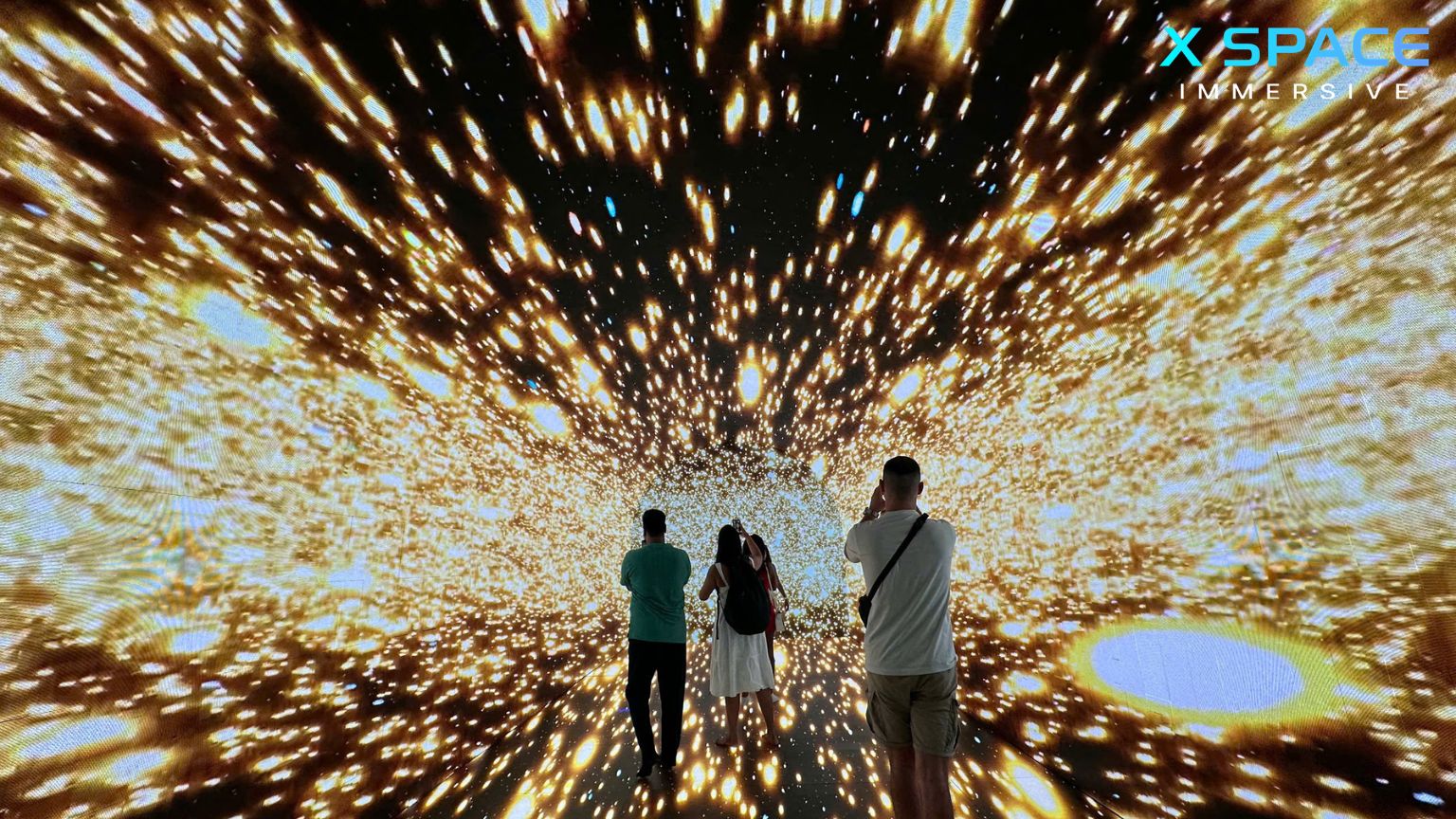
Visitors enjoying the X Space Immersive experience in Hanoi
X Space Immersive is designed around a journey through multiple experience rooms rather than a conventional gallery where artworks simply hang on walls.
According to its official website, the venue features eight experience rooms, including environments built around LED installations, neon art, immersive dome projection, interactive digital landscapes and light-based experiences.
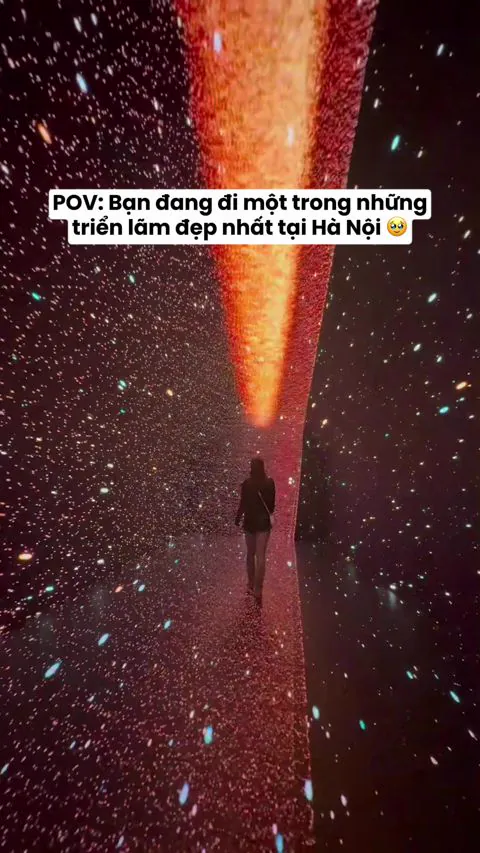
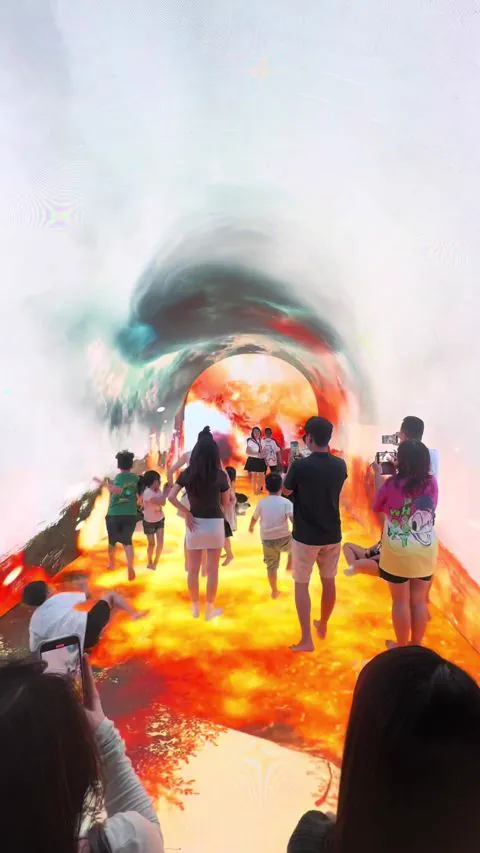
The Full LED Tunnel surrounds visitors with moving visuals, while the Immersive Dome Story uses 3D dome projection to create panoramic visual environments.
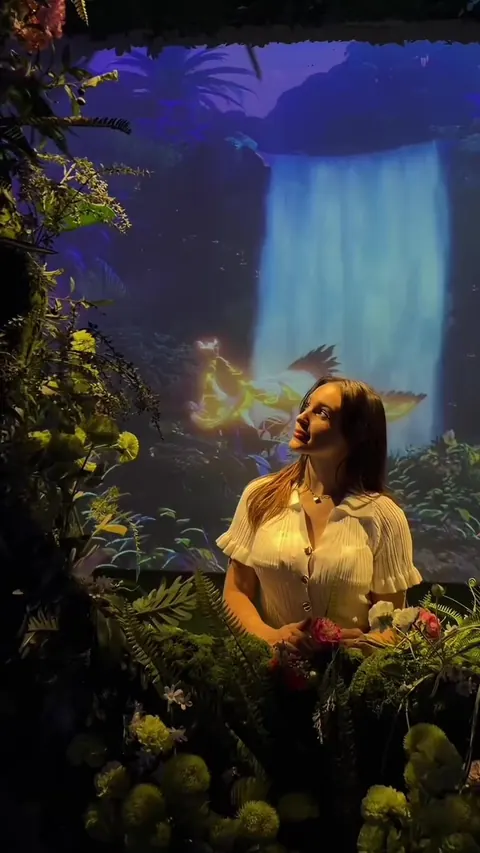
Other spaces move into fantasy and nature-inspired themes, including the Enchanted Jungle, Deep Ocean, Wonderland and Space Dome.
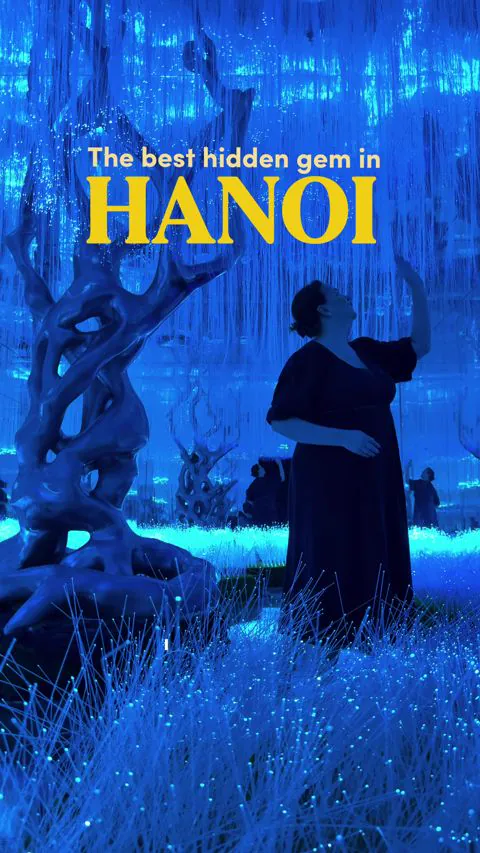
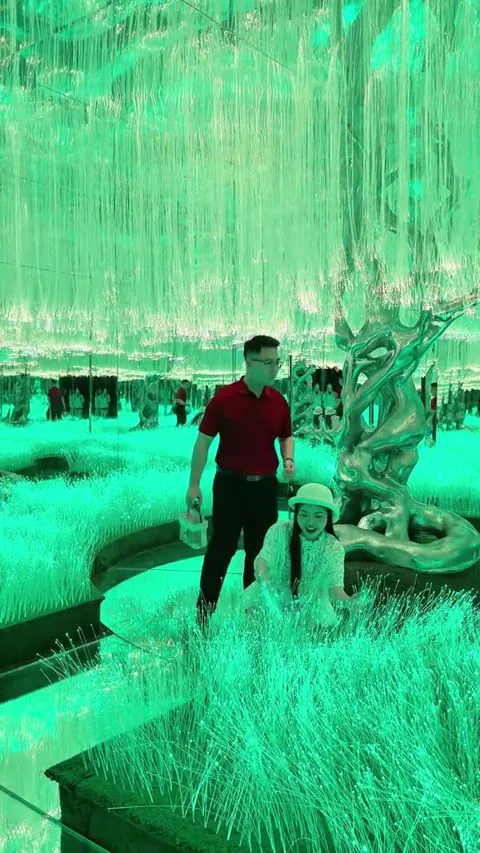
One particularly distinctive attraction is the Light Forest, where glowing forms, sound and light combine into a sensory environment.
What to Expect at X Space Immersive
The appeal of X Space lies in participation.
Rather than standing at a distance and observing an artwork, visitors step inside environments shaped by light and digital technology.
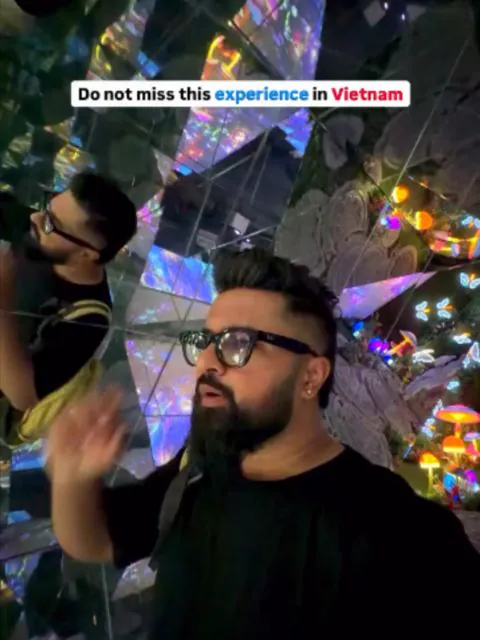
The experience includes features such as 3D Mapping LED Tunnel, Infinity Light Forest, 360° Immersive Dome, Interactive 3D Mapping and Magic Mirror Tunnel.
Interactive elements allow some projected environments to respond to visitors, making the experience feel less like watching a screen and more like entering a digital world.
It is also highly visual, making X Space particularly appealing for couples, families, groups of friends, photographers and travelers looking for unusual photo opportunities in Hanoi.
From Ancient Heritage to Digital Imagination
At first, Thay Pagoda and X Space Immersive may seem like completely different destinations.
That is precisely why they can work so well together.
Thay Pagoda represents a Hanoi shaped by centuries of history. Its architecture, Buddhist imagery, legends and water puppetry preserve cultural memories passed from one generation to another.
X Space represents another side of experience: contemporary technology turning light, color, projection and interaction into new forms of visual storytelling.
One asks you to slow down and observe.
The other invites you to step inside a constantly changing visual environment.
Together, they offer two very different ways of encountering Hanoi.
Plan Your X Space Immersive Experience in Hanoi
X Space Immersive is located at B2-R1-06, 07, 08, Vincom Mega Mall Royal City, 72A Nguyen Trai Street, Thanh Xuan, Hanoi.
The venue currently lists opening hours of 10:00 AM–10:00 PM from Monday to Friday, and 9:30 AM–10:00 PM on weekends and public holidays.
Two main experiences are currently offered.
The Standard Experience provides access to Rooms 1–7 and lasts approximately 60 minutes, while the Full Experience provides access to all eight rooms and lasts approximately 80 minutes.
Because opening hours, ticket categories and prices can change, check the official X Space Immersive before visiting for the latest ticket and booking information.
Why Combine Thay Pagoda with X Space Immersive?
A memorable travel day does not always come from visiting places that look alike.
Sometimes, contrast creates the strongest impression.
Start at Thay Pagoda, where tiled roofs reflect on quiet water and stories have been carried through generations. Walk beneath old trees, cross traditional bridges and discover a spiritual landscape shaped over centuries.
Then return to the city.
Step into X Space Immersive and watch that atmosphere change completely as digital art, 360-degree projection, mirrors, interactive visuals and glowing environments surround you.
From an ancient Buddhist sanctuary beneath Sai Son Mountain to a contemporary immersive world in the heart of modern Hanoi, the journey becomes a meeting between heritage and technology, stillness and movement, memory and imagination.
And perhaps that contrast captures Hanoi better than either experience could alone.
Hanoi is not simply a city of the past.
Nor is it only a rapidly changing modern capital.
It is both.
Begin with the timeless beauty of Thay Pagoda. Then step into a new world at X Space Immersive – and experience two very different sides of Hanoi in one unforgettable journey.
Was this article helpful?
Thanks for your feedback!