8 Days in Vietnam Itinerary: The Ultimate North to South Guide

Planning the perfect 8 days in Vietnam itinerary? From the timeless charm of Hanoi and the breathtaking beauty of Ha Long Bay to the lantern-lit streets of Hoi An and the vibrant energy of Ho Chi Minh City, Vietnam offers unforgettable experiences in just one trip. This guide takes you through the country’s must-see destinations with a well-planned north-to-south route, helping you make the most of every day while enjoying its rich culture, incredible cuisine, and stunning landscapes.
In this guide
Why Spend 8 Days Traveling Through Vietnam?
Vietnam stretches more than 1,600 kilometers from north to south, making it impossible to see everything in one week. However, eight days provide enough time to experience the country’s most famous destinations while getting a genuine feel for its culture and lifestyle.
Unlike shorter trips that only focus on one region, this itinerary allows you to compare the distinct personalities of northern, central, and southern Vietnam.
In the north, you’ll discover centuries-old temples, bustling markets, and breathtaking natural landscapes. Central Vietnam welcomes visitors with charming ancient towns, beautiful beaches, and exceptional local cuisine. Finally, southern Vietnam offers dynamic city life, fascinating wartime history, and the peaceful waterways of the Mekong Delta.
This route also minimizes unnecessary travel time. Domestic flights connect the major cities efficiently, allowing you to spend more time exploring instead of sitting on overnight buses or long train rides.
Is Eight Days Enough?
Absolutely.
Although you won’t visit every destination Vietnam has to offer, you can comfortably experience many of its highlights, including:
- Hanoi
- Ninh Binh or Ha Long Bay
- Da Nang
- Hoi An
- Ho Chi Minh City
- Mekong Delta or Cu Chi Tunnels
This combination gives first-time visitors an excellent introduction to Vietnam while leaving plenty of reasons to return.
Who Is This Itinerary Best For?
This 8 days in Vietnam itinerary is ideal for:
- First-time visitors to Vietnam
- Couples looking for a romantic journey
- Families wanting a balanced vacation
- Solo travelers
- Food lovers
- Photography enthusiasts
- Travelers visiting Southeast Asia on a multi-country trip
No matter your travel style, this itinerary offers flexibility without sacrificing the country’s most memorable experiences.
8 Days in Vietnam Itinerary at a Glance
| Day | Destination | Highlights |
| Day 1 | Hanoi | Old Quarter, Hoan Kiem Lake, street food |
| Day 2 | Hanoi | Historical landmarks, local culture |
| Day 3 | Ninh Binh or Halong Bay | Nature and landscapes |
| Day 4 | Da Nang & Hoi An | Beaches, Marble Mountains, lantern town |
| Day 5 | Hoi An | Ancient Town, countryside, local cuisine |
| Day 6 | Ho Chi Minh City | Colonial architecture, nightlife |
| Day 7 | Mekong Delta or Cu Chi Tunnels | Nature or history |
| Day 8 | Ho Chi Minh City | Museums, shopping, departure |
This route flows naturally from north to south, making transportation simple while allowing you to experience Vietnam’s incredible diversity in just over one week.
Day 1: Arrive in Hanoi and Explore the Old Quarter
After landing at Noi Bai International Airport, you’ll begin your journey in Vietnam’s thousand-year-old capital.
Hanoi is a fascinating blend of ancient traditions and modern energy. One moment you’re walking beside elegant French colonial buildings, and the next you’re weaving through lively streets filled with scooters, food vendors, and hidden cafés.
Rather than trying to visit too many attractions on your arrival day, take things slowly and immerse yourself in the city’s atmosphere.
Check In and Get Settled
Most travelers choose to stay in Hanoi’s Old Quarter because it’s within walking distance of many major attractions.
The neighborhood is packed with boutique hotels, cozy cafés, rooftop bars, and local restaurants, making it the perfect base for your first two nights.
Before heading into the city, consider purchasing a local SIM card at the airport or activating an eSIM to make navigation easier throughout your trip.
Wander Around Hoan Kiem Lake
Your first stop should be Hoan Kiem Lake, the symbolic heart of Hanoi.
Early mornings and late afternoons are particularly beautiful, as locals gather here to exercise, practice tai chi, or simply enjoy the peaceful surroundings.
Cross the iconic red bridge to visit Ngoc Son Temple, one of Hanoi’s most recognizable landmarks.
It’s an excellent introduction to Vietnamese history and spiritual traditions.
Explore Hanoi’s Old Quarter
The Old Quarter is where Hanoi truly comes alive.
Its narrow streets were originally organized by trade, and many still specialize in particular products today.
As you wander through the maze-like alleys, you’ll discover:
- Hidden temples
- Traditional tube houses
- Artisan shops
- Bustling local markets
- Charming coffee houses
Instead of following a strict route, allow yourself time to get pleasantly lost.
Some of Hanoi’s best experiences happen unexpectedly.
You might stumble upon a tiny café serving the city’s famous egg coffee or discover a quiet courtyard hidden behind busy streets.
Visit Hanoi Train Street (If Open)
One of Hanoi’s most photographed attractions is Train Street.
Here, trains pass just inches away from cafés built alongside the railway tracks.
Because access regulations change frequently, always check whether visitors are allowed before planning your visit.
If it’s open, arrive early and follow all safety instructions from local staff.
Taste Hanoi’s Legendary Street Food
No 8 days in Vietnam itinerary would be complete without exploring Hanoi’s incredible food scene.
The capital is considered one of Asia’s greatest street food destinations.
For your first evening, try several local specialties:
- Pho Bo (Vietnamese beef noodle soup)
- Bun Cha (grilled pork with rice noodles)
- Banh Mi
- Fresh spring rolls
- Egg coffee
- Local craft beer
Many family-run restaurants have been perfecting these recipes for generations, offering flavors you simply can’t replicate anywhere else.
Finish your evening with a leisurely walk around Hoan Kiem Lake as the city lights reflect across the water.
It’s a peaceful ending to your first day in Vietnam.
Day 2: Discover Hanoi’s History and Culture
After experiencing Hanoi’s vibrant streets, it’s time to dive deeper into the city’s rich history.
Vietnam’s capital has witnessed more than a thousand years of cultural evolution, and many of its landmarks tell fascinating stories about emperors, scholars, revolutionaries, and everyday life.
Visit Ho Chi Minh Mausoleum Complex
Begin your morning at Ba Dinh Square, home to the Ho Chi Minh Mausoleum.
This important national site honors President Ho Chi Minh, one of the most influential figures in modern Vietnamese history.
Nearby attractions include:
- One Pillar Pagoda
- Presidential Palace
- Ho Chi Minh’s Stilt House
- Botanical Gardens
Together, these sites provide valuable insight into Vietnam’s political and cultural heritage.
Explore the Temple of Literature
Built in 1070, the Temple of Literature was Vietnam’s first national university.
Walking through its peaceful courtyards feels like stepping back in time.
Stone turtles carrying doctoral steles, elegant pavilions, and centuries-old trees create one of Hanoi’s most photogenic and culturally significant attractions.
It’s also a wonderful place to escape the city’s busy traffic for an hour or two.
Discover Hanoi’s French Quarter
During the afternoon, stroll through the French Quarter.
Wide boulevards, colonial villas, luxury hotels, and elegant cafés create a completely different atmosphere from the bustling Old Quarter.
Highlights include:
- Hanoi Opera House
- Trang Tien Plaza
- Sofitel Legend Metropole area
- Tree-lined avenues perfect for photography
The contrast between these two neighborhoods perfectly illustrates Hanoi’s fascinating historical layers.
Experience a Traditional Water Puppet Show
As evening approaches, enjoy one of Vietnam’s most unique cultural performances.
Water puppetry originated in northern Vietnam nearly a thousand years ago and remains one of the country’s most beloved art forms.
The colorful puppets dance across water while live musicians perform traditional Vietnamese music, creating a memorable cultural experience suitable for visitors of all ages.
After the performance, consider ending your evening at a rooftop café overlooking Hanoi’s illuminated skyline before preparing for tomorrow’s adventure beyond the city.
Day 3: Choose Between Ninh Binh and Ha Long Bay
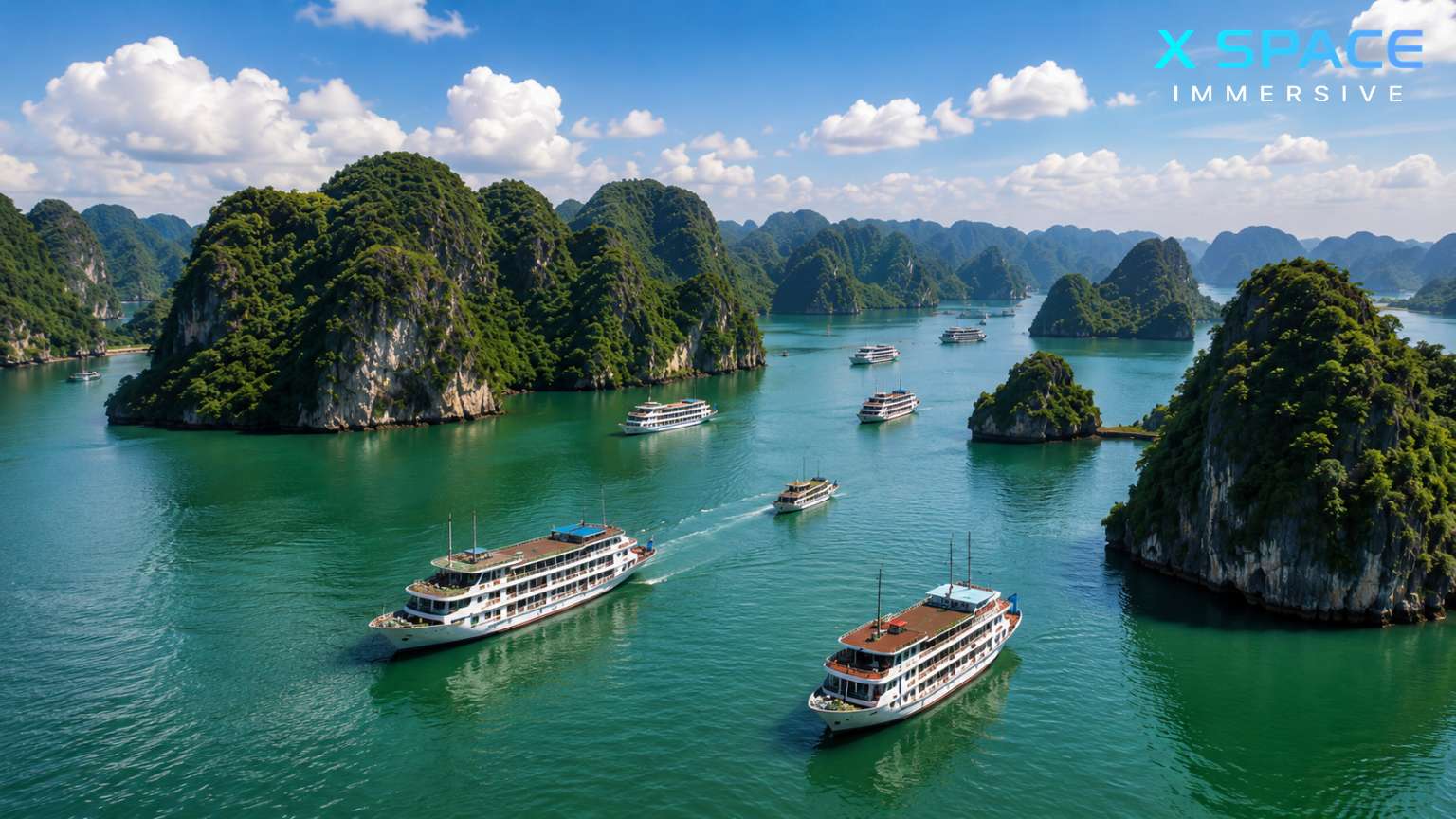
Cruise boats sailing through the limestone karsts of Ha Long Bay in northern Vietnam
Today offers one of the biggest decisions in this 8 days in Vietnam itinerary.
Should you visit the spectacular limestone landscapes of Ninh Binh or cruise through the world-famous waters of Ha Long Bay?
The answer depends on your travel style.
Both destinations are extraordinary—but each offers a completely different experience.
Option 1: Explore Ninh Binh
Often referred to as “Ha Long Bay on land,” Ninh Binh is famous for dramatic karst mountains, peaceful rivers, ancient temples, and lush rice fields.
A typical day trip includes:
- Trang An Scenic Landscape Complex
- Hoa Lu Ancient Capital
- Mua Cave viewpoint
- Traditional countryside villages
The highlight for many visitors is the Trang An boat ride, where local rowers guide small boats through caves, rivers, and towering limestone cliffs.
The scenery feels almost surreal.
Option 2: Cruise Through Ha Long Bay
If you’ve always dreamed of cruising through one of the world’s most iconic natural wonders, Ha Long Bay is the perfect choice.
A full-day cruise usually includes:
- Limestone islands
- Hidden caves
- Kayaking
- Seafood lunch onboard
- Scenic viewpoints
- Sunset cruise back to the harbor
Although an overnight cruise offers a more immersive experience, a well-organized day cruise still allows travelers with limited time to experience the bay’s breathtaking beauty.
Which Destination Should You Choose?
Choose Ninh Binh if you prefer:
- Peaceful countryside
- Photography
- Cultural heritage
- Cycling
- Less crowded experiences
Choose Ha Long Bay if you prefer:
- Boat cruises
- UNESCO World Heritage scenery
- Kayaking
- Dramatic ocean landscapes
- Classic Vietnam bucket-list experiences
Whichever destination you choose, you’ll return to Hanoi in the evening with unforgettable memories before continuing your journey to central Vietnam the following day.
Day 4: Fly to Da Nang and Continue to Hoi An
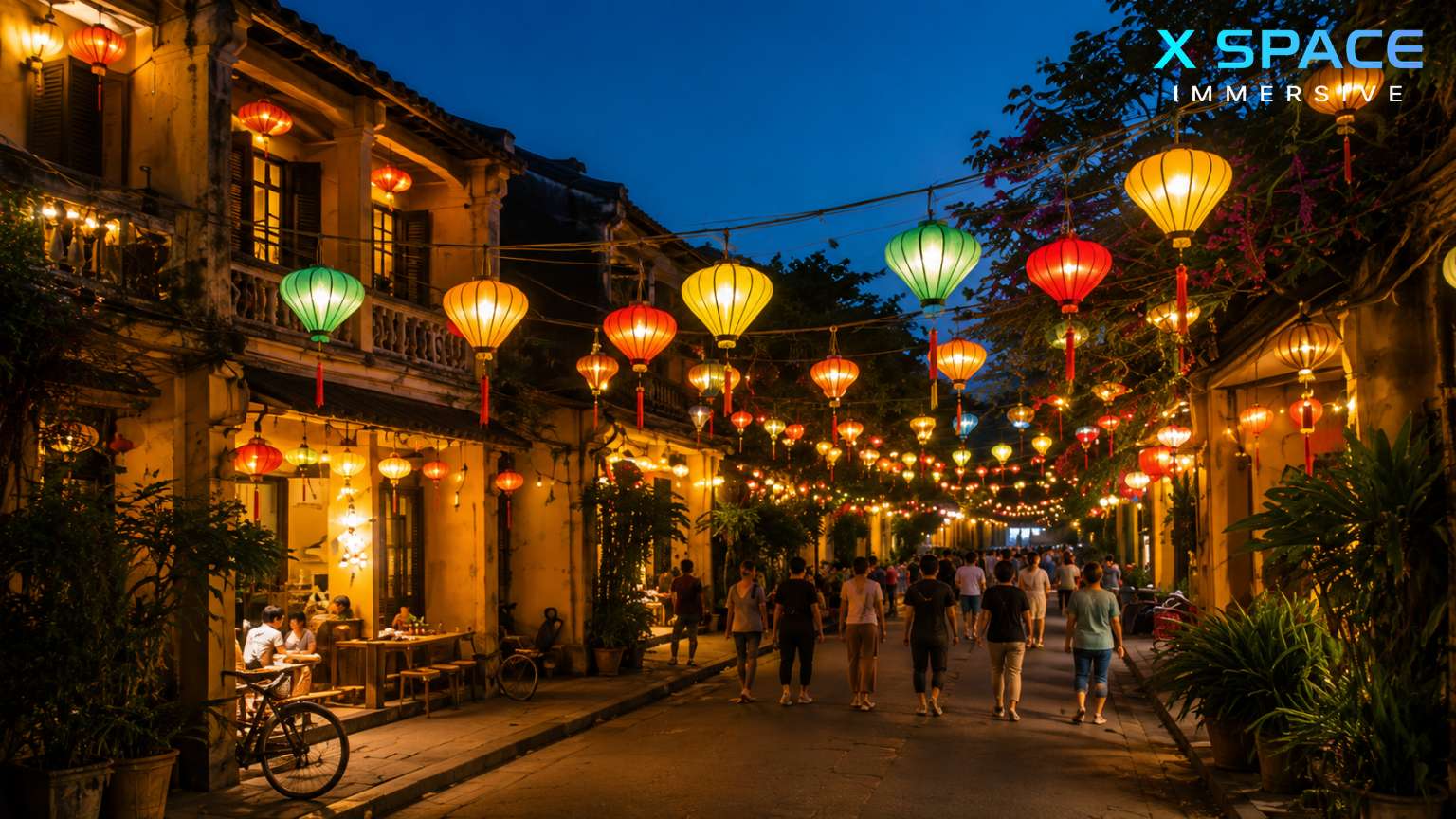
Hoi An Ancient Town illuminated by colorful lanterns at night in Vietnam
After three memorable days exploring northern Vietnam, it’s time to discover a different side of the country. Today’s journey takes you to Central Vietnam, a region known for its pristine beaches, rich heritage, and laid-back atmosphere.
A morning flight from Hanoi to Da Nang takes just over an hour, making it the fastest and most convenient option. From Da Nang International Airport, Hoi An is only about 45 minutes away by taxi or shuttle bus, so you’ll have plenty of time to explore in the afternoon.
Morning Flight from Hanoi to Da Nang
Booking an early flight helps you maximize your day. Several airlines operate frequent routes between Hanoi and Da Nang, offering flexible departure times and affordable fares when booked in advance.
Once you arrive, you can either head straight to Hoi An or spend a few hours discovering Da Nang before checking into your accommodation.
If your schedule allows, leaving your luggage at the hotel and starting your adventure immediately is a great way to make the most of this 8 days in Vietnam itinerary.
Stop by Da Nang’s Famous Attractions
Although many travelers treat Da Nang as a transit city, it’s well worth spending a few hours here.
One of the city’s biggest attractions is My Khe Beach, often ranked among Asia’s most beautiful beaches. Soft white sand, gentle waves, and a relaxed atmosphere make it an ideal place to unwind after your flight.
Another must-see landmark is the Marble Mountains, a cluster of limestone hills featuring caves, pagodas, and panoramic viewpoints. Climbing to the top rewards you with spectacular views over Da Nang’s coastline.
If you’re visiting in the evening, don’t miss the famous Dragon Bridge. On weekends, the bridge comes alive with a unique fire and water show that attracts both locals and visitors.
Experience the Magic of Hoi An at Night
As the sun begins to set, make your way to Hoi An Ancient Town.
Recognized as a UNESCO World Heritage Site, Hoi An feels like stepping into another era. Narrow streets lined with yellow merchant houses, colorful lanterns swaying above the river, and centuries-old architecture create one of Vietnam’s most romantic destinations.
Instead of rushing from one attraction to another, simply enjoy wandering through the pedestrian streets.
Highlights include:
- The Japanese Covered Bridge
- Traditional Chinese Assembly Halls
- Riverside cafés
- Lantern-filled alleyways
- Hoi An Night Market
The town becomes even more enchanting after dark when thousands of lanterns illuminate the Thu Bon River.
For dinner, choose a riverside restaurant and sample local specialties while watching colorful boats drift along the water.
End your evening with a peaceful lantern boat ride—an unforgettable experience that many travelers consider one of the highlights of their Vietnam trip.
Day 5: Explore Hoi An and the Surrounding Countryside
Wake up early to experience a quieter side of Hoi An before the streets become busy.
Morning light beautifully illuminates the ancient buildings, making this one of the best times for photography.
Unlike larger cities, Hoi An invites visitors to slow down and appreciate everyday life.
Wander Through Hoi An Ancient Town
Spend your morning exploring the town’s historical landmarks.
Many beautifully preserved merchant houses have stood for centuries and showcase the blend of Vietnamese, Chinese, Japanese, and European influences that shaped Hoi An’s trading history.
Take your time visiting:
- Tan Ky Ancient House
- Fujian Assembly Hall
- Hoi An Museum
- Traditional handicraft workshops
- Local tailor shops
Hoi An is also famous for its custom-made clothing. If you’re interested in having a suit or dress tailored, today is the perfect opportunity to place your order before leaving tomorrow.
Experience the Peaceful Countryside
Beyond the ancient town lies another side of Hoi An that many visitors overlook.
Renting a bicycle is one of the best ways to discover rice paddies, quiet villages, and scenic country roads.
Popular experiences include visiting Tra Que Vegetable Village, where local farmers still cultivate herbs using traditional methods passed down through generations.
Another favorite activity is taking a basket boat ride through Cam Thanh Coconut Village.
Local guides skillfully navigate the round bamboo boats through peaceful waterways surrounded by lush coconut forests, often entertaining visitors with impressive spinning demonstrations.
These authentic experiences provide a refreshing contrast to the historic streets of Hoi An.
Taste Hoi An’s Signature Cuisine
One of the greatest pleasures of traveling through Vietnam is discovering how each region has its own unique culinary traditions.
Hoi An is particularly famous for dishes that cannot easily be found elsewhere.
Don’t miss the chance to try:
Cao Lau
Perhaps Hoi An’s most iconic dish, Cao Lau combines chewy noodles, sliced pork, crispy croutons, fresh herbs, and a rich savory broth.
White Rose Dumplings
These delicate steamed dumplings are handmade using traditional family recipes and beautifully resemble flower petals.
Mi Quang
Originally from nearby Quang Nam Province, Mi Quang features turmeric noodles served with shrimp, pork, herbs, peanuts, and just a small amount of flavorful broth.
Hoi An Chicken Rice
Simple yet incredibly satisfying, this local favorite combines fragrant rice cooked in chicken broth with tender shredded chicken and fresh herbs.
Dining in Hoi An isn’t just about the food—it’s about enjoying the relaxed atmosphere that makes every meal memorable.
After dinner, spend another evening strolling along the lantern-lit streets before preparing for tomorrow’s journey south.
Day 6: Fly to Ho Chi Minh City
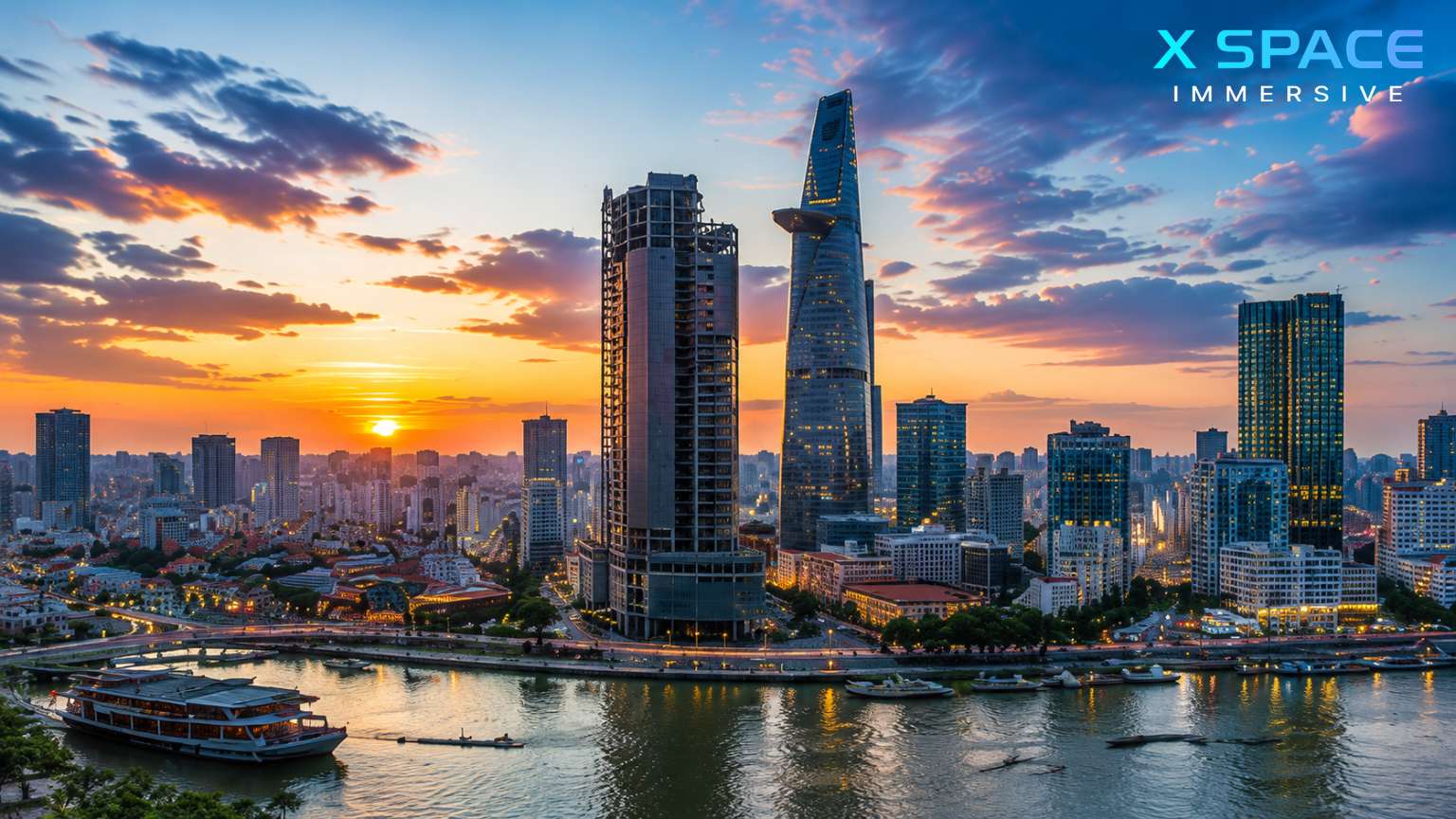
Ho Chi Minh City skyline at sunset overlooking the Saigon River
Your 8 days in Vietnam itinerary now continues to Vietnam’s largest and most energetic city.
While Hanoi feels deeply connected to tradition, Ho Chi Minh City offers a completely different experience.
Modern skyscrapers stand beside elegant colonial buildings, luxury shopping malls share streets with bustling local markets, and stylish cafés sit just steps away from traditional street food vendors.
This contrast is one of the reasons many travelers fall in love with Vietnam.
Travel from Da Nang to Ho Chi Minh City
Morning flights from Da Nang to Ho Chi Minh City are frequent and take approximately 90 minutes.
After arriving at Tan Son Nhat International Airport, reaching District 1 usually takes around 30 to 45 minutes depending on traffic.
District 1 is the most convenient area for first-time visitors, offering easy access to the city’s major attractions, restaurants, shopping streets, and nightlife.
Once you’ve checked into your hotel, you’re ready to explore.
Discover Ho Chi Minh City’s Historic Center
Despite its modern skyline, Ho Chi Minh City preserves many important historical landmarks.
Begin your walking tour at the Independence Palace, where significant events marking the end of the Vietnam War unfolded.
Next, admire the beautiful French colonial architecture surrounding the city center.
Nearby attractions include:
- Notre-Dame Cathedral Basilica of Saigon
- Saigon Central Post Office
- People’s Committee Building
- Book Street
- Nguyen Hue Walking Street
These landmarks are all within walking distance of one another, making it easy to spend an enjoyable afternoon exploring on foot.
Along the way, stop at one of the city’s many specialty coffee shops.
Vietnam is the world’s second-largest coffee producer, and Ho Chi Minh City offers countless opportunities to enjoy everything from traditional Vietnamese coffee to modern specialty brews.
Experience Saigon After Dark
As night falls, the city transforms once again.
The streets become livelier, rooftop bars begin filling with visitors, and local food markets buzz with activity.
There are countless ways to spend your evening.
You might enjoy:
- Watching the skyline from a rooftop bar
- Exploring Ben Thanh Night Market
- Joining a guided street food tour
- Walking along Nguyen Hue Walking Street
- Taking a dinner cruise on the Saigon River
If you’re a food lover, this is the perfect time to sample southern Vietnamese cuisine.
Popular dishes include broken rice with grilled pork (Com Tam), Banh Xeo pancakes, Hu Tieu noodle soup, fresh seafood, and a variety of tropical desserts.
Compared with Hanoi, the flavors here are generally sweeter and influenced by the fertile Mekong Delta.
As you return to your hotel, you’ll notice just how much Vietnam has changed throughout your journey.
In only six days, you’ve experienced ancient capitals, spectacular natural landscapes, charming UNESCO heritage towns, tropical beaches, and one of Southeast Asia’s most dynamic cities.
Tomorrow offers one final adventure before your unforgettable journey across Vietnam comes to an end.
Day 7: Choose Between the Mekong Delta and Cu Chi Tunnels
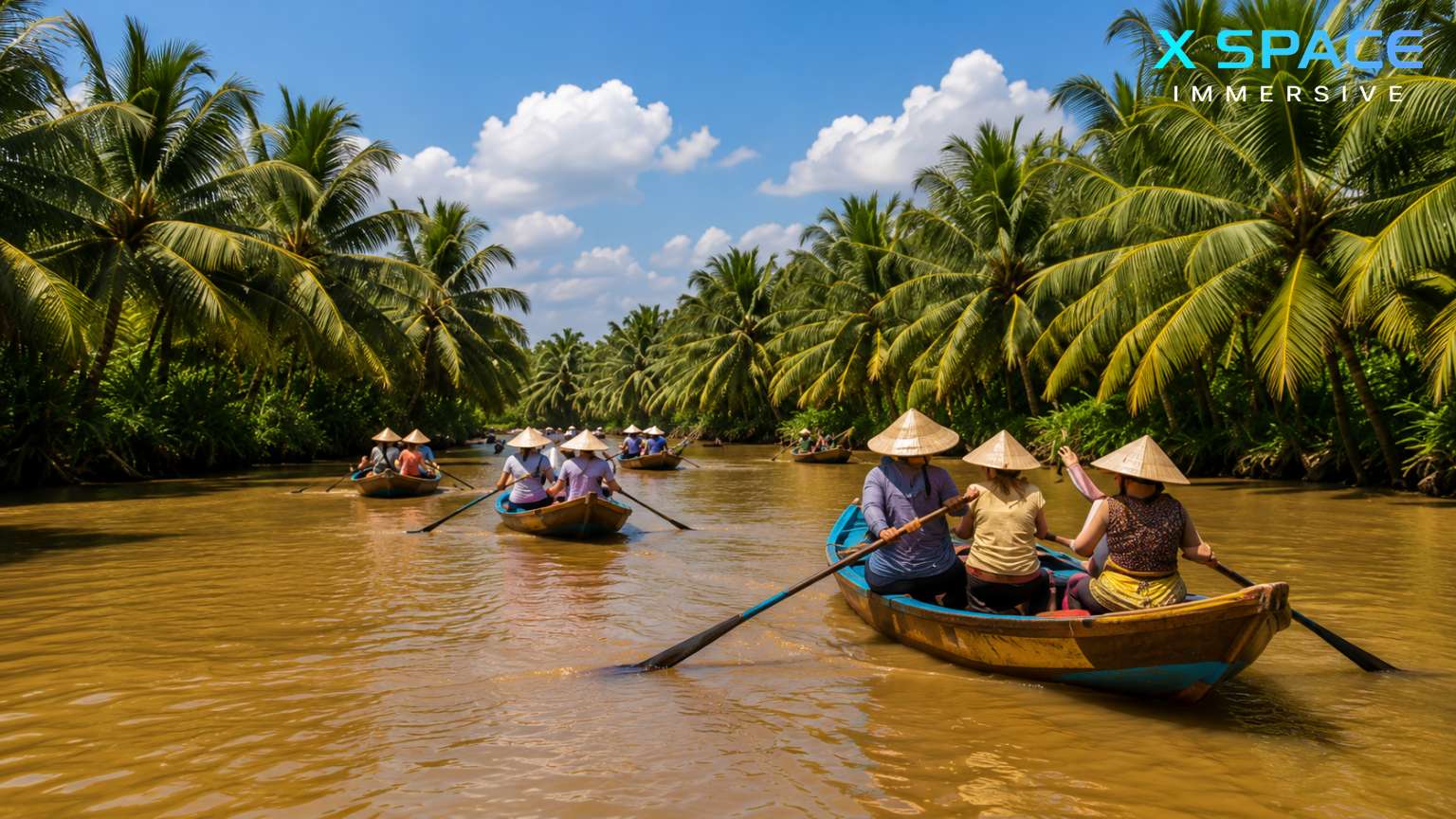
Traditional boat tour through the palm-lined canals of the Mekong Delta
As your 8 days in Vietnam itinerary nears its end, today gives you another exciting choice. Depending on your interests, you can either discover the peaceful waterways of the Mekong Delta or step back in time at the legendary Cu Chi Tunnels.
Both destinations are easy day trips from Ho Chi Minh City, but they offer completely different perspectives on Vietnam.
Option 1: Discover the Mekong Delta
Often called the “Rice Bowl of Vietnam,” the Mekong Delta is a vast network of rivers, canals, orchards, and floating communities. Life moves at a slower pace here, making it a refreshing escape from the energy of Ho Chi Minh City.
Most day tours include a scenic boat ride through narrow canals shaded by coconut palms, where you’ll see local life unfold along the riverbanks. Farmers transport goods by boat, children wave from wooden houses, and small family workshops continue traditional crafts that have been practiced for generations.
Many tours also include stops at:
- Coconut candy workshops
- Tropical fruit gardens
- Local honey farms
- Traditional folk music performances
- Small island villages
Lunch is usually served at a riverside restaurant, where you can sample fresh seafood and authentic southern Vietnamese dishes.
For travelers who enjoy nature, photography, and cultural experiences, the Mekong Delta is a rewarding addition to this itinerary.
Option 2: Visit the Cu Chi Tunnels
If history fascinates you, the Cu Chi Tunnels provide one of Vietnam’s most important historical experiences.
Located about 70 kilometers northwest of Ho Chi Minh City, this extensive underground network was used during the Vietnam War for transportation, communication, living quarters, and military operations.
Today, visitors can explore restored sections of the tunnels while learning about the remarkable resilience and ingenuity of the people who lived there.
Highlights include:
- Underground tunnel passages
- Hidden trapdoor entrances
- Underground kitchens and meeting rooms
- Military exhibits
- Historical documentaries
Some sections have been widened to make them more accessible for visitors, while still preserving the atmosphere of the original tunnel system.
Even if you’re not a history enthusiast, the Cu Chi Tunnels offer valuable insight into an important chapter of Vietnam’s past.
Which Day Trip Should You Choose?
Choose the Mekong Delta if you prefer:
- Nature and rural landscapes
- Local culture
- Relaxing boat rides
- Traditional village life
- Food experiences
Choose the Cu Chi Tunnels if you’re interested in:
- Vietnam War history
- Military engineering
- Museums and historical sites
- Educational experiences
Whichever option you choose, you’ll return to Ho Chi Minh City in the late afternoon with enough time to enjoy one final evening in Vietnam.
Day 8: Explore Ho Chi Minh City Before Departure
Your final day is an opportunity to slow down and enjoy Ho Chi Minh City at your own pace before heading to the airport.
Depending on your departure time, you can fit in a few more memorable experiences without feeling rushed.
Visit the City’s Top Attractions
If you haven’t already, consider visiting the War Remnants Museum, one of Vietnam’s most visited museums. Its exhibits provide a deeper understanding of the country’s modern history through photographs, military equipment, and personal stories.
For those interested in modern architecture, Landmark 81, Vietnam’s tallest skyscraper, offers panoramic views across the city from its observation deck.
Another enjoyable area to explore is Thao Dien, a trendy neighborhood filled with boutique cafés, art galleries, and stylish restaurants.
Shop for Vietnamese Souvenirs
No trip to Vietnam feels complete without bringing home a few local treasures.
Popular souvenirs include:
- Vietnamese coffee beans
- Handcrafted ceramics
- Silk scarves
- Lacquerware
- Bamboo products
- Local spices
- Traditional snacks
Ben Thanh Market remains one of the most convenient places for souvenir shopping, while boutique stores often offer higher-quality handmade products.
Prepare for Your Departure
Tan Son Nhat International Airport can become busy, particularly during weekends and holiday periods.
It’s generally recommended to arrive:
- At least 2 hours before domestic flights
- Around 3 hours before international departures
Using ride-hailing apps such as Grab is often the easiest and most affordable way to reach the airport.
As your journey comes to an end, you’ll realize that eight days have offered an incredible introduction to Vietnam’s diverse landscapes, welcoming people, fascinating history, and unforgettable cuisine.
How Much Does an 8 Days in Vietnam Itinerary Cost?
Vietnam remains one of Southeast Asia’s best-value destinations, making it suitable for a wide range of travel budgets.
Below is a general estimate excluding international flights.
Budget Travelers
Ideal for backpackers and independent travelers.
Estimated daily budget:
- Accommodation: $20–35
- Food: $15–20
- Transportation: $10–20
- Attractions: $15–25
Estimated total: $500–700
Mid-Range Travelers
Perfect for couples and most first-time visitors.
Estimated daily budget:
- Accommodation: $60–120
- Dining: $30–50
- Domestic flights
- Guided tours
- Comfortable transportation
Estimated total: $900–1,400
Luxury Travelers
For those seeking premium experiences.
Expect:
- Five-star hotels
- Private airport transfers
- Luxury cruises
- Fine dining
- Personalized tours
Estimated total: $2,000+
Best Time to Follow This 8 Days in Vietnam Itinerary
Because Vietnam stretches across three distinct climate zones, weather varies considerably throughout the year.
Fortunately, there are several excellent seasons when traveling from north to south is especially enjoyable.
February to April
This is widely considered one of the best times to visit Vietnam.
You’ll typically experience:
- Pleasant temperatures
- Lower humidity
- Clear skies
- Comfortable sightseeing conditions
It’s an excellent season for exploring Hanoi, cruising around Ha Long Bay, and walking through Hoi An.
October to Early December
Autumn is another fantastic period for this 8 days in Vietnam itinerary.
Northern Vietnam enjoys cool weather, Central Vietnam begins transitioning away from the rainy season, and Southern Vietnam experiences more sunshine.
Photography conditions are particularly beautiful during these months.
When to Avoid
While Vietnam is a year-round destination, travelers should prepare carefully during:
- Peak summer months (June–August)
- Heavy rainy seasons in Central Vietnam
- Tet (Vietnamese Lunar New Year), when transportation and accommodation become extremely busy
How to Travel Around Vietnam in 8 Days
With limited time, efficient transportation is essential.
Domestic Flights
Flying is by far the fastest way to travel between regions.
This itinerary recommends:
- Hanoi → Da Nang
- Da Nang → Ho Chi Minh City
Booking flights several weeks in advance usually provides the best fares.
Ride-Hailing Apps
Within cities, Grab is one of the easiest transportation options.
Benefits include:
- Transparent pricing
- Easy payment
- English-language interface
- Reliable drivers
Walking
Many attractions in:
- Hanoi Old Quarter
- Hoi An Ancient Town
- District 1 in Ho Chi Minh City
are best explored on foot.
Walking allows you to discover hidden cafés, local shops, and charming streets that many visitors miss.
Where to Stay During Your Vietnam Trip
Choosing the right accommodation helps maximize your sightseeing time.
Hanoi
The Old Quarter remains the best choice for first-time visitors thanks to its central location, lively atmosphere, and easy access to major attractions.
Travelers seeking a quieter stay may prefer the French Quarter or West Lake area.
Hoi An
Staying near the Ancient Town allows you to experience the magical lantern-lit evenings after day visitors leave.
Beach lovers may enjoy accommodations near An Bang Beach for a more relaxing atmosphere.
Ho Chi Minh City
District 1 is the most convenient neighborhood for sightseeing, dining, shopping, and nightlife.
District 3 offers a quieter local atmosphere, while Thao Dien appeals to travelers looking for boutique hotels and stylish cafés.
Essential Tips for an 8-Day Vietnam Trip
A well-planned 8 days in Vietnam itinerary isn’t just about choosing the right destinations—it’s also about knowing how to travel smoothly between them. A little preparation can save you time, reduce stress, and help you enjoy every moment of your adventure.
Whether it’s your first visit or you’ve traveled around Southeast Asia before, these practical tips will help make your Vietnam journey more comfortable and rewarding.
Check Visa Requirements Before You Travel
Visa policies vary depending on your nationality, so it’s important to check the latest entry requirements before booking your flights.
Many travelers can now apply for an electronic visa (e-Visa), making the process quick and convenient. Be sure to apply in advance and keep both digital and printed copies of your travel documents.
Also, ensure your passport remains valid for at least six months beyond your arrival date.
Carry Both Cash and Bank Cards
Although Vietnam has become increasingly cashless in major cities, cash is still widely used at local restaurants, traditional markets, and smaller shops.
The local currency is the Vietnamese Dong (VND).
It’s a good idea to:
- Withdraw cash from ATMs after arriving.
- Carry small denominations for street food and local transport.
- Use credit cards at hotels, shopping malls, and larger restaurants.
Keeping a combination of cash and cards gives you the greatest flexibility throughout your trip.
Stay Connected with a Local SIM Card or eSIM
Reliable internet access makes traveling around Vietnam much easier.
Navigation apps, ride-hailing services, online translation tools, and digital payments all depend on a stable connection.
You can purchase a local SIM card at major airports or activate an international eSIM before departure. Both options are affordable and provide excellent coverage across most tourist destinations.
Pack for Different Weather Conditions
One unique challenge of following an 8 days in Vietnam itinerary is experiencing several climate zones within a single trip.
Northern Vietnam can feel surprisingly cool during winter mornings, while southern cities remain warm and humid throughout the year.
Consider packing:
- Lightweight clothing
- Comfortable walking shoes
- A light jacket for cooler evenings
- Rain protection during the wet season
- Sunscreen and sunglasses
- A reusable water bottle
Packing versatile clothing allows you to stay comfortable without carrying unnecessary luggage.
Respect Local Customs
Vietnamese people are known for their warmth and hospitality, and showing respect for local customs goes a long way.
When visiting temples or pagodas:
- Dress modestly.
- Remove your hat before entering sacred areas.
- Speak quietly.
- Avoid touching religious statues.
Learning a few simple Vietnamese phrases such as “Xin chào” (Hello) or “Cảm ơn” (Thank you) is also appreciated by locals and often leads to friendlier interactions.
Eat Street Food with Confidence
Vietnam’s street food is one of the country’s greatest attractions.
Rather than avoiding it, choose busy stalls where locals are eating. High customer turnover usually means the food is freshly prepared.
Don’t hesitate to try regional specialties—you’ll quickly discover that every city has its own unique flavors.
One of the joys of traveling through Vietnam is realizing that a bowl of pho in Hanoi tastes completely different from noodle dishes served in Central or Southern Vietnam.
Use Ride-Hailing Apps
Instead of negotiating taxi prices, many travelers prefer using ride-hailing services such as Grab.
Benefits include:
- Transparent pricing
- Convenient cashless payment
- GPS navigation
- English-language interface
It’s one of the easiest ways to travel safely and efficiently in Vietnam’s larger cities.
Book Domestic Flights Early
Since this itinerary relies on domestic flights between regions, booking tickets several weeks in advance can help you secure better prices and more convenient departure times.
Morning flights are often recommended because they leave more time for sightseeing after arrival.
How to Customize Your 8 Days in Vietnam Itinerary
One of the greatest strengths of this itinerary is its flexibility.
While the suggested route works well for most first-time visitors, every traveler has different interests. Fortunately, it’s easy to personalize your journey without dramatically changing the overall schedule.
For First-Time Visitors
If this is your first trip to Vietnam, the recommended itinerary already covers the country’s essential highlights.
You’ll experience:
- Historic Hanoi
- Stunning natural landscapes
- UNESCO World Heritage sites
- Vibrant Ho Chi Minh City
- Traditional Vietnamese cuisine
- Local culture from north to south
It’s an excellent introduction that balances sightseeing, relaxation, and cultural experiences.
For Couples
Vietnam is filled with romantic destinations, making it a wonderful choice for couples and honeymooners.
Consider adding:
- A sunset cruise in Ha Long Bay
- A lantern boat ride in Hoi An
- Beachfront dining in Da Nang
- Rooftop cocktails overlooking Ho Chi Minh City
Choosing boutique hotels with river or beach views can make the journey even more memorable.
For Families
Families traveling with children may prefer a slower pace.
Instead of trying to visit every attraction, focus on interactive experiences such as:
- Basket boat rides in Hoi An
- Boat tours in the Mekong Delta
- Walking around Hoan Kiem Lake
- Beach time at My Khe Beach
Many museums and historical sites also offer engaging exhibits suitable for older children.
For Food Lovers
Vietnam is one of Asia’s most exciting culinary destinations.
Food enthusiasts can easily adapt this itinerary by including:
- Hanoi street food tours
- Vietnamese cooking classes
- Coffee workshops
- Local market visits
- Seafood dinners in Da Nang
- Riverside dining in Hoi An
Every region introduces new ingredients, flavors, and cooking techniques, making food an unforgettable part of the journey.
For Nature Lovers
Travelers who enjoy outdoor adventures may wish to spend more time exploring Vietnam’s spectacular landscapes.
Instead of rushing between cities, consider:
- Choosing Ninh Binh over Ha Long Bay for cycling and hiking.
- Spending extra time kayaking around limestone islands.
- Exploring the countryside around Hoi An.
- Visiting the Mekong Delta instead of urban attractions.
Nature lovers often find these slower experiences among the most rewarding moments of the trip.
For History Enthusiasts
Vietnam’s rich history spans thousands of years.
History-focused travelers may wish to dedicate more time to:
- Temple of Literature
- Hoa Lu Ancient Capital
- Imperial architecture in Hoi An
- Independence Palace
- War Remnants Museum
- Cu Chi Tunnels
These sites provide valuable context for understanding Vietnam’s fascinating cultural evolution.
Prefer a Slower Journey?
If you don’t enjoy frequent flights, you can simplify this 8 days in Vietnam itinerary by focusing on two regions instead of three.
For example:
Option 1
- Hanoi
- Ninh Binh
- Ha Long Bay
Ideal for travelers who love nature and northern culture.
Option 2
- Da Nang
- Hoi An
- Ho Chi Minh City
Perfect for those seeking beaches, history, food, and vibrant city life.
While you’ll see fewer destinations, you’ll gain more time to truly appreciate each place without feeling rushed.
At the end of the day, the best itinerary isn’t necessarily the one with the longest checklist—it’s the one that matches your travel style and allows you to enjoy Vietnam at your own pace.
FAQ About an 8 Days in Vietnam Itinerary
Is 8 days enough to visit Vietnam?
Yes. While eight days won’t allow you to see every corner of the country, it’s enough to experience Vietnam’s most iconic destinations. By combining domestic flights with a well-planned route, you can comfortably explore Hanoi, either Ha Long Bay or Ninh Binh, Hoi An, Da Nang, and Ho Chi Minh City while enjoying a balanced mix of culture, history, nature, and local cuisine.
Should I travel from North to South or South to North?
Both directions work well, but traveling from North to South is often the preferred choice for first-time visitors.
Starting in Hanoi introduces you to Vietnam’s rich history and traditional culture before gradually transitioning to the charming heritage of Central Vietnam and the modern energy of Ho Chi Minh City. This route also feels like a natural progression, with each destination offering a different perspective on the country.
Is Ha Long Bay or Ninh Binh better?
There’s no wrong choice—it simply depends on the experience you’re looking for.
If you dream of cruising among limestone islands and emerald waters, Ha Long Bay is the perfect option. If you prefer peaceful countryside landscapes, scenic boat rides through caves, and fewer crowds, Ninh Binh may be a better fit.
Both destinations showcase Vietnam’s spectacular natural beauty in different ways.
How much should I budget for 8 days in Vietnam?
Vietnam is considered one of Southeast Asia’s best-value destinations.
A budget traveler can expect to spend around USD 500–700, while a comfortable mid-range trip usually costs USD 900–1,400, including accommodation, domestic flights, transportation, meals, and entrance fees. Luxury travelers should expect a higher budget depending on hotel choices and private experiences.
When is the best time to follow this itinerary?
The most pleasant months are generally February to April and October to early December, when much of the country enjoys comfortable temperatures and relatively stable weather.
Since Vietnam stretches across multiple climate zones, checking the forecast for each region before your trip is always recommended.
How many domestic flights are included?
This 8 days in Vietnam itinerary typically includes two domestic flights:
- Hanoi → Da Nang
- Da Nang → Ho Chi Minh City
Flying helps maximize sightseeing time and keeps travel between regions efficient.
Is Vietnam safe for international travelers?
Yes. Vietnam is widely regarded as one of the safest destinations in Southeast Asia for solo travelers, couples, and families.
As with any destination, it’s wise to stay aware of your surroundings, keep valuables secure in crowded areas, and use licensed transportation or trusted ride-hailing apps.
Can I complete this itinerary without joining a guided tour?
Absolutely.
Most travelers organize this itinerary independently by combining domestic flights, hotels, and day tours. Guided tours can still be worthwhile for destinations such as Ha Long Bay, Ninh Binh, the Mekong Delta, or the Cu Chi Tunnels, where transportation and local insights enhance the experience.
Experience X Space Immersive

Visitors exploring X Space Immersive digital art exhibition in Hanoi
After exploring Vietnam’s ancient temples, breathtaking landscapes, vibrant markets, and centuries of history, you may be looking for one final experience that offers a fresh perspective before your journey ends.
X Space Immersive provides a modern cultural experience where art, technology, and storytelling come together in an engaging and interactive environment.
Rather than simply observing exhibits, visitors become part of the experience through immersive digital installations, dynamic visual projections, synchronized sound, and creative interactive spaces. It’s a different way to connect with culture—one that appeals to travelers of all ages, whether you’re visiting with friends, family, or as a couple.
Why Add X Space Immersive to Your Vietnam Itinerary?
An itinerary filled with historical landmarks and outdoor adventures naturally benefits from a change of pace. X Space Immersive offers exactly that.
It’s an excellent choice if you:
- Want to experience Vietnam from a contemporary perspective.
- Enjoy digital art, multimedia exhibitions, and interactive technology.
- Need an indoor activity during hot or rainy weather.
- Prefer attractions suitable for both adults and children.
For travelers who have already explored museums, markets, and colonial architecture, it provides a refreshing contrast while adding another memorable layer to the trip.
Tips for Planning Your Visit
If your international flight departs later in the day, consider visiting X Space Immersive on the morning or early afternoon of Day 8.
To make the most of your visit:
- Allow approximately 60–90 minutes to explore.
- Purchase tickets in advance during weekends or holidays if available.
- Charge your phone or camera beforehand, as the immersive installations offer excellent photography opportunities.
- Check opening hours before your visit to fit comfortably into your departure schedule.
Adding this experience at the end of your trip creates a smooth transition between Vietnam’s rich cultural heritage and its growing creative scene.
Conclusion
An 8 days in Vietnam itinerary is the perfect way to experience the country’s incredible diversity, from historic cities and breathtaking landscapes to vibrant local culture and unforgettable cuisine. Whether you’re visiting Vietnam for the first time or planning a return trip, this itinerary helps you make the most of every day while creating lasting memories.
Was this article helpful?
Thanks for your feedback!